







Childcare Cost Calculator by State in 2026
- Local Editor:Local Editor: The HOMEiA Team
- Category: USA , Cost of Living



Why Childcare Now Rivals College Tuition
Childcare Cost Calculator by State: Center-based infant care remains one of the largest and most unevenly distributed costs facing American families. Massachusetts has consistently ranked among the most expensive states for infant care, with state-level childcare reimbursement rates and market-rate surveys pointing to full-time costs well into the tens of thousands of dollars annually in the Boston metro region. Mississippi and other Southern and Plains states remain consistently among the most affordable, with expenses being a fraction of what families pay in high-cost states.
Child Care Aware of America’s annual national report on childcare funding gaps highlights that total state investments in child care and preschool vary enormously, from a few hundred dollars to several thousand dollars per child under age five. Wealthier, higher cost of living states like Massachusetts and California direct substantially more public funding per child toward childcare than lower-cost states. This investment gap correlates directly with what families pay out of pocket.
For families with two children under five, childcare costs can exceed $30,000 annually in most states, and $80,000 or more in high-cost states. That’s more than housing in many markets, forcing families to make hard decisions about whether to relocate, if one parent should leave the workforce, or to delay having children altogether.
Key Takeaways
- Massachusetts remains among the most expensive states for infant care in the nation, with subsidized reimbursement rates in the Boston metro region implying annualized full-time costs well into the tens of thousands of dollars.
- Mississippi, South Dakota, and Wyoming remain among the most affordable states for infant care nationally.
- Center-based infant care exceeds in-state public college tuition in a majority of states, a pattern that has held consistently across multiple years of national childcare cost research.
- State investments in childcare range enormously, from a few hundred dollars to several thousand dollars per child, and this gap tracks closely with what families pay out of pocket.
- Childcare costs as a share of household income range from single digits in the cheapest states to well over 20 percent in the most expensive states.
- A family with two children in care can spend $30,000 to $80,000 or more annually, rivaling or exceeding housing costs in many markets.

Related article
Grocery and Food Costs by State in 2026 (the first 10 States)
The cost of groceries varies significantly across the United States, making location an important factor in every household’s budget. Differences in transportation, supply chains, state taxes, and local market conditions can add hundreds (or even thousands) of dollars to annual food expenses. While national food inflation has moderated, prices continue to fluctuate…
1. The National Headline: Childcare vs. College Tuition
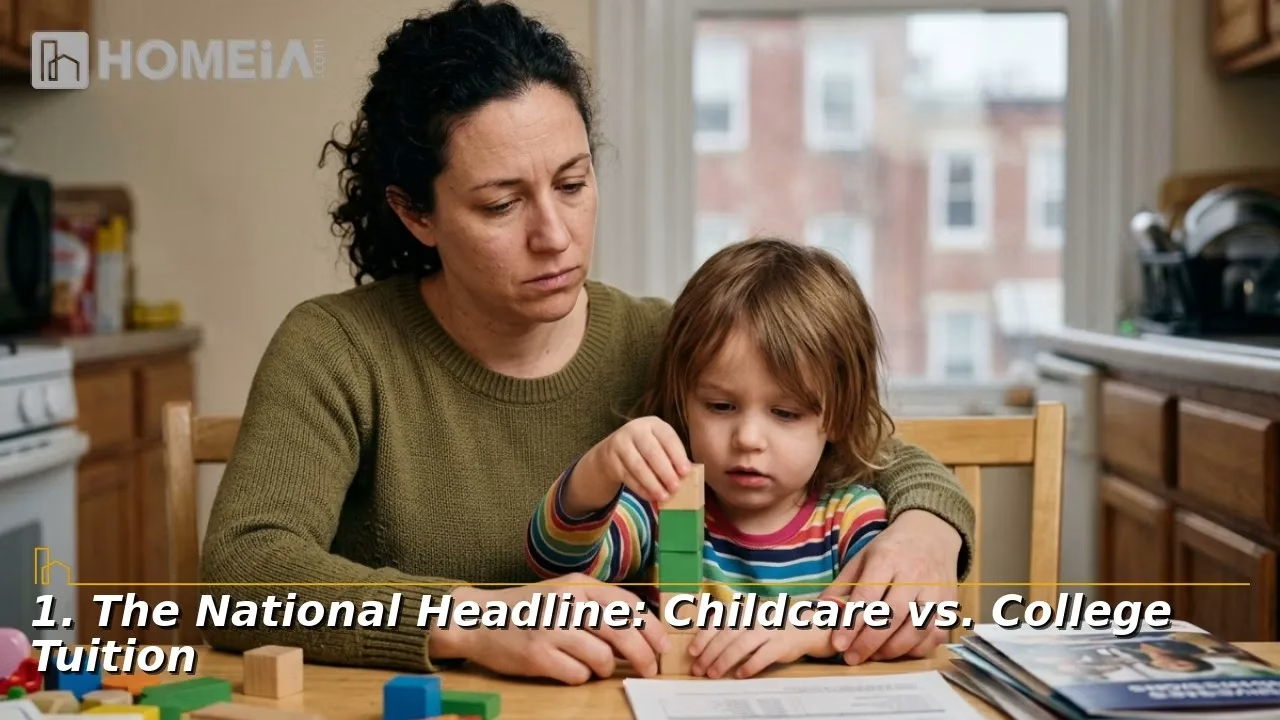
National childcare research consistently finds that center-based infant care exceeds in-state public college tuition in a majority of states. Families paying for infant care in a high-cost state like Massachusetts are often unfortunately spending more than the cost of a year at a state university.
The disparity between states is driven largely by state-level policy decisions. Those with strict licensing ratios, higher staff qualification requirements, and limited subsidy programs have higher costs. Others with greater flexible regulations and stronger subsidy programs have lower costs.
2. Why Costs Vary So Dramatically by State
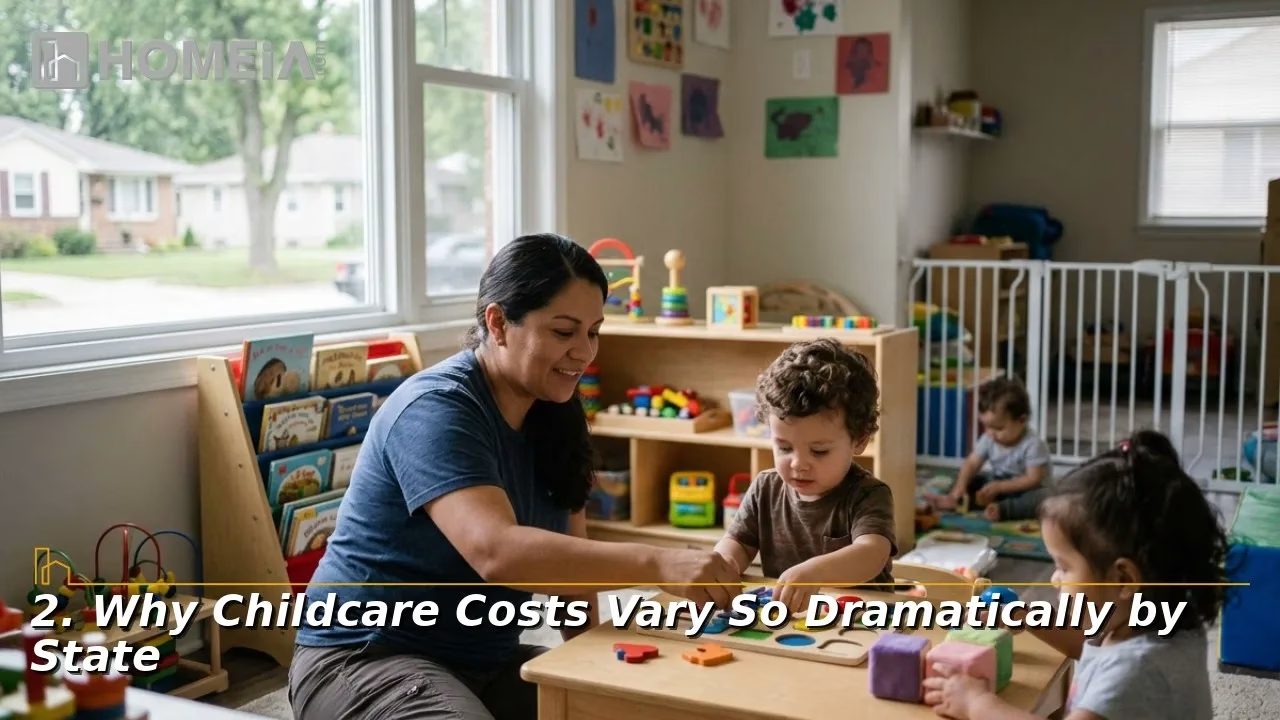
- Regulatory ratios. States set different staff-to-child ratios for infant care. Places with stricter ratios, requiring more caregivers per infant, see meaningfully higher labor costs baked into tuition.
- Licensing requirements. Areas with higher education and training requirements for childcare workers have higher labor costs. Certain ones require lead teachers to hold a bachelor’s degree in early childhood education, while others require only a high school diploma and basic training. The wage gap between degreed and non-degreed workers is significant and flows directly into tuition.
- Urban vs. rural availability. Childcare is more expensive in urban areas due to higher real estate costs, but it’s also more available. Rural areas often have fewer providers, which can reduce competition and keep prices high despite lower operating costs.
- Subsidy programs. States that invest more in childcare subsidies reduce the cost burden on families. The per-child public investment correlates directly with out-of-pocket costs for families in that state.
- Real estate costs. Childcare centers need space. In high-cost real estate markets like Boston, San Francisco, and New York, the price for renting or owning a facility is a significant portion of the total cost passed on to families.
Recommended for you




3. The Real-World Impact: Two Families, Two Decisions

Consider a family in a high-cost state like Massachusetts and another in a low-cost state like Mississippi. Both have a 1-year-old and a 3-year-old, and each have two working parents earning their state’s median household income.
The Massachusetts family could easily face combined infant and preschool childcare costs approaching $80,000 per year for two children. Against a state median household income in the range of $90,000, childcare can consume the large majority of one parent’s take-home pay. Many families in this position face a real question, is it financially worthwhile for both parents to work, once childcare, taxes, and commuting costs are netted out?
The Mississippi family, facing combined costs closer to $23,000 per year for two children against a lower median household income, still spends a meaningful share of one parent’s take-home pay, but retains substantially more financial flexibility than the higher-earning, higher-cost-state family.
4. The Compounding Effect on Relocation Decisions

Childcare costs are now a primary factor in relocation decisions for families with young children. A job offer in a high-cost state might come with a meaningful salary increase over a comparable employment opportunity in a low-cost state, but the childcare cost difference can wipe out that gain and then some.
This is why many families delay moving to high-cost states until their children are school-age. Once public school begins, the childcare cost burden drops dramatically, and the higher salaries available in high-cost states become far more attractive relative to the cost of living.

Related article
Electricity and Utility Costs by State in 2026 (the first 10 States)
Electricity costs vary dramatically across the United States, making utility bills a major factor in overall affordability. While some states benefit from abundant, low-cost energy resources, others face significantly higher rates because of fuel costs, grid infrastructure, and energy policies. As electricity prices continue to rise nationwide, understanding state-by-state…
5. Practical Framework: Estimating Your Childcare Cost Burden
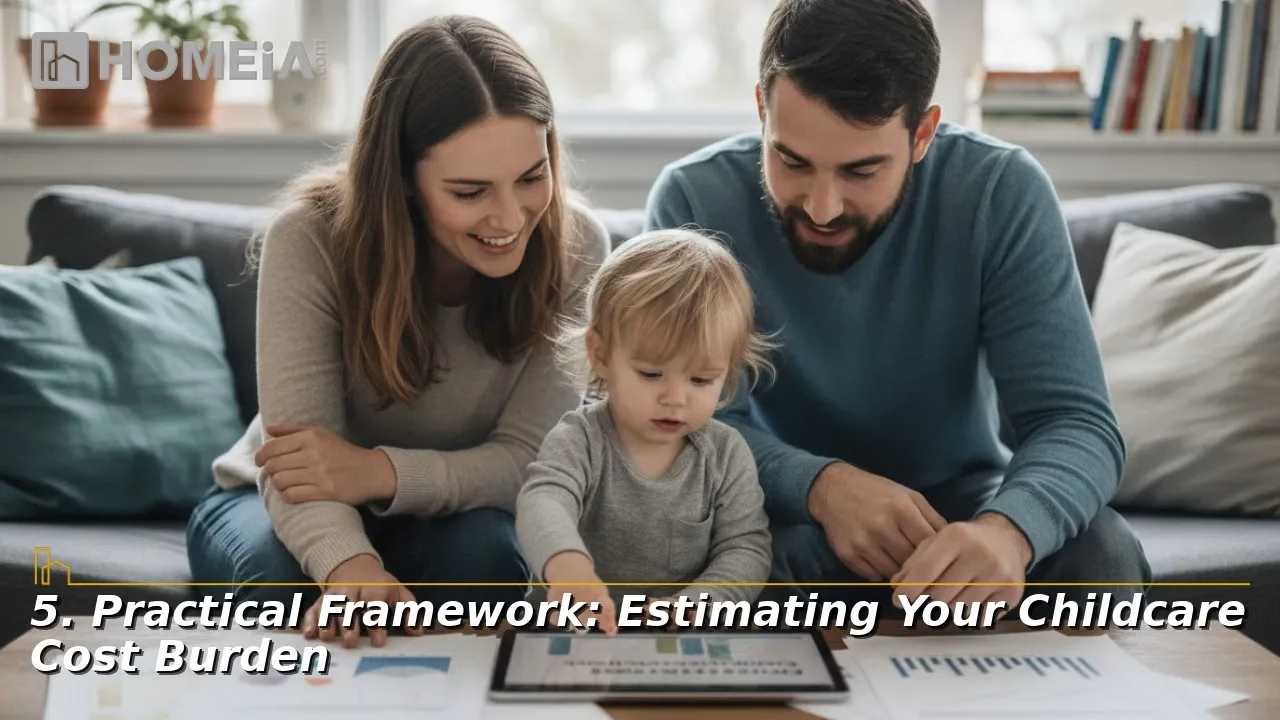
To estimate your childcare cost burden, use this three-step framework:
Step 1: Determine your annual childcare cost. Use state-specific data from Child Care Aware of America or your state’s child care resource and referral agency. Infant care costs the most while toddler and preschool rates are typically somewhat lower.
Step 2: Calculate your after-tax household income. Use your marginal tax rate (federal plus state plus local) to determine your take-home pay. Childcare is generally paid with after-tax dollars unless you use a dependent care flexible spending account.
Step 3: Divide childcare cost by after-tax income. If childcare consumes more than 20 percent of your after-tax income, you’re in the “burdened” category. If it consumes more than 30 percent, you’re “severely burdened.”
The federal government generally considers childcare affordable when it costs less than 7 percent of household income. Most American families pay far more than that benchmark.

Related article
Auto Insurance Cost Guide by State in 2026 (the first 12 States)
Auto insurance costs vary widely across the United States, making your state of residence one of the biggest factors affecting what you pay. Differences in accident rates, weather risks, repair costs, insurance regulations, and litigation trends create substantial variations in premiums from one state to another. This guide compares average auto insurance costs across the country…
6. Subsidy Programs: What’s Available and How They Vary

- Child Care and Development Fund (CCDF). This federal block grant provides subsidies to low-income families. Eligibility and benefit levels vary significantly by state.
- State subsidy programs. Many states supplement federal funding with their own programs. Regions with higher per-child investment directly reduce out-of-pocket costs for eligible families relative to states with minimal state-level investment.
- Dependent care FSAs. These allow families to set aside pre-tax dollars, up to a federal limit, for childcare expenses, regardless of how many children are in care.
- Child and Dependent Care Tax Credit. This non-refundable federal credit covers a percentage of childcare expenses, with the percentage decreasing as household income increases.
Conclusion: Planning a move with children? Childcare costs are significant line items in a family budget. For a complete picture, explore HOMEiA’s True Cost of Homeownership by State guide to see how childcare interacts with housing, taxes, and other expenses, and use our Rent vs. Buy Calculator Guide to compare total monthly costs across your target cities.
Recommended for you




FAQs About Childcare Cost Calculator by State
1. What state has the most affordable childcare?
Mississippi consistently ranks among the most affordable states for infant care nationally. South Dakota and Wyoming also rank among the cheapest.
2. Are childcare subsidies available and how do they vary by state?
Yes. The federal CCDF program provides subsidies to low-income families, despite eligibility and benefit levels fluctuating by state. Families should check with their state’s child care resource and referral agency for specific eligibility criteria.
3. How should childcare costs factor into a relocation decision?
Childcare expenses should be a primary consideration for families with children under five. The difference between high-cost and low-cost states can be significant enough to offset a significant portion of a salary increase, and should be factored into your total cost-of-living calculation before accepting a job offer or signing a lease.
Share