










Foreclosure occurs when homeowners fall behind on mortgage payments and lenders seize and sell the property to recover losses, severely impacting credit and finances. Before foreclosure, options like loan modification, forbearance, or selling may help. Buyers may find discounts, but risks such as hidden damage and title issues make careful research and professional guidance essential…
Buying a Twin Home: Complete Guide to Costs, Pros, and Cons
- Local Editor:Local Editor: Andy (Anh Dung) Pham
- Category: Buy House
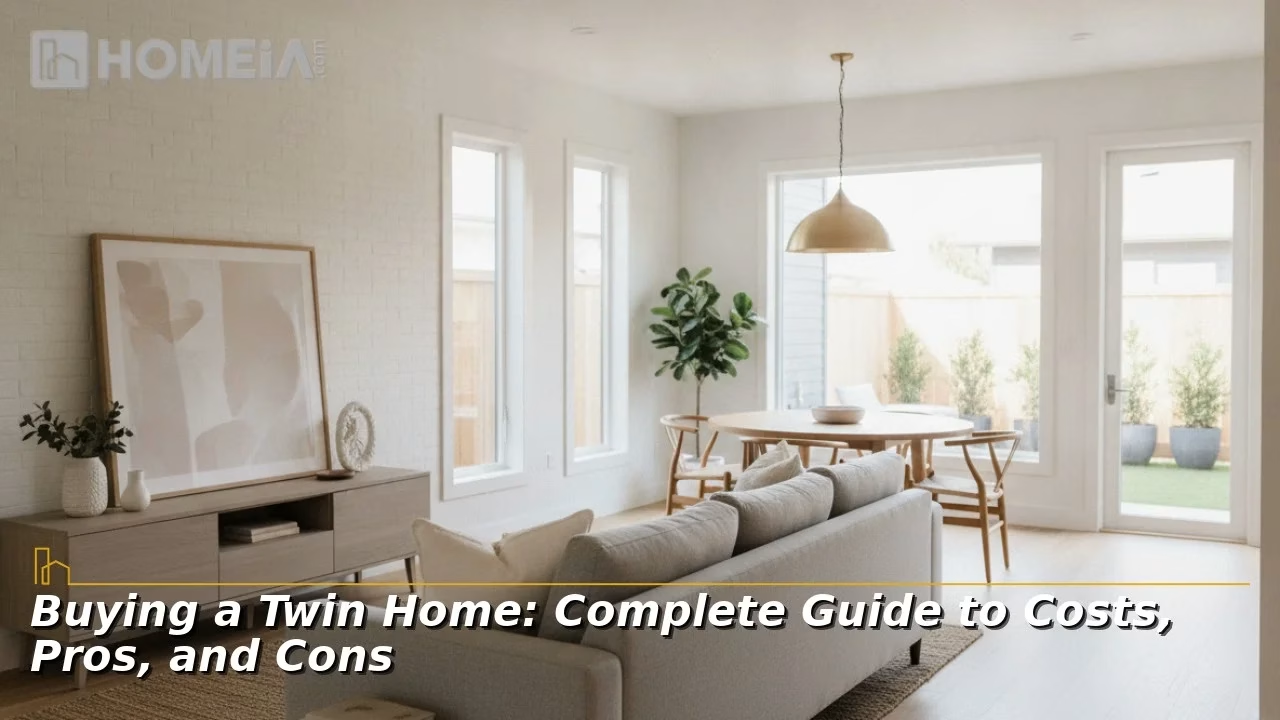
Buying a Twin Home: Explore buying a twin home with 2026 housing market data. Learn how twin homes differ from duplexes and townhomes, and review financing and repair costs.
The housing market of 2026 presents significant affordability challenges for buyers. Stubbornly elevated mortgage rates currently averaging 6.57% to 6.62% on a 30-year fixed loan combined with tight inventory have pushed the national median home sale price to approximately $395,000 to $403,000. To navigate these hurdles, buyers are turning to attached-housing alternatives that offer both financial feasibility and long-term equity.
Among these options, the twin home is a highly practical yet frequently misunderstood structure. Often confused with duplexes or townhouses, twin homes feature a distinct legal and physical framework combining the financial advantages of attached living with the autonomy of independent landownership. This guide provides a comprehensive analysis of the twin home, examining its unique physical characteristics, legal boundaries, and financial implications to help you determine if it is the right investment for your household.
Key Takeaways
- Twin homes occupy separate legal parcels with individual deeds, mortgages, and tax assessments, distinguishing them from duplexes.
- Standard single-family residential financing applies to twin homes, utilizing standard conventional, FHA, or VA mortgage guidelines.
- Valuation and underwriting are performed using the standard Uniform Residential Appraisal Report, known as Fannie Mae Form 1004.
- Ownership responsibilities and easements are governed by a legally binding, recorded Party Wall Agreement rather than an HOA.
- Physical acoustic insulation and separate utility lateral lines are critical elements requiring professional structural inspection.
- Twin homes offer greater exterior design flexibility and landownership rights than traditional, HOA-governed townhouses.

Related article
Evaluating the Impact of a Home Warranty on Home Value
A home warranty serves as a safety net, it covers the repair or replacement of many home appliances and systems that inevitably wear out over time — so you know you won’t be responsible for the full cost of replacing expensive equipment. In this article, we take a close look at home warranties – including what they are, and how exactly getting one could impact the value of your home…
1. What Is a Twin Home?
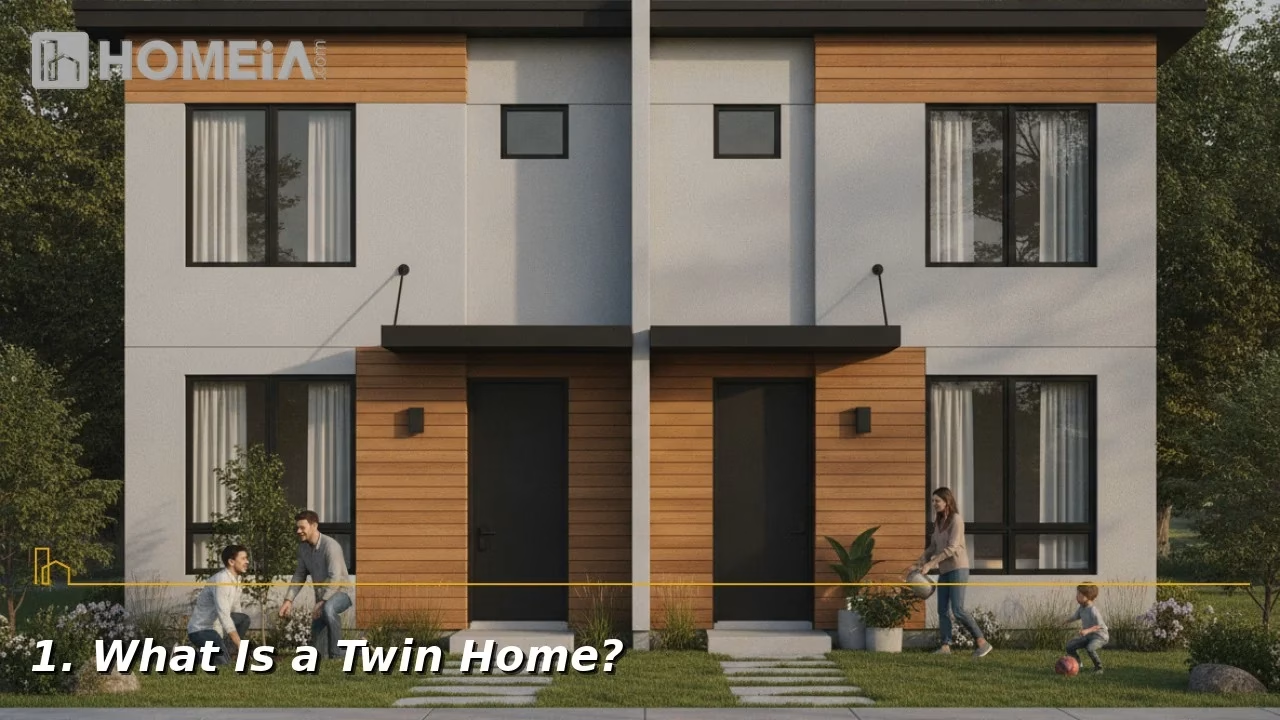
To understand the twin home, one must look beyond its physical envelope to its legal and platting architecture. Physically, a twin home is a residential structure containing two attached dwellings that share a single common vertical wall (party wall). Architecturally, the building is designed as a cohesive whole, featuring mirror-image layouts, symmetrical rooflines, and contiguous exterior siding. From the street, it may look identical to a side-by-side duplex, but legally, it’s entirely different.
The defining legal characteristic of a twin home is that the underlying property line runs vertically through the exact center of the shared wall, dividing the land into two completely separate parcels. Unlike other multi-unit structures, there is no undivided common interest in the land. When a buyer purchases a twin home, they acquire sole, fee-simple title to their specific dwelling unit and the exact plot of land directly underneath and surrounding their half of the building. This property boundary structure means each twin home side has its own unique legal property description, recorded deed, tax assessment ID, and independent mortgage.
Furthermore, twin homes are structured to operate with complete operational independence. Each half of the building is connected to independent utility service lines including separate water laterals, sewer connections, and electrical meters. Doing so prevents the co-mingling of utility expenses while ensuring that each household is billed solely for its own consumption. While they share a physical structural partition, twin homes are legally classified as separate single-family attached homes, granting owners the same fundamental landownership rights as those who own traditional detached residences.

Related article
Seller Financed Homes: Key Factors to Consider and Top Buyer Benefits
Seller financing lets sellers act as lenders, helping buyers bypass banks. It offers flexibility, faster closings, and unique benefits for both buyers and sellers alike.
2. Twin Home vs. Duplex
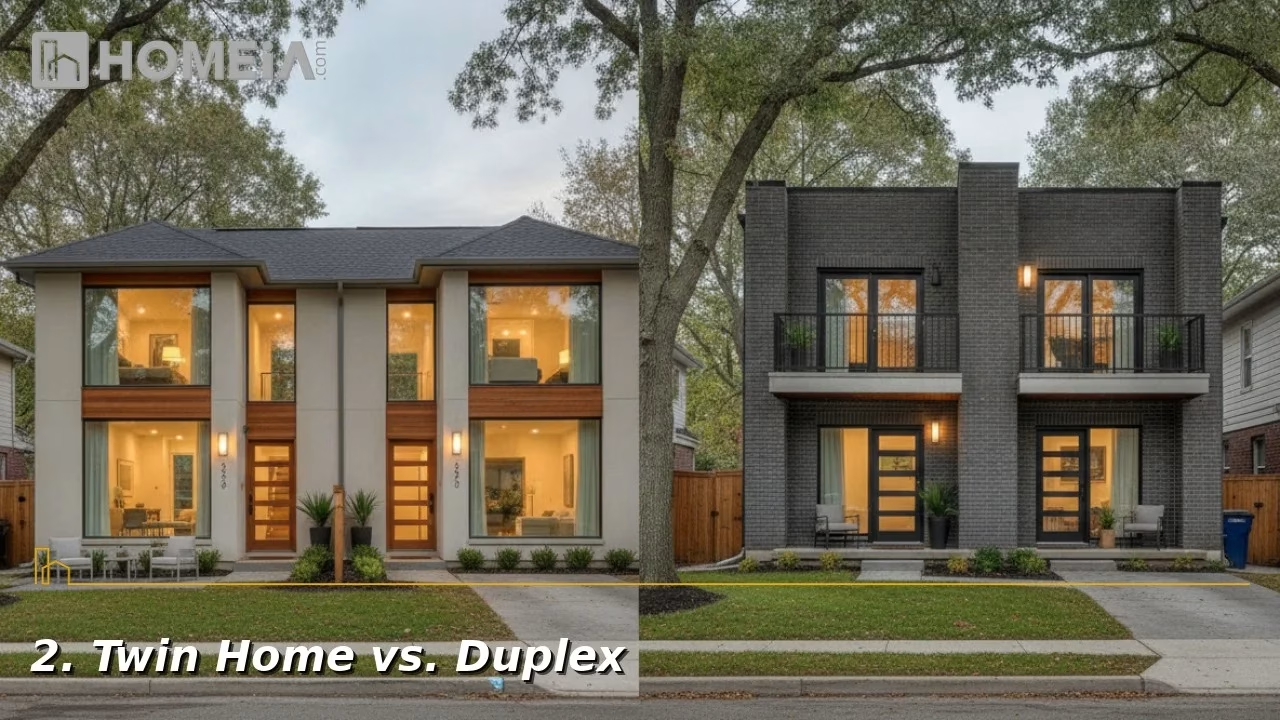
Many buyers and real estate professionals use the terms twin home and duplex interchangeably, but this is a significant legal and financial error. Physically, both housing types consist of two side-by-side living spaces within a single building structure. However, the legal classifications, financing mechanisms, and daily management of these properties are fundamentally different.
| Comparison Feature | Twin Home | Duplex |
| Legal Property Boundaries | Two distinct lots divided down the center | One single lot containing both units |
| Ownership Structure | Fee-simple ownership of half the building and lot | Single ownership of the entire property and lot |
| Mortgage Financing Options | Conforming single-family residential mortgages | Multi-unit residential financing (2 to 4 units) |
| Property Tax Assessments | Separate parcel numbers and tax bills | Single parcel number and combined tax bill |
| Utility Infrastructure | Separate lateral connections and meters | Often shared main lines and meters |
| Maintenance Autonomy | Independent responsibility for own side | Combined responsibility or landlord-managed |
| Optimal Investment Use | Owner-occupancy with high exit liquidity | House hacking or dual-unit rental portfolios |
The mortgage underwriting process highlights this divide. Because a duplex is classified as a multi-unit property, lenders apply multi-unit underwriting guidelines, often requiring down payments of 15% to 25% for conventional investment purchases and steeper cash reserves. Duplexes also require a Small Residential Income Property Appraisal Report, documented on Fannie Mae Form 1025. Twin homes, conversely, are eligible for standard single-family residential mortgages. This allows primary residence buyers to secure conforming conventional loans with down payments as low as 3% using the standard Fannie Mae Form 1004 appraisal, simplifying the transaction and lowering borrowing costs.

Related article
Best Guide to Buying Your First Home: Saving, Preparing, and Thriving
Homeownership remains the American dream. Though daunting initially, many paths lead to success. This guide provides actionable steps for prospective buyers. The housing market shifts constantly — demand, inventory, and mortgage rates create opportunities and challenges. Understanding these factors is crucial for developing strategies that impact affordability and negotiation power…
3. Twin Home vs. Townhome
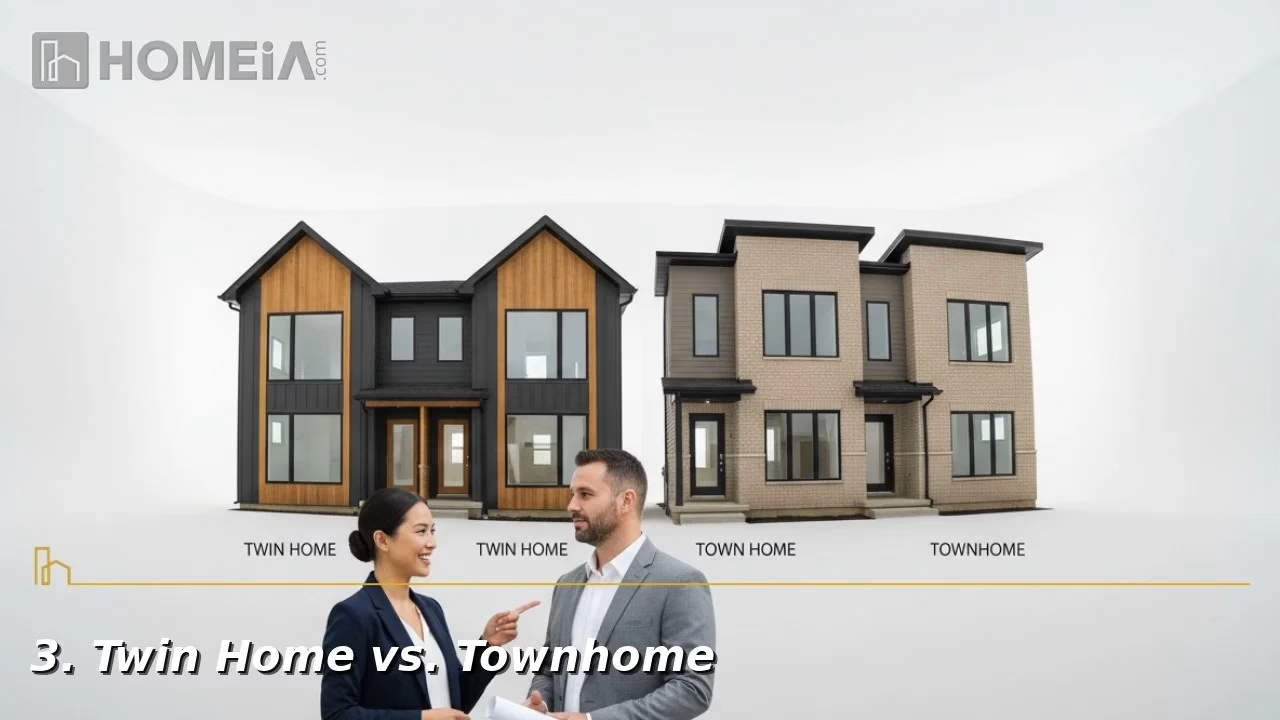
While both twin homes and townhouses are attached single-family structures where owners hold fee-simple titles to their individual units and the land directly beneath them, their operational structures and community governance are vastly different, primarily regarding scale and association oversight.
| Comparison Feature | Twin Home | Townhome |
| Development Scale | Exactly two attached units | Three or more attached units in a row |
| HOA Governance | Typically absent unless in planned developments | Mandatory Homeowners Association rules |
| Monthly Association Dues | Absent, allowing direct financial savings | Mandatory monthly HOA dues |
| Exterior Upkeep Control | Absolute owner autonomy and coordination | Controlled and executed by the HOA board |
| Physical Building Codes | Shared vertical wall with fire-separation | Double-wall structural separation; sprinklers |
| Design Flexibility | Owners choose exterior finishes and landscaping | Strict uniform aesthetic restrictions |
| Special Assessments | No risk of sudden community board levies | High exposure to major capital levies |
The lack of an HOA is the most significant differentiator for twin home ownership. Twin home owners enjoy complete land-use autonomy, avoiding monthly association fees that can erode monthly affordability. However, this freedom shifts the entire physical and financial burden of exterior maintenance onto the individual owner. If the siding rots or the roof begins to leak, the owner must source their own contractors and pay out of pocket rather than relying on an association reserve fund. An autonomic relationship allows owners to avoid the risk of unexpected, budget-straining HOA special assessments for capital improvements, but demands disciplined personal savings. Furthermore, under standard building codes, a townhouse building with three or more units is mandated to feature automatic fire sprinkler systems, whereas two-unit structures like twin homes are generally exempt.
Recommended for you
4. Twin Home vs. Single-Family Home
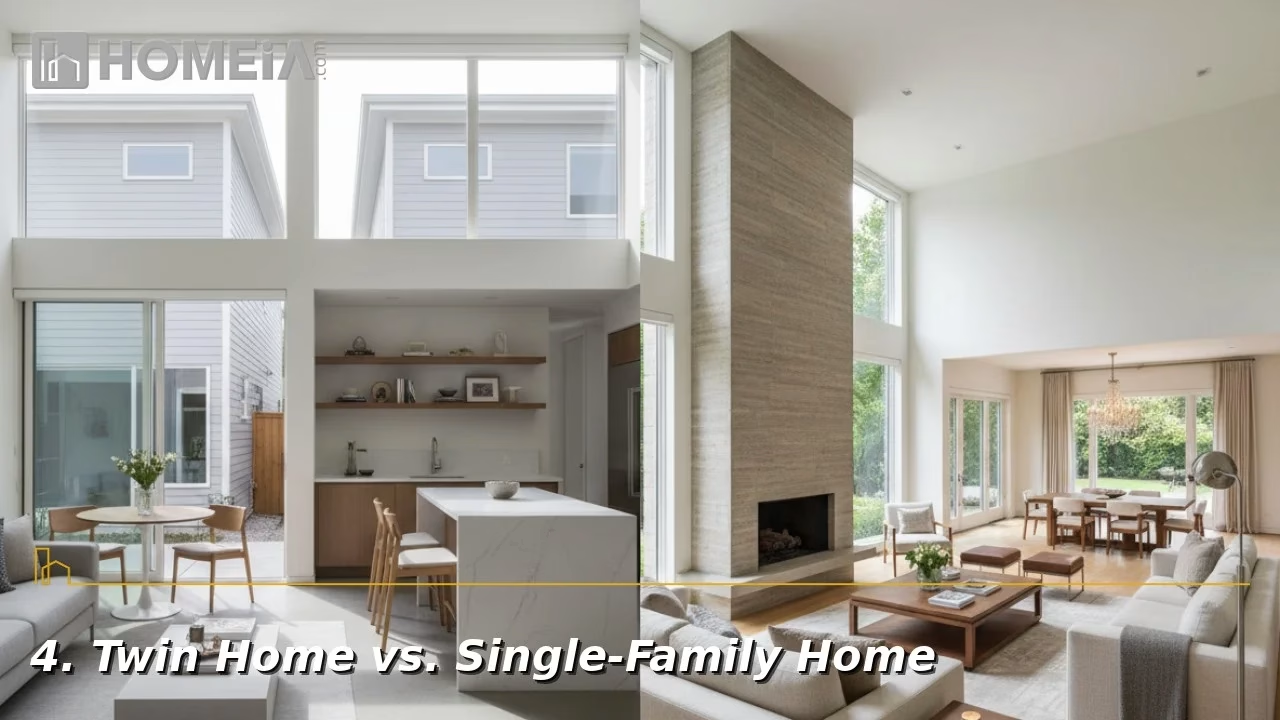
The decision to purchase a twin home rather than a traditional standalone single-family detached home represents a fundamental trade-off between purchase cost, physical privacy, and ongoing maintenance responsibilities.
| Comparison Feature | Twin Home | Single-Family Detached Home |
| Initial Purchase Cost | Lower entry price point for same location | Financial premium for standalone status |
| Acoustic and Spatial Privacy | Shares one interior vertical party wall | Fully detached with zero shared walls |
| Ongoing Maintenance Burden | Smaller yard and exterior paint footprint | Larger physical footprint and yard upkeep |
| Long-Term Appreciation | Steady, but heavily tied to neighbor condition | Consistently strong and independent |
| Private Yard Space | Moderate lot sizes; often split down center | Generous, surrounding wrap-around lot |
| Exterior Modification Rights | Independent, but bounded by structural safety | Unrestricted within municipal zoning codes |
The principal advantage of the twin home over a detached residence is financial accessibility. In a high-interest-rate environment, twin homes offer a lower purchase price, translating to a smaller mortgage, lower down payment, and reduced property taxes. Because the lot size is smaller, physical demands of groundskeeping and yard maintenance are also reduced. However, these savings require the owner to forfeit the isolation of a detached home. Sharing a central wall means that noise from the opposite unit can occasionally be heard if the wall is not properly constructed or sealed. Additionally, because the two structures are physically joined, any neglect or poor maintenance on the neighbor’s side will directly impact the curb appeal and resale value of the buyer’s home.

Related article
The Ultimate Home Buying Guide: From Dreaming to Keys
Buying a home offers lasting rewards — building credit, growing equity, and gaining stability and pride in owning your space. You may even qualify for tax benefits, depending on your situation. Success rests on three key factors: a down payment, steady income, and solid credit. Even if you fall short in one area, many programs now exist to help buyers reach their goals…
5. Advantages of Buying a Twin Home
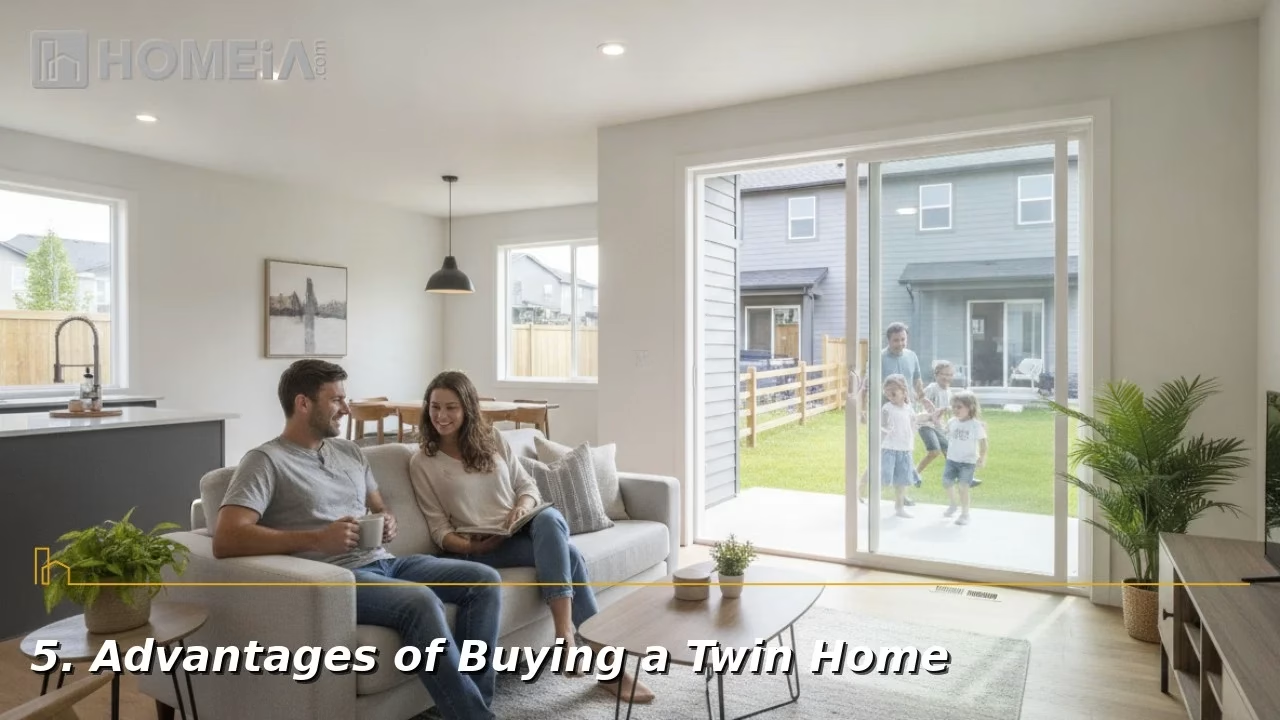
The unique configuration of a twin home delivers several compelling advantages for modern homebuyers seeking to balance affordability with ownership autonomy.
- Lower Cost of Entry: Twin homes are consistently priced below comparable detached single-family homes in the same neighborhood. Because developers can construct two homes on a land parcel that would typically accommodate only one, the savings on land and infrastructure are passed directly to the buyer. This lower purchase price results in a smaller required down payment, lower monthly payments, and reduced property taxes, enabling buyers to purchase in desirable neighborhoods that would otherwise be financially out of reach.
- No Mandatory HOA Fees: Unlike townhome or condominium buyers, who must budget hundreds of dollars each month for association dues, twin home owners retain this cash entirely. Over a ten-year ownership period, avoiding a typical $300 monthly HOA fee saves the homeowner approximately $36,000, which can instead be directed toward principal mortgage reduction or a personal maintenance fund.
- Design and Operational Independence: Twin home owners hold fee-simple deeds to their lot and structure, granting them the freedom to make independent decisions regarding their property. Within the limits of local zoning, owners can choose their own paint colors, replace siding, install a preferred roofing material, build a custom deck, and execute landscaping designs without needing permission from a restrictive association board or their adjoining neighbor.
- Utility Efficiency: The shared vertical party wall acts as a substantial thermal buffer, significantly reducing heat loss during cold winter months and minimizing heat gain during the summer. This consistently lowers monthly heating and cooling bills compared to fully detached properties.
Related article
Hidden Costs of Buying a Foreclosed Home: 17 Problems Investors Miss Until It’s Too Late
Foreclosures can look like lottery wins, offering homes priced 20–30% below market value. But discounts come with hidden risks. From title issues to major repairs, costs add up fast. This guide uncovers 17 common pitfalls behind foreclosure deals, helping buyers and investors price offers wisely and protect their capital.
6. Disadvantages of Buying a Twin Home
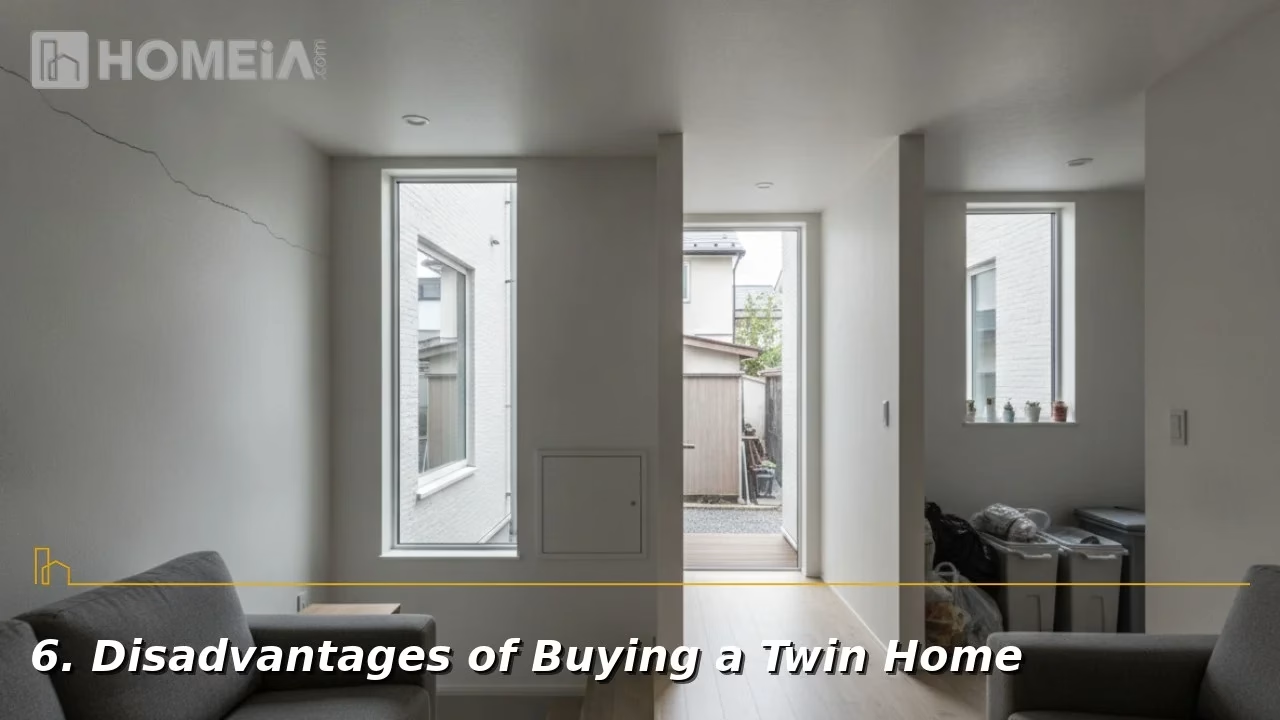
While the benefits of twin home ownership are substantial, prospective buyers must carefully weigh these advantages against several inherent structural and social disadvantages.
- Acoustic Transfer. Sharing a central vertical wall means that noise transmission is an ongoing risk. Common airborne sounds like loud conversations, television audio, or barking pets alongside impact noise like footsteps can migrate through the shared wall when lacking proper acoustic decoupling, disrupting the peace of the home and creating domestic tension.
- No Control Over Neighboring Maintenance. Because there is no HOA to enforce uniform aesthetic standards, a twin home owner is at the mercy of their neighbor’s financial stability. If the adjoining owner neglects exterior repairs, allows their siding to rot, or refuses to maintain their yard,it immediately devalues the buyer’s half of the structure.
- Shared Structural Coordination. Maintenance coordination for shared structural systems including a continuous roof, contiguous gutters, or main lateral sewer lines, are frequent sources of conflict. If the continuous roof needs replacement, both owners should ideally hire a single contractor to replace the entire surface to ensure seamless waterproofing. However, if the neighbor is financially unable or unwilling to fund their half, the buyer faces difficult choices.
- Narrower Resale Pool. Twin homes face a narrower buyer demographic at resale, as many buyers prefer completely detached homes. This can lead to slightly longer days on market in some areas.
7. Financial Considerations Before Buying

A successful twin home purchase requires a comprehensive analysis of the underwriting rules governing this property class. Since these are legally platted as single-family attached units, their financing structure differs significantly from both condos and multi-unit duplexes.
Lending and mortgage qualification for a twin home follow standard single-family guidelines. Conventional buyers typically need a minimum credit score of 620 and a debt-to-income ratio below 43% to 45%. Buyers with a 20% down payment can bypass private mortgage insurance entirely. For FHA buyers, a low 3.5% down payment is accessible with a credit score of 580 or higher. Under 2026 guidelines, the single-unit FHA loan limit floor in low-cost areas is established at $541,287, and high-cost metropolitan ceilings reach up to $1,249,125, giving buyers strong purchasing power across most U.S. markets.
Property tax structures are entirely independent. Each owner receives an individual tax bill based on the assessed value of their specific structure and lot, with zero shared tax liability between neighbors. Insurance requires careful budgeting as well. Twin home buyers must secure a standard HO-3 Special Form policy, covering the entire structure on their side of the property line, rather than a cheaper HO-6 condo policy. Finally, buyers must establish a dedicated, independent maintenance reserve. In the absence of an HOA reserve fund, planners recommend setting aside 1% to 2% of the home’s purchase price annually in a liquid savings account to cover big-ticket maintenance items like roofing and siding.

Related article
8 Key Steps to Buy a Manufactured Home
As traditional home prices soar, manufactured housing has emerged as a smart, modern alternative; not a last resort. Today’s manufactured homes are precision-engineered, built to strict federal standards, and often exceed local codes. Combining affordability, sustainability, and contemporary design, they’re reshaping how Americans…
8. What to Inspect Before Buying a Twin Home
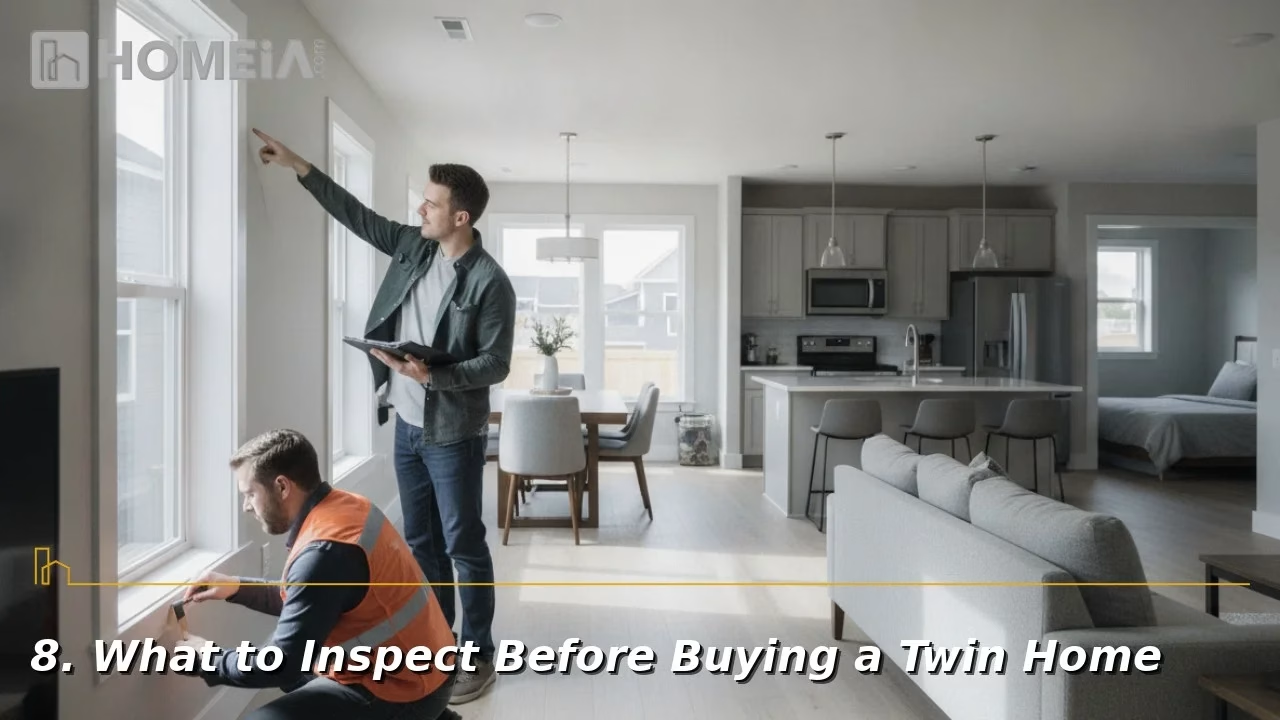
Since twin homes share critical structural elements with an adjacent property, standard home inspections are insufficient. Prospective buyers must engage a licensed inspector who is highly experienced in evaluating attached dwellings and shared-wall vulnerabilities.
| Inspection Category | Critical Assessment Points | Warning Signs and Red Flags |
| The Party Wall | Verify continuous fire-barrier and acoustic decoupling | Missing gypsum in attic; back-to-back electrical boxes |
| Roof and Flashing | Inspect the property line seam and ventilation | Worn flashing; sagging rafters; condensation |
| Site Drainage | Assess land slope away from shared foundation | Standing water near the center line; pooling |
| Utility Laterals | Confirm separate sewer laterals and water lines | Shared main shut-off; joined clean-outs |
| Party Wall Agreement | Review recorded covenants and easements | Missing agreement; no arbitration clauses |
| Neighboring Side | Observe neighbor’s siding, roof, and trim condition | Dry rot; gutter decay; active pest damage |
Soundproofing is a major factor in any evaluation. The inspector should check the wall’s Sound Transmission Class rating, aiming for an STC of 50 or higher. This is achieved through construction assemblies like two layers of 5/8-inch Type X gypsum board installed with a damping compound on a decoupled double-wood-stud frame. The inspector must also climb into the attic space to confirm that the fire-rated drywall partition extends completely to the underside of the roof deck, leaving no open air gaps.
The buyer’s legal counsel must review the recorded Party Wall Agreement. This binding covenant runs with the land, granting mutual easements for maintenance and allowing contractors to access the neighbor’s lot without committing trespass. It should also outline clear arbitration processes to handle deadlocks if there are disagreements regarding repair timing or cost sharing.
9. Are Twin Homes a Good Investment?
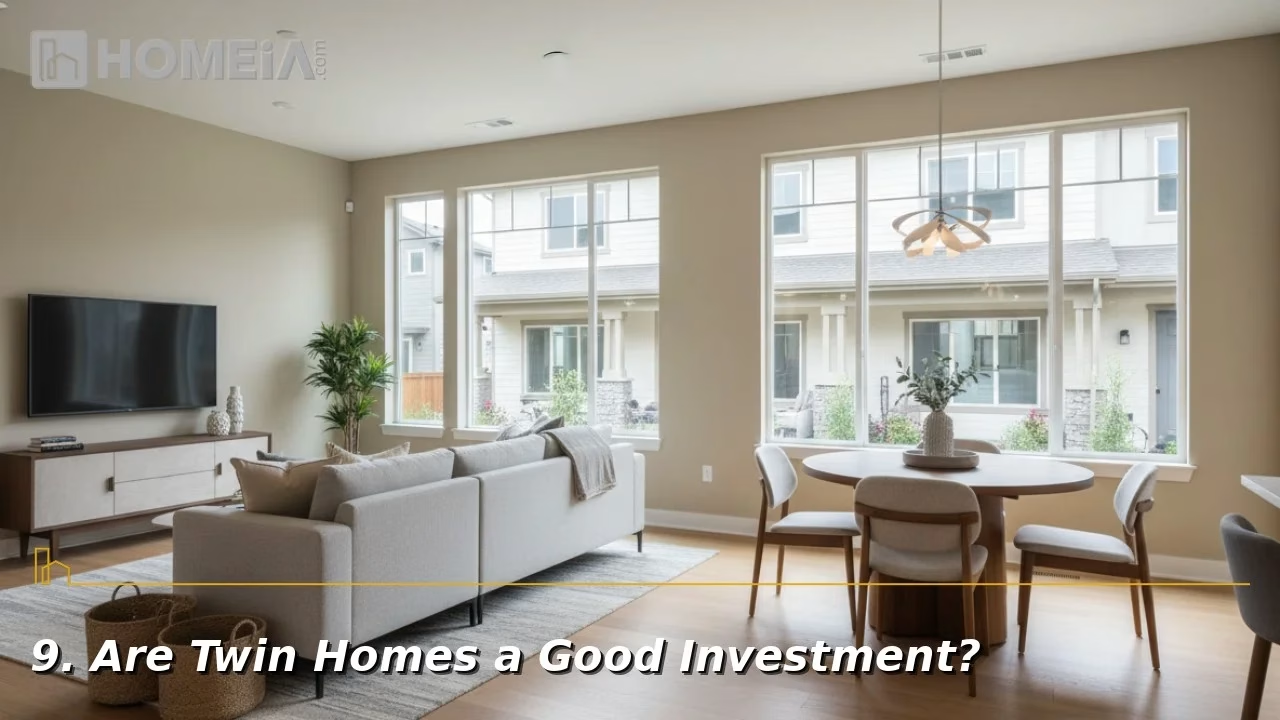
Determining whether a twin home represents a sound real estate investment requires analyzing current market trends and exit flexibility. With national housing inventory approximately 17% below pre-pandemic norms as of early 2026, and economists projecting national home prices will rise by 2% to 3% through the year, the lower entry cost of twin homes has continued to drive an influx of buyers seeking affordable, low-maintenance options, supporting appreciation in the attached segment.
For investors, twin homes offer a highly flexible exit strategy compared to duplexes. Duplex owners must sell the entire multi-unit building, which appeals almost exclusively to other investors. Twin home owners can sell their individual unit to a standard owner-occupant at any time, opening the asset to a larger retail buyer pool and enhancing liquidity. While a twin home may not match the rapid appreciation of a detached home in a luxury market, it serves as a resilient, cash-flow-friendly, and lower-risk asset that builds reliable equity.
Related article
10. Who Should Buy a Twin Home?
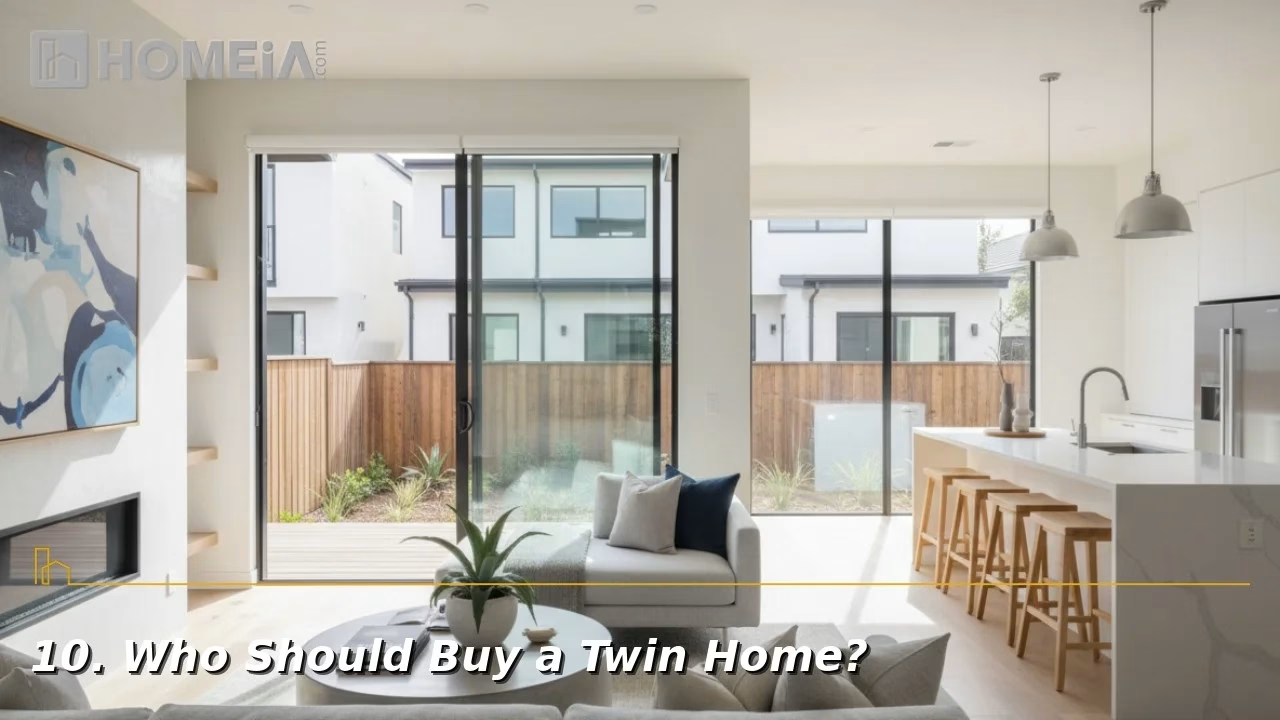
The twin home is an ideal residential match for several key homebuyer demographics.
- First-time homebuyers are among the prime beneficiaries. Facing high listing prices and elevated mortgage rates above 6.5%, many find themselves priced out of detached homes. Twin homes offer an accessible entry point, enabling buyers to transition from renting to wealth-building homeownership with a lower purchase price and a smaller down payment, averaging 10%, or as low as 3.5% through FHA programs.
- Budget-conscious young families, single-income households, and childless couples also find twin homes highly practical, prioritizing interior space over yard maintenance. The absence of HOA fees provides a meaningful monthly budget advantage.
- Retirees and empty-nesters looking to downsize are exceptional candidates, seeking to escape the exhaustive upkeep and high utility costs of a large detached home while retaining street-level access and private yards.
11. Who Should Avoid Buying a Twin Home?
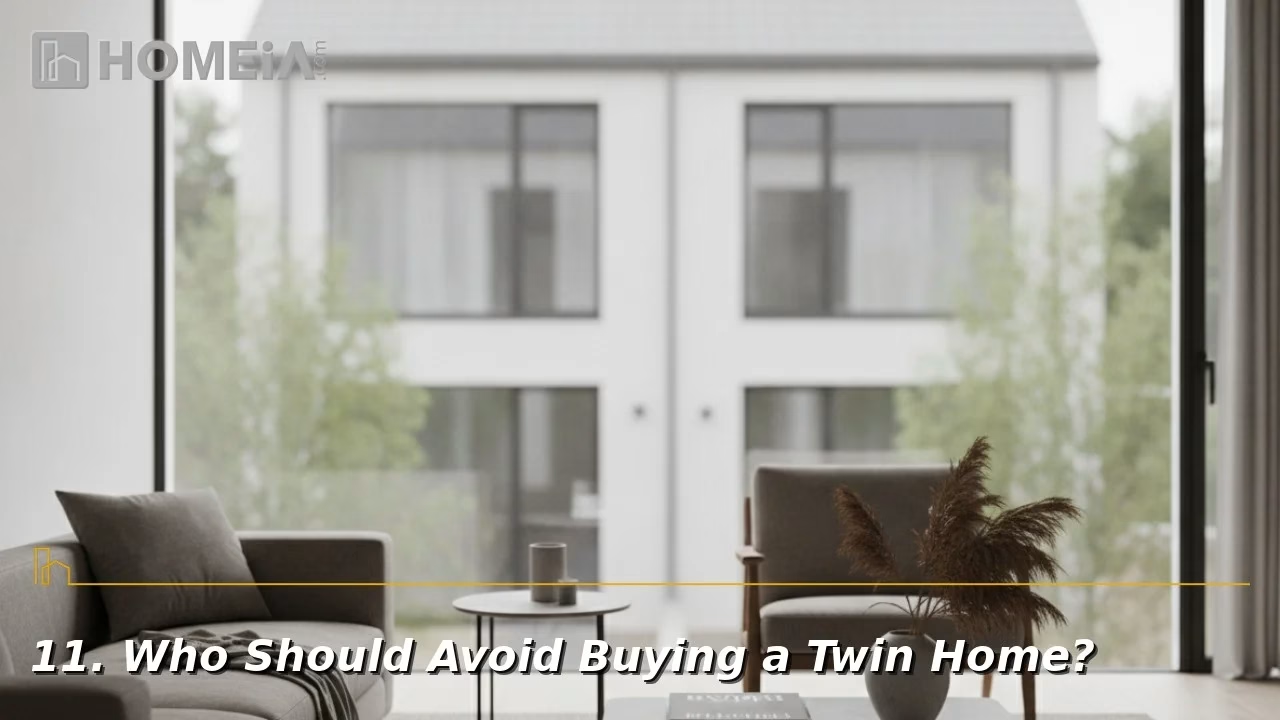
Certain individuals should actively consider alternatives to a twin home.
- Buyers who prioritize absolute physical privacy and are sensitive to sound may find the structural reality of a shared vertical wall difficult to accept. Despite advanced insulation, noise from an adjacent neighbor can occasionally penetrate the living space.
- Passionate renovators and buyers who want complete exterior control should weigh their options carefully. Making significant structural modifications can damage the shared party wall, violate municipal codes, or create an unsightly visual mismatch with the connected unit.
- Real estate investors seeking to maximize economies of scale and maintain complete operational control over a multi-unit property are better served by purchasing traditional duplexes, where they own the entire building and both revenue streams.
Conclusion
Purchasing a twin home is a highly strategic compromise in today’s demanding real estate landscape. It offers a practical middle ground between the autonomy of a detached single-family home and the density constraints of a townhouse, allowing buyers to navigate affordability challenges without sacrificing landownership. Key benefits include lower purchase prices, standard single-family financing options, and the total absence of mandatory monthly HOA fees. However, these financial advantages come with shared physical and legal responsibilities. Buyers must accept the close proximity of a shared wall, which demands neighbor cooperation for structural maintenance. A professional inspection of shared structures and a thorough legal review of the Party Wall Agreement are essential. When these are in place, a twin home provides a highly cost-effective and resilient path to homeownership.
Recommended for you




FAQs About Buying a Twin Home
1. Can a homeowner build a structural addition to a twin home?
Building a structural addition is legally and physically complex. Because the building shares a central vertical party wall and a continuous roofline, any expansion altering the structural load, changes the roof elevation, or connects to the shared wall requires the explicit written consent of the adjoining neighbor. The constructing owner is strictly liable for any structural settling, water intrusion, or damage caused to the adjacent unit. Homeowners must also secure municipal building permits and confirm compliance with local zoning ordinances and setback requirements.
2. Do twin homes qualify for standard FHA and VA financing?
Yes, twin homes qualify for standard FHA and VA financing. Because each twin home sits on an individually platted lot with its own legal description and parcel number, lenders classify these units as single-family attached residences rather than multi-unit properties. Under 2026 guidelines, FHA buyers can utilize a low 3.5% down payment with a credit score of 580 or higher. Appraisals are completed using the standard Uniform Residential Appraisal Report (Fannie Mae Form 1004), creating a straightforward and cost-effective underwriting process.
3. How does homeowners insurance work for a twin home structure?
Twin homes do not utilize a shared master insurance policy. Each owner must secure an independent HO-3 Special Form homeowners insurance policy, which provides comprehensive, open-peril dwelling coverage for their specific physical half of the structure, including their side of the roof, framing, exterior siding, and foundation, along with their personal belongings and liability. The recorded Party Wall Agreement typically mandates that both adjacent owners maintain active HO-3 coverage to ensure that a major loss on one side does not cause uncompensated damage to the connected home.
When shared structural components require repair or replacement, the process is legally governed by the recorded Party Wall Agreement. This binding covenant mandates a 50/50 division of expenses for normal wear and tear and grants necessary maintenance easements allowing contractors to access both properties. If one owner refuses to fund their share of a necessary repair, the agreement’s mandatory mediation or arbitration clauses are triggered, and the performing owner can place a property lien to recover the costs.
5. Can an owner rent out their twin home to tenants without restrictions?
Twin home owners possess high leasing flexibility because most twin homes are not governed by a Homeowners Association. Unlike townhomes and condominiums, which impose strict rental caps or outright leasing bans, twin home owners are free to establish standard residential leases and manage their half of the building independently. Landlords remain legally responsible for ensuring that tenants adhere to local noise ordinances, property maintenance codes, and the structural terms outlined in the recorded Party Wall Agreement.
Share