






7 Cheapest Places to Live in South Carolina
- Local Editor:Local Editor: Casey McKenna-Monroe
- Category: USA , South Carolina


Cheapest Places to Live in South Carolina: A quality lifestyle requires more beautiful landscapes and an interesting culture. When purchasing gas and groceries and paying for housing busts a budget, it leaves little room to enjoy eating out or visiting a museum. South Carolina’s exceptionally affordable cost of living makes it possible to maintain a balanced checking account and enjoy its perks.
From a big-picture perspective, the Palmetto State’s low property taxes and a statewide cost-of-living index approximately 6% below the national average make a compelling case for families, remote workers, and retirees seeking a life rich in Southern charm, not expense.
However, affordability varies widely across South Carolina. Buying a home in Sullivan Island, SC, comes with a median price tag of $4 million. Balancing your budget with your lifestyle lies in finding the right community.
This guide moves beyond the travel brochures to provide a detailed, data-driven analysis of the most inexpensive areas to call home in the Palmetto State for 2026. We’ve crunched the numbers on housing, utilities, transportation, and local economies to bring you seven cities and towns where you can achieve financial stability without sacrificing a high quality of life.
Takeaways
- Widespread Affordability: South Carolina’s inland and Piedmont markets offer housing expenses up to 27% below the national average, providing significant relief for relocators.
- Variety of Options: Affordable living in the state ranges from historical college towns to bustling military hubs and industrial centers.
- Trade-Offs Exist: Several of the most budget-friendly municipalities feature elevated property crime rates or heavy blue-collar concentrations in their local economies.
- Beyond the Purchase Price: True affordability must factor in South Carolina’s unique property tax classes, localized sales taxes, and summer cooling utility costs.
- Essential to Research: Neighborhood safety ratings and public amenities vary considerably within each city. Neighborhood-level research is highly critical.
I. Methodology: How We Chose the Most Affordable Places
Our selection of these seven locations is based on a weighted set of criteria that prioritize the metrics relevant to residents seeking value. Our goal is to identify places with the best balance of affordability, access to essentials, and community, not just the lowest price tag.
A. Housing & Affordability (30%): The primary driver for relocation. We’ve examined median listing prices, typical home values, average monthly rents, and key ratios, including home price-to-income, to gauge true accessibility.
B. Cost of Living (25%): Beyond housing, this metric evaluates day-to-day expenses, including the cost of groceries, utilities, transportation, and healthcare relative to other parts of the state.
C. Access & Infrastructure (20%): This criterion assesses distance to major metropolitan employment centers, highway connectivity like Interstate 85 and Interstate 95, and regional healthcare networks.
D. Community & Safety (15%): A fundamental need. This assesses crime rates and considers the strength of community engagement, social offerings, and amenities that contribute to a high quality of life.
E. Economic Resilience & Opportunity (10%): For long-term viability, we evaluate economic diversity, primary industries, and employment trends to ensure a community is built for a stable and prosperous future.
Data for this article is compiled from verified 2026 sources, including Zillow, the U.S. Census Bureau, the Bureau of Labor Statistics, FBI crime data, and local market reports.

Related article
Our Methodologies to create HOMEiA Score Ratings for Each Group of Content
HOMEiA uses a consistent, data-driven methodology to evaluate U.S. states for livability, affordability, and long-term value. Our analysis centers on key factors such as Housing and Affordability, Cost of Daily Living, Access and Infrastructure, Community Strength, Safety and Quality of Life, Economic Resilience and Job Market…
7 South Carolina Communities, One State: A Comparison Table
| City | HOMEiA Score | Cost of Living | Avg. Rent (2-Bed) | Home Price to Income Ratio | Income to Rent Ratio | Safety Rating |
| Orangeburg | 77/100 | -19% | $1,103 | 5.2:1 | 35.0x | 42/100 |
| Union | 78/100 | -29% | $900 | 3.8:1 | 64.8x | 45/100 |
| Gaffney | 79/100 | -8% | $1,018 | 5.7:1 | 40.4x | 65/100 |
| Laurens | 80/100 | -12% | $1,141 | 4.2:1 | 47.3x | 60/100 |
| Newberry | 81/100 | -15% | $1,200 | 3.4:1 | 42.7x | 74/100 |
| Sumter | 83/100 | -10% | $1,431 | 3.9:1 | 38.8x | 58/100 |
| Greenwood | 85/100 | -10% | $1,199 | 5.5:1 | 37.1x | 62/100 |
II. Detailed Affordable Community Analysis
1. Orangeburg: The Garden City Hub
HOMEiA Score: 77/100
- Cost of Living: 17% below U.S. average
- Monthly Rent: $1,050
- Home price to income ratio: 5.2:1
- Income to rent ratio: 35.0x
- Safety rating: 42/100
A. Cost of Living & Housing: Orangeburg, nicknamed the “Garden City,” is a primary agricultural and industrial center in the Midlands. Real estate is very affordable, presenting a median home listing price of $163,602 and an average rent of $985. The cost of living is 17% below the national average, which by some measures makes it among the most budget-friendly places to live in South Carolina. Housing costs are a primary reason for this. Home values fell at 62% under the national average.
B. Economy & Job Market: Orangeburg County is one of the hubs of South Carolina’s Global Logistics Triangle. It’s a Midlands region formed by I-95, I-26, and U.S. 301. As a result, the city features a highly developed industrial and logistics job market.
Top employers include Husqvarna with 2,000 workers, MUSC Health Orangeburg with 1,400 employees, Zeus Industrial Products, Allied Air Enterprise, and a massive Food Lion Distribution Center.
Outside manufacturing, the retail trades and healthcare each account for 16% of the total available jobs in the county. Education also accounts of one-fifth of the jobs available inside the City of Orangeburg, mostly through the public school system, but also with South Carolina State University.
C. Access & Infrastructure: The city is situated 37 miles southeast of Columbia on the north fork of the Edisto River. It is a short drive from multiple interstate shipping lanes., railroad lines, and about an hour’s drive from the Port of Charleston.
Being directly off Interstate 26 and about 25 miles from its Interstate 95 junction allows Orangeburg residents to connect to major cities across South Carolina and the southeastern seaboard.
D. Quality of Life & Culture: Home to Claflin University and South Carolina State University, the town’s collegiate culture gives it an exciting optimism and energy. The nickname “Garden City” comes from its landmarks Edisto Memorial Gardens, listed as one of South Carolina’s top attractions. The annual Festival of Roses is one of the city’s hallmark events. But Orangeburg has more charms beyond the gardens. Founded in 1703, this city has elegantly restored homes, a Civil Rights museum, arts centers, and community theaters.
Crime rates in Orangeburg are high. Property crime offenses report figures above the national median. People relocating to Orangeburg should focus their home search on established residential suburbs and invest in home security. Areas on the outskirts, such as around Moss Hills and Greenbriar, tend to report lower crime rates.

Related article
3 Most Affordable and Safe Neighborhoods to Live in Columbia, South Carolina
Columbia, SC offers neighborhoods like Forest Acres, Rosewood, and Shandon that combine affordability, safety, and unique character. With strong community pride, accessible urban amenities, and reasonable housing costs, these areas appeal to families, professionals, and retirees alike, making Columbia a welcoming and practical choice for residents at every stage of life…
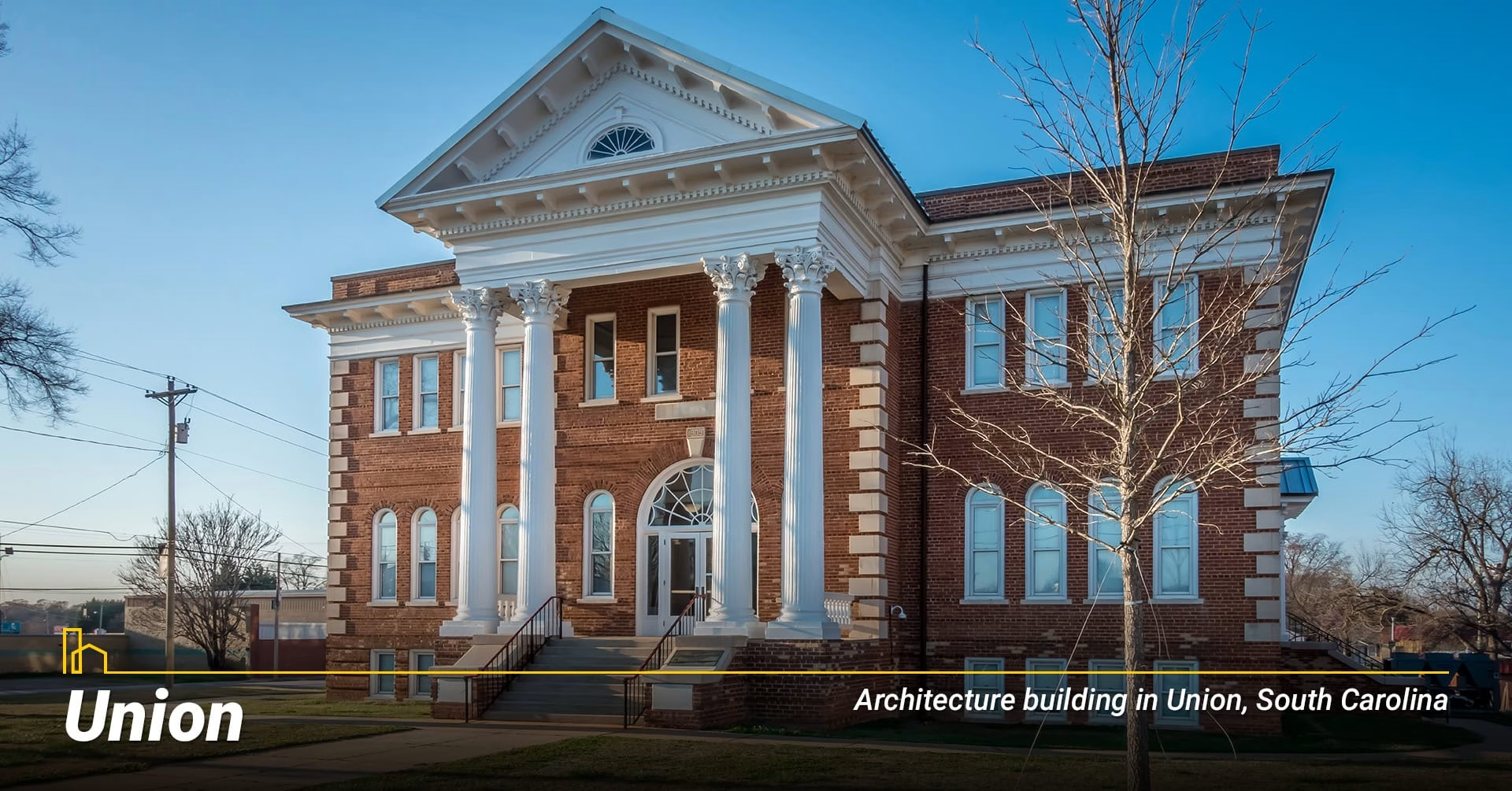
2. Union: The Upstate Industrial Value
HOMEiA Score: 78/100
- Cost of Living: 29% below U.S. average
- Monthly Rent: $900
- Home price to income ratio: 3.8:1
- Income to rent ratio: 64.8x
- Safety rating: 45/100
A. Cost of Living & Housing: Union sits comfortably in the Piedmont region, one of the most budget-friendly residential markets in Upstate South Carolina. The current median home listing price is approximately $139,224, with typical purchase ranges between $150,000 and $280,000. Average monthly rent is exceptionally low at $845. Living in Union can maximize monthly cash flow by spending less on housing.
Since this is a more rural community, there are fewer available listings at any given time. In April 2026, it had 58. However, if you’re interested in owning land or homesteading, Union is an excellent place to buy land in South Carolina.
B. Economy & Job Market: The local economy employs approximately 10,800 people countywide with about 54% in non-governmental related work. Industrial manufacturing is the leading source of local jobs, followed by logistics and material moving. Major employers in the county include Dollar General (distribution center), Belk E-Commerce, and Timken USA. The highest-paying local sectors are utilities and agriculture-related sectors, though manufacturing provides the largest overall job volume.
C. Access & Infrastructure: Union is the county seat for Union County, a large, rural area that includes portions of Francis Marion & Sumter National Forests. It’s positioned near the Interstate 85 and Interstate 26 corridor. Those transit routes link to Spartanburg, South Carolina, and Charlotte, North Carolina. Local healthcare services are stable, and the municipal core features such as grocery stores, banks, and libraries are present.
D. Quality of Life & Culture: Life in Union revolves around its agricultural roots. Its historic downtown dates to the 1800s with an old jailhouse and an award-winning local museum. Municipal parks include the Timken Sports Complex and Rose Hill Plantation State Historic Site. It throws classic small-town events like Christmas parades and Independence Day celebrations. The annual Union County Agricultural Fair is a highlight of the social calendar.
Crime rates in the city are historically elevated with a high per-person ratio. Do keep in mind that Union County overall of around 8,000 people. Figures can be different in its unincorporated areas or smaller towns like Carlisle and Jonesville.
Related article
The 9 Best Places to Live in South Carolina for Families
South Carolina offers far more than the coastal appeal of Charleston and Myrtle Beach. Across the Midlands and Upstate, families find affordable living, strong job markets, outdoor recreation, and welcoming communities. This guide explores the best places to live based on schools, lifestyle, opportunity, and overall quality of life…
3. Gaffney: The Peach Capital Commuter
HOMEiA Score: 79/100
- Cost of Living: 8% below U.S. average
- Monthly Rent: $950
- Home price to income ratio: 5.7:1
- Income to rent ratio: 40.4x
- Safety rating: 65/100
A. Cost of Living & Housing: Gaffney is an affordable residential option on the Interstate 85 corridor in the Upstate. , April 2026 home listing prices fell to $180,514, according to Zillow. and average monthly rents of $950. The local cost of living is 8% below the national average. Highly competitive housing costs are a large reason why, but so is the more affordable rates on child care, dining out, and clothes shopping.
B. Economy & Job Market: Top industries in Cherokee County include advanced manufacturing, transport, and utilities. Manufacturing alone accounts for 30% of the local job market. Major local employers are Freightliner Custom Chassis Corporation, Hamrick Mills, Nestle, and Milliken and Company. These are part of a corridor of industry that runs along Interstate 85 between the Spartanburg Metro and Charlotte, NC.
C. Access & Infrastructure: Gaffney is a convenient, strategic hub for commuters driving into Spartanburg, South Carolina, or Charlotte, North Carolina. Interstate 85 passes directly through Gaffney. Regional medical clinics and extensive commercial retail options add to the infrastructure advantages.
D. Quality of Life & Culture: The town is famous for the Peachoid water tower, part of its identity as the “Peach Capital of South Carolina.” Its classic Upstate lifestyle is apparent in a stroll through its historic districts, of which the small town has three. The city has eight parks, a 150-acre lake, and a nearby national battlefield from the American Revolution. People travel to Gaffney for its outlet stores and historic boutique shops like Hartzog’s, in business since 1946.
Gaffney ranks 30th in South Carolina for crime counts. It is a stable, growth-oriented environment oriented toward blue-collar families.
Recommended for you




4. Laurens: The Piedmont Foothills Haven

HOMEiA Score: 80/100
- Cost of Living: 12% below U.S. average
- Monthly Rent: $1,141
- Home price to income ratio: 4.2:1
- Income to rent ratio: 47.3x
- Safety rating: 60/100
A. Cost of Living & Housing: Laurens falls into the at the edge of the Piedmont and Upstate, a region prized for its cooler temperatures and outdoor recreation. An overall cost of living that is 12 percent lower than the national average helps Lauren rank among the more affordable places to live in South Carolina. Typical home values are $180,131, with average rents ranging from $1,085 to $1,141. Since it lies outside the Greenville-Spartanburg metro, essential expenses tend to be lower.
B. Economy & Job Market: Like much of the Upstate, the job market relies heavily on health services and logistics. Leading employers in the county include Prisma Health Upstate, ZF Transmissions Greenville, Walmart Associates, Sterilite Corporation, and Yanfeng Automotive Interior Systems. Multiple companies service the automotive industry by building the parts needed by nearby BMW and Hyundai plants.
C. Access & Infrastructure: Laurens is highly commuter-friendly. Straightforward highway links to the Greenville-Spartanburg metro area include Interstate 385 and Highway 14. As the seat of county government, the area has solid local infrastructure. Residents gain reliable utilities and regional healthcare facilities.
D. Quality of Life & Culture: Life in Laurens centers around its quiet county lifestyle and its closeness to the Blue Ridge Mountains. Around 9,000 people call the City of Laurens home. Its historic Courthouse is an architectural landmark and frames the town square. Street murals new and old add to the charm of the boutique shops and restaurants that add to its ambiance.
While the city’s per capita crime rate is elevated in Laurens, selecting properties in suburban developments helps families maintain safety and security.
Related article
The Pros and Cons of Living in South Carolina
South Carolina offers more than coastal charm and Lowcountry scenery. From Charleston to Summerville and Hilton Head Island, the state combines economic growth, favorable taxes, and warm weather. This guide explores the real advantages and trade-offs of living in the Palmetto State.
5. Newberry: The College Town Charm

HOMEiA Score: 81/100
- Cost of Living: 14% below U.S. average
- Monthly Rent: $1,000
- Home price to income ratio: 3.4:1
- Income to rent ratio: 42.7x
- Safety rating: 74/100
A. Cost of Living & Housing: Newberry offers a compelling mix of collegiate activity and historic home values. Properties in the city proper feature a median home value of approximately $167,124 as of April 2026, with average monthly rent hovering around $1,000. The local cost of living is 14% lower than the U.S. national average. Retirees and young professionals realize greater cost savings in spending less on housing.
B. Economy & Job Market: Newberry’s economy grew about of agricultural roots but has pivoted to become a business hub for South Carolina’s Midlands region. Education services and public administration help create a highly stable market, further supported by the county’s agricultural businesses.
The presence of Newberry College, a private liberal arts college, acts as a consistent economic driver. An increasing number of manufacturing brands are taking advantage of its lower expenses and marketing positioning, leading to brands like Renfro, Komatsu, Georgia Pacific to set up in while Newberry County. The mix helps the job market maintains a healthy, low unemployment rate of 4.1 percent.
C. Access & Infrastructure: Located in the heart of South Carolina’s Midlands, Newberry has direct access to Interstate 26 and to Columbia and the Greenville metropolitan area via highways. Local households benefit from excellent digital infrastructure, with broadband subscription rates sitting at a respectable 87.1 percent.
D. Quality of Life & Culture: Residents enjoy rich local arts at the Newberry Opera House and a beautifully preserved historic downtown district. The historic building frames a classic Town Square, which has helped it earn a spot on the Travel Channel as one of the nation’s most charming small towns. Along these brick-paved pedestrian pathways are restaurants serving Southern fried chicken and catfish, antique shops, and a local museum. Discover a Japanese garden, a winery, and beautifully renovated bed-and-breakfasts.
In terms of safety, Newberry ranks among the most secure small towns in the region. It ranks 46th in South Carolina for crime counts.
Related article
Moving to South Carolina in 2026: Why It’s America’s #1 Relocation Destination
South Carolina continues leading the nation in inbound migration, attracting nearly two new residents for every one who leaves. Strong economic growth, tax reforms, affordability, and lifestyle appeal—from historic Charleston to vibrant Greenville—have made the Palmetto State one of America’s most desirable relocation destinations…
6. Sumter: The Military Oasis

HOMEiA Score: 83/100
- Cost of Living: 10% below U.S. average
- Monthly Rent: $1,100
- Home price to income ratio: 3.9:1
- Income to rent ratio: 38.8x
- Safety rating: 58/100
A. Cost of Living & Housing: Sumter lies to the east of Columbia, near the state’s geographical center. Its robust housing market is influenced heavily by regional military bases. The typical Zillow home value in Sumter is $214,600, with rent averaging $1,100. Compared to some other towns on this list, it has a more active housing market due to both the county’s larger population and the transient influx of military personnel.
Outlying sectors around Sumter offer highly affordable options for families with a monthly payment ceiling.
B. Economy & Job Market: The Department of Defense at Shaw Air Force Base anchors the Sumter County economy. Between military-related work, government positions, and healthcare, it lends the job market stability. Around 7,000 active military personnel work at the base, and those are aided by civilian workers for a $2.1 billion annual economic impact.
In the private sector, manufacturing produces over 6,000 jobs. These major local employers include Continental Tire North America, Becton Dickinson and Company, and Prisma Health Midlands.
C. Access & Infrastructure: Sumter falls inside the Midlands region, so it benefits from a central location in South Carolina. Highway 378 connects locals to state capital Columbia and east to Interstate 95. North on Highway 15 connects to Interstate-20, a vital east-west transportation artery.
The county acts as a regional shopping and healthcare corridor for the eastern Midlands. Residents have access to extensive public administration facilities and the Central Carolina Technical College.
D. Quality of Life & Culture: The region thrives on building a close-knit culture with downtown Friday night street festivals and annual events like the Iris Festival. Swan Lake Iris Gardens blooms with thousands of flowers in the spring and delights visitors with all its elegant swans. Sumter also has Palmetto Tennis Complex, South Carolina’s largest public complex with 24 courts and on-site tennis pros.
Property crime occurs in some commercial zones, but the suburban outskirts of Sumter have quiet, safe streets. Lakewood and Cane Savannah, as an example, report lower crime.

Related article
7 Most Affordable and Safe Places for Young Professionals to Live in North Carolina
In all the cities included in this list, there is a wide range of safe, affordable, and conveniently located housing options, whether the young professional prefers city life or the suburbs. These North Carolina communities are not only inexpensive, but they also offer appealing amenities and access to the mountains and the seashore…
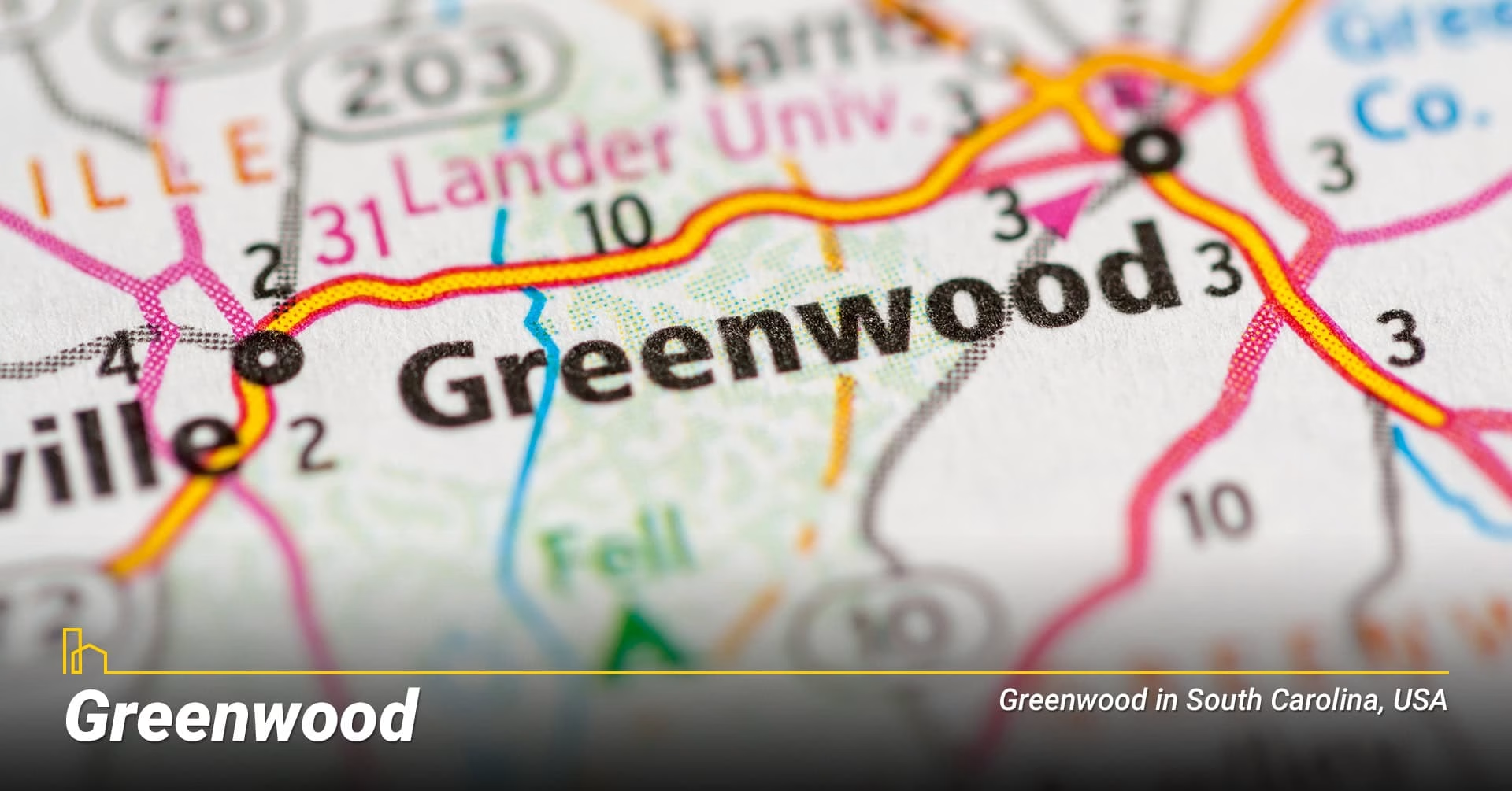
7. Greenwood: The Lakelands Manufacturing Center
HOMEiA Score: 85/100
- Cost of Living: 10% below U.S. average
- Monthly Rent: $1,199
- Home price to income ratio: 5.5:1
- Income to rent ratio: 37.1x
- Safety rating: 62/100
A. Cost of Living & Housing: Greenwood is the primary hub of South Carolina’s Lakelands, a Piedmont subregion renowned for its many lakes and manmade reservoirs. offering typical home values of $188,180 and average monthly rents of $1,150. Rental costs in Greenwood are 42.5 percent lower than the U.S. average, giving local renters outstanding budget flexibility. It’s also attractive pricing if you consider the nearby lakefront properties available on Lake Greenwood.
B. Economy & Job Market: Greenwood County’s job market is highly resilient. Healthcare and manufacturing and the top two sectors powering the economy. Top private and public employers in the area include Self Regional Healthcare (employing over 2,500 people), Eaton Corporation, Carolina Pride Foods, Lonza, and Lander University. It’s worth noting its hospitality sector, as the lake and the surrounding region attract visitors to recreate and relax.
C. Access & Infrastructure: The city functions as the Lakelands’ major medical and educational center. Local infrastructure inside the City of Greenwood features extensive commercial avenues, and a regional public park system. Broadband internet access is more scattered across the county’s more rural areas.
D. Quality of Life & Culture: Home to the annual South Carolina Festival of Flowers, Greenwood promotes a superb, outdoor-recreation-focused lifestyle. Being next to Lake Greenwood, it attracts visitors for bass fishing and water sports in the summer months. It complements the outdoor fun with some of South Carolina’s prized festivals and art events.
Greenwood is a balanced, family-friendly market, though property crimes are the primary issue for local law enforcement.
III. A Relocation Checklist for Your South Carolina Home
- Verify Your Tax Assessment: South Carolina rewards primary homeowners with a highly favorable 4% home value assessment ratio. New homeowners must apply with your new county assessor immediately upon moving to avoid the commercial 6% rate.
- Leverage Rural Mortgages: Because many of these affordable South Carolina towns fall outside major metro areas, they are eligible for USDA rural housing loans. Qualifying low to moderate income buyers may purchase a home with zero down payment.
- Plan for Local Vehicle Taxes: To register your vehicle, you must pay South Carolina personal property tax at your new county auditor’s office before visiting the DMV to secure state license plates.
- Secure Employment First: Many regional economies are highly specialized in defense, healthcare, or advanced manufacturing. Secure local employment or essential training. Remote workers should verify remote internet speeds before relocating.
- Budget for HVAC Costs: Hot Palmetto State summers mean higher air-conditioning utility costs. Inspect the insulation and heating/cooling systems in affordable historic homes.
Your Affordable South Carolina Future Awaits
From the manufacturing corridors in the Upstate to the collegiate charm of Newberry, these seven South Carolina communities prove that you can achieve homeownership in the Southeast without a premium price tag. Build a financially secure future where your household budget is matched by the substantial tax advantages of the Palmetto State.
Recommended for you




FAQs About the Most Affordable Places to Live in South Carolina
1. Is it possible to find a home under $150,000 in South Carolina?
Yes, housing markets including Union and Newberry regularly feature quality entry-level single-family homes listed below $150,000. While these properties are often older or require light cosmetic updates, they hold exceptional long-term value in stable, historic neighborhoods.
Personal property taxes and seasonal utility expenses. South Carolina levies an annual property tax on personal motor vehicles based on their fair market value. Additionally, the high heat and humidity of coastal and inland summers can lead to substantial cooling bills in older, uninsulated properties.
3. Are these communities good for remote workers?
Yes, but you must verify connectivity. Larger regional cities like Greenwood, Sumter, and Newberry have multiple reliable broadband providers. In more rural areas, options may be limited, so checking available speeds at your specific address is highly recommended. Highways provide quick transit links to major metro areas.
4. What is the property tax situation like?
South Carolina has some of the lowest property tax rates in the nation for primary homeowners. Owner-occupied homes receive a special 4 percent assessment ratio and are completely exempt from the school operating portion of local taxes. It keeps recurring carrying costs incredibly manageable.
5. How do I choose between these South Carolina cities?
Prioritize your specific needs:
- For Jobs: Focus on Sumter or Greenwood for diversified employment in healthcare, defense, and specialized manufacturing.
- For Lowest Cost: Look closely at Union or Gaffney for the absolute lowest monthly mortgage and rental entry points.
- For Families: Greenwood and Newberry offer safe neighborhoods, great public spaces, and highly rated local school districts.
- For Retirees: Greenwood and Sumter have excellent access to healthcare systems, golf courses, and rich local history.
- For Outdoor Access: Greenwood wins with its superb boating and fishing on Lake Greenwood, while Union County includes the Sumter National Forest.
Share