







How to Hire an Audio Visual Installer: Vetting, Licensing, Quotes and Red Flags
- Local Editor:Local Editor: The HOMEiA Team
- Category: Home Improvement



Hiring an audio visual installer is a unique experience in the trades, because the work is roughly half physical installation and half software configuration, and only one of those is visible when the job is finished. This guide explains what an audio visual installer actually does, how installers differ from AV integrators and low voltage contractors, which licenses and certifications to verify, how to read an AV quote line by line so you understand what you are paying for, the eight red flags that predict an unsatisfactory outcome, and the twelve questions to ask before you sign anything. Whether you are wiring a home theater or fitting out a conference room, the vetting process is the same.
Key Takeaways
- An audio visual installer physically installs and configures systems. An integrator designs and manages the whole project.
- Most US states regulate low voltage work, so verify licensing before anything else.
- AVIXA’s CTS and CTS-I credentials are the recognized industry certifications for AV professionals.
- Commissioning and programming are the line items most often missing from inexpensive quotes.
- Insist on a written scope, an equipment list with model numbers, and as-built documentation at handover.
- Refusal to conduct a site survey before quoting is the strongest single warning sign.
- Ask who owns the control system source code before you sign, not after.
Related article
How to Install Acoustic Wall Panels: DIY vs. Hiring a Professional
Acoustic panel performance depends heavily on proper installation. This guide covers five mounting methods, the importance of air gaps, the mirror method for precise placement, DIY versus professional installation, and common mistakes that can reduce acoustic performance and waste money…
1. What an Audio Visual Installer Actually Does?
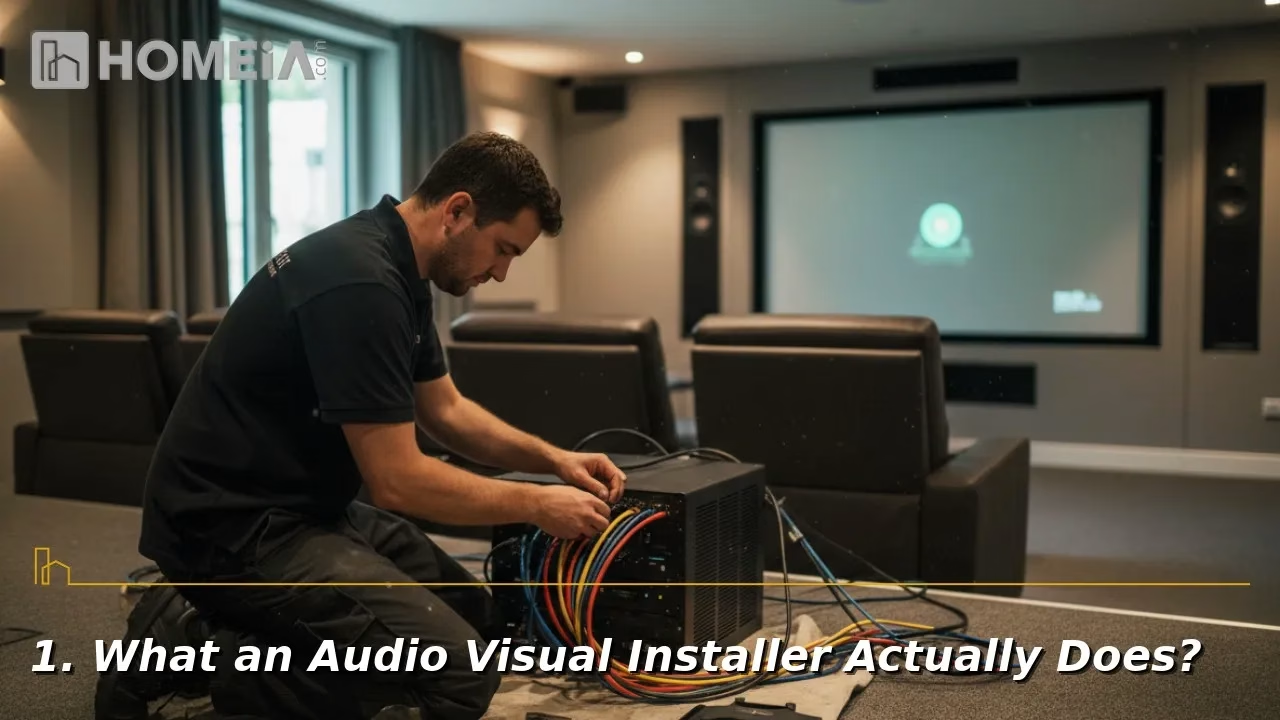
An audio visual installer takes a design and makes it work in a real building. The role usually covers:
- Running and terminating low voltage cable for audio, video, control and network
- Mounting displays, projectors, screens, speakers and equipment racks
- Configuring processors, amplifiers, digital signal processing and control systems
- Commissioning, which means testing and tuning the system until it performs to specification
- Training the people who will use it, and providing documentation
The last two items are where value is won or lost. A system that is installed but never properly commissioned will technically switch on and still disappoint every day it is used.
2. Installer, Integrator, Contractor or Retailer
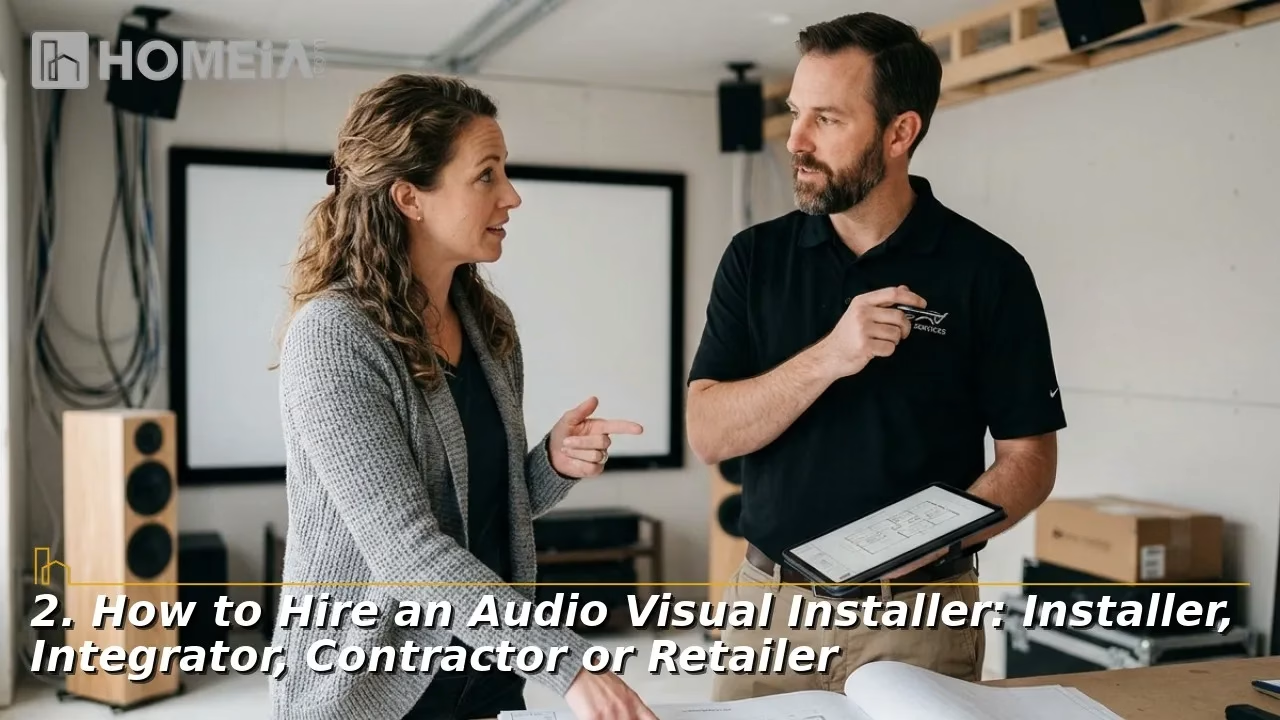
These titles get used interchangeably in marketing, but they describe genuinely different services.
| Role | What they do | Typical project size | Licensing | Choose when |
| Audio visual installer | Physical installation and configuration of a specified system | Single room to whole home | Low voltage license, often CTS-I | You know what you want and need it installed properly |
| AV integrator | Design, engineering, procurement, project management, install | Multi room, multi site, commercial | Low voltage plus contractor licensing | The project is complex or spans several rooms and trades |
| Low voltage contractor | Structured cabling and infrastructure | Whole building | State low voltage license | You need pre-wire during construction, not finished AV |
| Retailer with install service | Sells equipment, subcontracts fitting | Single item or room | Varies, often none held directly | Simple jobs like a TV mount and soundbar |
The practical implication is if you ask a retailer to handle a dedicated home theater, that leads to hiring a subcontractor without being able to vet. If you ask an installer to design a multi room system from scratch, you may get an install that is technically clean but poorly specified. Match the role to the job.

Related article
White Acoustic Wall Panels: Materials, NRC Ratings and Design Guide
White acoustic wall panels help reduce room echo while maintaining a bright, spacious aesthetic. This guide explains panel materials, sound absorption ratings, thickness, shapes, quantity, room-by-room applications, and the difference between sound absorption and soundproofing…
3. Licensing and Certification to Verify
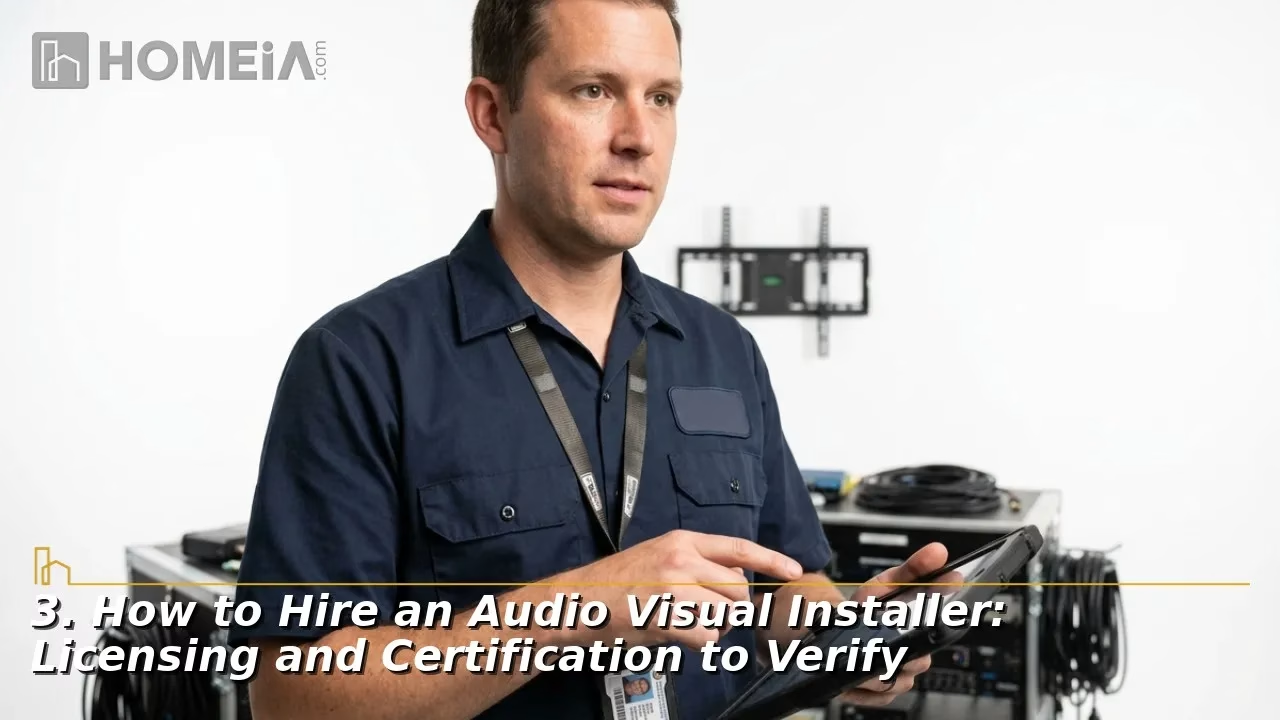
- State low voltage licensing. Nearly every US jurisdiction regulates low voltage work in some capacity, though the details differ significantly. Certain states define low voltage as anything under 50 volts, others extend the threshold higher. Experience requirements for licensure commonly range from one to four years, and reciprocity between states is inconsistent. Ask for the license number and check it against your state licensing board’s public lookup rather than accepting a logo on a website.
- AVIXA certification. AVIXA is the industry association for the AV trade, and it issues two credentials worth knowing:
- CTS (Certified Technology Specialist): the general AV professional certification.
- CTS-I (Certified Technology Specialist, Installation): the installation specialty.
Applicants must already hold an active CTS, and AVIXA recommends three to four years of experience before attempting it.
- Insurance. Verify general liability coverage and workers’ compensation, and ask for a certificate of insurance naming you or your property. This matters more in AV than people assume, because installers work above ceilings, on ladders and inside walls. HOMEiA’s guide to hiring an insured general contractor explains why an uninsured trade becomes your liability.
- Manufacturer authorization. Many control and audio brands only sell through authorized dealers, and only authorized dealers can obtain warranty support and firmware. Confirm brands the company is authorized to sell and service.
Recommended for you




4. How to Read an AV Quote
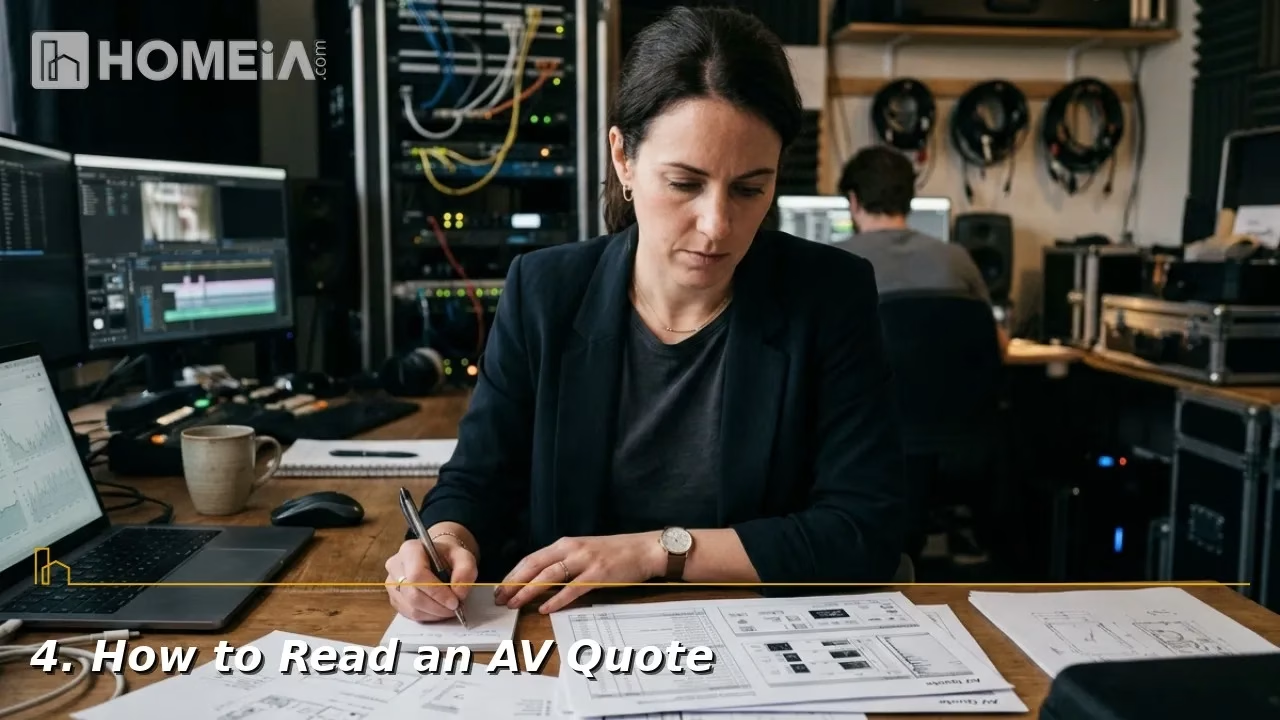
A credible AV quote separates four categories. If yours shows one lump sum, ask for it broken out.
| Line item | What it covers | Typical share of total |
| Equipment | Displays, speakers, processors, racks, mounts | 45 to 60 percent |
| Cable and infrastructure | Cable, conduit, plates, terminations, racks | 5 to 15 percent |
| Labor | Physical installation and rough-in | 20 to 30 percent |
| Programming and commissioning | Configuration, tuning, control system code, testing | 10 to 25 percent |
Labor commonly runs 75 to 150 dollars per hour, while programming is a specialist skill and often bills at 125 to 250 dollars per hour. A quote with no programming or commissioning line for a system including a control processor is not a cheaper quote. It is an incomplete one.
Also confirm the quote includes:
- Every model number, not just categories such as, “in ceiling speakers”
- Who supplies and who installs any equipment you already own
- Whether the price is fixed or an estimate subject to change
- What happens to the price if the site survey reveals surprises
5. Eight Red Flags
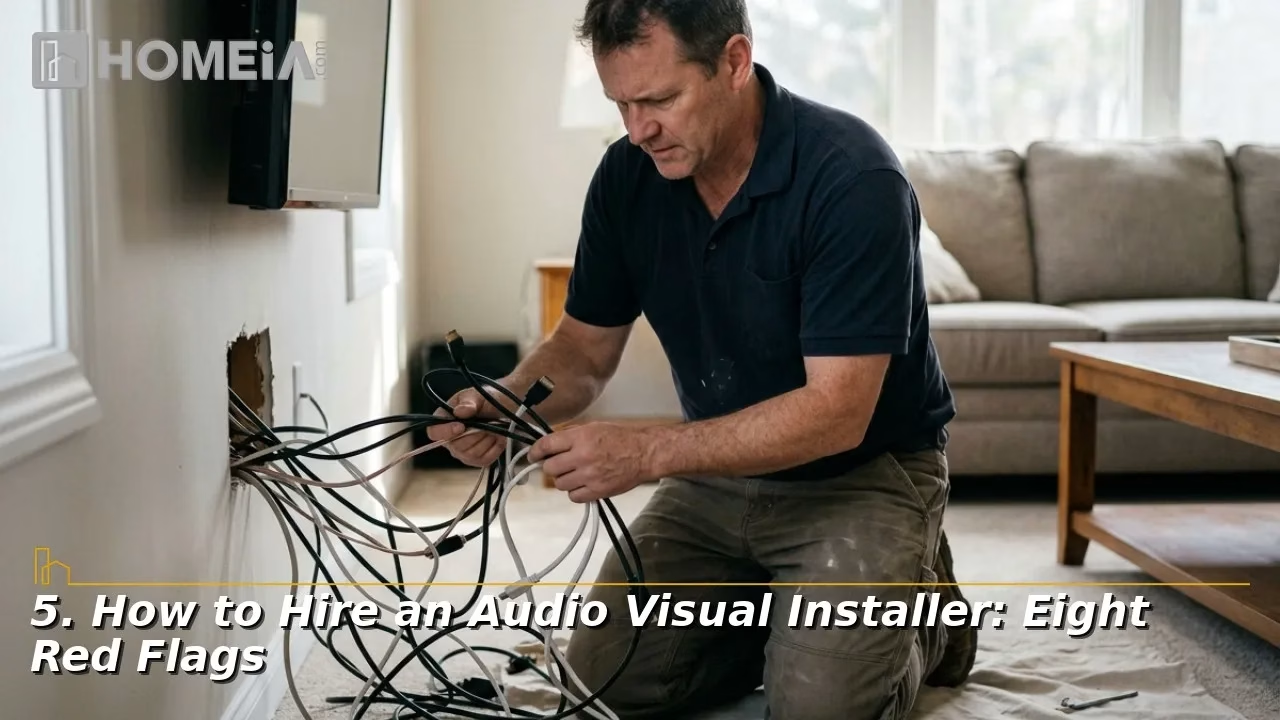
- No site survey before quoting. The simplest predictor of cost overruns and disappointing results. Any installer quoting a multi room system from a floor plan alone is guessing.
- No written scope of work. A quote is a price. Scopes define what you are actually buying.
- Brand locked proposals with no rationale. If every solution regardless of room or budget uses the same brand, you are being sold inventory rather than a design.
- No mention of room acoustics. A well-specified conferencing system in a glass walled room will still sound poor, because reverberation destroys speech intelligibility before the equipment matters.
- Programming and commissioning missing from the quote.
- No post-install training offered. A system nobody can operate is a failed system.
- No as-built documentation promised. You should receive cable schedules, rack layouts, IP addresses and configuration files.
- Large deposits with vague milestones. Equipment deposits are normal. Paying most of the total before anything is installed is not.
Related article
Office Wayfinding Signage: How to Design a Clear Navigation System for Multi-Floor Workspaces
Modern offices have evolved into complex, multi-purpose environments shaped by hybrid work and flexible layouts. Effective wayfinding signage is no longer just directional; it reduces stress, improves navigation, enhances client impressions, and reinforces brand identity. Designing these systems requires careful attention to human behavior, spatial planning, and professional design standards…
6. Twelve Questions to Ask Before Signing

- Will you conduct a site survey before finalizing the quote?
- What is your state low voltage license number?
- Does anyone on the install team hold CTS or CTS-I certification?
- Can you provide a certificate of insurance?
- Which manufacturers are you an authorized dealer for?
- Is programming and commissioning included in this price?
- Who owns the control system source code when the job is complete?
- What documentation will I receive at handover?
- How much training is included, and for how many people?
- What is covered by your labor warranty, and for how long?
- Who coordinates with my electrician, builder or IT team?
- Can I speak to two clients with projects similar to mine?
Questions 7 and 10 are the most often skipped and expensive to get wrong. Before signing, it is also worth reviewing HOMEiA’s guidance on home improvement contracts, since AV agreements should meet the same standards as any other trade contract.
Recommended for you




FAQs About How to Hire an Audio Visual Installer
1. How long does a typical AV installation take from contract to completion?
For a single room like a home theater or conference room, expect two to six weeks from signed contract to handover, with only two to five days of that spent on site. Most of the timeline is equipment lead time, which has stayed unpredictable for displays and control processors. Whole home systems in new construction run alongside the build and involve two separate visits. This would be a pre-wire during framing, and a trim out after drywall and paint. Ask specifically what the equipment lead times are before you agree to a completion date.
2. Is it cheaper to buy the equipment myself and just pay for installation?
Sometimes on paper, rarely in practice. Many professional grade brands are only available through authorized dealers, so the equipment you can buy online is often a different tier. More importantly, installers will likely not warranty the performance of hardware they did not supply, and some will decline the job entirely. If you already own equipment you want to reuse, disclose it during the site survey rather than after the quote, and get in writing which parts of the system the installer stands behind.
3. Should my electrician or my AV installer run the cable?
Usually the AV installer, or a low voltage contractor working to their specification. Electricians are licensed for line voltage and are often excellent, but AV cabling has requirements they may not routinely handle. There are separation distances from power cable to avoid interference, bend radius limits on fiber and HDMI, correct category rating for the video distances involved, and pull string for future upgrades. If your electrician does run it, have the AV installer supply the cable schedule and inspect before drywall closes.
4. Who is responsible if the installer damages my walls, ceiling or existing finishes?
Their general liability insurance, which is why you verify it in advance. Put in writing before work starts who patches and repaints after cable runs, because this is the most common dispute in AV projects. Many installers will cut and patch but not paint, leaving you to match a finish. Agree the boundary explicitly, and photograph existing conditions in every room before work begins.
5. What happens to my system if the installer goes out of business?
This is the reason question 7 above matters. If the control system programming is proprietary and the source code stays with the company, another firm may have to rebuild the configuration from scratch, which can cost thousands. Ask for the source files, configuration backups and documentation at handover, and store them yourself. Sticking to widely supported mainstream platforms rather than niche proprietary ones also makes it easier to find someone else to take over support.
Share