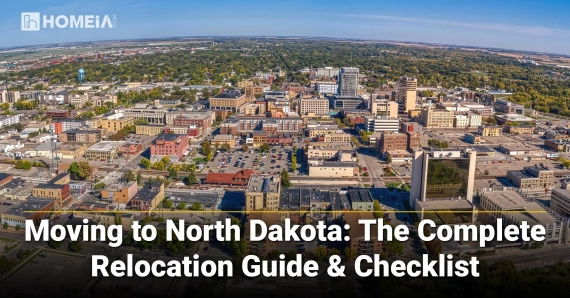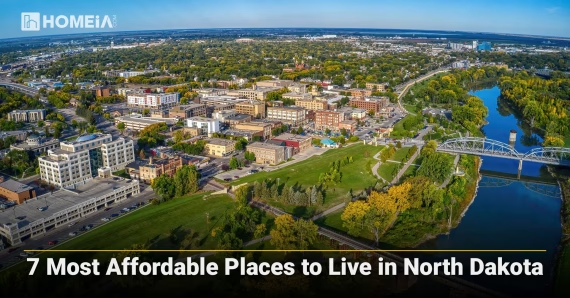








North Dakota is more than prairies and oil fields—it’s home to growing communities, strong job prospects, and affordable living. But challenges include harsh winters, fewer cultural amenities, and geographic isolation. This guide offers a balanced look at life in the 701 and highlights the best cities for young professionals, families, and retirees…
The 5 Best Places to Live in North Dakota: A City Comparison
- Local Editor:Local Editor: The HOMEiA Team
- Category: USA , North Dakota
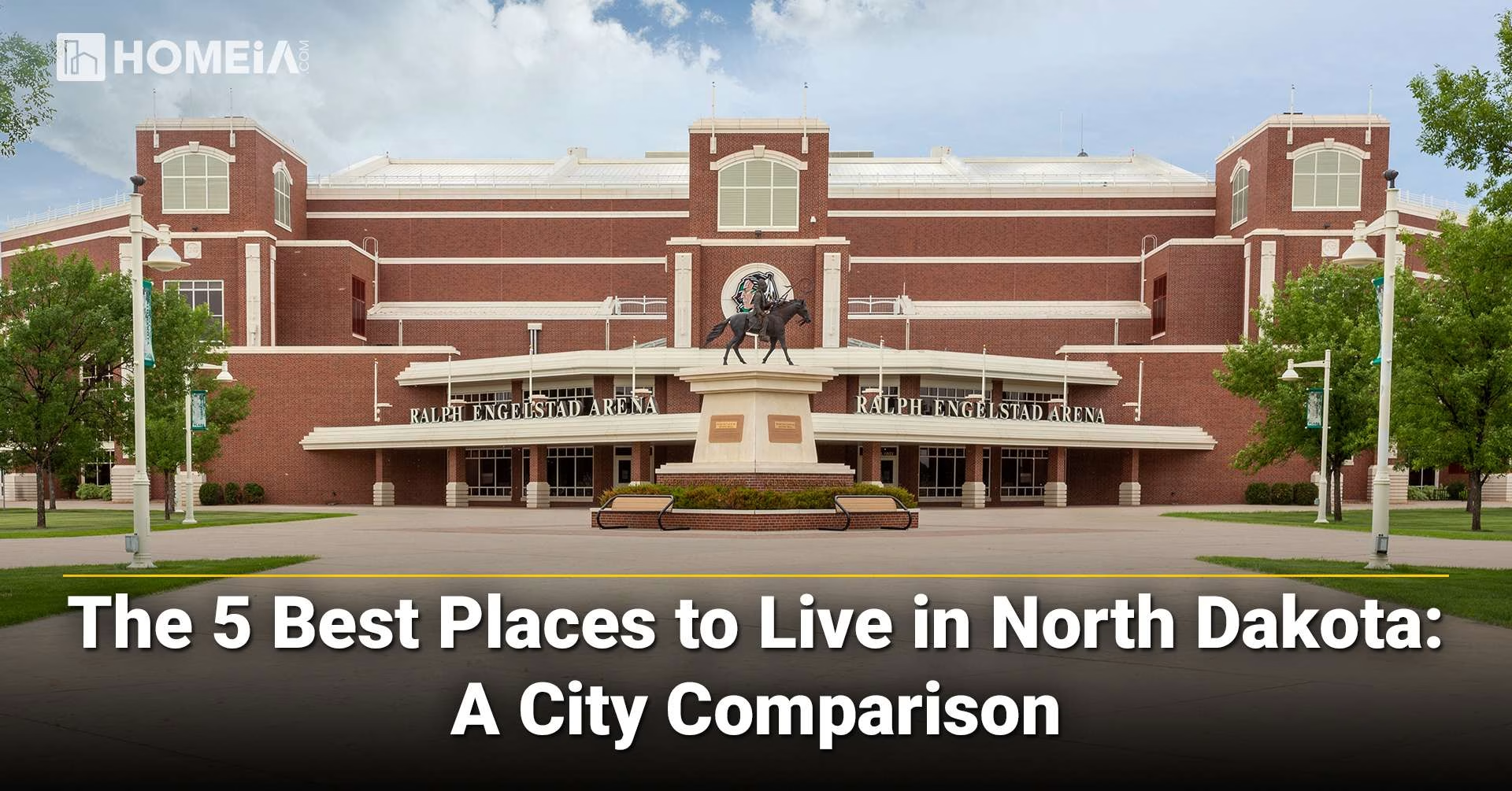
North Dakota is a state of rugged beauty, economic opportunity, and tight-knit communities where the pioneering spirit thrives in the modern day. Choosing the right community within the 701 is crucial to unlocking a lifestyle fitting your ambitions, no matter the goal.
This guide provides an in-depth, data-driven analysis of the five best places to live in North Dakota. We’ve moved beyond simple charm to evaluate these population centers on the factors that matter most: economic opportunity, affordability, safety, access to amenities, and unique quality of life. From the energy boomtown of Williston to the college town charm of Grand Forks, we break down what makes each city a premier destination for building your future in the Upper Midwest.
Key Takeaways
- Diverse Options for Diverse Needs: These top cities offer distinctly different lifestyles, from the energy-driven economy of Williston to the stable government and education hub of Bismarck.
- Affordability is a Constant: A major advantage across all five cities is cost of living at or below the national average, with accessible housing costs compared to other states experiencing energy booms.
- Safety Varies by Community: Safety ratings range from sheltered to underperforming, making it crucial to research specific neighborhoods and cities based on your personal tolerance and priorities.
- Economic Drivers Differ: Each job market is anchored by a different sector—energy, agriculture, government, education, or healthcare—requiring alignment with your career field.
- Community is Key: The intangible sense of place, community engagement, and access to outdoor recreation are often the defining factors in choosing between these exceptional locations.
I. Methodology: How We Chose the Best
To ensure a comprehensive and objective ranking, our analysis is based on a multi-factor methodology evaluating each city on key criteria essential for quality of life in the North Dakota context.
Our evaluation criteria are weighted as follows:
- Employment & Economy (25%): Assesses job market health, major employers, economic diversity, and income levels relative to the local cost of living.
- Housing & Affordability (25%): Evaluates median home value, average rent, and home-price-to-income ratios, acknowledging North Dakota’s overall affordability but important local variations.
- Quality of Life & Culture (20%): Encompasses access to unique outdoor recreation, cultural attractions, dining, entertainment, and overall lifestyle.
- Access & Infrastructure (15%): Considers connectivity (road, air), healthcare access, internet reliability, and other critical services.
- Safety & Community (15%): Reviews crime statistics and overall community engagement, resilience, and family-friendliness.
Data is compiled from reputable 2026 sources, including the U.S. Census Bureau, Bureau of Labor Statistics, FBI crime data, and real estate market analyses (Zillow, local MLS).

Related article
Our Methodologies to create HOMEiA Score Ratings for Each Group of Content
HOMEiA uses a consistent, data-driven methodology to evaluate U.S. states for livability, affordability, and long-term value. Our analysis centers on key factors such as Housing and Affordability, Cost of Daily Living, Access and Infrastructure, Community Strength, Safety and Quality of Life, Economic Resilience and Job Market…
II. The 5 Best Cities: A Portrait of North Dakota’s Diversity
1. Williston: The Energy Capital
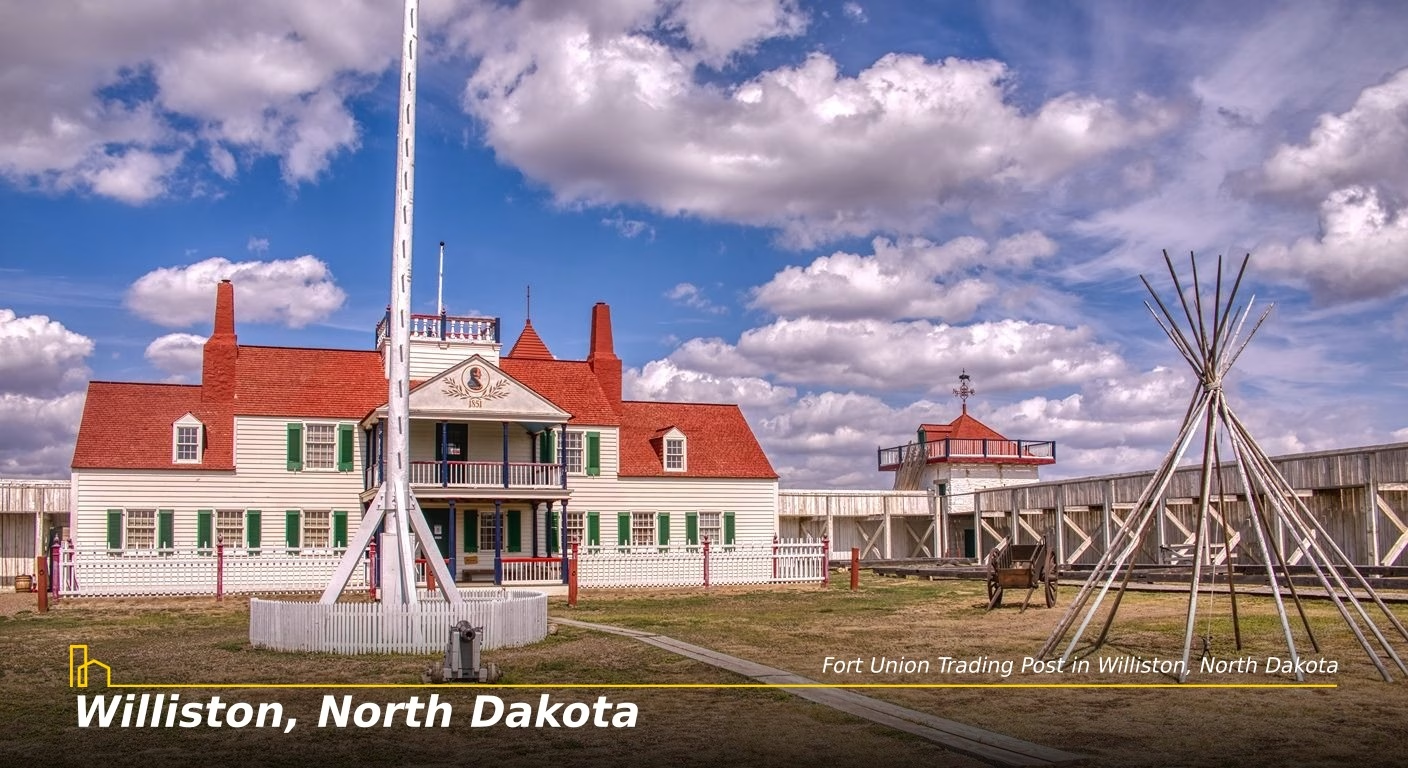
HOMEiA Score: 80/100
- Cost of Living: On par with U.S. average
- Monthly Rent: $1,200
- Home price to income ratio: 3.8:1
- Income to rent ratio: 66.7x
- Safety rating: 55/100
A. Employment & Economy Williston remains the epicenter of North Dakota’s energy industry, with the Bakken oil field driving high-wage employment opportunities. While more volatile than other economies on our list, the energy sector provides exceptional earning potential for qualified workers. The city has dipped its toes into supporting industries and agriculture.
B. Housing & Affordability Their housing market has moderated from peak boom years but remains the most expensive in the Roughrider State. However, a home-price-to-income ratio of 3.8:1 signals high wages in the energy sector. Significant construction has increased housing supply, helping to stabilize prices.
C. Quality of Life & Culture Legislature has invested heavily in quality-of-life amenities following the energy boom, including new parks, recreation facilities, and community centers. Situated near the Montana border provides access to outdoor recreation in both states, and local cultural offerings have expanded with population growth.
D. Access & Infrastructure Massive investment to support population growth have begun to take shape, with improved roads, utilities, and public services. Sloulin Field International Airport closed in 2019 and was replaced by the Williston Basin International Airport (XWA) southwest of town, which provides essential connectivity. Healthcare resources can be stretched during peak activity periods.
E. Safety & Community With a safety rating of 55/100, residents face challenges common to energy boomtowns. The community is working to improve social cohesion and address transient population issues. Recent investments in public safety and community programs show commitment to long-term stability.
Related article
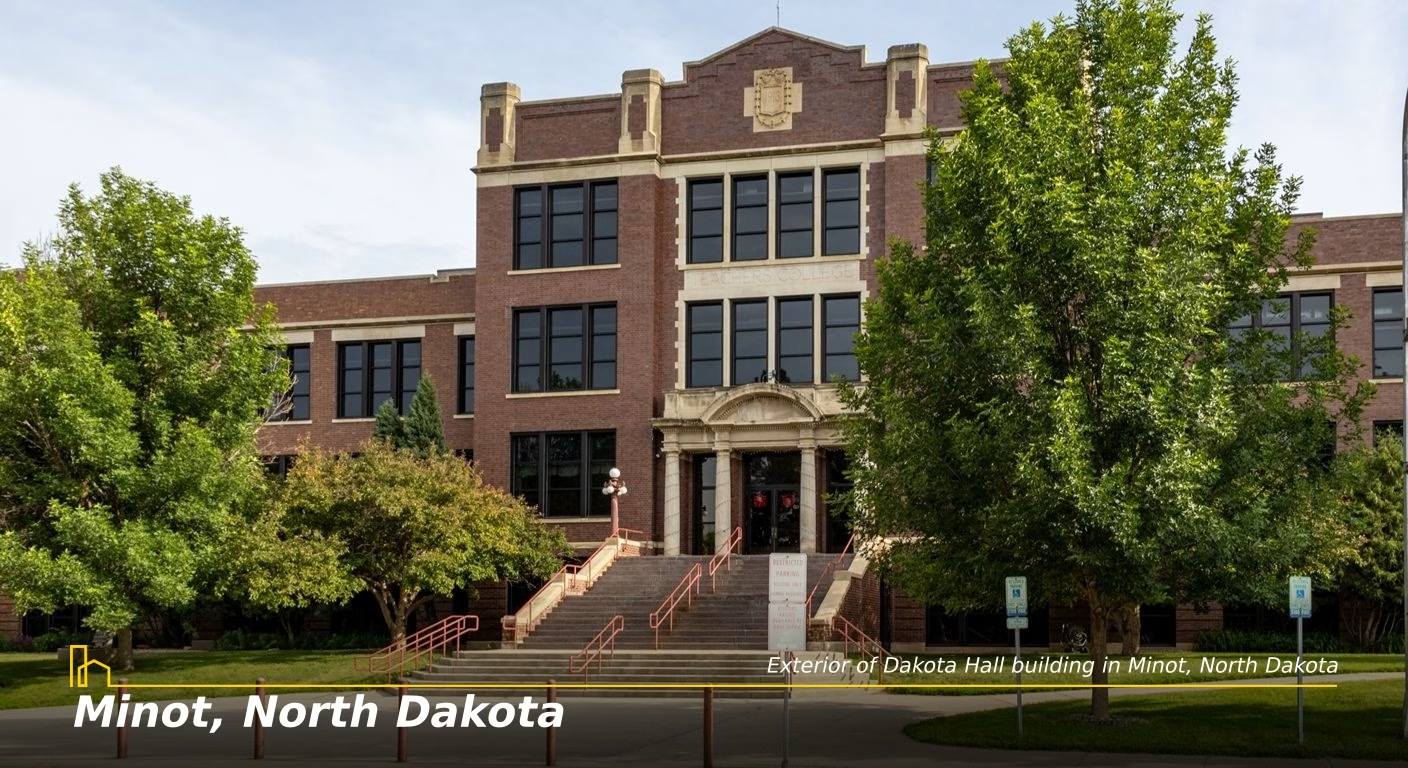
2. Minot: The Magic City
HOMEiA Score: 82/100
- Cost of Living: 16% below U.S. average
- Monthly Rent: $1,000
- Home price to income ratio: 4.8:1
- Income to rent ratio: 58.1x
- Safety rating: 60/100
A. Employment & Economy Minot’s economy is a unique blend of military (Minot Air Force Base), energy, and agriculture. Diversification instills stability despite fluctuations in any single sector. Serving as a hotspot for northwestern North Dakota, retail, healthcare, and professional services support the surrounding area.
B. Housing & Affordability This housing market has stabilized following the energy boom years, with the home-price-to-income ratio at 4.8:1. A military presence creates consistent demand for housing, while recent construction has increased inventory. Rental costs remain reasonable for the amenities offered.
C. Quality of Life & Culture Cultural amenities are plentiful including the North Dakota State Fair, Scandinavian Heritage Park, and quality performing arts. Outdoor recreation, particularly fishing and hunting in the surrounding prairie and lake country are all easily accessible.
D. Access & Infrastructure Minot International Airport (MOT) provides regional connection options, and their infrastructure supports its role as an area focal point. Healthcare facilities are comprehensive, serving a large geographic area beyond the city limits.
E. Safety & Community With a safety rating of 60/100, it faces typical challenges of a regional hub city. This community is known for historical military-civilian relationships and resilience through economic cycles. Neighborhood associations are active, and community events help maintain strong social bonds.
3. Grand Forks: The College Town
HOMEiA Score: 84/100
- Cost of Living: 8% below U.S. average
- Monthly Rent: $950
- Home price to income ratio: 4.1:1
- Income to rent ratio: 63.4x
- Safety rating: 65/100
A. Employment & Economy Grand Forks’ economy is driven by education (University of North Dakota), healthcare (Altru Health System), and agriculture. Academia attracts research opportunities, cultural events, and a steady stream of educated workers. The Grand Forks Air Force Base adds another layer of economic stability and diversity to the region.
B. Housing & Affordability The Folks provides exceptional value with a cost of living 8% below the national average. A home-price-to-income ratio of 4.1:1 indicates desirable affordability. UND creates a robust rental market while keeping prices reasonable for students and permanent residents.
C. Quality of Life & Culture As a college town, it benefits from the cultural and athletic events, including Division I hockey that draws statewide attention. Riverfront location provides enjoyable recreational opportunities, while downtown is home to features unique shops, restaurants, and a growing arts scene.
D. Access & Infrastructure Grand Forks International Airport (GFK) provides necessary regional connectivity, and their infrastructure is well-maintained. Its university partnership brings additional resources and facilities that benefit the entire community, from healthcare to cultural institutions.
E. Safety & Community With a safety rating of 65/100, GF holds an acceptable safety record. The community is known for its resilience, having rebuilt and bolstered after the 1997 flood. College students add youthful energy while the established community provides stability and tradition.
Recommended for you




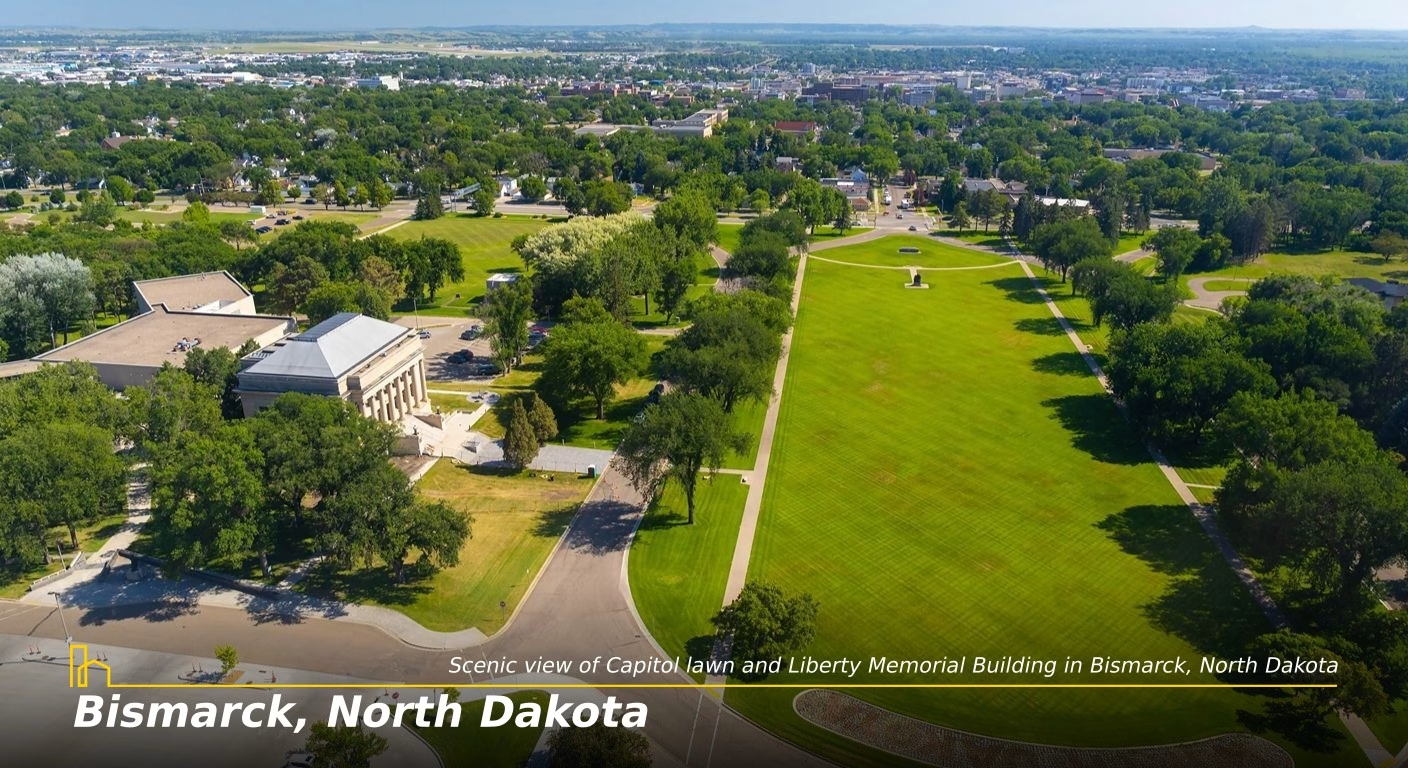
4. Bismarck: The Capital City
HOMEiA Score: 86/100
- Cost of Living: 3% below U.S. average
- Monthly Rent: $1,050
- Home price to income ratio: 4.5:1
- Income to rent ratio: 59.2x
- Safety rating: 72/100
A. Employment & Economy Bismarck’s economy is anchored by stable government employment as the state capital, complemented by proven healthcare (CHI St. Alexius, Sanford Health) and energy sectors. This combination creates economic stability that weathers market fluctuations better than energy-dependent communities. It’s also popular for banking, insurance, and professional services.
B. Housing & Affordability A balanced housing market, options range from historic neighborhoods near the capitol to newer subdivisions. Home-price-to-income ratio of 4.5:1 reflects the city’s stable economy and moderate housing costs. Rental availability can be competitive during legislative sessions but generally remains accessible.
C. Quality of Life & Culture Life revolves around its beautiful riverfront location, historic sites, and family-friendly amenities. Residents are spoiled by beautiful parks, the Dakota Zoo, quality schools, and a growing arts scene. Their central location provides convenient access to outdoor recreation while maintaining all the services expected in a capital city.
D. Access & Infrastructure This city is well-developed with a regional airport (BIS), modern healthcare facilities, and reliable public services. Manageable size means minimal traffic congestion while still offering comprehensive shopping, dining, and entertainment options.
E. Safety & Community With a safety rating of 72/100, it ranks as one of North Dakota’s safest cities. The community is known for its cherished family values, well-ranked education, and engaged citizenry. Neighborhood watch programs and community policing contribute to the city’s safe environment.
Related article
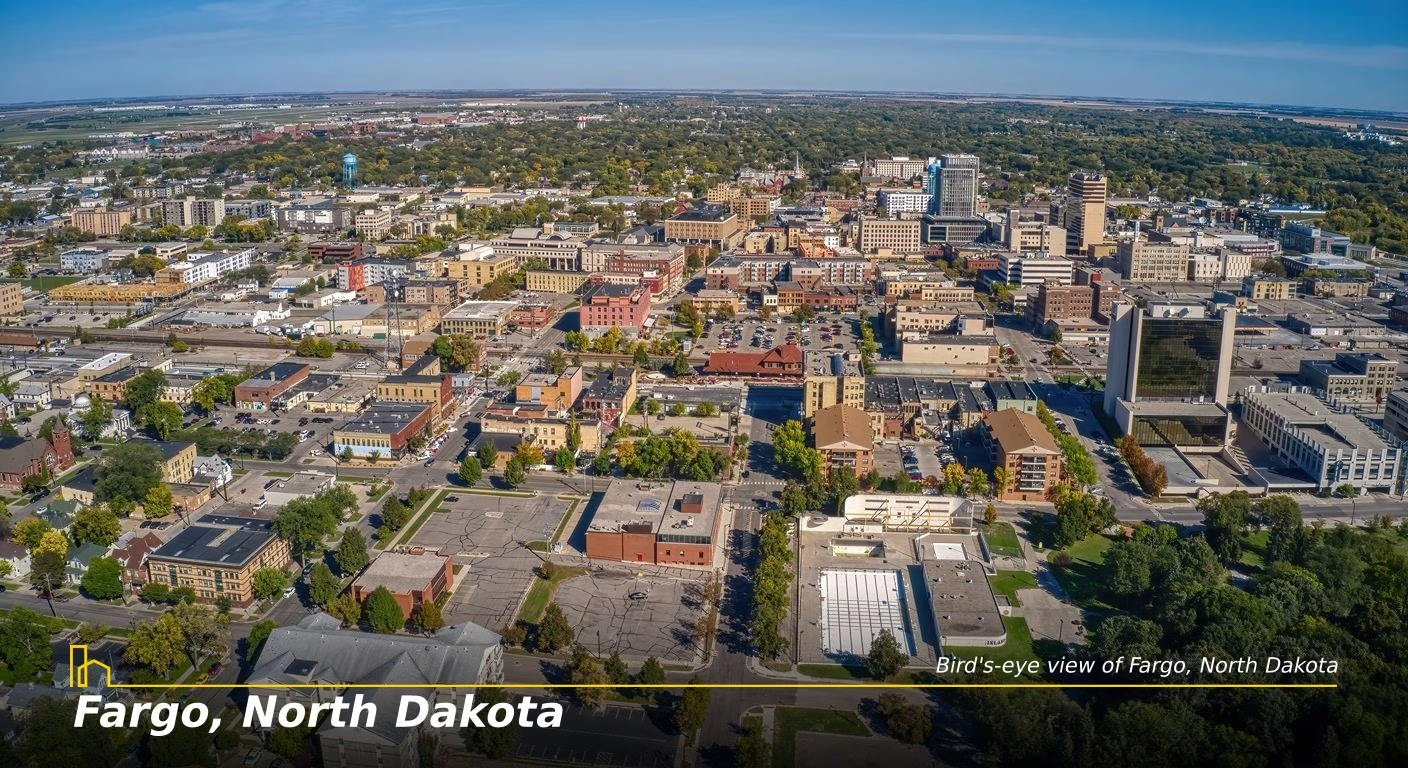
5. Fargo: The Metropolitan Hub
HOMEiA Score: 88/100
- Cost of Living: 5% below U.S. average
- Monthly Rent: $1,100
- Home price to income ratio: 4.2:1
- Income to rent ratio: 61.8x
- Safety rating: 68/100
A. Employment & Economy Fargo serves as North Dakota’s economic engine and largest metropolitan area. It boasts a remarkably diverse economy spanning healthcare (Sanford Health), tech (Microsoft campus), education (North Dakota State University), manufacturing, and finance. Economic diversity provides stability and opportunity across multiple sectors, making it resilient to energy market fluctuations prone to other cities on the list.
B. Housing & Affordability This area offers the most diverse housing stock in ND, from historic homes in established neighborhoods to new developments on the growing edges. Home-price-to-income ratio of 4.2:1 indicates desirable purchasing power for residents. While rental costs have increased with population growth, they remain affordable compared to similar-sized cities in other states.
C. Quality of Life & Culture As the cultural capital, residents can enjoy an impressive array of amenities including Broadway-caliber theater, Division I athletics at NDSU, vibrant downtown dining scene, and numerous parks and recreational facilities. Being located on the Red River offers exceptional outdoor opportunities while maintaining urban conveniences.
D. Access & Infrastructure Here boasts standout infrastructure with Hector International Airport (FAR) providing direct flights to major hubs, a comprehensive healthcare system, and reliable utilities. Population growth has led to infrastructure investments keeping pace with demand, though traffic congestion has increased in recent years.
E. Safety & Community With a safety rating of 68/100, it maintains an acceptable safety profile for its size. The community is known for its friendly, engaged residents and strong neighborhood associations. While property crime rates are higher than smaller North Dakota cities, violent crime remains relatively low for a metropolitan area.
Comparative Data Table
City | HOMEiA Score | Cost of Living | Avg. Rent (2-Bed) | Home Price to Income Ratio | Income to Rent Ratio | Safety Rating |
|---|---|---|---|---|---|---|
| Williston | 80 | On Par | $1,200 | 3.8:1 | 66.7x | 55 |
| Minot | 82 | -16% | $1,000 | 4.8:1 | 58.1x | 60 |
| Grand Forks | 84 | -8% | $950 | 4.1:1 | 63.4x | 65 |
| Bismarck | 86 | -3% | $1,050 | 4.5:1 | 59.2x | 72 |
| Fargo | 88 | -5% | $1,100 | 4.2:1 | 61.8x | 68 |
Conclusion: Finding Your Perfect North Dakota Match
The best North Dakota city is subjective. Fargo delivers metropolitan amenities and diverse careers, while Bismarck offers reliable government employment and capital city prestige. Grand Forks provides college town charm and exceptional affordability, and Minot combines military, energy, and agricultural economies. Williston offers high earning potential in the energy sector for those willing to embrace its dynamic nature.
Each location presents a unique trade-off between economic opportunity, lifestyle, and community character. Your ideal choice hinges on aligning these factors with personal, financial, and professional goals for life in the Peace Garden State. For those still considering options, our guide to the best places to live in South Dakota might provide additional insights for Northern Plains living.
Recommended for you



FAQs About Living in North Dakota’s Best Cities
1. Which city has the best job market?
Fargo has the most diverse and stable job market, spanning multiple industries including healthcare, tech, education, and finance. Williston offers the highest earning potential but is concentrated in the energy sector.
2. I’m a remote worker. Where should I move?
Grand Forks offers an optimal combination of affordability, quality of life, and reliable infrastructure for remote workers. Bismarck provides exceptional amenities with good connectivity and a stable community environment.
3. Are these cities safe?
Safety varies by community. Bismarck is generally considered the safest (72/100), followed by Fargo (68/100). Williston (55/100) faces challenges common to energy boomtowns but has been night and day from peak boom years.
4. What’s the best city for young professionals?
Fargo offers the most vibrant social scenes, networking opportunities, and diverse career paths for young professionals. Grand Forks provides an affordable, energetic alternative with university amenities.
5. What’s the best city for families?
Families often choose based on schools and community. Bismarck offers standout schools and the highest safety rating (72/100). Fargo provides diverse educational options and extensive family amenities while maintaining good safety (68/100). For those considering other family-friendly states, explore the best places to live in Minnesota or the best places to live in Colorado for additional options.
6. How does North Dakota’s cost of living compare to neighboring states?
North Dakota generally offers more affordable living than many neighboring states. For comparison, you might explore the pros and cons of living in Minnesota or the pros and cons of living in South Dakota to understand regional differences.
7. What’s the weather like in these cities?
All cities experience four distinct seasons with cold winters and warm summers. Fargo and Grand Forks in the eastern part of the state tend to have slightly more moderate temperatures than Bismarck, Minot, and Williston in the western region.
8. Are there good outdoor recreation opportunities?
ND offers revered outdoor recreation across all five cities. Bismarck and Fargo provide riverfront activities, while Grand Forks and Minot offer access to lake country. Williston provides proximity to Montana’s outdoor attractions. For those interested in mountain recreation, consider the best places to live in Colorado.
9. How is the healthcare system in these cities?
Fargo and Bismarck have the most comprehensive healthcare systems, with Grand Forks and Minot serving as regional medical hubs. Williston has expanded healthcare facilities but may have limited specialized services. For those prioritizing healthcare access, the best places to live in Minnesota offer world-class medical facilities.

Related article
The 3 Most Affordable Neighborhoods to Live in Grand Forks, North Dakota
Grand Forks blends affordability with quality living in neighborhoods like the historic North End, lively Downtown, and the University Area. Each offers unique character, community spirit, and budget-friendly housing. The city proves that small Midwestern towns can provide connection, opportunity, and urban amenities without the high cost of big cities…
Share