




Foreclosure occurs when homeowners fall behind on mortgage payments and lenders seize and sell the property to recover losses, severely impacting credit and finances. Before foreclosure, options like loan modification, forbearance, or selling may help. Buyers may find discounts, but risks such as hidden damage and title issues make careful research and professional guidance essential…
Hidden Costs of Buying a Foreclosed Home: 17 Problems Investors Miss Until It’s Too Late
- Local Editor:Local Editor: The HOMEiA Team
- Category: Buy House
Share
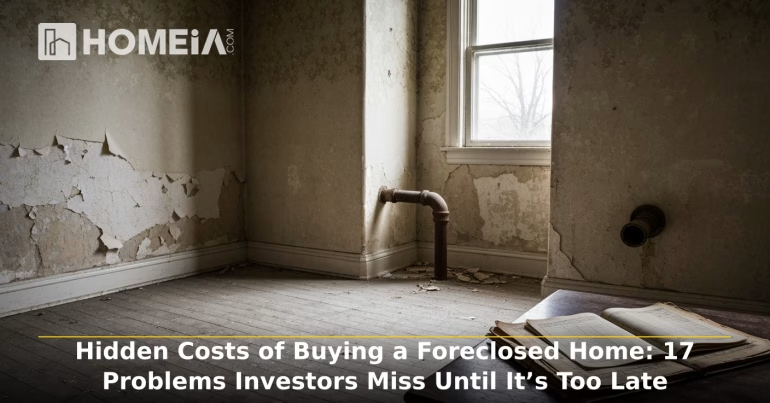
The lure of a foreclosure is undeniable. In a competitive real estate market, seeing a property listed at 20% or 30% below market value is the same as winning the lottery. Whether it’s becoming a homebuyer for the first time or a budding investor seeking your first “flip,” the “as-is” price tag is a powerful magnet.
However, in the world of distressed real estate, purchase prices are rarely the final cost. Foreclosures are discounted for a reason: they carry baggage that traditional sales do not. From “quiet title” lawsuits to stripped copper plumbing, the path to profit is littered with financial landmines.
This guide explores 17 specific hidden costs and structural lemons turning bargains sour instantly. By understanding these risks now, you can price your offers accurately and protect your capital.
Table of Contents:
- Quick Recap: How Foreclosure Purchases Work
- I. The 17 Hidden Costs and Problems
- 1) Title Clouds and Unrecorded Liens
- 2) Delinquent Property Taxes
- 3) HOA Dues and Special Assessments
- 4) Unpaid Utilities and “Lienable” Bills
- 5) Code Violations and Unpermitted Work
- 6) The “Right of Redemption”
- 7) Occupancy Issues and Eviction Costs
- 8) “As-Is” Condition (The Disclosure Gap)
- 9) Major Deferred Maintenance
- 10) Vandalism and Stripped Systems
- 11) Mold and Water Damage
- 12) Winterization Failures
- 13) The “Scope Creep” of Rehab
- 14) High Insurance Premiums
- 15) Appraisal Gaps
- 16) Legal and Professional Fees
- 17) Holding Costs and Opportunity Cost
- II. Due Diligence Checklist
- III. When to Walk Away vs. When to Buy
- FAQs About Hidden Costs of Buying a Foreclosed Home
Quick Recap: How Foreclosure Purchases Work
Before diving into the costs, it’s vital to understand that foreclosure isn’t a single type of sale. Risk profiles changes based on where in the process you buy the home:
- Pre-Foreclosure / Short Sale: You buy from the owner before the bank seizes the property. Buyers typically maintain the right to inspect, but banks must approve the discounted price, which can take months.
- Foreclosure Auction (Trustee/Sheriff Sale): Homes are sold on the courthouse steps to the highest bidder. This is the highest risk. You often cannot see inside the home before bidding, and final sales must be paid in cash almost immediately.
- Bank-Owned (REO): Properties don’t sell at auction, so the bank took title. These are sold on the open market (MLS). While safer than auctions, they are still sold “as-is” with limited disclosures.
Related article
1) Title Clouds and Unrecorded Liens
When buying a traditional home, sellers clear the title. In a foreclosure—especially at auction—you might inherit “clouds” on the title. This includes junior mortgages, mechanic’s liens from contractors who weren’t paid, or even IRS tax liens.
How to reduce this risk:
- Run a preliminary title report before bidding
- Purchase a homeowner’s title insurance policy (if buying REO)
- Budget for a “Quiet Title” action if the chain of title is complex
2) Delinquent Property Taxes
Many investors assume the foreclosure wipes out all debt. While it may wipe out some junior liens, property taxes stay with the land. If the previous owner stopped making mortgage payments, they almost certainly stopped paying the county. You could be on the hook for two or three years of back taxes plus interest and penalties.
How to reduce this risk:
- Check the county tax assessor’s website for the “total amount due”
- Ensure the escrow instructions clarify who pays the pro-rated taxes
3) HOA Dues and Special Assessments
Homeowners Associations (HOAs) have significant power. In many states, Home Owners Association (HOA) have “super lien” status. Even if the mortgage is foreclosed, HOAs may still be owed thousands in past-due monthly fees, late charges, and legal fees. Furthermore, you might inherit a “special assessment” for a new roof or pool that was passed while the home was in default.
How to reduce this risk:
- Request an “Estoppel Letter” or HOA Demand Statement
- Research if the community has pending litigation or major planned repairs
4) Unpaid Utilities and “Lienable” Bills
In some municipalities, water, sewer, and trash bills follow the property, not the person. If the previous owner left a $2,000 water bill, the city may refuse to turn the water on until that balance is paid in full.
How to reduce this risk:
- Call local utility providers to check for “transfer balances”
- Check for municipal “nuisance liens” (e.g., the city charged the owner for mowing the grass)
Related article
A Comprehensive Guide to Finding Pre-Foreclosure Homes
In this article, we will explore how to find home pre-foreclosures; the possibilities of buying and financing them; and steps to avoid foreclosure and save a home after it has been foreclosed…
5) Code Violations and Unpermitted Work
Foreclosed homes are often the result of financial distress, leading to DIY repairs or total neglect. You might find a finished basement or a deck that was built without permits. Once the homeowner, city building departments can force you to tear it down or pay hefty fines to bring it up to code.
How to reduce this risk:
- Perform a “Permit Search” at the local building department
- Budget for “As-Built” permits if you suspect unpermitted additions
6) The “Right of Redemption”
In certain states (ex. Alabama or Tennessee), foreclosed homeowners possess a “Right of Redemption.” It allows them to “buy back” the house for the foreclosure price plus interest for a set period (sometimes up to a year) after the sale. For example, if you spend $50,000 on renovations during this window, this would become sunken costs if the owner redeems.
How to reduce this risk:
- Consult a real estate attorney about your state’s redemption laws
- Avoid major renovations until the redemption period expires
7) Occupancy Issues and Eviction Costs
One of the most stressful hidden costs is a “holdover tenant” or the former owner who refuses to move out. Changing the locks isn’t the solution; you must go through a formal legal eviction process, which can cost $1,500 to $5,000 and take months.
How to reduce this risk:
- Offer “Cash for Keys”—paying the occupant to leave peacefully and leave the home clean
- Factor legal eviction fees into your “worst-case” budget
8) “As-Is” Condition (The Disclosure Gap)
In a normal sale, the seller provides a “Property Disclosure” detailing known defects. Banks are exempt from this as they weren’t residents. You’re buying the home’s history—good and bad—with no recourse against the seller.
How to reduce this risk:
- Never skip a professional home inspection (if the purchase type allows it)
- Assume there is at least one major invisible problem (ex. cracked heat exchanger)
9) Major Deferred Maintenance
When homeowners can’t afford their mortgage, they don’t fix the roof. Expect “big ticket” items to be at the end of their life cycle. A roof replacement ($10,000–$20,000) or new HVAC system ($6,000–$10,000) can instantly evaporate profit margins.
How to reduce this risk:
- Use a “Scope of Work” checklist during your walkthrough
- Get actual contractor quotes vs. making assumptions
10) Vandalism and Stripped Systems
Vacant foreclosures are targets for vandals and copper thieves. Thieves will break in and tear the copper plumbing and AC wiring out of the walls. Replacing a home’s entire plumbing system can cost $5,000 to $15,000 depending on its size.
How to reduce this risk:
- Inspect the crawlspace or basement specifically for missing pipes
- Secure the property with heavy-duty locks or “Dawgs” steel window covers immediately after closing

Related article
Buying New Construction Homes: What You Need to Know
This article aims to demystify your journey by addressing your most pressing concerns, from identifying budget-friendly locales to preparing for unforeseen delays and costs…
11) Mold and Water Damage
If the power was turned off, the sump pump stopped working. Clogged gutters means water likely entered the basement. Without climate control, small leaks transform into house-wide mold infestation in weeks. Professional remediation can easily cost $3,000 to $10,000+.
How to reduce this risk:
- Look for “high tide” marks on basement walls
- Smell for musty odors; if you smell it, it’s there
12) Winterization Failures
Banks often “winterize” homes by blowing air through the lines. If done unprofessionally, water trapped in the elbows of the pipes can freeze and burst. When turning the water on for the first time, you might have ten leaks behind finished drywall.
How to reduce this risk:
- Perform pressure tests on the plumbing before turning the main water valve on.
- Budget for plumbing surprises ($2,000+) in any vacant home
13) The “Scope Creep” of Rehab
Investors often ignore the minor issues that can snowball into something major. Replacing every light fixture, outlet cover, door handle, and hinge in a house can cost $2,000 in materials alone. When factoring in labor, your “light refresh” budget can double.
How to reduce this risk:
- Add 15%–20% contingency buffers to every repair estimate
- Track every hardware store run; those $100 trips add up to thousands
Insuring a vacant, distressed property is exponentially pricier than insuring an owner-occupied home. Many standard carriers won’t touch a “fixer-upper.” You may need a “Builder’s Risk” or “Vacant Property” policy, which can cost 2x to 3x a normal premium.
How to reduce this risk:
- Get an insurance quote before you close
- Install a security system to lower the “vacant property” risk premium
15) Appraisal Gaps
If using a loan to buy a foreclosure, banks will require appraisals. If the house is in poor condition, appraisers may value it lower than your contract price. Or, they may flag “safety repairs” (including missing handrails or peeling lead paint) that must be fixed before the bank will fund the loan.
How to reduce this risk:
- Ensure your contract has an appraisal contingency
- Have cash reserves to cover the difference if the appraisal comes in low

Related article
Seller Financed Homes: Key Factors to Consider and Top Buyer Benefits
Seller financing lets sellers act as lenders, helping buyers bypass banks. It offers flexibility, faster closings, and unique benefits for both buyers and sellers alike.
16) Legal and Professional Fees
Foreclosures often go beyond real estate agents. You may need an attorney to handle a “Quiet Title” action, eviction specialist, or surveyor to resolve boundary disputes with neighbors who moved their fence while the home was vacant.
How to reduce this risk:
- Budget $2,500 for “General Legal/Title Curative” work
- Build a relationship with a local real estate attorney who understands the foreclosure niche
17) Holding Costs and Opportunity Cost
Every day you own the house but aren’t living in it or renting it out is squandered value. Property taxes, insurance, utilities, and interest on loans (especially “hard money” loans at 10%–12%) eat your profit. If a rehab takes six months instead of two, you could lose $10,000 in pure holding costs.
How to reduce this risk:
- Calculate “Daily Burn Rate”—the exact cost of owning the house per day
- Have your contractors lined up before you close to minimize downtime
Comparison: Risks by Purchase Type
Risk Factor | Pre-Foreclosure / Short Sale | Foreclosure Auction | Bank-Owned (REO) |
|---|---|---|---|
| Inspection Access | Usually Yes | Rarely | Yes |
| Title Risk | Low (Title Co. Involved) | High | Low |
| Eviction Risk | Moderate | High | Low (Usually vacant) |
| Speed to Close | Very Slow (3-9 months) | Very Fast (24-48 hours) | Standard (30-45 days) |
| Repair Risk | Moderate | Extremely High | Moderate |
II. Due Diligence Checklist
Phase 1: Before Making the Offer
- [ ] Run a Title Search: Identify liens, judgments, and back taxes.
- [ ] External Inspection: Walk the perimeter. Check the roof age and foundation cracks.
- [ ] Check HOA Status: Call the association to confirm dues and assessments.
- [ ] Utility Check: Verify if the city has “lienable” utility balances.
Phase 2: Before Closing (The “Due Diligence” Period)
- [ ] Full Home Inspection: Focus on “Big 5”: Roof, HVAC, Plumbing, Electric, Foundation.
- [ ] Sewer Scope: Use a camera to check for collapsed pipes (common in older foreclosures).
- [ ] Environmental Testing: Test for mold, lead paint, and radon.
- [ ] Contractor Walkthrough: Get a firm bid for the renovation.
Phase 3: The First 30 Days of Ownership
- [ ] Re-Key All Locks: You don’t know who has a copy of the previous keys.
- [ ] Secure the Property: Check windows and install an alarm.
- [ ] Pressure Test Plumbing: Confirm no burst pipes before full water restoration.
- [ ] File for Property Tax Exemptions: Ensure you aren’t paying the “investor rate” if you plan to live there.

Related article
III. When to Walk Away vs. When to Buy
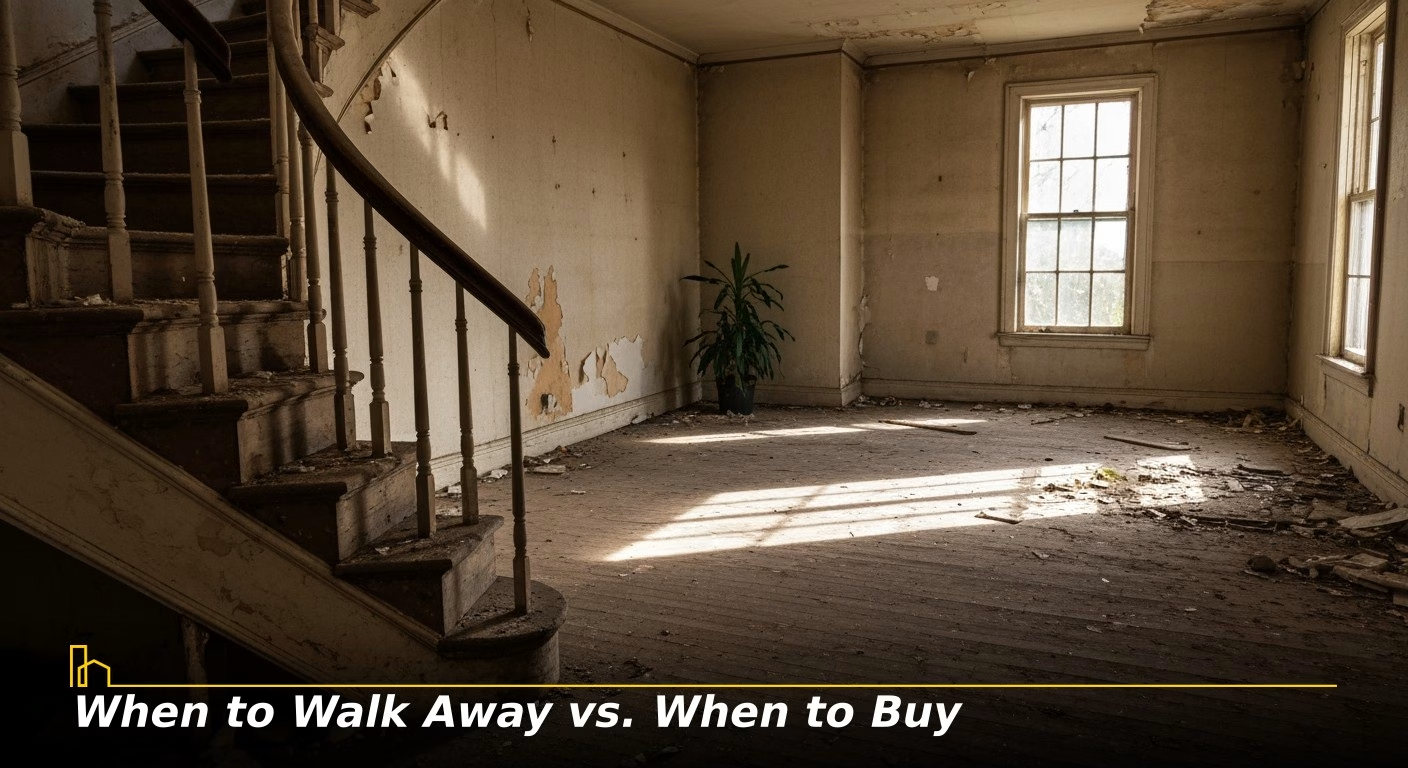
- The “Green Light” Scenario: The home has cosmetic issues (ugly carpet, nicotine-stained walls, overgrown yard) but major systems (roof, foundation) are sound. You have a 20% equity cushion after accounting for all 17 hidden costs.
- The “Red Light” (Walk Away) Scenario: The property has structural foundation issues AND is located in a state with a long Right of Redemption. If total all-in cost (purchase + repairs + holding costs) is within 10% of the market value, the risk far outweighs the reward.
Conclusion
Foreclosures offer a legitimate path to building wealth, but are not for the faint-of-heart financially as seen on TV.The difference between a successful investor and one who loses their shirt is the depth of their due diligence.
Before signing a contract or raising your paddle at an auction, ensure you have a “team of four” ready: savvy real estate agent, meticulous home inspector, sharp real estate attorney, and reliable contractor.
Recommended for you




1. If the property is “as-is,” can I still negotiate the price if my inspection reveals a massive foundation crack?
In an REO (Bank-Owned) sale, the “as-is” clause is the starting point, not always the final word. While banks won’t perform repairs, they are often motivated to close the file. If your professional inspection uncovers a “material defect”— major structural or safety issue that wasn’t apparent when the offer was made—you can submit the inspection report to the bank’s asset manager. They may offer a “price haircut” or a closing cost credit to keep the deal from falling through. However, at a courthouse auction, this negotiation is impossible; the price you bid is the price you pay, regardless of what you find behind the front door.
2. How do “Super Liens” specifically impact my ownership rights in HOA states?
In approximately 20 states, HOAs have “super lien” status, meaning their claim for unpaid dues can actually take priority over the bank’s first mortgage. If buying a foreclosure in a super-lien state (like Nevada or Florida) without verifying the HOA balance, the association could theoretically foreclose on you shortly after you take title to satisfy the old debt. Even in non-super-lien states, these associations often won’t grant access to amenities (pool, gym) or approve renovation plans until the previous owner’s ledger is cleared. This makes the “Estoppel Letter” just as important as the title report.
3. What is the legal difference between a “judicial” and “non-judicial” foreclosure for a buyer?
This distinction drastically changes your “holding cost” timeline. In judicial states (notably New York or Illinois), foreclosure goes through the court system, which can take years. If buying a pre-foreclosure here, be prepared for a marathon. In non-judicial states (including Texas or California), the process is much faster, often handled by a trustee. For a buyer, judicial foreclosures often mean the title is “cleaner” because a judge has reviewed the process. However, the risk of a previous owner filing for bankruptcy to stall the sale price exists, potentially tying up your earnest money for months.
4. How does “Force-Placed Insurance” affect my initial overhead?
Many foreclosure buyers are dumbfounded by the cost of insurance during the “rehab phase.” If the bank realizes the property is vacant before they sell it to you, they may have “force-placed” a policy that is incredibly expensive but offers very little protection for your personal liability. Once granted ownership, you cannot keep the bank’s policy. You must secure a “Vacant Property Policy” or “Builder’s Risk Insurance.” Unlike a standard homeowner’s policy, these are often “fully earned,” meaning if you finish the flip in two months, you might not get a refund for the remaining ten months of the premium.
5. What happens to the previous owner’s “Right of Possession” after I get the deed?
Owning the deed is not the same as having the right to enter. If the former owner or tenant is still inside, they have “possession.” Even if they aren’t paying rent, that person(s) have constitutional protections against illegal eviction. In many jurisdictions, if you enter the home and change the locks while their belongings are still inside, you could be sued for “wrongful eviction” or “self-help eviction,” which carries heavy statutory damages. Hidden costs extend beyond legal fees; it’s the lost time. You cannot start your renovation—and your holding costs continue to tick—until the local Sheriff physically removes the occupants and returns “possession” to you.


Related Content