







The 2026 housing market is reshaped by aggressive federal interior policy and immigration enforcement. New legislation and ICE strategy are disrupting labor supply, tenant stability, and rental demand, forcing investors and operators to reassess traditional indicators; especially in immigrant-driven urban rental markets…
Immigration, Climate Safety, and 2026’s Emerging ‘Value’ Housing Markets in the Midwest and Great Lakes
- Local Editor:Local Editor: The HOMEiA Team
-
Category: Rent , City Living Guide
Share

Table of Contents:
- The Great Rebalancing of the American Residential Landscape
- Key Takeaways
- 1. Climate Safety and the Case for the Midwest/Great Lakes
- 2. Immigration and Demographic Renewal in Value Markets
- 3. 2026’s Emerging Value Markets: City Spotlights
- 4. A Practical Framework for Evaluating Value Markets
- 5. Risks, Trade-offs, and Growth Tensions
- 6. 2026 Outlook: Why These Markets Matter for the Next Decade
- FAQ: Navigating the 2026 Value Markets
The Great Rebalancing of the American Residential Landscape
As the United States progresses through 2026, the housing market is undergoing a structural realignment fundamentally altering geographical opportunity. For decades, the primary drivers of internal migration and investment were employment growth in coastal tech hubs and the lifestyle allure of the Sunbelt. However, by the mid-2020s, a convergence of three powerful forces: extreme climate-driven insurance costs, a $3.7 trillion surge in immigrant-led housing wealth, and the persistent scarcity of affordable inventory, has pivoted the focus toward the Midwest and Great Lakes regions.
The phenomenon, described by analysts as the Great Rebalancing, is not merely a search for lower sticker prices; it’s strategic migrating towards climate safety and demographic renewal. This year marks a tipping point where the perceived risks of coastal living have finally begun to outweigh the historical rewards, leading families, professionals, and small investors to seek refuge in the interior of the continent.
Current macroeconomic environments provide a backdrop of cautious optimism. Following years of volatility, mortgage rates have begun to stabilize, with the average 30-year fixed rate decreasing to approximately 5.77%, a significant improvement from the peaks of previous years. This easing of borrowing costs, combined with a moderation in home price appreciation to a manageable 2% to 3% annually, has created a window of opportunity for those who were previously locked in or priced out. Yet, the gain in affordability from lower interest rates is being unevenly distributed. In high-risk climate zones, the escalating cost of property insurance has effectively ended the benefits of lower mortgage rates, while in the Value Markets of the Midwest, the total cost of ownership remains anchored by lower risk profiles and abundant natural resources.
Central to this narrative is the role of the Midwest as a destination for both domestic and international migrants. Here is experiencing a demographic renewal fueled by a massive influx of immigrant-driven capital. With immigrant housing wealth now exceeding $3.7 trillion nationally, the Midwest’s secondary cities are increasingly viewed as the last bastion of the American Dream. These markets offer a Value Play where families can secure not only a home but a long-term hedge against the environmental and financial instability of the coasts. An intersection of freshwater security, lower disaster risk, and specialized financing options like Individual Taxpayer Identification Number (ITIN) mortgages has made cities such as Rochester, Minnesota, and various Great Lakes hubs the most compelling investment targets of the year.
Key Takeaways
- Strategic Migration: Homebuyers are pivoting from high-risk coastal and Sunbelt regions to the Midwest, prioritizing climate safety and the 20% of the world’s surface freshwater found in the Great Lakes.
- Demographic Anchor: National immigrant housing wealth has reached $3.7 trillion, providing a critical price floor and revitalizing secondary markets through specialized ITIN-based ownership.
- Insurance Affordability: Property insurance now averages 9% of monthly mortgage payments, making low-risk interior regions primary selections for sustainable total cost of ownership.
- Expansion Hubs: Value Markets like Rochester, MN, Indianapolis, and Syracuse are outperforming national trends due to massive institutional expansions in healthcare, logistics, and semiconductor manufacturing.

Related article
1. Climate Safety and the Case for the Midwest/Great Lakes

The primary catalyst for the 2026 coastal exodus is the unprecedented escalation of property insurance premiums. By the first quarter, climate anxiety has transitioned from a theoretical concern into a dominant factor in residential decision-making. Research indicates that nearly half of U.S. homeowners are considering relocating specifically due to climate-related concerns, with a staggering 93% of respondents expecting relevant damage to their property within a three-year window. This shift is not merely psychological; it is a response to the mathematical reality of homeownership in the era of granular underwriting.
A. The New Math of Monthly Payments
Today, the traditional calculation of affordability has been upended. Historically, principal and interest were the primary determinants of a monthly mortgage payment. However, insurance costs have now reached a historic record of representing roughly 9% of the typical homeowner’s monthly mortgage payment. In high-risk regions, this figure can be significantly higher, effectively functioning as a second mortgage not building equity. Divergence in insurance inflation is stark: while the overall Consumer Price Index (CPI) has risen by approximately 23% since 2019, home insurance inflation has surged by 49%.
The moderation of premium growth to 8.5% is a welcome deceleration from the 18% spike seen in 2024, but it remains nearly double the pre-2022 norm of 3% to 5%. This persistent inflation is driven by granular underwriting technologies, where carriers utilize satellite imagery, AI, and drones to assess property-level risks such as roof age and vegetation density. For homeowners in the Midwest, severe convective storms (hail and wind) are the primary peril, with insurance burdens staying manageable. For those in the high-risk zones of Florida, California, and Texas, the market has become increasingly reliant on the Excess & Surplus (E&S) market, which offers fewer consumer protections and significantly higher costs.
B. Why the Great Lakes Region Stands Out
The most profound long-term competitive advantage of the Great Lakes and Midwest regions this year are the security of its freshwater resources. Containing 20% of the world’s available surface freshwater, the Great Lakes basin is increasingly viewed as a hydrological fortress in a world of climate-driven scarcity. Resource security is attracting not only residents but also a new generation of water-intensive industries that provide the high-paying jobs necessary to support housing demand.
The Great Lakes Compact, which prohibits the diversion of water outside the basin, remains the critical legal firewall for the region. By 2026, this legal protection has become a quantifiable asset in real estate valuations. Properties within the basin are valued at a premium because they are shielded from the water wars seen in the Southwest. For a homebuyer or investor, the presence of a robust municipal water system fed by the lakes is a key indicator of long-term property stability and resale value.

Related article
Landlords, Tenants, and ICE: Rights, Risks, and Best Practices in 2026
In 2026, heightened federal immigration enforcement is reshaping local housing markets, especially in immigrant-rich areas. With historic funding increases under the One Big Beautiful Bill Act, landlords, investors, and renters must understand legal rights, risks, and best practices to maintain stable, ethical, and compliant housing communities…
2. Immigration and Demographic Renewal in Value Markets
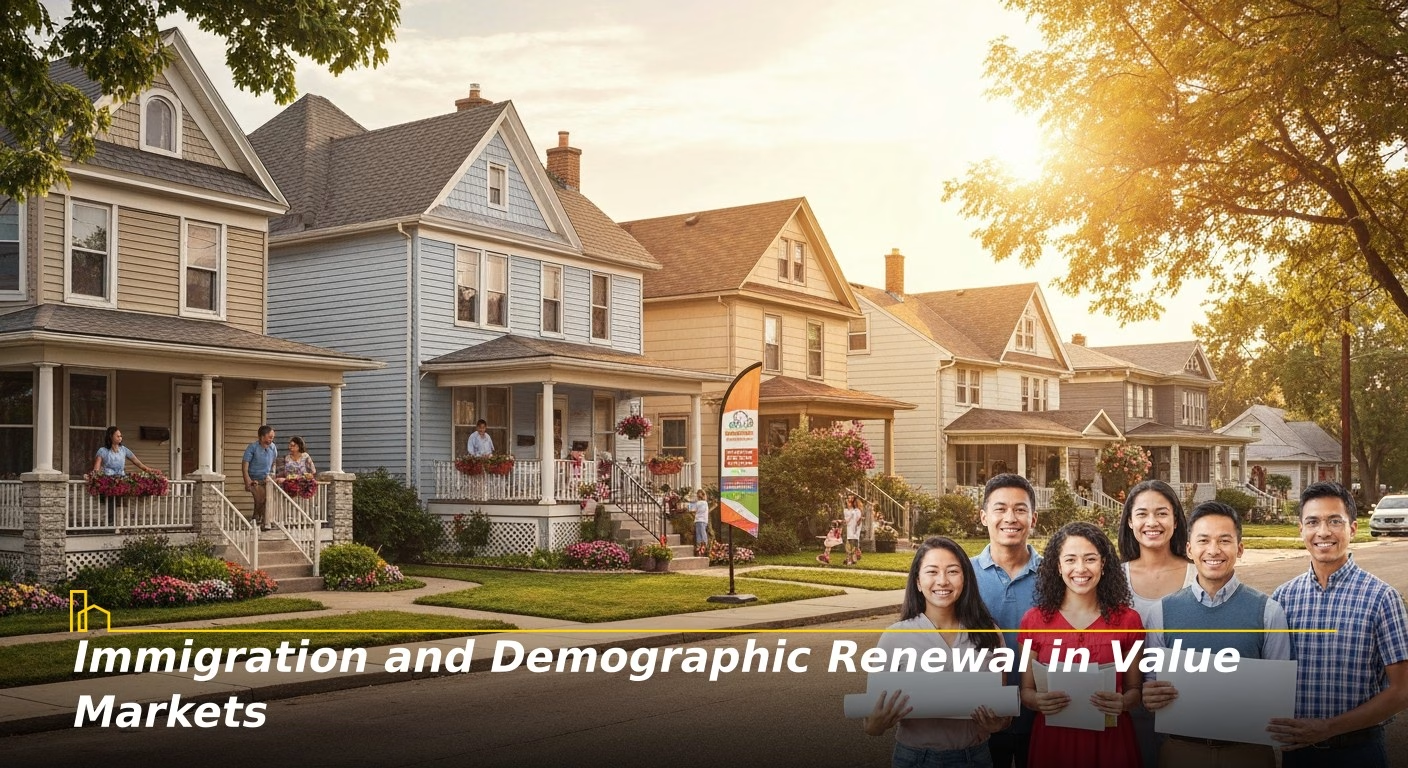
A critical yet often overlooked component of 2026’s value housing markets is the role of immigrant populations in stabilizing and revitalizing interior cities. The narrative of demographic renewal posits that the $3.7 trillion in housing wealth held by immigrants is a vital floor for property values in cities undergoing economic transition. This demographic is not only providing a steady stream of renters but increasingly transitioning into the homeownership class, supported by a maturing secondary mortgage market.
A. The Rise of ITIN and Non-QM Lending
By 2026, the non-agency mortgage market has become the primary vehicle for this demographic renewal. A major driver of this growth is the Individual Taxpayer Identification Number (ITIN) mortgage program, creating a pathway to homeownership for individuals contributing to the U.S. economy despite lacking a Social Security Number. These financing options are particularly transformative in the Midwest, where median home prices are often below the $300,000 threshold.
For an independent contractor or a small business owner with an ITIN, the ability to put 20% down and provide 12 months of bank statements allows them to secure a primary residence in a stable Value Market of Kansas City or Harrisburg. This activity prevents the death spiral of vacancy and declining property values that many interior cities feared during the previous decade. Instead, these neighborhoods are seeing renewed investment in legacy housing stock and a steady increase in local property tax revenues, strengthening municipal services and community stability.
B. Neighborhood Stability
The rental market in immigrant-dense neighborhoods is also evolving. Now, the intensity of ICE enforcement has shifted housing behavior; fear of enforcement leads some mixed-status households to “double up” with family, which can create short-term volatility in vacancy rates for small landlords. However, in sanctuary jurisdictions common in the Great Lakes region, tenant protection ordinances and a culture of mutual trust tend to stabilize these markets. Landlords prioritizing respectful treatment and clear communication often enjoy lower turnover and higher consistent occupancy, as their properties become seen as secure community anchors.

Related article
Eviction Notice FAQs: Can Landlord Put Eviction Notice on Door?
In this article, we will inform tenants of the laws to empower them to protect their rights, avoid unjust evictions, and seek legal remedies when faced with landlord misconduct. On the other hand, landlords benefit from understanding the laws to ensure compliance, avoid legal disputes, and execute eviction proceedings lawfully and effectively…
3. 2026’s Emerging Value Markets: City Spotlights
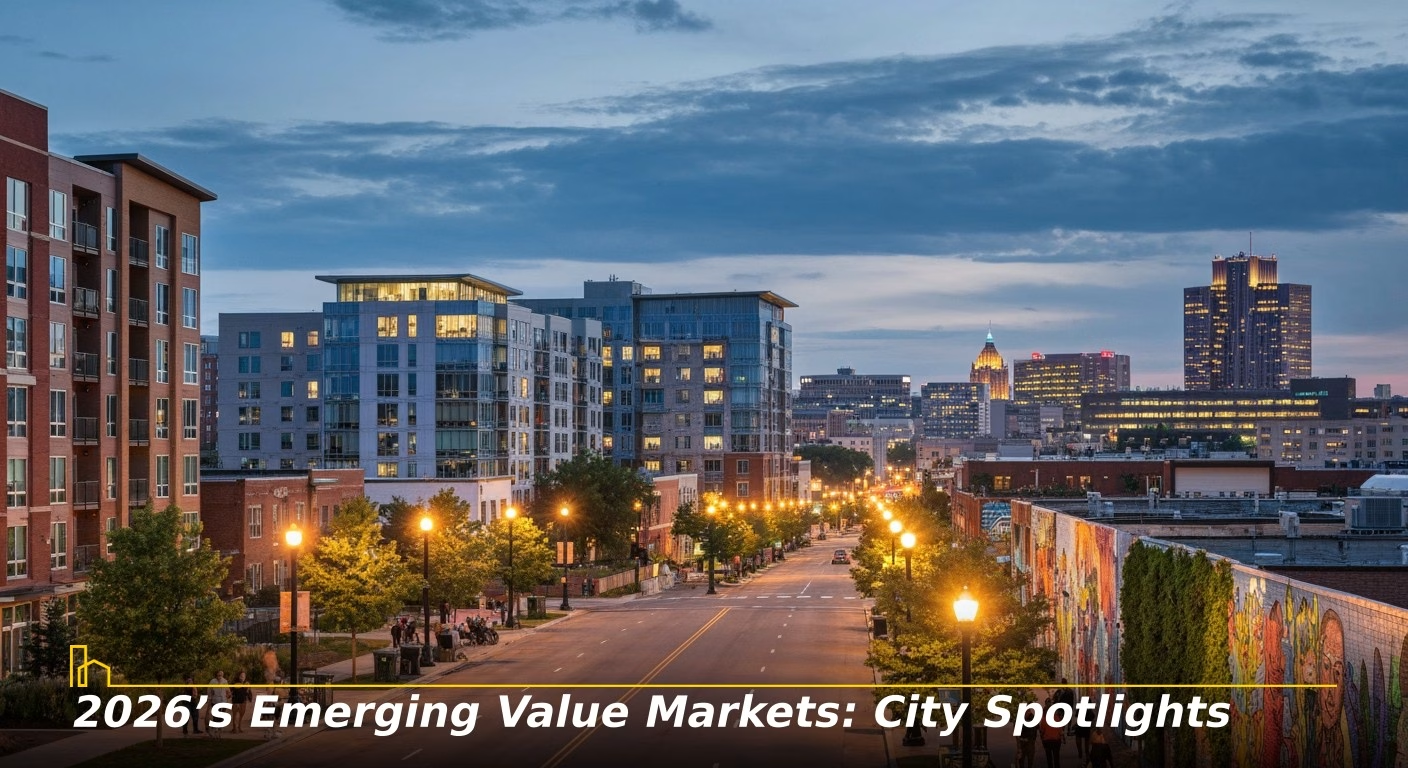
While the region as a whole shows promise, 2026 has spotlighted three specific metro types: medical anchor, logistics hub, and high-tech renaissance city.
A. Rochester, Minnesota: The Medical Anchor
Rochester serves as the primary case study for an emerging value market in 2026. Anchored by the world-renowned Mayo Clinic and the Destination Medical Center (DMC) initiative, Med City has successfully decoupled its housing market from the cyclical fluctuations of the broader economy.
The Mayo Clinic’s influence is unmistakable. As the medical giant undergoes a $5 billion expansion across 15 city blocks, it’s creating a permanent floor for housing demand. The DMC project is projected to create more than 35,000 new jobs by 2030, with a 15% population increase expected by December. Here is considered a strategic value play because property prices currently trade at approximately 15% to 20% below comparable markets in the Minneapolis-Saint Paul area, while vacancy rates for stabilized properties remain tight at around 5.2%.
B. Indianapolis, Indiana: The Logistics Heartbeat
If Rochester is the medical anchor, Indianapolis is the region’s logistical heartbeat. The metropolitan area has solidified its position as a national logistics hub, with transportation and material movement occupations growing by nearly 17% in recent years. This industrial strength provides a sustainable pool of employment for a diverse workforce, including the immigrant demographic.
Now, Indy’s housing market balances steady appreciation (4% to 6%) with remarkable affordability. However, the market is currently in a state of softening and easing due to a surge in supply. There are approximately 13,000 multifamily units under construction, which is expected to exceed the near-term demand. For a renter, this means a wider choice of amenities; for an investor, it requires a shift in strategy toward high-demand northside suburbs like Carmel and Fishers, where institutional demand remains most concentrated.
C. Syracuse, New York: The High-Tech Renaissance
Syracuse represents the third-tier Renaissance market of the year. Long defined by industrial decline, the city has been fundamentally transformed by the announcement of Micron Technology’s Megafab semiconductor project. This $100 billion investment, which officially broke ground on January 16, 2026, has injected an unprecedented level of capital into the region and history of Upstate New York.
The Micron project is expected to generate nearly 50,000 jobs across the state. This influx of tech-salary purchasing power has already triggered a 13.5% increase in median housing values across Onondaga County. Despite the rapid price growth, Syracuse remains significantly underbuilt, with local planners estimating a need for 30,000 units over the next decade. For investors, the Home of the Orange offers a rare pre-boom opportunity to acquire assets in a market transitioning from a low-cost industrial center to a high-value tech hub.
Recommended for you




4. A Practical Framework for Evaluating Value Markets
Navigating the 2026 housing market requires a departure from traditional metrics. A Value Market is no longer a cheap market; it is one where the economic fundamentals and environmental risks are in equilibrium. Families and investors should use the following multi-tiered framework.
A. The Climate and Infrastructure Checklist
- Insurance Share of Mortgage: Target markets where insurance costs represent less than 7% of the monthly payment to avoid premium creep seen on the coasts.
- Water Source Security: Prioritize surface water from the Great Lakes basin over finite groundwater aquifers to hedge against future surcharges or rationing.
- Resilient Building Codes: Identify cities with updated building codes and energy-efficient infrastructure to mitigate Midwest maintenance costs.
- Floodplain Accuracy: Use updated FEMA maps to ensure properties are not in areas where severe convective storms are causing new localized flooding.
B. The Economic and Demographic Metrics
- Institutional Anchors: Verify the presence of a Tier-1 university or a major R1 healthcare system to ensure recession-resistant demand.
- Stabilized Vacancy Rate: Rates between 4.5% and 5.5% indicates a healthy balance of supply and demand without the volatility of oversupply.
- Gross Rental Yield: Aim for properties achieving 0.8% to 1.0% of the purchase price in monthly rent to ensure positive cash flow at current interest rates.
- ITIN Participation: Check for local lenders who offer ITIN and Non-QM products, as these are primary drivers of neighborhood revitalization and price stability.

Related article
13 Best Tips That Make Your Apartment Attractive to a New Tenant
An apartment that’s good, stylish, and functional attracts good tenants who can help maximize returns on investment. Want to stand out from the competition and attract more tenants? Let us help—contact us today for custom advice and services…
5. Risks, Trade-offs, and Growth Tensions

While the Midwest and Great Lakes hubs offer a compelling narrative of safety and value, they are not without significant risks. The Value Play is often a trade-off between current price and future maintenance liability.
A. Legacy Infrastructure and Maintenance Liability
Many of these emerging markets are older Rust Belt”cities with legacy infrastructure. This includes aging sewer systems, lead-pipe water lines, and a housing stock requiring extensive modernization to meet 2026 efficiency standards. In Minnesota and Upstate New York, cold-weather maintenance is a significant expense. Ice dam prevention, boiler servicing, and pipe insulation are non-negotiable annual tasks. Residents are finding that the sticker price of a $200,000 home can be quickly eclipsed by the costs of deferred maintenance and high local property taxes.
B. The Industrial-Residential Conflict
The surge in data center and high-tech manufacturing interest is a double-edged sword. While it brings high-paying jobs, it also places immense strain on local utilities. Hyperscale data centers can use more than 365 million gallons of water a year, equivalent to the consumption of 12,000 households. In parts of Michigan and Indiana, NIMBYism is on the rise as communities express concern over groundwater management. For a residential investor, a city prioritizing industrial tax incentives over residential water security may see long-term degradation of its housing quality.
6. 2026 Outlook: Why These Markets Matter for the Next Decade

The current housing market is one of profound transitions. The era of low-interest-rate-fueled coastal speculation has ended, replaced by an era of Climate Pragmatism. The Midwest and Great Lakes hubs, once considered the Flyover States of real estate, have been redefined as the primary destinations for families and investors seeking a balance of affordability, safety, and long-term stability.
Converging $3.7 trillion in immigrant wealth and a maturing ITIN/Non-QM mortgage market has provided these regions with a demographic durability that protects against economic downturns. Meanwhile, the region’s Freshwater Fortress status provides a hedge against the most severe climate-driven financial shocks. By focusing on cities with robust demographic renewal, lower climate risk profiles, and a clear vision for resource management, HOMEiA readers can secure a future in the most resilient corner of the nation’s residential landscape.
Recommended for you
1. How do ITIN mortgages differ from traditional loans in these markets?
ITIN loans are designed for non-citizens without a Social Security Number. In 2026, they typically require a higher minimum down payment (often 20% to 25%) and 12 months of consistent employment history. However, they allow for alternative documentation such as bank statements and utility payments to prove creditworthiness, making homeownership accessible in affordable Midwest hubs.
2. Does the Great Lakes Compact really protect local property owners?
Yes. The Compact is a legally binding agreement among eight states and two Canadian provinces that prohibits large-scale water diversions outside the Great Lakes basin. For homeowners, this acts as a hydrological firewall, ensuring local water supplies cannot be piped away to water-scarce regions in the Southwest, preserving long-term property utility and value.
3. What kind of down payment assistance is available in 2026 value markets?
Several Value Markets have launched aggressive assistance programs. For example, Michigan’s First-Generation Down Payment Assistance offers $25,000 in deferred loans, while New York’s HomeFirst program provides up to $100,000 for qualifying buyers. These programs are specifically designed to help buyers bridge the gap in high-growth markets like Syracuse.
4. Why is Same Day Pre-Approval a game-changer for these regions?
In competitive markets like Rochester and Syracuse, speed is critical. Using modern Intelligent Document Processing (IDP) technology, lenders can now verify W-2s, bank statements, and tax returns in under four hours. This allows buyers to make firm, credible offers immediately when a well-priced home hits the market, a major advantage for out-of-state relocators.
5. How does the lock-in effect impact inventory in 2026?
The lock-in effect; where owners refused to sell to keep their 3% interest rates, is finally fading. In 2026, life events (births, deaths, and career shifts) are driving more homeowners to list their properties while ignoring current rates. This has led to a 20% year-over-year increase in inventory, providing more choices for families moving to the Midwest.


Related Content