






Step by Step Renters Guide on How To File a Complaint or Lawsuit Against Your Landlord
- Local Editor:Local Editor: The HOMEiA Team
-
Category: Rent , Home Maintenance
Share


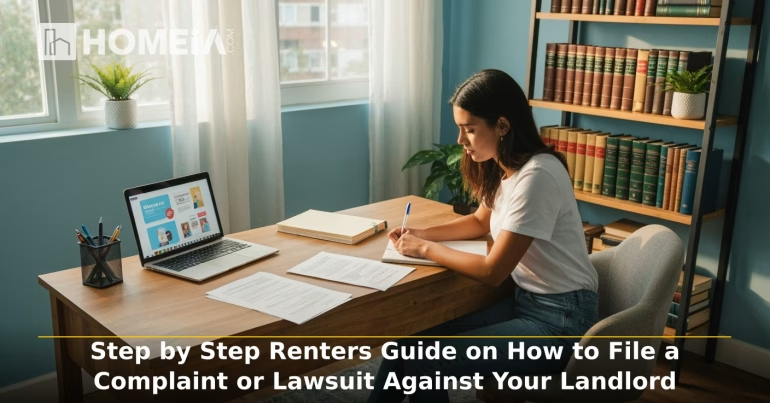
The landlord-tenant relationship is a business arrangement, but gradually evolves into a personal one to the overall nature. Most disputes, whether about unreturned security deposits, ignored repairs, or privacy violations, are resolved through negotiation or firm reminders. However, when a landlord persistently violates the law or the lease, this may no longer be an option. You may need to escalate the matter to external authorities or the court system.
Filing a formal complaint or a lawsuit is a serious step shifting the conflict from a private disagreement to a public legal matter. It requires preparation, evidence, and a clear understanding of your rights. This guide walks you through the escalation process, from organizing your trial binder to filing with government agencies and, if necessary, initiating litigation.
Table of Contents:
- Key Takeaways
- Quick answer: What are my options if my landlord won’t fix problems or keeps violating my rights?
- Step 1: Confirm your issue and review your lease
- Step 2: Gather and organize your evidence
- Step 3: Try one more written demand letter
- Step 4: File a complaint with the right agency
- Step 5: When to talk to a tenant-rights lawyer or legal aid
- Step 6: Considering a lawsuit
Key Takeaways
- Evidence is Mandatory: You cannot win a complaint or lawsuit based on your word alone. Having a paper trail, in vital, composed of chronological log of events, timestamped photos, and preserved text/email metadata.
- Lease Review: Before taking action, verify that your lease does not have specific clauses regarding dispute resolution, including mandatory mediation or arbitration requirements.
- Agency First: For many issues like repairs or discrimination, filing a complaint with government agencies (HUD, Code Enforcement) is faster and cheaper than court and creates an official record.
- Demand Letters: Most courts require you to prove the landlord was provided a final chance to fix the issue. A formal demand letter sent via Certified Mail is often a legal prerequisite to suing.
- Statute of Limitations: There’s a finite window to file. For example, HUD discrimination complaints must be filed within one year, while small claims limits vary by state.
- Retaliation Protection: Filing a valid complaint usually triggers protection against “retaliatory eviction,” preventing the landlord from raising rent or ending your lease in response.
Disclaimer: This guide provides general educational information and does not constitute legal advice. Laws regarding landlord-tenant disputes, small claims limits, and filing procedures vary significantly by state and municipality. You should always consult with a qualified attorney or local legal aid organization regarding your specific situation.

Related article
What To Do If Your Landlord Won’t Make Repairs: Tenant Rights, Evidence Checklist, and Legal Remedies
When a landlord ignores repair requests, renters can be left in unsafe, stressful living conditions. But tenants have legal rights. By documenting issues, providing proper notice, and using local housing laws, renters can push for repairs, protect their health, and hold landlords accountable…
Quick answer: What are my options if my landlord won’t fix problems or keeps violating my rights?
If direct communication fails, there are three levels of escalation:
First, you can file an administrative complaint with government agencies like local Code Enforcement (for repairs) or HUD (for discrimination), which can investigate and fine the landlord.
Second, you can utilize local dispute resolution programs or mediation to reach a resolution out of court.
Finally, if damages are financial (stolen deposit) or severe, you can sue in Small Claims Court for amounts typically under $10,000–$12,500 or Civil Court with the help of an attorney.
Step 1: Confirm your issue and review your lease
Before filing any paperwork, you must clearly define the legal basis of your complaint. Courts and agencies have specific jurisdictions; sending a mold complaint to a Small Claims judge who only handles money disputes will result in a dismissal.
A. Identify the Category of Your Dispute:
- Habitability: Mold, no heat, pests, leaks. (Jurisdiction: Local Code Enforcement/Health Department).
- Financial: Unreturned security deposit, illegal rent hikes, utility overcharges. (Jurisdiction: Small Claims Court/Rent Board).
- Civil Rights: Discrimination based on race, gender, disability, or family status. (Jurisdiction: HUD/State Fair Housing Agencies).
- Harassment/Privacy: Illegal entry, lockouts, threats. (Jurisdiction: Civil Court/Police/Housing Court).
B. Check Your Lease: Read your lease agreement carefully. Look for a “Notice” clause dictating how you must inform the landlord of issues (e.g., “written notice sent to [Address]”). Also, check for an arbitration or mediation clause. Some leases require you to try mediation before resulting in suing.

Related article
Illegal Evictions and Lockouts: How Tenants Can Fight Back and Reclaim Their Home
Being locked out or having utilities shut off by a landlord is illegal in most states and can feel terrifying. Staying calm and responding strategically is critical. Tenant protection laws prohibit “self-help” evictions, and emergency legal remedies, like court orders or police assistance…
Step 2: Gather and organize your evidence
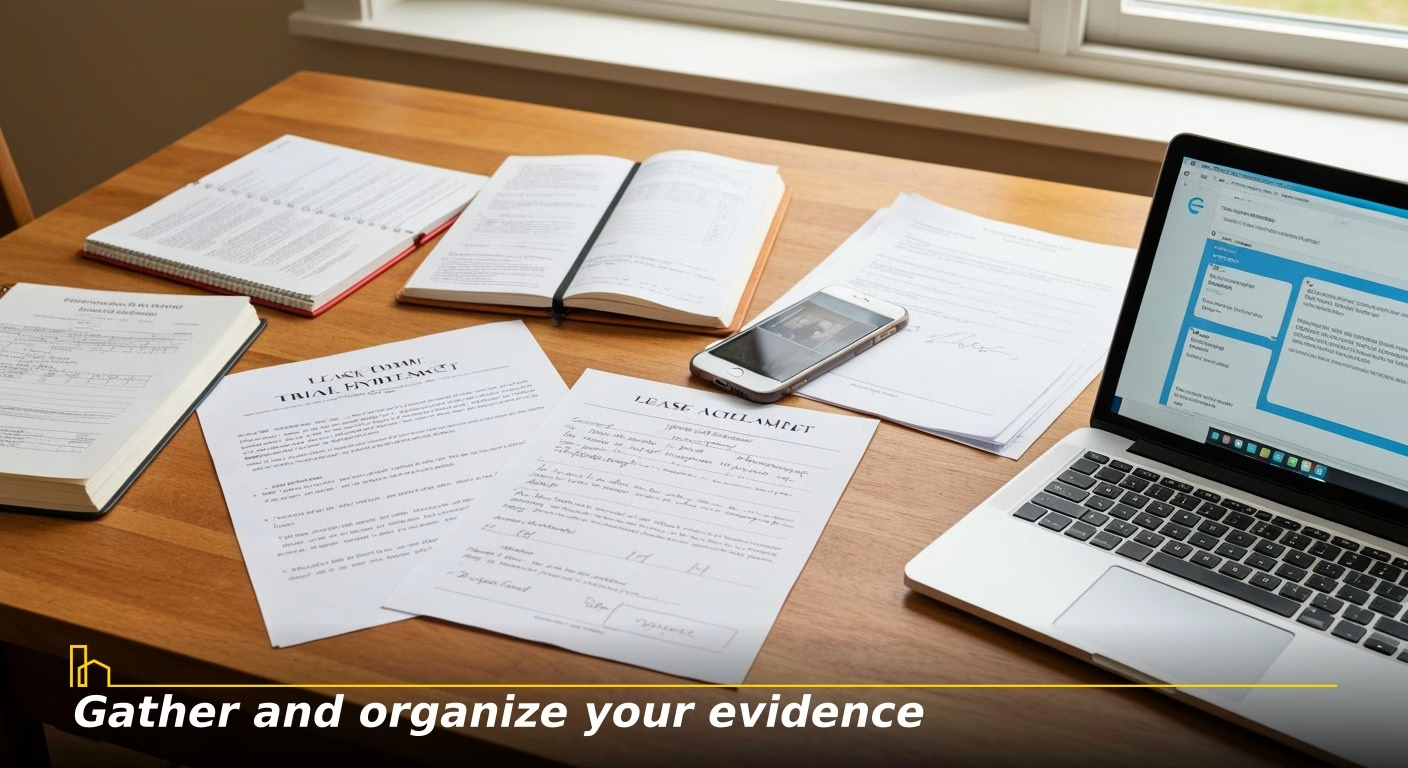
In the eyes of the law, if you cannot prove it, it didn’t happen. You need to build a case file that tells a clear, coherent story to the necessary party.
A. The Trial Binder Approach: Whether physical or digital, organize your evidence into specific categories.
- Contract: Your lease, all addendums, and house rules.
- Timeline (Log): A simple spreadsheet listing every incident. Columns should include: Date/Time, Event Description, Witnesses, and Evidence Reference.
- Visual Proof:
- Photos: Take wide shots of the room and close-ups of the damage. Use a coin or ruler for scale.
- Metadata: Ensure your photos have date/time stamps. Apps like Timestamp Camera can burn this info onto the image.
- Communications:
- Emails: Print these with the full header visible (showing To/From/Date).
- Texts: Do not rely on screenshots, which courts can reject as they’re easy to fake. Use software like Decipher TextMessage or TouchCopy to export text history as a PDF that includes the sender’s phone number and the date/time for every message.
- Financials: Bank statements, cancelled checks, or rent receipts proving you are staying current on rent or showing the amount deducted.
B. Digital Tip: Upload all evidence to a cloud service including Google Drive or Dropbox immediately. Phones can be lost or broken; the cloud is your backup.

Related article
Tenant Rights When a Rental is Unsafe or Uninhabitable: From Code Complaints to Breaking Your Lease Legally
Living without heat, dealing with leaks, or facing pest infestations in a rental endangers health and safety. Landlords cannot legally charge rent for uninhabitable housing. Tenants who understand habitability standards…
Step 3: Try one more written demand letter
Before filing a lawsuit, you usually need to demonstrate that you tried to resolve the issue in good faith. The Demand Letter is your final warning. It serves as Exhibit A in your future lawsuit.
How to Write It:
- Tone: Professional, firm, and devoid of emotion. Avoid insults.
- Content:
- Summary: “On _____, I notified you of [Problem]. As of today, it is not resolved.”
- The Demand: “I request that you _____ by.”
- The Consequence: “If this is not resolved by this deadline, I reserve the right to pursue all available legal remedies, including filing a complaint with [Agency Name] or Small Claims Court.”
- Delivery: Send this via Certified Mail, Return Receipt Requested. The green receipt card is proof the landlord received it. You can also send a copy via email for speed, but the physical letter is the legal standard.
Step 4: File a complaint with the right agency

If the Demand Letter is ignored, your next step depends on the nature of the problem. Agency complaints are often free and do not require a lawyer.
A. For Unsafe Conditions (Code Enforcement)
If your unit is uninhabitable (no water, dangerous wiring, infestation), contact your city or county’s Code Enforcement or Department of Building Inspection.
- Process: An inspector will visit your home. If they find violations, they will issue a “Notice of Violation” to the landlord and may fine them daily until fixed.
- Why do this? The inspector’s report is an official government document. If you later sue for rent abatement (money back), this report proves the unit was illegal.
B. For Discrimination (HUD/Fair Housing)
If you believe you are being mistreated due to race, disability (including denial of service animals), religion, sex, or family status, file a complaint with the U.S. Department of Housing and Urban Development (HUD) or your state’s Civil Rights Department.
- Process: You can file online. HUD will investigate and can charge the landlord with discrimination. This can lead to settlements or federal lawsuits.
- Timeline: You typically have one year from the alleged discriminatory act to file a complaint with HUD.
C. For Consumer Protection (Attorney General)
For wide-scale scams, including a landlord who systematically steals deposits from all tenants or uses illegal lease clauses, file a complaint with your state’s Attorney General or Consumer Protection Bureau. While they may not sue for your specific deposit, they investigate businesses that harm the public.

Related article
How To Document Landlord Harassment and Retaliation For Building A Legal Case
Landlord harassment and retaliation are unlawful tactics used to pressure tenants into leaving without proper eviction. From intimidation and neglect to sudden rent increases, these actions endanger housing stability. Tenants are legally protected when asserting their rights, and…
Step 5: When to talk to a tenant-rights lawyer or legal aid
While you can handle simple repairs or deposits yourself, certain situations require professional legal counsel.
A. Seek Legal Help If:
- Eviction is Threatened: If you receive a “Notice to Quit” or court papers, a lawyer is needed immediately to prevent losing your home.
- High Damages: If suing for significant monetary amounts (e.g., over $10,000) for emotional distress, injury, or severe property damage.
- Complex Harassment: If you are being stalked, locked out, or physically threatened, a lawyer can help you get an emergency restraining order and sue for statutory damages.
- Illegal Lockouts: This is a specific emergency where a lawyer can help you file an “ex parte” (emergency) motion to get back into your home within days.
B. Resources:
- Legal Aid: Organizations including the Legal Services Corporation (LSC) provide free legal help to low-income tenants.
- Right to Counsel: New York and San Francisco are some of the cities guaranteeing free lawyers for tenants facing eviction. Check if your city has a “Right to Counsel” law.
Step 6: Considering a lawsuit
If agencies cannot help and the landlord refuses to pay, you may need to sue.
A. Small Claims Court
This is the “People’s Court.” It is designed for disputes involving financial issues, notably unreturned security deposits or rent refunds for repairs you paid for.
- No Lawyers: In many states (ex. California and Michigan), lawyers are not allowed to represent you in the hearing; you must represent yourself.
- Dollar Limits: There is a maximum amount you can sue for (the “jurisdictional limit”).
- California: $12,500 (for individuals).
- Texas: $20,000 (Justice Court).
- New York: $10,000 (varies by town/village).
- Process: You file a simple form with the court clerk and file ($30–$100), along with paying to have the Sheriff or a process server hand the papers to your landlord.
B. Civil Court (State/Superior Court)
For cases involving large sums, personal injury (e.g., lead poisoning, slip and fall), or requests for “injunctive relief” (a court order forcing the landlord to do something, like fix a roof), you file in Civil Court.
- Complexity: These cases follow strict rules of evidence and procedure. You almost certainly need a lawyer.
- Remedies: You can win actual damages (your losses), statutory damages (penalties set by law, like 2x your deposit), and sometimes punitive damages (punishment for malicious acts).
Conclusion: Filing a complaint or lawsuit is a powerful tool, but it should be used strategically, not impulsively. This is the final step when communication has failed. By meticulously documenting your case, sending a formal demand letter, and choosing the right venue, whether it’s a city inspector or a Small Claims judge, you turn a frustrating situation into an actionable legal claim.
Remember, the goal is not merely winning a fight, but securing a safe home and fair treatment. Always verify local laws, as rules in New York City differ from those in rural Texas, and seek guidance from local tenant advocacy groups before walking into a courtroom.
Recommended for you



FAQs About How To File a Complaint or Lawsuit Against Your Landlord
1. How much does it cost to sue my landlord?
In Small Claims Court, filing fees are generally low, ranging from $30 to $100, depending on your state and the amount suing for. If you have low income, you can ask the court clerk for a Fee Waiver to file for free. In Civil Court, fees are higher (often $200+), and attorney fees can run into the thousands, though many tenant lawyers work on contingency”(taking a % of the win) or rely on laws that force the landlord to pay your legal fees if you win.
2. Can I sue without a lawyer?
Yes. In Small Claims Court, you are often required to represent yourself. The system is designed for regular people, so judges are more lenient with procedure. However, for Civil Court or eviction defense, trying to represent yourself is risky due to complex evidence rules. If you cannot afford a lawyer, seek Legal Aid.
3. How long does a lawsuit take?
Small Claims cases are fast, often getting to a hearing within 1 to 3 months. Civil Court lawsuits are much slower, taking 12 to 24 months or longer to reach trial. Administrative complaints (HUD/Code Enforcement) vary; a code inspection might happen in days, while HUD investigations can take months.
4. Can my landlord evict me for suing them?
No. It is illegal in almost every state for a landlord to evict, harass, or raise rent because you filed a complaint or lawsuit. This is called Retaliation. If they attempt to evict you shortly after filing (e.g., within 6 months), you can use the lawsuit as a defense in eviction court, and the court often presumes the eviction is retaliatory.
5. What if I win but the landlord won’t pay?
Winning the lawsuit gives you a “Judgment,” but the court does not collect the money for you. If the landlord refuses to pay, you must take extra steps to enforce the judgment, whether it be garnishing their bank account or placing a lien on their property. This requires filing additional paperwork with the court.


Related Content