






Your California Tenant Rights: A Guide to a Safe, Pest-Free Home
- Local Editor:Local Editor: Christopher Gorrie
- Category: USA , California


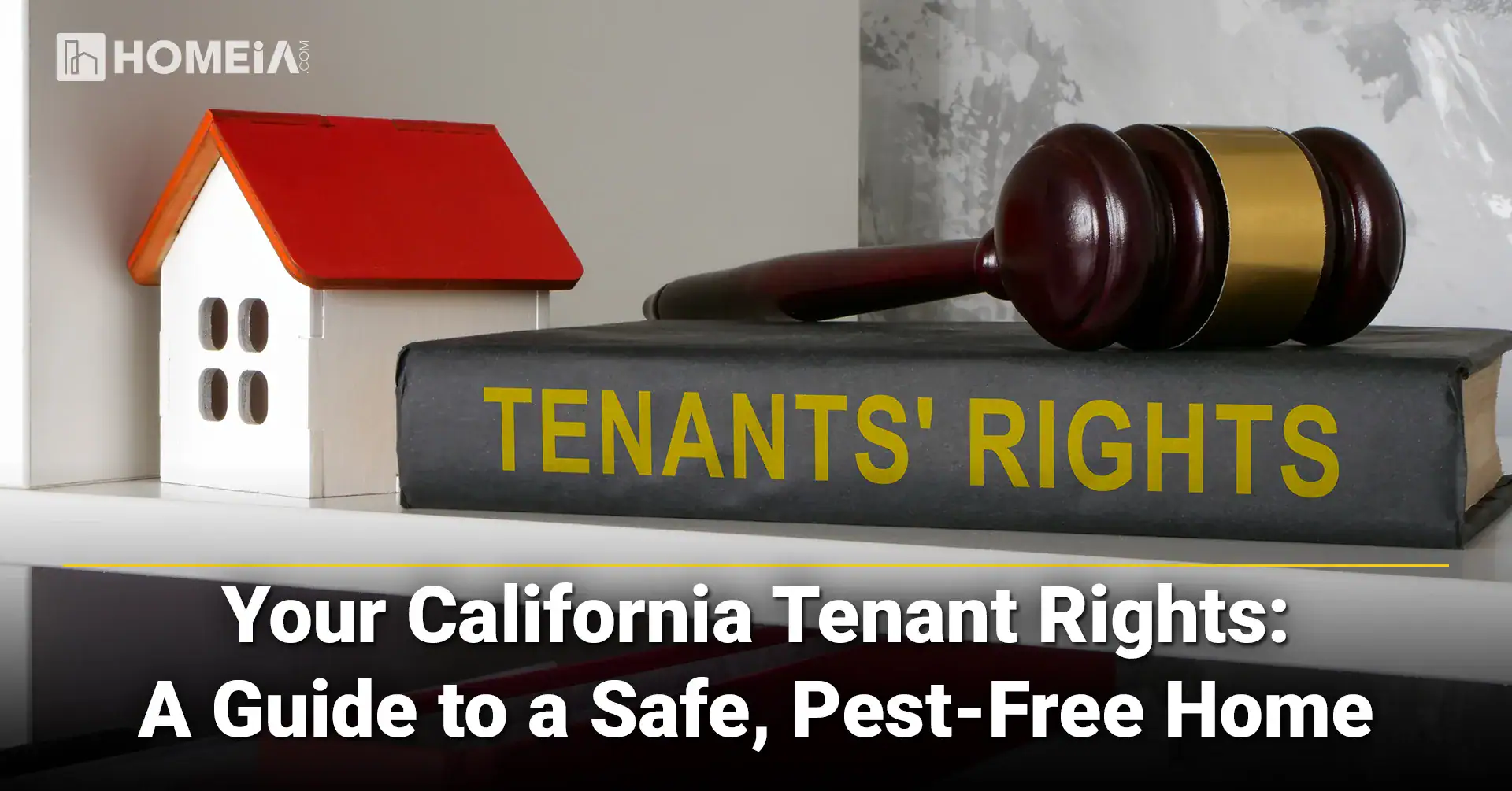
Imagine coming home to a place that is safe, clean, and healthy. These rights are enforced at both the state and local levels. For example, the San Francisco Department of Public Health operates a dedicated Healthy Housing Inspection program, and the Los Angeles Housing Department (LAHD) has a Systematic Code Enforcement Program (SCEP) that proactively inspects buildings. Knowing your city-specific resources is your first line of defense. Every renter has what is called the “right to habitability.” This is a fancy way of saying your landlord must provide you with an apartment that is fit for people to live in. A big part of this is keeping your home free of pests like cockroaches, rats, mice, and bed bugs.
This California Tenant Rights guide will explain your rights in simple terms. We will cover what your landlord must do, what you should do if there’s a problem, and how new laws in 2025 protect you. You will learn how to get the repairs you need and how to stand up for your right to a healthy home. If you need help understanding these rights or communicating with your landlord, you can seek advice from a legal professional such as Castelblanco Law Group.
If you’re also dealing with other issues, knowing your broader rights is key. You can learn more about this in our guide on common questions about renters insurance, which can sometimes help in certain situations.
Key Takeaways
- Your Home Must Be Pest-Free: California law says landlords must keep your rental unit free of pests. This is a basic part of providing a “habitable” home.
- You Must Tell Your Landlord First: If you see pests, you must properly notify your landlord in writing and give them a reasonable amount of time to fix it.
- You Have Powerful Options if They Don’t Help: If your landlord ignores the problem, you have rights like calling city inspectors, paying less rent (“repair and deduct”), or even moving out without penalty.
- You Are Protected from Revenge: It is illegal for a landlord to evict you, raise your rent, or punish you just for complaining about a pest problem or other health and safety issues.
- The Landlord Usually Pays: In most cases, the landlord is responsible for paying for pest control treatments, unless you caused the infestation through extreme uncleanliness. Be aware that ordinances can be stricter: Many California cities have their own rules. Oakland’s “Warranty of Habitability” ordinance (OMC Ch. 8.22), for instance, requires landlords to provide pest control supplies for minor issues. And then there’s San Diego’s Housing Code (SDMC Ch. 9, Art. 4, Div. 3), which has specific protocols for bed bug treatment in multi-unit buildings, including mandatory inspection of adjacent units. Moral of the story: always check your municipal code.


Related article
Moving to California: The Complete Relocation Guide & Checklist
This comprehensive guide helps you plan a successful move to California, covering cost of living, job market, moving timelines, and top cities like Silicon Valley, Los Angeles, San Diego, and Sacramento. Make informed decisions for your West Coast relocation with practical checklists and real insights for a smooth transition…
I. What Does “Habitability” Mean? Your Right to a Livable Home

California law is very clear. Every rental home must be “habitable.” This means it must be fit for people to live in. The law lists specific things a landlord must provide, including:
- Good repair: The building must be structurally sound.
- Clean and sanitary conditions: This includes being free from garbage, debris, and vermin (pests like rodents and insects).
- Working plumbing and gas facilities.
- Working heating.
- Proper weatherproofing (roof, windows, walls that keep out rain and wind).
A pest infestation—whether it’s cockroaches, ants, rodents, or bed bugs—makes your home unclean and unsanitary. Therefore, dealing with pests is a fundamental part of your landlord’s job to keep the property habitable.
New laws in 2025 have made these rules even stronger. For instance, the updated 2025 California Building Standards Code (Title 24), effective January 1, 2026, includes enhanced provisions for weatherproofing and sealing entry points to prevent pest infestations. Furthermore, cities like Berkeley have passed local ordinances requiring landlords to provide integrated pest management (IPM) plans for multi-unit buildings. Landlords are now expected to address habitability problems, including pest infestations, more quickly than in previous years.

Related article
The Pros and Cons of Living in California: Complete Relocation Guide
In this article, we cover the Pros and Cons of living in California and explore the top cities for various demographic groups. We also provide plenty of insights to help you ease the relocation process and find your perfect destination in California…
II. Who is Responsible for Pest Control? Landlord vs. Tenant
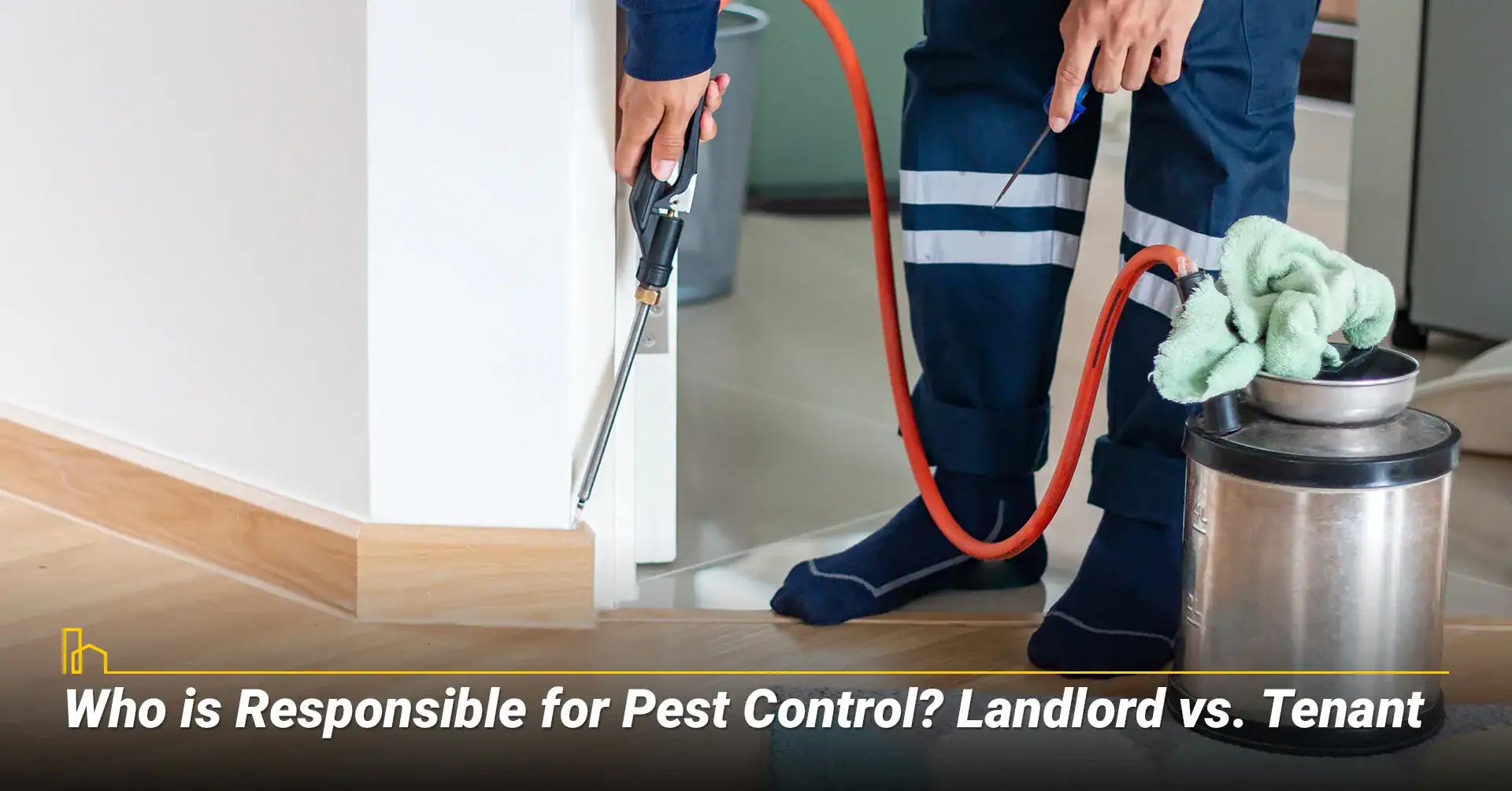
This is a common question. The basic rule is: The landlord is responsible for pest control.
Why? Because keeping the property habitable (livable) is the landlord’s duty. Since pests make a home uninhabitable, it’s the landlord’s problem to solve.
The landlord’s responsibility includes preventative measures. A 2022 ruling in Los Angeles County (Green v. Superior Court) affirmed that landlords must address the root causes of infestations, such as sealing entry points in the building’s structure, not just spraying for bugs when they appear. If your apartment has cracks in the walls or floors that pests use to enter, that is the landlord’s responsibility to fix.
When is the Tenant Responsible?
There is one main exception. If you caused the infestation through your own actions, you might have to pay for it. Examples include:
- Never taking out the trash, leading to a major ant or cockroach problem.
- Bringing in furniture from the street that is infested with bed bugs.
- Hoarding items that attract rodents and insects.
However, the landlord cannot just blame you. They must have proof that you were the cause. A clause in your lease that says “tenant pays for all pest control“ is likely illegal and unenforceable if the problem was not your fault. Keep in mind that the burden of proof is high. For a landlord to charge you for bed bug treatment in San Jose, for example, they would need a certified pest control operator’s report stating the infestation originated exclusively in your unit, which is extremely difficult to determine. Most ‘tenant-pays’ clauses are considered void as against public policy in California under the California Civil Code § 1942.4.

Related article
The 7 Best Cities to Live in California
For those looking at California as a potential home base, there are a variety of considerations to make when weighing a decision. Some may value safety and community, while others could not care less and just want to club all night. More factors like climate, recreation, and, certainly for most, proximity to the sea will be major considerations…
III. A Step-by-Step Guide: What to Do if Your Landlord Won’t Fix a Pest Problem
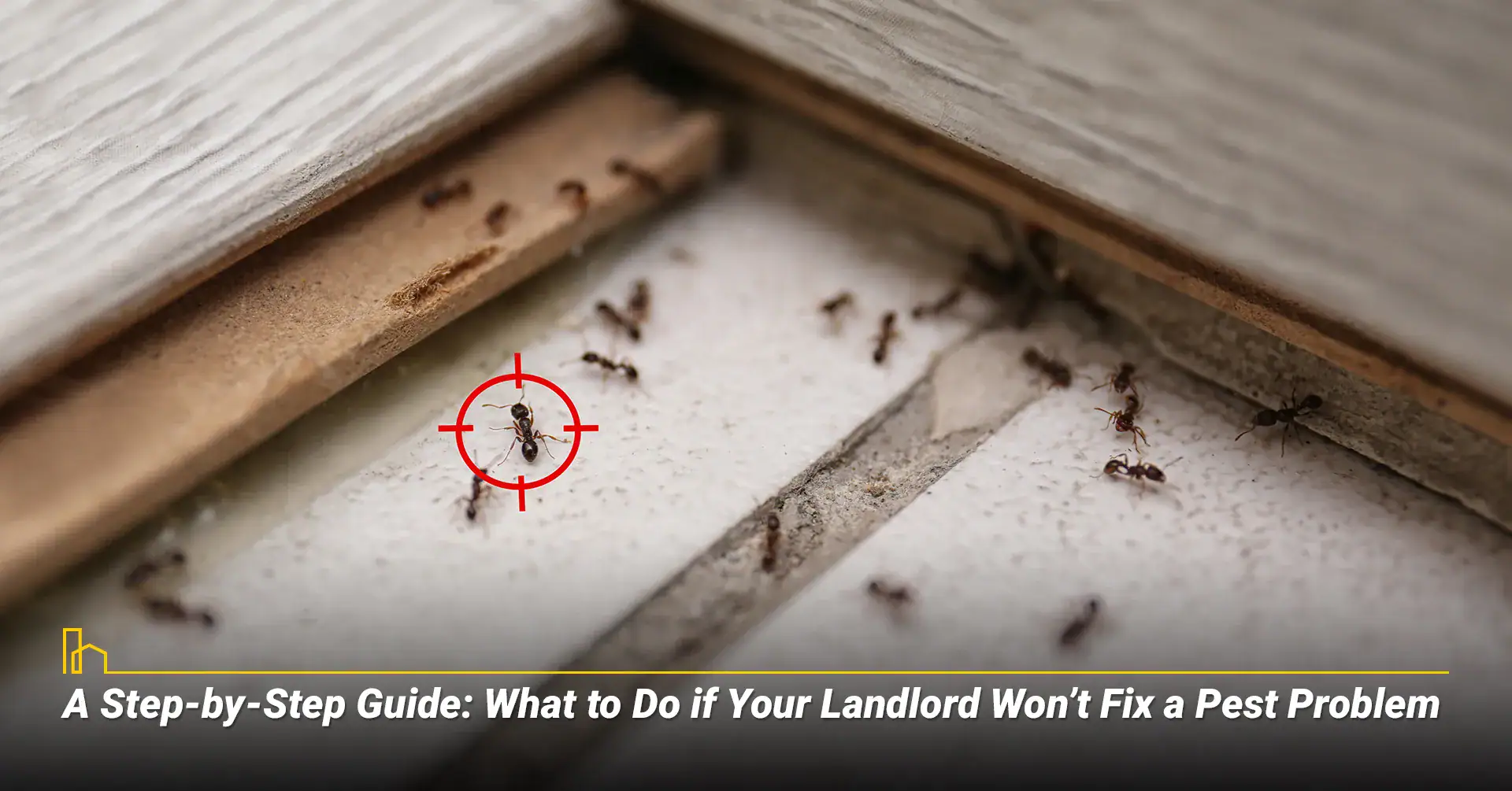
If you discover pests, don’t panic. Follow these steps.
Step 1: Document Everything
Before you do anything else, start collecting evidence.
- Take photos and videos of the pests, their droppings, and any bites on your body.
- Write down details: When you see them, where you see them, and how many.
- Keep a log of every time you contact your landlord about the issue.
Pro Tip: Use a free app like Timestamp Camera to add a date and location stamp to all media. For bed bug identification, the University of California Statewide IPM Program’s website offers high-resolution photos and a comparison guide for bites vs. other skin irritations. This documentation is crucial for any case with your local rent board or in small claims court.
Step 2: Notify Your Landlord in Writing
You must officially tell your landlord about the problem. Do this in writing (email or letter is best). This creates a paper trail. Be polite but clear. Say:
- What the pest problem is.
- When you first noticed it.
- That you request they fix it to keep the unit habitable as required by law.
- Keep a copy of this letter or email for your records.
If you’re in Southern California, know that the City of Los Angeles Housing Department (LAHD) provides a free online “Tenant Request for Repair” form that generates a formal notice. In the Bay Area, the San Francisco Tenants Union offers downloadable, legally-vetted template letters in English, Spanish, and Chinese. Using these ensures you include all necessary legal language, such as citing California Civil Code § 1942.
Recommended for you



Step 3: Give Them Time to Fix It
By law, you must give your landlord a “reasonable” time to fix the problem. What is reasonable? For a serious pest infestation, 30 days is often considered the maximum, but for severe issues like rodents or bed bugs, it should be much faster.
However, “reasonable” is defined by severity and local code. Take San Diego Code Enforcement (SDMC § 98.0703) for example. The city expects action within 72 hours for rodents or cockroaches. For bed bugs, the California Department of Public Health recommends treatment commence within 7 days. Santa Monica’s ordinance (SMMC § 4.60.070) requires landlords to begin remediation within 48 hours of receiving notice of a vermin complaint.
Step 4: If They Still Do Nothing, Escalate
If your landlord ignores you or refuses to fix the problem, you have powerful options. Remember, you are protected from retaliation for using these options.
- Option A: Call Code Enforcement. Your local city or county has a department called Code Enforcement or Health Department. Call them and file a complaint. An inspector will come out. If they find code violations (like pests), they will order your landlord to fix it. This official order is very powerful. When researching your local stipulations, don’t just search “code enforcement.” Search for “[Your City] + Tenant Habitability Program” or “[Your County] + Environmental Health Division.” For example:
- LA County: Department of Public Health, Environmental Health
- SF: Department of Building Inspection (DBI) – Housing Inspection Services
- Sacramento: Community Development Code Enforcement
- San Jose: Code Enforcement’s Neighborhood Preservation Unit
- Calling the right department first saves critical time. Many departments, like Oakland’s, allow you to submit service requests online with photo evidence.
- Option B: Repair and Deduct. You can hire a professional pest control company yourself, pay for it, and then deduct the cost from your next month’s rent. WARNING: There are strict rules for this. The cost cannot be more than one month’s rent, you can only do it twice in a 12-month period, and you must have already notified your landlord in writing. It is best to talk to a lawyer before doing this. Additionally, before you repair and deduct, you may be required to notify your landlord of your intent. Oakland’s “Warranty of Habitability” ordinance (OMC 8.22.050) requires a second written notice stating you intend to use the repair and deduct remedy if the issue isn’t fixed within 14 days. Failure to follow this precise process can invalidate your claim and lead to an eviction filing for non-payment of rent.
- Option C: Move Out (Constructive Eviction). If the problem is so severe that the apartment is unlivable, you may have the right to break your lease and move out immediately without penalty. This is a big step. You should definitely get legal advice before doing this. Constructive eviction is a high-stakes legal claim. You must prove the landlord’s failure to act made the unit “uninhabitable.” Courts often look for official documentation. For example, a tenant in Redding successfully used a Shasta County Health Department closure order to break their lease after a severe rodent infestation. Without a similar official finding, you could be held liable for breaking the lease. The 2025 California Tenant Protection Act strengthens protections against retaliatory evictions if you complain about habitability issues. Renters receiving housing assistance have an additional option: this Section 8 transfer guide explains how to move your voucher to a new state if your current rental becomes uninhabitable.
For more on dealing with difficult property issues, you can read about what landlords can legally require regarding cleanliness.
IV. How the 2025 California Tenant Protection Act Keeps You Safe

The California Tenant Protection Act (TPA) is a big law that stops landlords from unfairly evicting tenants or raising rents too much. It also protects you when you complain about problems.
The TPA’s “just cause” eviction protections (CCP § 1946.2) do not apply to all properties. Single-family homes and condos owned by individuals (not corporations) are often exempt unless leased through a company. However, many cities have their own, stricter ordinances. For example, San Jose’s ”Apartment Rent Ordinance” (CH. 17.23) and Glendale’s Rent Stabilization Ordinance provide “just cause” protections that cover more types of housing than the state law. Always check your local ordinances.
Protection from Retaliatory Evictions
A “retaliatory eviction” is when a landlord tries to evict you because you complained about something like a pest problem. The TPA makes this illegal. If you have complained about pests in the last 6 months and then get an eviction notice, the law assumes it is retaliation. The landlord would have to prove to a court that they are evicting you for a legitimate reason, not because you complained.
“Just Cause” for Eviction
The TPA says a landlord can only evict you for a “just cause” (a good reason). Good reasons include not paying rent or causing significant damage. Reporting a pest problem is NEVER a “just cause” for eviction.
Conclusion: You Have the Power to Take Action
Living with pests is both stressful and unhealthy, but you are not powerless. California law provides strong protections to ensure that your home remains safe and habitable. If you encounter this issue, the first step is to document the problem with photos and notes, then notify your landlord in writing.
If your landlord fails to take action, you can escalate the matter by contacting code enforcement or seeking legal assistance. Your home is your sanctuary, and by knowing your rights, you can take the necessary steps to keep it that way. You are not alone in this process, as California has a strong network of tenant advocacy groups ready to help.
For example, the California Rural Legal Assistance (CRLA) supports agricultural communities in the Central Valley, while tenants in the Inland Empire can reach out to the Fair Housing Council of Riverside County. A quick online search for “[Your County] tenant resources” can connect you with local experts, and the California Department of Justice also offers a comprehensive online guide to landlord-tenant issues.
Recommended for you




FAQs About California Tenant Rights
1. My lease says I have to pay for pest control. Is this legal?
Probably not. Unless you caused the infestation through your own extreme actions, the responsibility for maintaining a habitable home (which includes pest control) falls on the landlord. Such a clause is likely unenforceable.
If you are presented with a lease containing such a clause in a competitive rental market like Orange County or Silicon Valley, you can try to negotiate its removal before signing. Once you sign, challenging it is still possible but more difficult. Document the property’s condition with a video walk-through before you move in to preempt any false claims that you brought the pests. The 2025 California Department of Real Estate Landlord/Tenant Guide explicitly states that such clauses are generally unenforceable if the infestation is not the tenant’s fault.
2. What if my neighbor’s messy apartment is causing the bugs to come into my clean apartment?
This is still the landlord’s problem. The landlord is responsible for ensuring the entire property is pest-free. They need to inspect other units and treat the building as a whole.
This is a common issue in large apartment complexes in cities like Long Beach or San Francisco. In your written notice to the landlord, be specific: “The infestation appears to be originating from a neighboring unit and requires treatment of the entire building.” This language triggers their duty under California Health and Safety Code § 17920.3 to investigate the common areas and adjacent units, not just yours. The 2025 California Building Code includes new standards for sealing between units in multi-family dwellings to prevent pest migration.
3. Are bed bugs treated the same as other pests?
Yes. Bed bugs are a serious health and safety issue that make an apartment uninhabitable. Landlords are absolutely responsible for eradicating them. The process for getting them to act is the same: document, notify in writing, and escalate if needed.
4. Can I just stop paying rent if my landlord won’t fix a pest problem?
No. This is very dangerous. If you stop paying rent without following the proper “repair and deduct” rules, your landlord can start the eviction process against you for non-payment of rent. Always follow the legal steps.
5. Where can I get free or low-cost legal help?
You can contact:
- Legal Aid Foundation in your county.
- Tenant’s Unions in your city (like the SF Tenants Union or LA Tenants Union). Also look for “[Your City] Rent Board” or “[Your City] Housing Rights Center” online. For example:
- Fresno: Central California Legal Services (559-570-1200)
- Santa Ana: Community Legal Aid SoCal (714-571-5200)
- Sacramento: Sacramento Tenant’s Union (916-749-7458)
- Many of these organizations offer free tenant rights workshops. The State Bar of California also offers an online lawyer referral service to find a qualified attorney in your area.
- Law School Clinics where law students supervised by professors give free advice.
Dealing with a bad rental situation can make you consider moving. If so, our resource on essential steps for moving to a new city might be helpful.
Share