






7 Most Affordable Places to Live in New Hampshire
- Local Editor:Local Editor: The HOMEiA Team
- Category: USA , New Hampshire


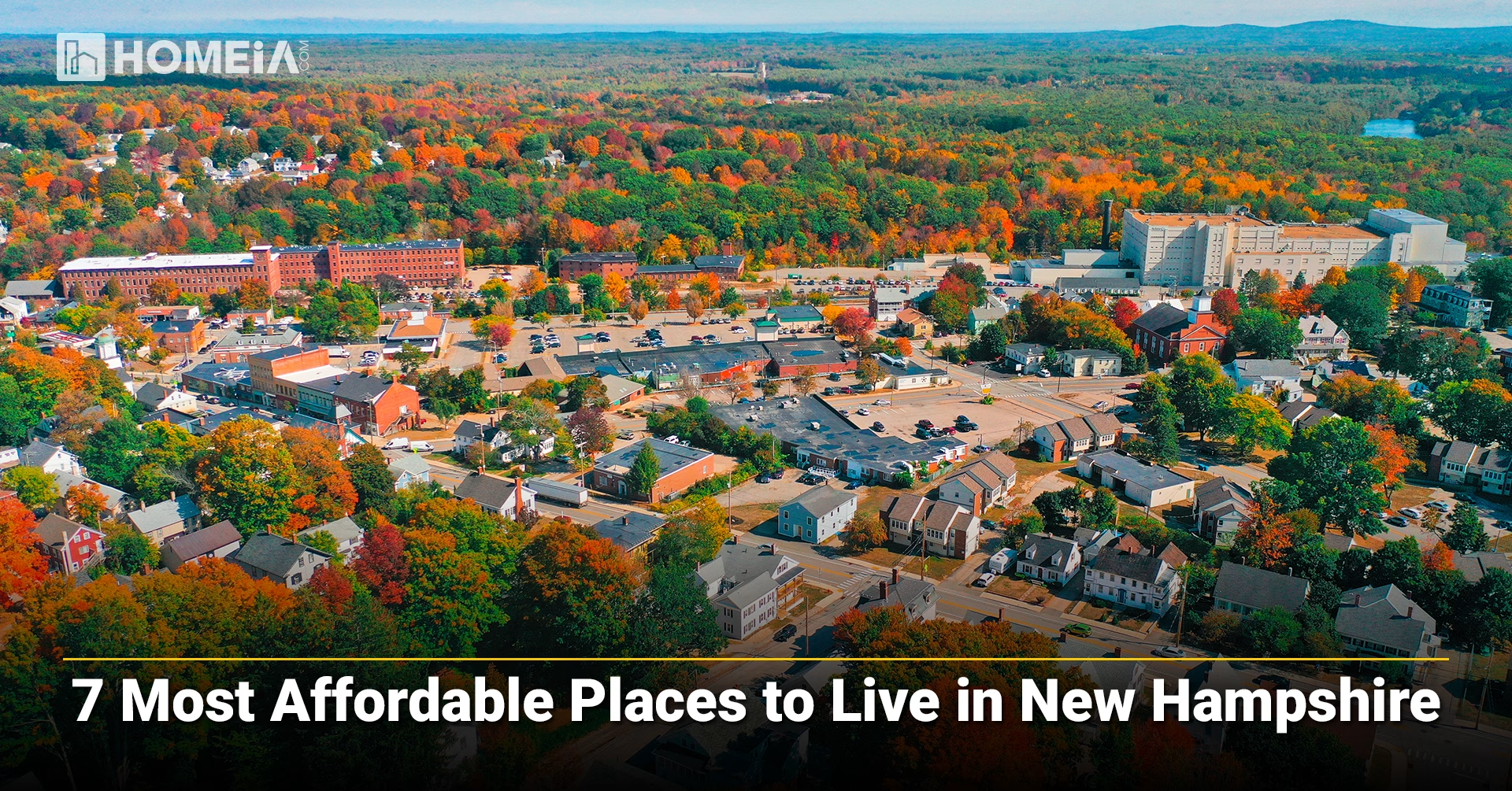
In a nation where housing costs continue to climb, New Hampshire stands out—not only for its stunning landscapes and rich history, but for their remarkably affordable cost of living compared to neighboring New England states. With a median home price significantly below the regional average and no state income or sales tax, the Granite State offers a compelling case for families, remote workers, and retirees seeking a life rich in experience, not expense. However, affordability varies widely throughout, making finding the right community key to balancing budget with lifestyle.
This guide digs deep to provide a detailed, data-driven analysis of the cheapest places to live in New Hampshire. We’ve crunched the numbers on housing, utilities, transportation, and more to bring you seven cities and towns where you can achieve financial stability without sacrificing the unique New England experience. If you’re also considering other regions, you might find our guide on the most affordable places to live in Ohio helpful for comparison.
Key Takeaways
- Widespread Affordability: New Hampshire’s overall cost of living is 5%-15% below the New England average, with many communities offering wallet-friendly housing, especially compared to neighboring Massachusetts and Vermont.
- Variety of Options: Here, affordable living isn’t limited to remote towns; this includes suburbs, university cities, and communities with prosperous job markets, offering choices for every lifestyle.
- Trade-Offs Exist: The most affordable cities often come with trade-offs, including fewer job opportunities outside key sectors, higher property taxes, or more remote locations that require longer drives for major amenities.
- Beyond the Purchase Price: True affordability takes into account utility costs, which can be high in areas with harsh winters, and transportation expenses, which are substantial in isolated communities.
- Essential to Research: Safety and school ratings vary dramatically from city to city, making it crucial to research specific neighborhoods rather than relying on statewide generalizations.
I. Methodology: How We Chose the Most Affordable Places
Our selection of these seven locations is based on a weighted criterion prioritizing key metrics relevant to residents seeking value. Our goal is to identify places that offer a harmonious balance of affordability, access to essentials, and community, not just the lowest price tag.
- Housing & Affordability (30%): The primary driver for relocation. We’ve examined median home price, average monthly rent, and overall affordability compared to U.S state averages—using crucial ratios like home-price-to-income to gauge true accessibility in a high-cost environment.
- Cost of Living (25%): Beyond housing, this metric evaluates the day-to-day expenses defining a budget, including cost of groceries, utilities, transportation, and healthcare relative to other parts of NH.
- Access & Infrastructure (20%): Here, affordability can be negated by isolation. This criterion assesses critical access to groceries, healthcare facilities, major employers, and reliable internet and transportation links.
- Community & Safety (15%): A fundamental need. This assesses crime rates and considers the strength of community engagement, social offerings, and amenities that contribute to a high quality of life.
- Economic Resilience & Opportunity (10%): For long-term viability, we evaluate economic diversity, key industries, and employment trends to ensure a community is built for a stable and prosperous future.
Data for this article is compiled from verified 2026 sources, including Zillow, the U.S. Census Bureau, Bureau of Labor Statistics, FBI crime data, and local market reports.

Related article
Our Methodologies to create HOMEiA Score Ratings for Each Group of Content
HOMEiA uses a consistent, data-driven methodology to evaluate U.S. states for livability, affordability, and long-term value. Our analysis centers on key factors such as Housing and Affordability, Cost of Daily Living, Access and Infrastructure, Community Strength, Safety and Quality of Life, Economic Resilience and Job Market…
7 New Hampshire Communities, One State: A Quick Comparison Table
City | HOMEiA Score | Cost of Living | Avg. Rent (2-Bed) | Home Price to Income Ratio | Income to Rent Ratio | Safety Rating |
|---|---|---|---|---|---|---|
| Berlin | 78/100 | ~18% below U.S. avg | $800 | ~2.3:1 | ~56x | 45/100 |
| Claremont | 80/100 | ~10% below U.S. avg | $950 | ~3.0-4.1:1 | ~49.5x | 65/100 |
| Rochester | 81/100 | ~10-12% below U.S. avg | $900 | ~4.1-4.5:1 | 61.1x | 60/100 |
| Somersworth | 82/100 | ~15% below U.S. avg | $850 | 3.6:1 | 56.5x | 58/100 |
| Laconia | 84/100 | ~10-12% below U.S. avg | $900 | 3.4-3.9:1 | 55.6x | 62/100 |
| Concord | 85/100 | ~5% below U.S. avg | $1,300 | 4.1:1 | 57.7x | 70/100 |
| Manchester | 87/100 | ~10% below U.S. avg | $950 | 4.9-5.1:1 | 54.7x | 55/100 |
Notes on Data Accuracy:
- Home Price to Income Ratios vary slightly in sources; Berlin’s ratio is closer to 2.3:1 based on median income of ~$39,000 and median home price around $90,000 to $95,000 in parts, but recent appreciation has pushed median home values to near $189,000 (median varies by neighborhood).
- Rent values in Berlin range broader ($800-$1,300); the median stated in this article is $800 but source data shows higher rents in some reports.

Related article
The Pros and Cons of Living in New Hampshire
New Hampshire blends colonial charm, outdoor adventure, and low taxes with strong community life. But it also brings harsh winters, high housing costs, and limited transit. This guide breaks down the key pros and cons of living in the Granite State and highlights its top cities for professionals, families, and retirees.
II. Detailed Community Analysis: Seven Affordable Enclaves
1. Berlin: The North Country Value Hub

HOMEiA Score: 78/100
- Cost of Living: ~18% below U.S. average
- Monthly Rent: Ranges from $800 to about $1,300
- Home price to income ratio: Approximately 2.3:1 to 4.1:1 depending on data source
- Income to rent ratio: Approximately 56x
- Safety rating: 45/100
A. Cost of Living & Housing: Berlin is one of the most affordable cities in New Hampshire where you can find some of the lowest rents and home prices in the state. Median home values have risen but still offer significant value under $190,000 on average. This is the place to prioritize cost-minimization above all else.
B. Economy & Job Market: Workcenters on healthcare, education, and manufacturing, with Androscoggin Valley Hospital as a major employer. Efforts continue to diversify beyond traditional sectors.
C. Access & Infrastructure: Located on the Androscoggin River, it’s critical as a service hub for the rural North Country and connected by Route 16. Internet infrastructure is reliable but can vary in rural outskirts.
D. Quality of Life & Culture: The City That Trees Built provides access to outdoor recreation and natural beauty but faces socioeconomic challenges reflected in its safety rating.
2. Claremont: The Connecticut River Valley Gem

HOMEiA Score: 80/100
- Cost of Living: ~10% below U.S. average
- Monthly Rent: ~$950
- Home price to income ratio: Around 3.0 to 4.1:1
- Income to rent ratio: 49.5x
- Safety rating: 65/100
A. Cost of Living & Housing: Claremont’s median home price is roughly $230,000 to $342,000 depending on the source, with many homes under $250,000, making it affordable relative to state averages.
B. Economy & Job Market: Stable economy with healthcare, education, and manufacturing employment. Proximity to Vermont expands job opportunities.
C. Access & Infrastructure: Well-situated at major route crossroads, has convenient access to hospital and retail amenities. Near Dartmouth College and the cultural resources of the Upper Valley.
D. Quality of Life & Culture: Residents maintain deeply-rooted community identities, safe environments, and a small-city feel with modern services.
Recommended for you




3. Rochester: The Seacoast Region’s Best Value

HOMEiA Score: 81/100
- Cost of Living: ~10-12% below U.S. average
- Monthly Rent: $900
- Home price to income ratio: About 4.1 to 4.5:1
- Income to rent ratio: 61.1x
- Safety rating: 60/100
A. Cost of Living & Housing: Offers ideal value in the Seacoast, where median home prices range widely but remain below many coastal benchmarks, enabling affordability.
B. Economy & Job Market: Diverse economy includes healthcare, retail, and manufacturing, with proximity to Portsmouth and Dover employment hubs.
C. Access & Infrastructure: Revered infrastructure with regional connectivity, utilities, and amenities.
D. Quality of Life & Culture: Family-friendly community identity with commendable safety and access to coastal amenities without associated costs.
4. Somersworth: The Border City Advantage
HOMEiA Score: 82/100
- Cost of Living: ~15% below U.S. average
- Monthly Rent: $850
- Home price to income ratio: 3.6:1
- Income to rent ratio: 56.5x
- Safety rating: 58/100
A. Cost of Living & Housing: Somersworth has among the lowest homeownership barriers, with many homes below $250,000.
B. Economy & Job Market: Economic prosperity is diverse with manufacturing, healthcare, and retail; the Maine border location enhances economic and cultural aspects.
C. Access & Infrastructure: Pristine highway access and amenities; serves the Seacoast region well.
D. Quality of Life & Culture: Community-oriented with average safety; industrial heritage roots are strong.
5. Laconia: The Lakes Region Retreat
HOMEiA Score: 84/100
- Cost of Living: ~10-12% below U.S. average
- Monthly Rent: $900
- Home price to income ratio: 3.4 to 3.9:1
- Income to rent ratio: 55.6x
- Safety rating: 62/100
A. Cost of Living & Housing: One of the more affordable spots in the Lakes Region. Median home prices hover around $410,000 per latest data but vary; this price tag still makes home affordable for many families and retirees.
B. Economy & Job Market: Driven by tourism, healthcare, and retail sectors with year-round economic activity.
C. Access & Infrastructure: Well-connected with essential infrastructure and medical services.
D. Quality of Life & Culture: Convenient access to outdoor recreation with a family and retiree demographic predominating; steady safety profile.

Related article
Moving to New Hampshire: The Complete Relocation Guide & Checklist
New Hampshire’s 1.4 million residents enjoy natural beauty, safety, and no income tax. From the White Mountains to the Seacoast, the state blends independence, community, and strong economic opportunity. This guide outlines key relocation essentials, including climate preparation, the tax structure, and the steps to establish residency in the Granite State.
6. Concord: The Capital City Value
HOMEiA Score: 85/100
- Cost of Living: ~5% below U.S. average
- Monthly Rent: ~$1,300
- Home price to income ratio: 4.1:1
- Income to rent ratio: 57.7x
- Safety rating: 70/100
A. Cost of Living & Housing: Offers unmatched value with stable infrastructure and schooling; median home prices generally near or above $400,000 but housing market varies widely.
B. Economy & Job Market: Economy anchored by state government, healthcare, insurance, education, and retail sectors.
C. Access & Infrastructure: Robust state capital amenities, infrastructure, and emergency services.
D. Quality of Life & Culture: Consistently safe, family-friendly, with parks and cultural programming.
7. Manchester: The Urban Value Center
HOMEiA Score: 87/100
- Cost of Living: ~10% below U.S. average
- Monthly Rent: $950
- Home price to income ratio: ~4.9 to 5.1:1
- Income to rent ratio: 54.7x
- Safety rating: 55/100
A. Cost of Living & Housing: Largest city with combo of urban amenities and relative affordability; median home prices about $320,000 to $350,000 range in 2025; rents near $950 typical.
B. Economy & Job Market: Diversified economic base in healthcare, education, finance; Southern New Hampshire University and hospitals key employers.
C. Access & Infrastructure: Transport hub with I-93/I-293, international airport (MHT), interconnected healthcare systems, and retail options.
D. Quality of Life & Culture: Vibrant cultural scene, youthful energy, near Boston; ongoing urban revitalization.
III. A Relocation Checklist for Your New Hampshire Home
- Budget for the True Cost: Account for utility costs, especially heating in harsh winters, and transportation expenses when commuting or living remotely.
- Secure Employment First: Job markets vary widely; securing employment, particularly in healthcare, education, or trades, is essential before relocating.
- Visit in Person: Neighborhood conditions differ block-by-block; firsthand visits help gauge suitability.
- Confirm Internet Reliability: Reliable high-speed internet is crucial for remote work; verify availability at intended residence.
Conclusion: Your Affordable New Hampshire Future Awaits
From the urban streets of Manchester to the lakeside communities of Laconia, these seven communities prove that it’s possible to access the New England dream without a premium price tag. New Hampshire offers a unique opportunity to build a future where appreciation for history, nature, and community is matched by the financial wisdom of a chosen home. By carefully considering what each of these affordable enclaves has to offer, you can find the perfect spot to plant your roots and thrive in the Granite State. For those considering a different state, you might also explore the most affordable places to live in Virginia.
Recommended for you




FAQs About the Most Affordable Places to Live in New Hampshire
1. Is it possible to find a home under $250,000 in New Hampshire?
Yes, absolutely. Markets like Berlin, Claremont, Somersworth, and Rochester still have numerous homes listed below $250,000 as of 2025, although inventory fluctuates. These homes may require renovations, but offer great value in New England.
Property taxes and winter utilities. New Hampshire does not have an income or sales tax but possesses higher-than-average property taxes. Winter heating bills can also be substantial due to the frigid climate.
3. Are these communities good for remote workers?
It varies. Developed towns, notably Manchester, Concord, and Rochester, have multiple reliable high-speed internet providers. Smaller or remote communities generally have slower and less affordable service; confirming internet availability before moving is critical.
4. What is the job market like in these affordable areas?
Diverse but localized. Healthcare, education, and manufacturing dominate statewide strongly. Southern NH near Massachusetts holds diverse opportunities with higher salaries attached. The North Country depends more on tourism, healthcare, and education.
5. How do I choose between these cities?
Prioritize your needs.
- For Jobs: Look at Manchester or Concord for diverse employment opportunities.
- For Lowest Cost: Consider Berlin or Somersworth for maximum affordability.
- For Families: Concord and Rochester excel in safety and schools.
- For Retirees: Laconia and Claremont provide value and amenities.
- For Culture & Outdoor Access: Manchester and Lakes Region towns are excellent.
Neighborhood-level research remains essential, as conditions fluctuate within cities.
Share