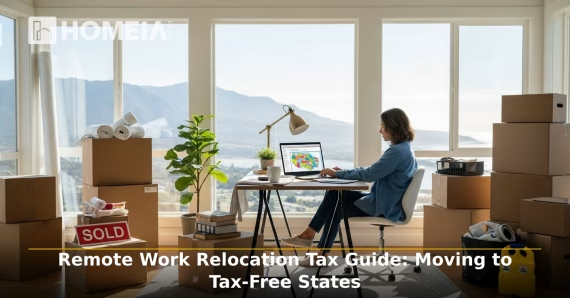













Remote work has made skilled professionals valuable recruits, prompting cities to offer relocation incentives up to $25,000. This guide analyzes the top 12 programs, evaluating not just payouts but long-term livability using the HOMEiA Score. The best opportunities combine strong incentives with high overall value and long-term stability.
Remote Work Relocation Tax Guide: Moving to Tax-Free States
- Local Editor:Local Editor: The HOMEiA Team
- Category: USA

The mass shift to remote work has fundamentally changed how professionals approach their living situations, untethering careers from specific geographic locations. Newfound flexibility allows for strategic decisions based on quality of life and financial optimization. One of the most significant considerations for remote workers is state tax burden, which can vary dramatically across the US.
For high-earning remote professionals, relocating to a state with no broad-based personal income tax represents a powerful economic strategy, instantly boosting take-home pay and accelerating savings, all while enhancing long-term financial security. However, this decision requires careful analysis beyond income tax considerations.
This guide examines the nine U.S. states with no broad-based personal income tax through the lens of the proprietary HOMEiA Score, which evaluates overall livability and value. By combining tax strategy with comprehensive quality-of-life metrics, we help you make an informed decision for balancing immediate monetary benefits with long-term satisfaction. High earners with mobile income should also compare these domestic options against international relocation in this guide to moving states versus moving countries, which weighs tax treatment by income type.
Key Takeaways
- Tax Savings Are Substantial: Relocating from high-tax states can save remote workers $5,000–$15,000+ annually, depending on income level.
- The HOMEiA Score Reveals True Value: The state’s overall livability score helps identify locations where tax savings translate into genuine quality of life improvements.
- Total Tax Picture Matters: While income tax may be zero, high property taxes, sales taxes, and other levies (e.g., in Texas or Tennessee) can significantly impact overall affordability.
- Texas and Florida Lead in Balance: Among no-income-tax states, Texas and Florida offer an unrivaled combination of tax benefits, economic stability, and remote work infrastructure.
I. Our Methodology: The HOMEiA Score for Tax-Free States
The HOMEiA Score (out of 100) provides a comprehensive framework for evaluating states for more than their tax considerations. We assess performance across critical remote work dimensions:
- Housing & Affordability (25%): Median home prices, rental costs, and price-to-income ratios after accounting for tax savings.
- Internet Speed, Access & Infrastructure (25%): Broadband reliability, fiber availability, and average speeds—crucial for remote work productivity.
- Cost of Living (20%): Daily expenses including groceries, utilities, and healthcare, adjusted for local tax structures.
- Coworking, Community & Safety (20%): Remote work ecosystem strength, coworking spaces, and community engagement opportunities.
- Economic Resilience & Tax Efficiency (10%): Overall business climate and long-term economic stability in no-tax environments.

Related article
Our Methodologies to create HOMEiA Score Ratings for Each Group of Content
HOMEiA uses a consistent, data-driven methodology to evaluate U.S. states for livability, affordability, and long-term value. Our analysis centers on key factors such as Housing and Affordability, Cost of Daily Living, Access and Infrastructure, Community Strength, Safety and Quality of Life, Economic Resilience and Job Market…
II. The 9 No-Income-Tax States: HOMEiA Score Analysis (Ranked Lowest to Highest for Remote Work)
Rank | State | HOMEiA Score | Tax Policy Overview | Cost of Living | Top Remote Work Cities |
| 9 | Alaska | 76/100 | No income or state sales tax; high local costs offset tax benefits; PFD dividend. | High | Anchorage, Juneau, Fairbanks |
| 8 | Wyoming | 79/100 | No income tax, low sales tax (4% state); state services funded by mineral revenue. | Low to Moderate | Cheyenne, Jackson, Casper |
| 7 | South Dakota | 80/100 | No income or corporate tax; low sales tax (4.5% state); business-friendly. | Low | Sioux Falls, Rapid City |
| 6 | New Hampshire | 81/100 | Fully Income Tax-Free as of Jan 1, 2025; No sales tax; high property taxes. | High | Manchester, Nashua, Portsmouth |
| 5 | Nevada | 83/100 | No income tax; average sales tax 8.2%; tourism and gaming-funded services. | Moderate | Las Vegas, Reno, Henderson |
| 4 | Washington | 84/100 | No income tax on wages; Capital Gains Tax on $270k+ (7% or 9.9% top rate). | High | Seattle, Spokane, Bellevue |
| 3 | Tennessee | 85/100 | No income tax; Highest combined sales tax in the nation (~9.56% average); low property taxes. | Low to Moderate | Nashville, Chattanooga, Knoxville |
| 2 | Florida | 87/100 | No income tax; sales tax 6%; Homestead exemption (adjusted for inflation). | Moderate to High | Tampa, Miami, Orlando |
| 1 | Texas | 88/100 | No income tax; High property taxes; State sales tax 6.25% (8.2% avg with local). | Moderate | Austin, Dallas, Houston |
Last Updated: November 2025 Tax information current as of November 2025 tax law. This guide is for informational purposes only and should not be construed as tax or legal advice. And here are affordable places to live in America.
III. State Profiles: Tax Policy, Cost of Living & Best Cities

1. Texas (HOMEiA Score: 88/100)
- Tax Policies: No state income tax. Property taxes are among the highest nationally (1.8%-2.0%).
This trade-off between income tax savings and property tax burdens is the central dynamic in this analysis of geography as a cost-of-living lever, which found that housing costs often outweigh state income tax differences.
- NEW 2025: Homestead exemption increased to $140,000.
- Best For: Professionals seeking no income tax with access to major metros (Austin, Dallas, Houston), and entrepreneurs benefiting from the business-friendly environment.
- Cons: High property taxes significantly offset income tax savings; extreme summer heat.
2. Florida (HOMEiA Score: 87/100)
- Tax Policies: No state income tax. State sales tax is 6%.
- 2025 UPDATE: Homestead exemption now $50,722 (adjusted annually by CPI) and caps annual assessed value increases at 3%.
- Best For: Retirees and high-income professionals; those seeking warm weather; remote workers in tech, finance, or creative fields.
- Cons: Hurricane risk, hot/humid summers, rising property insurance costs.
3. Tennessee (HOMEiA Score: 85/100)
- Tax Policies: No state income tax (fully phased out in 2021). Highest combined sales tax in the nation (average of ~9.56%). Low property taxes.
- Best For: Musicians and creatives; budget-conscious professionals; outdoor enthusiasts; those comfortable with a high sales tax burden for cultural richness and low property costs.
- Cons: Nashville costs rising quickly; limited public transit.
4. Washington (HOMEiA Score: 84/100)
- Tax Policies: No state income tax on wages.
- Capital Gains Tax: 7% on profits over $270,000, with an additional 2.9% tax on gains exceeding $1M (9.9% top rate) impacting wealthy investors. High sales tax (average 8.9%).
- Best For: High-earning tech professionals (Amazon, Microsoft) without significant investment income; people prioritizing elite quality of life.
- Cons: Skyrocketing cost of living in the Seattle area; capital gains tax affects investors.

Related article
Best U.S. Cities for Remote Workers: A Strategic Guide to WiFi, Coworking & Affordability
Remote work now frees professionals to live where quality of life and affordability align. Ideal cities offer strong infrastructure, reasonable costs, and supportive communities. Using the proprietary HOMEiA Score, this guide ranks top U.S. locations for remote workers, helping individuals choose places that provide long-term value and a thriving lifestyle.
5. Nevada (HOMEiA Score: 83/100)
- Tax Policies: No state income tax. Average sales tax 8.2%. State services funded heavily by tourism and gaming.
- Best For: California expatriates seeking tax relief; entrepreneurs and small business owners; remote workers valuing affordability compared to coastal states.
- Cons: Desert climate extremes; tourism-dependent economy; limited cultural diversity.
6. New Hampshire (HOMEiA Score: 81/100)
- Tax Policies: FULLY Income Tax-Free as of January 1, 2025 (Interest & Dividends tax repealed). No state sales tax. High property taxes (among highest nationally) fund local services.
- Best For: High-income professionals who own modest homes; workers seeking tax relief near the Boston job market; families prioritizing standout education and no sales tax.
- Cons: Towering property taxes are a major offset; frigid winters; exorbitant cost of living.
7. South Dakota (HOMEiA Score: 80/100)
- Tax Policies: No state income or corporate income tax. Low combined sales tax (4.5% state).
- Best For: Remote workers prioritizing maximum tax savings and the lowest overall tax burden; families seeking affordable homeownership; those valuing small-town life.
- Cons: Frozen winters, limited cultural amenities, compact job market.
8. Wyoming (HOMEiA Score: 79/100)
- Tax Policies: No state income or corporate tax. Economical sales tax (4% state). Revenue generated primarily from mineral extraction.
- Best For: Remote workers valuing wilderness and outdoor lifestyle; retirees seeking peace and natural beauty; entrepreneurs with location-independent businesses.
- Cons: Undersized population; limited infrastructure in rural areas; harsh winters.
9. Alaska (HOMEiA Score: 76/100)
- Tax Policies: No state income or state sales tax. Provides an annual Permanent Fund Dividend (PFD) (est. $1,000 in 2025).
- Best For: Adventurers and outdoor enthusiasts; those seeking a unique frontier lifestyle; individuals prioritizing natural beauty and comfortable with isolation.
- Cons: Astronomical cost of living significantly offsets tax benefits; extreme isolation; harsh winters and limited daylight.
Related article
Remote Work Relocation Tax Guide: Moving to Tax-Free States
Remote work has freed professionals to choose where to live, making tax strategy a major factor. States with no personal income tax offer high earners significant financial advantages, but decisions must consider more than taxes. This guide evaluates all nine no-tax states using the HOMEiA Score to balance savings with overall livability.
IV. Tax Savings Examples by Income Level

Note: Tax calculations are estimates for the 2024/2025 tax year. Consult a tax professional for personalized advice.
| Scenario | From State | Annual Income | Estimated State Income Tax | To State | Real Net Savings (Est.) |
| Single Filer | California | $100,000 | ~$5,800–$6,000 | Texas | ~$4,000–$5,000 per year (after property tax adjustment) |
| Married Couple | New York | $250,000 | ~$14,000–$15,000 | Florida | ~$12,000–$13,000+ per year (benefit from homestead exemption) |
| Entrepreneur | California | $500,000 | ~$50,000–$60,000 | Nevada | ~$45,000–$55,000+ per year (benefit from no corporate/franchise tax) |
Recommended for you
V. Factors Beyond Taxes: Climate, Housing & Amenities

While tax savings are substantial, successful relocation requires considering broader lifestyle factors.
1. Housing Markets
Research local real estate conditions thoroughly: a small tax saving is lost if housing costs are greater.
- Property Taxes: Texas and New Hampshire have elevated property taxes that largely fund local services, offsetting income tax savings.
- Homestead Exemptions: Florida ($50,722) and Texas ($140,000+) offer significant protections that limit how much assessed value can increase annually.
2. Climate Considerations
- Florida: Humidity, hurricanes, year-round warmth.
- Washington: Rain/clouds (9 months), mild temperatures.
- Texas: Extreme summer heat (100°F+), mild winters.
- Alaska: Extreme cold, limited daylight in winter.
- Wyoming/South Dakota: Harsh winters, low humidity.
3. Community Infrastructure
Evaluate internet reliability, coworking spaces, and social opportunities:
- Texas: Modernized infrastructure in major metros.
- Tennessee: Chattanooga is “Gig City” with municipal gigabit fiber.
- Washington: Proven private tech infrastructure (Seattle/Bellevue).
- Rural States: Alaska, Wyoming, and South Dakota may have limited broadband options outside major cities.
VI. Actionable Steps & Resources

The key to a successful move is meticulous preparation and documentation.
- Verify Residency Requirements: To avoid double taxation, you must establish legal domicile in the new state, usually by meeting the 183-Day Rule (spending the majority of the year there) and documenting:
- New driver’s license/voter registration.
- Permanent home ownership/lease.
- Establishing local professional ties (doctors, accountants).
- High-tax states (CA, NY, NJ) aggressively audit residency changes.
- Plan for Part-Year Tax Filings: For the transition year, you will file tax returns in both states, allocating income by time spent in each. Plan for incorrect withholding and potential audits.
- Calculate Total Tax Burden: Use comprehensive online tools (including SmartAsset or NerdWallet) to compare the total tax burden (income + property + sales) for understanding your true financial gain.
Conclusion: Relocating to a no-income-tax state offers remote workers substantial financial advantages, but the smartest approach combines tax strategy with comprehensive quality-of-life considerations.
| Recommendation Focus | Top States | Key Trade-Off |
| Maximum Tax Savings + Infrastructure | Texas (88) / Florida (87) | Accept higher property/sales taxes. |
| Lowest Overall Tax Burden | Wyoming (79) / South Dakota (80) | Accept smaller population, limited amenities. |
| Families Seeking Education + Safety | Texas (88) / New Hampshire (81) | Accept higher property taxes for high-quality services. |
| Affordability + Culture | Tennessee (85) | Accept the nation’s highest sales tax burden. |
Successful relocations happen when professionals choose locations that support long-term satisfaction and success in the remote work era.
Final Advice: Visit your target cities for extended stays before committing. Rent for 6–12 months before buying. Consult with tax professionals familiar with multi-state taxation.
Last Updated: November 2025 Tax information current as of November 2025 tax law. This guide is for informational purposes only and should not be construed as tax or legal advice.
Recommended for you




FAQs About Remote Work Relocation to Tax-Free States
1. How do I establish legal residency in a new state?
You prove residency through multiple factors (domicile): physical presence (183+ days), updating driver’s license/voter registration, securing a permanent address, and establishing local community and professional ties.
2. Can my previous state still tax me after I move?
Yes, if you file as a part-year resident during the transition year, or if continuing to earn income sourced to the previous state (e.g., rental property). High-tax states will audit for maintaining significant ties there.
3. Are relocation incentives (like Tulsa Remote) taxable?
Yes, nearly all cash relocation incentives constitute taxable income at both the federal and state levels and are typically reported via a Form 1099.
4. What about digital nomads moving frequently?
Digital nomads must meticulously track days spent in each state and must establish clear domicile in a no-tax state. Spending significant time (often 30+ days) working in an income-tax state may create tax liability there.
5. Do these states really make up tax revenue in other ways?
Yes, revenue is made up through: higher property taxes (TX, NH); high sales taxes (TN, WA); special resource taxes (AK oil revenue, WY mineral extraction); and business fees.
6. What if I’m self-employed or own a business?
Self-employed income avoids state income tax. However, be aware of business franchise or gross receipts taxes (e.g., Texas’s franchise tax) and necessary state-specific business registration and licensing.
Share