







In real estate, the biggest gains often appear in transitional neighborhoods showing real momentum—rising home prices, new amenities, active investment, and younger residents. This guide helps first-time buyers, move-up buyers, and investors spot areas poised for long-term growth, balancing rapid equity potential with risks…
Best Neighborhoods for Young Families in Austin, Texas
- Local Editor:Local Editor: The HOMEiA Team

Best Neighborhoods for Young Families in Austin, Texas: Choosing to move to Austin is an exciting decision, fueled by its vibrant economy, legendary cultural scene, and financial advantages when analyzing the overall cost of living in Florida vs Texas for growing families. However, the choice that will most profoundly impact your daily life isn’t “Austin,” it’s where in Bat City you plant your roots. The Live Music Capital of the World is a sprawling mosaic of distinct communities, each with its own personality, pace, and priorities. A neighborhood that’s perfect for Gen Z is rarely ideal for a family with young children.
This guide is specifically crafted for young families actively considering a move to ATX this year. We understand your unique checklist: trying to balance the need for standout schools and safe streets with practical concerns like reasonable commutes, family-friendly amenities, and long-term home value. You want a community where your kids can play outside, it’s easy to meet other parents, and the overall investment is sound.
For cutting through the hype, we’ve moved beyond mere anecdotes. This guide combines the latest quantitative data, on crime, school ratings, commute times, and housing costs, with qualitative insights into neighborhood character. Our goal is to provide you with an actionable shortlist of communities where your family can truly thrive.
Key Takeaway for Young Families
For young families moving to Austin this year, the central dilemma is balancing quality of education, safety, and space against cost and commute. Our analysis shows the highest-scoring neighborhoods offer distinct value propositions: Mueller (92/100) for unmatched walkability and urban amenities; Circle C Ranch (94/100) for top public schools and sprawling parks; and Cedar Park (88/100) for the best square footage per dollar. Your choice will likely hinge on prioritizing one of these pillars. There is no single “best” neighborhood, but rather a clear group of top-tier options where one can confidently invest in your family’s next chapter.
I. Our Methodology: How We Chose Austin’s Best Neighborhoods for Families
Data Sources: Our analysis synthesizes information from local government databases (crime stats, transit), the Texas Education Agency, reputable real estate market platforms (for pricing and trends), and national walkability/quality-of-life indexes.

Related article
Our Methodologies to create HOMEiA Score Ratings for Each Group of Content
HOMEiA uses a consistent, data-driven methodology to evaluate U.S. states for livability, affordability, and long-term value. Our analysis centers on key factors such as Housing and Affordability, Cost of Daily Living, Access and Infrastructure, Community Strength, Safety and Quality of Life, Economic Resilience and Job Market…
II. The Top Austin Neighborhoods for Young Families:
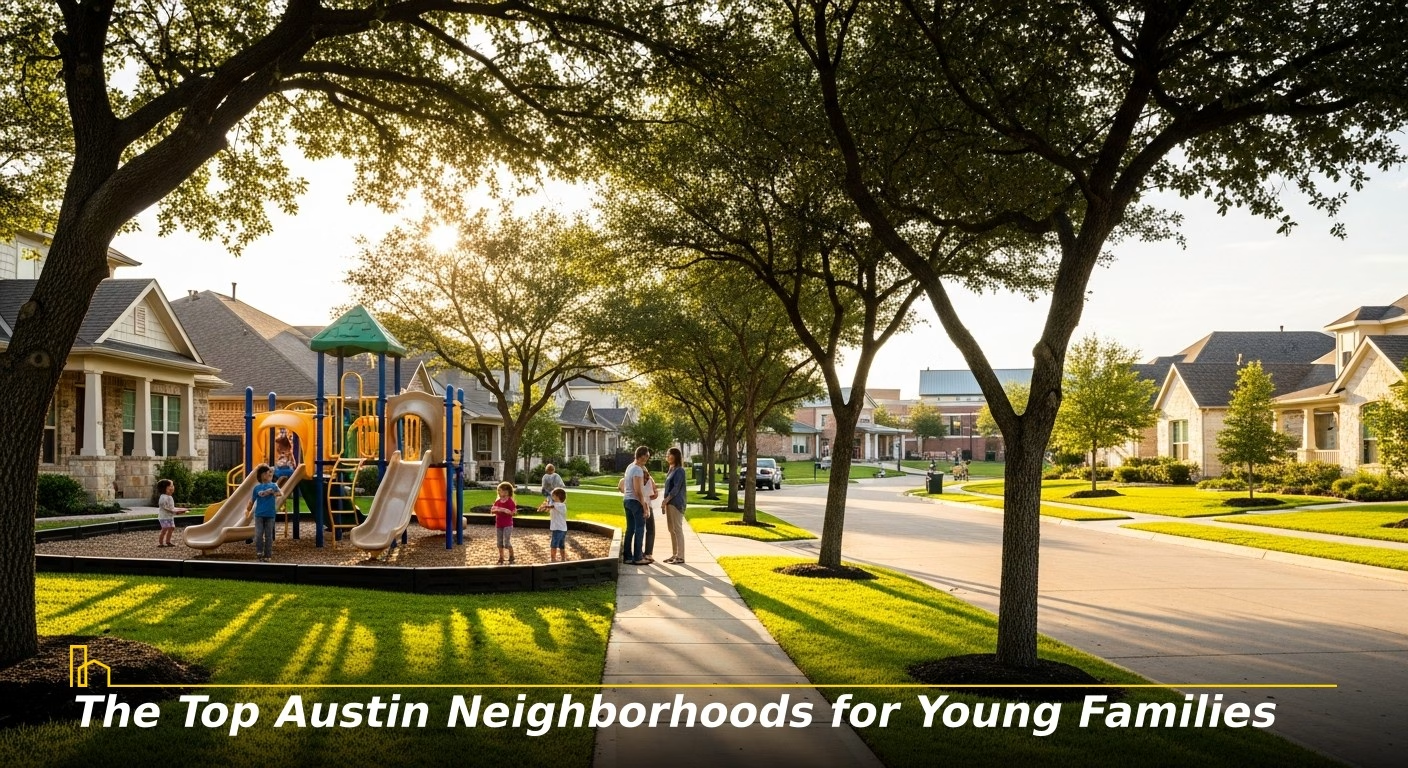
1. Circle C Ranch
A. Snapshot: A master-planned community in Southwest Austin known for its sprawling parks, extensive trail system, and deep-rooted sense of community. It feels like a suburb but with direct access to Austin’s tech corridor. It is Best for families seeking top-tier schools, abundant green space, and a highly active, community-oriented lifestyle.
B. HOMEiA Neighborhood Score: 94/100
Circle C scores among the best of the best due to its premier school district (Austin ISD’s Bowie High School zone), incredibly low crime rates, and unparalleled network of parks and pools. Its primary trade-off is a longer commute to downtown, but for many families, the community benefits outweigh any drive.
C. Data-Driven Details:
- Typical Home Prices: Median single-family home price is ~$850,000. Typical rent for a 3-bedroom home ranges from $2,800 – $3,800/month. While pricier, homes here often offer greater square footage and larger lot sizes compared to Central Austin.
- Commute: Average drive to downtown is 25-40 minutes (via Mopac/Loop 1). The area is a major hub for tech workers commuting to the Apple campus or other employers in Southwest Austin (often a 10-20 minute drive). Relying on Mopac means rush hour traffic is heavy, but close proximity to major employers outside of the core mitigates this.
- Walkability & Amenities: The community is built around the Circle C Ranch Metropolitan Park and over 20 miles of hike-and-bike trails. While primarily car-dependent for errands, its design encourages walking and biking to parks, pools, and friends’ houses. The new Slaughter Creek Centre provides convenient shopping and dining.
- Schools: Zoned for the highly coveted Bowie High School feeder pattern (Mills Elementary, Gorzycki Middle, Bowie High), all consistently rated among the best in Austin.
- Safety: Consistently ranks as one of the safest communities in the Austin area.
Pros | Cons |
|---|---|
| Unmatched access to parks, trails, and community pools. | Exponential home prices and property taxes. |
| Some of the highest-rated public schools in Texas. | Commuting to downtown or north Austin can be heavy during rush hour. |
| Extremely low crime rates and family-friendly atmosphere. | Limited architectural diversity; mostly 1990s-2000s suburban homes. |
| Strong community association with frequent family events. | Few “local” restaurant/bar options within the immediate neighborhood. |
2. Mueller
A. Snapshot: A groundbreaking, award-winning sustainable development built on the site of Austin’s old airport. It’s a walkable, mixed-use utopia with a central park, convenient access to downtown, and a meticulously planned feel. It is Best for families who prioritize walkability, modern amenities, and a progressive, eco-conscious community close to the urban core.
B. HOMEiA Neighborhood Score: 92/100
Mueller earns top marks for its revolutionary walkability, direct access to pristine amenities (think Thinkery Children’s Museum right in the neighborhood), and its A+ location. Schools are respected and improving, though not yet in the historic “top tier”. Housing costs are at a premium for the convenience offered.
Data-Driven Details:
- Typical Home Prices: Median single-family home price is ~$1.1 million. Townhomes and condos start in the $600s. Rents for a 2-3 bedroom apartment/townhome range from $2,500 – $4,500/month. Housing here is expensive due to the high demand for true walkability near the core.
- Commute: Unbeatable for central Austin. An average drive to downtown is 10-15 minutes. It is served by multiple Capital Metro bus lines and has favorable bike lane connectivity.
- Walkability & Amenities: A national model for walkable design. The Mueller Lake Park and Thinkery are the heart of the community. Daily needs (H-E-B grocery, pharmacies, clinics, restaurants, shops, and a weekly farmers’ market) are all within a 5-15 minute walk.
- Schools: Zoned to Austin ISD’s Maplewood Elementary (highly rated), Kealing Middle (a recognized magnet), and Northeast Early College High. Many families also pursue in-district charter options.
- Safety: Designed with safety in mind; well-lit streets, active retail fronts, and a community patrol contribute to low crime rates.
Pros | Cons |
|---|---|
| Perhaps the most walkable, amenity-rich neighborhood in Texas for families. | Lavish home prices and dense living. |
| Prime central location with minimal commute times. | Limited housing inventory; high demand leads to competitive bidding. |
| Sustainable design with abundant green space, community gardens, and parks. | Can feel “planned” or lack the organic charm of older neighborhoods. |
| Vibrant, diverse community with constant family-friendly events. | Some traffic congestion on Aldrich Street during peak times. |

Related article
3. Northwest Hills / River Place
A. Snapshot: Nestled in the scenic hills west of Mopac, this area combines natural beauty, dramatic cliffs and access to the Colorado River, with established, upscale neighborhoods and standout schools. This is Best for families who want a peaceful, almost rural feel with large lots, great schools, and a quick drive to central Austin.
B. HOMEiA Neighborhood Score: 90/100
The region scores highly for its exceptional safety, commendable Eanes ISD schools, and serene, hill country setting. It offers a more private, estate-like feel compared to master-planned communities. Commuting can be bottlenecked by the few roads in and out of the hills.
C. Data-Driven Details:
- Typical Home Prices: Median single-family home price is ~$1.3 million. Homes often sit on large, wooded lots. Rents for a 3-bedroom home are rare but can range from $4,500+/month. This is the highest price point on the list, reflecting the additional space and the quality of the Eanes ISD.
- Commute: Average drive to downtown is 20-35 minutes via the heavily-traveled 2222/Mopac corridor. Commuting to the Domain or Apple campus is more manageable (15-25 mins). Traffic congestion on main arteries like FM 2222 and 620 can be significant, as they are the primary access routes leaving and entering the area.
- Walkability & Amenities: Car-dependent for daily needs, but River Place Nature Trail and neighborhood parks offer incredible recreational walking/hiking. Shopping and dining are a short drive to Bee Cave Road or the Four Points area.
- Schools: Primarily zoned to the elite Eanes Independent School District (Bridge Point Elementary, West Ridge Middle, Westlake High), perennially ranked among the best in Texas.
- Safety: Minimal crime in these affluent, secluded neighborhoods.
Pros | Cons |
|---|---|
| Access to the top-rated Eanes ISD. | The highest price point for housing in the Austin area. |
| Beautiful hill country setting with privacy and large lots. | Sparse inventory and few rental options. |
| Extremely safe and quiet. | Car-dependent; minimal walkability to services. |
| Strong long-term property value retention. | Traffic congestion on main arteries (2222, 620) can be significant. |
4. Cedar Park (Brushy Creek Area)
A. Snapshot: A thriving suburb north of ATX that has matured into a destination of its own. The Brushy Creek area, in particular, offers lush city parks, a top-tier school district, and more affordable spacious homes. It is Best for families seeking maximum square footage, highly-rated schools, and a suburban lifestyle with major retail and employment hubs nearby.
B. HOMEiA Neighborhood Score: 88/100
Cedar Park delivers outstanding value for families. It boasts revered Leander ISD schools, modern infrastructure, and major amenities including the H-E-B Center and a vibrant downtown of its own. The commute to North Austin is easy, but journeys to downtown or the airport (AUS) are considerable.
C. Data-Driven Details:
- Typical Home Prices: Median single-family home price is ~$575,000. New construction is still available. Typical 3-bedroom rent ranges from $2,200 – $3,000/month. This represents the best value on the list for newer construction and square footage.
- Commute: Average drive to the Domain/North Austin is 15-25 minutes. To downtown, plan for 35-50+ minutes, depending on I-35/Mopac traffic. Public transportation options are limited, increasing reliance on personal vehicles and exposing commuters to peak-hour congestion on 183A and 1431.
- Walkability & Amenities: The Brushy Creek Lake Park and trail system is a massive regional asset. Neighborhoods are typically suburban but contain sidewalks and parks. The 1890 Ranch Shopping Center and Cedar Park Downtown provide every conceivable retail and dining option.
- Schools: Zoned to the highly-regarded Leander ISD (e.g., Brushy Creek Elementary, Cedar Park Middle, Cedar Park High).
- Safety: A consistently safe suburban environment with proactive city services.
Pros | Cons |
|---|---|
| More house for your money compared to Austin-proper. | A significant commute to Austin’s core employment centers. |
| Consistently high-performing schools in Leander ISD. | Can feel generic or lack the unique “Austin vibe”. |
| Family-focused city with superb parks, sports complexes, and a new library. | Traffic congestion on 183A and 1431 during peak hours. |
| Thriving local job market in tech and healthcare. | Limited public transportation options. |
Recommended for you




5. Allandale
A. Snapshot: This beloved, centrally-located neighborhood north of downtown, characterized by mature trees, mid-century modern homes on spacious lots, and a quiet, established feel. It is Best for families who want an authentic, central Austin neighborhood with character, great schools, and a manageable renovation project.
B. HOMEiA Neighborhood Score: 86/100
Allandale wins on location, charm, and respectable schools. It offers a true “old Austin” feel with a rich community, all within 10-15 minutes of downtown. Trade-off is an expensive and competitive market, often featuring homes requiring maintenance.
C. Data-Driven Details:
- Typical Home Prices: Median single-family home price is ~$1.2 million. Many homes are 1950s-1970s ranch styles on spacious lots. Few rentals are available. Extravagant cost is driven by the central location and large lot sizes, despite the age of the housing stock.
- Commute: Excellent central location. Average drive to downtown is 10-15 minutes. Quick access to Mopac and Burnet Road.
- Walkability & Amenities: Moderately walkable to local favorites on Burnet Road (“The Drag North”), including restaurants, coffee shops, and the iconic Alamo Drafthouse. The sprawling Shoal Creek Greenbelt runs along its western edge.
- Schools: Zoned to Austin ISD’s Hill Elementary, Murchison Middle, and Anderson High, all well-regarded with reliable community support.
- Safety: A stable, established neighborhood with low crime.
Pros | Cons |
|---|---|
| Prime central location with minimal commute. | Questionably-high home prices; entry points are steep. |
| Established, tree-lined streets with large lots and unique home character. | Housing stock is older, often requiring renovations. |
| Strong sense of community and neighborhood associations. | Intense competition for available homes. |
| Access to popular Austin amenities on Burnet Road and the Triangle. | Less “turnkey” and fewer modern community amenities (like pools) compared to planned developments. |
III. Comparison: Which Austin Neighborhood is Right for Your Family?

Choosing between these standout options comes down to prioritizing what matters most to your family’s lifestyle and budget.
- If you want top schools above all, start with: Circle C Ranch and Northwest Hills. These areas feed into the highest-ranked traditional public-school districts (Bowie and Westlake, respectively).
- If you want the best value for your money (more space/size): Focus on Cedar Park. You’ll get a newer, spacious home for a significantly lower price per square foot than inside Austin city limits.
- If you want car-free, walkable living: Mueller is in a class of its own. It’s the only neighborhood on this list where a family can realistically live with or without a car.
- If you want a central location with an “Austin” feel: Allandale offers the quintessential central Austin neighborhood experience, though at a premium.
- If you want a balance of community amenities and location: Circle C and Mueller, while distinct, both offer incredible built-in amenities (trails/pools vs. retail/museums) defining daily life.

IV. How to Choose Your Austin Neighborhood: A Practical Checklist

Moving is stressful, and the Austin market is competitive. A savvy methodical approach is critical for a successful transition.
- Define Your Hard Numbers: Set a firm budget for your monthly housing cost (mortgage/taxes/insurance or rent). Use online calculators taking into account Texas’s notoriously high property taxes.
- Rank Your Top 3 Priorities: Is it school rating, commute time under 30 minutes, walkability, or backyard space? Be honest as a family. You likely can’t maximize all four.
- Visit Like a Local, Not a Tourist: Don’t only drive through on a Saturday. Visit potential neighborhoods on a Tuesday evening. Check out the local playground after school. Test the commute during rush hour.
- Dig into the Specific Data: It’s best to see the trust the neighborhood with your eyes, not their name.. Research the specific school campus ratings your address is zoned for on the TEA website. Check the Austin Police Department’s online crime map for the last 6 months.
- Talk to Residents: Use community Facebook groups (e.g., “Circle C Families” or “Mueller Neighborhood”) to ask polite questions about life there. An honest local perspective is invaluable.
- Consult a Hyper-Local Realtor: Work with an agent who specializes in your target neighborhood and demographic (family moves). They know about upcoming listings, market nuances, and can provide critical context.
Recommended for you




FAQs About Best Neighborhoods for Young Families in Austin, Texas.
1. How significant is the property tax difference between Austin-proper and the suburbs?
Property taxes are a major cost factor. Travis County (Austin) rates are typically between 1.8% – 2.2% of assessed value. Moving to Williamson County (e.g., Cedar Park, Round Rock) often offers a lower county rate (closer to 1.7%), but home values may be assessed higher. Always calculate the estimated annual dollar amount as opposed to the rate while factoring it into total monthly housing cost.
2. When is the best time to move to align with the Texas school year?
To ensure a smooth school enrollment, aim to close on a home or secure a lease by mid-July. Registration typically opens in early August, and schools need proof of residency. Moving in late summer allows time for utilities to be up-and-running while providing a buffer before the first day of school, which usually falls in mid-August for Austin-area districts.
3. Are there any up-and-coming neighborhoods for families that are more affordable?
Areas including Windsor Park (near Mueller) and Crestview (north of Allandale) offer more moderate price points with access to desirable amenities and improving schools. Further east, Manor is experiencing rapid growth with new family-focused developments, offering an economical entry point with a longer commute.
4. How can I research a neighborhood’s “vibe” and community remotely?
- Join neighborhood-specific Facebook and WhatsApp Groups or Nextdoor communities (you can often browse before moving).
- Watch virtual tours and “day in the life” videos on YouTube.
- Use Google Street View to explore parks and main streets.
- Check the City of Austin’s website for community event calendars in different council districts.
Beyond property taxes, budget for:
- High HOA Fees (common in master-planned communities, notably Circle C or Mueller, ranging from $500-$1500+ annually).
- Pool/Membership Fees for community amenities can be separate.
- Landscaping/Watering Costs can be expensive due to summer heat.
- Also, consider the potential cost of renovating older homes (common in central neighborhoods like Allandale) to meet modern family needs.
Share