







If you’re a veteran or service member refinancing in 2026, you may encounter VA Type I and Type II cash-out refinances. While the VA classifies both as cash-out loans, these distinctions determine how much you can borrow, applicable fees, and whether you receive cash at closing…
VA Cash-Out Refinance in 2026: How It Works, Who Qualifies, and When It Actually Makes Sense
- Local Editor:Local Editor: The HOMEiA Team
- Category: Mortgage & Finance

The VA cash-out refinance is a powerful financial tool allowing qualified veterans and service members to replace their current mortgage with a new VA-backed loan, often for more than what is currently owed. The difference between the two loans, minus closing costs, is paid out to the homeowner in cash, providing a way to access the equity built up in their property.
Unlike many other mortgage products, VA cash-out refinance is unique because it allows you to refinance a non-VA loan into one. Whether you currently have a conventional, FHA, or even a subprime mortgage, this program can be used to secure the benefits of VA financing while tapping into your resident’s value.
Key Takeaway
A VA cash-out refinance is a strategic tool for 2026, allowing veterans to access up to 90%–100% of their home’s value in cash. Unlike the IRRRL streamline, this process requires a full appraisal and credit underwriting but offers the flexibility to refinance any loan type into a VA-backed mortgage. With average VA refinance rates currently more competitive than conventional options, its main function is consolidating high-interest debt or fund home improvements. However, borrowers must weigh the upfront VA funding fee and closing costs against long-term interest savings to ensure the move makes sense financially.
1. What is a VA cash-out refinance and how does it work?
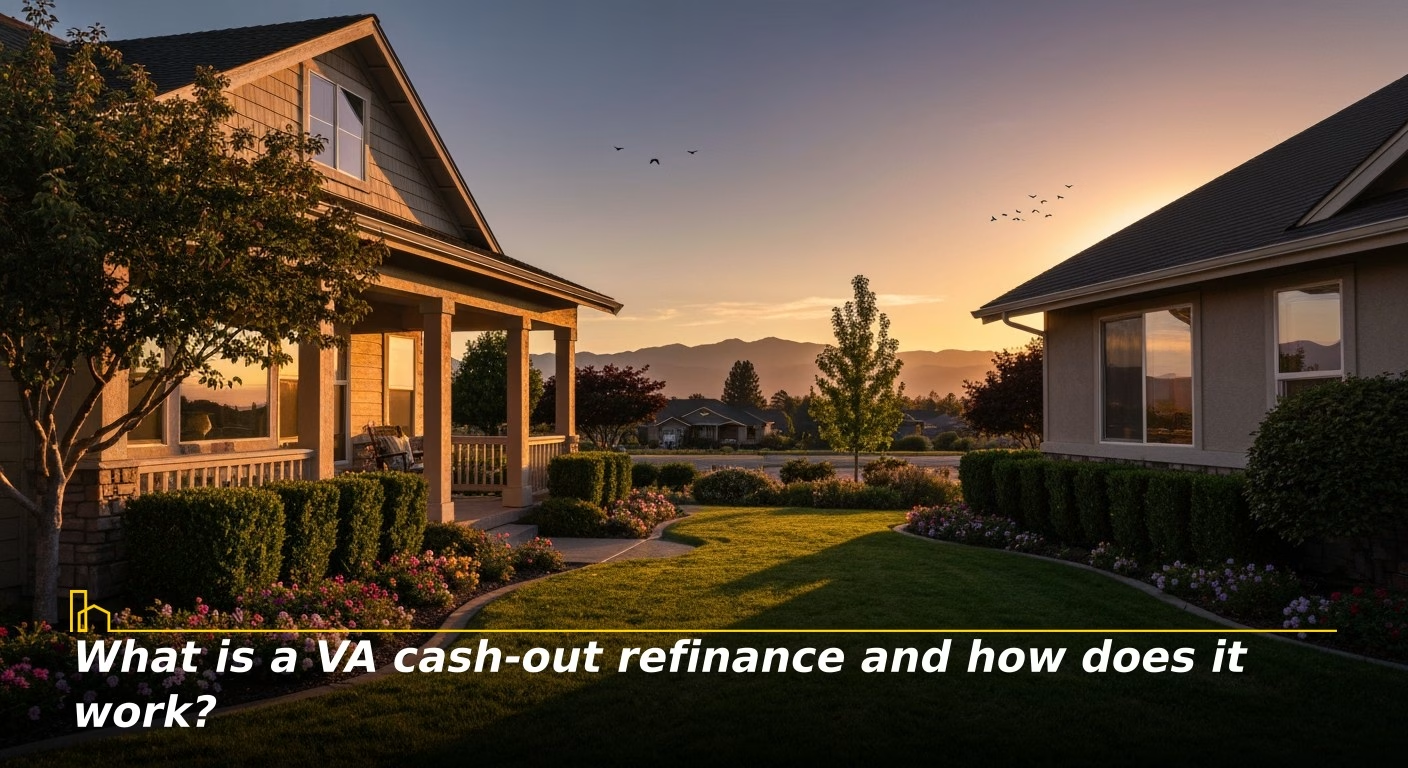
A VA cash out refinance is a mortgage loan backed by the U.S. Department of Veterans Affairs allows cash to be taken out of your home’s equity to pay for things like debt consolidation, home improvements, or emergency expenses. It works by replacing an existing mortgage with an entirely new loan possessing a higher balance than your current one.
A. How it differs from other VA and conventional loans
To understand if this is the right decision, it helps to compare it to other common options:
- VA Purchase Loan: Used strictly to buy a new home.
- VA IRRRL (Interest Rate Reduction Refinance Loan): Often called a “Streamline,” this is only for veterans who already have a VA loan and want to lower their interest rate. You cannot take cash out with an IRRRL.
- Conventional Cash-Out: Standard bank loans that typically require higher credit scores and often limit to 80% of your home’s value. VA cash-out loans allow for higher loan-to-value (LTV) ratios and do not require private mortgage insurance (PMI).
B. The Basic Process Flow
The journey from application to cash-in-hand typically follows these milestones:
- Application: You apply with a VA-approved lender.
- Appraisal: VA-assigned appraiser determines the current market value of your home.
- Underwriting: Lender verifies your income, credit, and the home’s value.
- Closing: You sign the final paperwork and pay closing costs.
- Funding: After a mandatory three-day rescission period (for primary residences), funds are disbursed.
C. A Simple Numeric Example
Imagine you own a home worth $400,000.
- Existing Loan Balance: $250,000
- New VA Cash-Out Loan (at 90% LTV): $360,000
- Estimated Closing Costs/Fees: $10,000
- Result: The new loan pays off your $250,000 balance and $10,000 in costs. You receive $100,000 in cash at the closing table.

Related article
VA Cash-Out Refinance vs HELOC vs Home Equity Loan: Best Way to Tap Home Equity as a Veteran
As a veteran homeowner in 2026, you have unique advantages for tapping home equity. Specialized VA programs often offer better terms than civilian options, but more choices can create confusion. This guide helps you…
2. Who qualifies for a VA cash-out refinance in 2026?

To qualify for a VA cash-out refinance, you must meet both the federal eligibility requirements set by the Department of Veterans Affairs and the specific overlays (internal rules) set by your chosen private lender. Generally, if you are eligible for a VA purchase loan, you’re eligible for a cash-out refinance.
A. Core Eligibility and the COE
The foundation of your application is the Certificate of Eligibility (COE). This document proves to the lender that you have served the required amount of time in the military.
- Service Requirements: Requirements vary based on when you served (wartime vs. peacetime) and whether you were Active Duty, National Guard, or Reserve.
- Occupancy: The VA requires that the home being refinanced is your primary residence. You cannot use a VA cash-out refinance for an investment property not intended to live in.
B. Credit, Income, and Lender Overlays
While the VA does not technically set a “minimum credit score,” most lenders do. In 2026, you will likely find:
- Credit Scores: Most lenders look for a score of at least 580 to 620, though some may go lower with compensating factors.
- Debt-to-Income (DTI) Ratio: Lenders prefer a DTI of 41% or lower, but the VA’s use of Residual Income (the money left over each month after all bills are paid) often allows veterans with higher DTIs to still get approved.
C. Seasoning Rules
You cannot refinance immediately after buying a home. “Seasoning” refers to the time you must wait. Typically, you must have made at least six consecutive monthly payments on your current loan, and it must have been at least 210 days since the first payment due date before you can close on a VA cash-out refinance.


Related article
Top 3 Factors to Consider when Qualifying for a Home Purchase or Refinance
Financial institutions look at a wide variety of things when a customer applies for mortgage financing on a home. There’re 3 main building blocks that create the foundation for a solid mortgage application. If any of these 3 building blocks are compromised, it can result in a less than…
3. How much cash can you take out with a VA refinance?

The amount of cash you can receive is determined by a home’s Loan-to-Value (LTV) ratio. Equity is the difference between what your home is worth and what you owe. The more equity you have, the more cash you can potentially access.
While the VA technically allows for up to 100% LTV, most lenders in the 2026 market cap cash-out loans at 90% LTV to manage risk and satisfy Net Tangible Benefit tests.
A. Example 1: High Equity Home
- Home Value: $500,000
- Existing Balance: $200,000
- Max Loan (90% LTV): $450,000
- Total Cash Available: $250,000 (Before closing costs and fees).
B. Example 2: Moderate Equity Home
- Home Value: $350,000
- Existing Balance: $280,000
- Max Loan (90% LTV): $315,000
- Total Cash Available: $35,000 (Before closing costs and fees).
Important Note: Always remember that cash at closing is the net amount. Your closing costs, the VA Funding Fee, and any prepaid items (like homeowners insurance or property taxes) are subtracted from the total loan amount before the check is given.
Related article
5 Common Things that Can Turn a Pre-Approval into a Declined Loan
There are so many different loan programs out there and each has its own set of guidelines that need to be met. This article is going to focus on the top 5 items that can cause issues during the loan process and ultimately lead to the loan getting declined…
4. What are the key costs, rates, and fees with a VA cash-out refinance?

While VA loans generally offer lower interest rates than conventional loans, they are not free. Understanding the fee structure is vital to determining if the refinance is actually a wise move for your family.
A. Interest Rates
VA cash-out rates are typically lower than conventional cash-out rates, but slightly higher than VA purchase or IRRRL rates. This is because cash-out transactions represent a higher risk to the lender. In early 2026, VA cash-out rates hovered around 5.9% to 6.3% depending on credit profile.
B. The VA Funding Fee
Unless you are exempt, you must pay a VA Funding Fee. For a cash-out refinance in 2026:
- First-time use: 2.15% of the total loan amount.
- Subsequent use: 3.3% of the total loan amount.
- Exemptions: You may be exempt if receiving disability compensation for a service-connected disability, are a surviving spouse, or are a Purple Heart recipient.
C. Closing Costs and Prepaids
You should expect to pay between 2% and 5% of the loan amount in closing costs. These include:
- Appraisal fee ($600–$1,200).
- Title insurance and search fees.
- Origination fees (capped at 1% by the VA).
- Credit report and recording fees.
Example of rolling costs into the loan:
If you take a loan for $300,000 and have $9,000 in closing costs plus a $6,450 funding fee (2.15%), your new principal balance becomes $315,450. This means you pay interest on those fees for the next 30 years.

Related article
Approval Tips for Complicated Self-Employed Mortgage Applicants
This article aims to highlight the hurdles and provide a compass and map for the self-employed individuals out there, guiding them through the intricacies of the mortgage application process with clarity and confidence…
5. What is the step-by-step process for a VA cash-out refinance?

Navigating a refinance requires organization. Following these steps can help ensure a smooth transaction.
- Decide Your Goal: Determine exactly why you need the cash. Is it $20,000 for a roof or $50,000 to wipe out credit cards? Knowing your number prevents over-borrowing.
- Check Eligibility and Gather Docs: Locate your DD-214, recent pay stubs, W-2s, and bank statements. Lenders will use these to pull your COE.
- Shop and Compare Lenders: Don’t settle for the first offer. Compare at least three VA-approved lenders to find the best combination of interest rate and lender fees.
- Apply and Authorize Credit Checks: Once you choose a lender, you’ll formally apply. This triggers a hard credit pull.
- Appraisal Ordered and Completed: The lender will order a VA appraisal. The appraiser will ensure the home meets “Minimum Property Requirements” (MPRs) and determine its value.
- Underwriting Review: A human underwriter will review every detail of your file. They may ask for conditions—additional documents like an explanation of a large deposit in your bank account.
- Clear-to-Close and Disclosures: You’ll receive a Closing Disclosure (CD) at least three days before closing. Review this carefully to learn your final numbers.
- Signing and Funding: You sign the papers. For a primary residence, federal law provides a three-day right of rescission to cancel the deal. Funds are disbursed around the fourth business day.
6. When does a VA cash-out refinance actually make sense?
Cash-out refinance is a major financial move that should only be executed when the benefits clearly outweigh the costs. It makes sense when it improves your “net tangibility”—meaning you are in a measurably better financial position afterward.
A. High-Value Use Cases
- Consolidating High-Interest Debt: If you are carrying $40,000 in credit card debt at 22% interest, moving that debt into a mortgage at 6% or 7% can save you hundreds in monthly interest.
- Home Improvements: Using equity to fix a failing roof or modernize a kitchen can preserve the home’s value and improve quality of life without using high-interest personal loans.
- Emergency Liquidity: For veterans facing significant medical bills or legal expenses, the home’s equity may be the most affordable source of large-scale funding.
B. Comparison Scenario: Debt Consolidation
Expense | Before Refinance | After Refinance |
|---|---|---|
| Mortgage Payment | $1,800 | $2,200 |
| Credit Card Payments | $900 | $0 |
| Total Monthly Outlay | $2,700 | $2,200 |
| Monthly Savings | — | $500 |
C. When to Avoid It
- Short Time Horizon: If planning to move in two years, closing costs will likely outweigh any interest savings.
- Small Loan Balances: If you owe $50,000 on your home, the flat fees of a refinance might be too high to justify the loan.
- Lifestyle Spending: Using home equity for luxury items or vacations is risky, as you’re trading a long-term asset for a depreciating one.
Related article
Approval Tips for Complicated Self-Employed Mortgage Applicants
This article aims to highlight the hurdles and provide a compass and map for the self-employed individuals out there, guiding them through the intricacies of the mortgage application process with clarity and confidence…
7. What are the main risks and downsides of a VA cash-out refinance?

Accessing cash through your home is not free money. It is a secured debt carrying specific risks.
- Restarting the Clock: If you have been paying your mortgage for 10 years and refinance into a new 30-year term, you are extending the debt.
- Increased Total Interest: By increasing a loan balance and potentially the term, you may pay significantly more in total interest over the life of the loan.
- Eroding Equity: Repeatedly using your home as a piggy bank prevents you from owning the asset free and clear, impacting retirement security.
- Risk of Foreclosure: Because the loan is secured by your home, failing to make the new (potentially higher) payments puts you at risk of losing your property.
8. How does a VA cash-out refinance affect your VA entitlement and future options?
Your VA entitlement is the dollar amount the government guarantees on your behalf. When you take out a VA cash-out refinance, you are using a portion of that entitlement.
If planning to buy another home in the future using a VA loan, having a substantial amount of entitlement tied up in your current cash-out refinance could limit your ability to buy a second home with $0 down. To restore your entitlement, you typically have to sell the home and pay off the VA loan in full.
9. Alternatives to a VA cash-out refinance
Option | Best For | Pros | Cons |
|---|---|---|---|
| VA IRRRL | Rate Reduction | Minimal paperwork; no appraisal. | No cash back allowed. |
| HELOC | Ongoing Projects | Access funds as needed. | Variable rates; 2nd lien. |
| Personal Loan | Small Amounts | Faster; no home collateral. | Higher interest rates. |
Recommended for you




Frequently asked questions about VA cash-out refinances
1. How often can you do a VA cash-out refinance?
You must wait 210 days and make six payments between refinances.
2. Can you do a VA cash-out if your home is already paid off?
Yes, this is considered a “replenishment of assets” and is permitted under VA guidelines.
3. Can you roll closing costs into the loan?
Yes, most lenders allow you to finance the costs into the principal balance.
4. Do you need an appraisal?
Yes, a full VA appraisal is mandatory for all cash-out transactions.
5. How long does it take?
Typically 30 to 45 days from application to funding.
6. Can you use it for investment property?
No, the property must be your primary residence.
Disclaimer: This article is for general educational purposes only and does not constitute legal, tax, or individualized financial advice. Rates, guidelines, and lender overlays change over time. Readers should consult a qualified VA-approved lender or financial professional for specific recommendations.
Share