





Remote work has made skilled professionals valuable recruits, prompting cities to offer relocation incentives up to $25,000. This guide analyzes the top 12 programs, evaluating not just payouts but long-term livability using the HOMEiA Score. The best opportunities combine strong incentives with high overall value and long-term stability.
How to Decide: A Remote Work Relocation Checklist
- Local Editor:Local Editor: The HOMEiA Team
- Category: City Living Guide
Share

The freedom of remote work is a double-edged sword: with the entire country as a potential office, how do you possibly choose where to live? The paradox of unlimited choice can lead to decision fatigue, leaving you paralyzed by an abundance of well-suited options.
Moving is one of life’s toughest decisions. Strategic, structured approaches ensure you don’t trade one set of problems for another. This step-by-step checklist, built on the same principles as the HOMEiA Score, will serve as a guide to evaluate potential cities, verifying critical infrastructure, and executing a move enhancing both your career and quality of life.
Table of Contents:
Key Takeaways
- Systematic Beats Spontaneous: A methodical process prevents costly mistakes while ensuring a new city aligns with your professional needs and personal lifestyle goals.
- Infrastructure is Non-Negotiable: Never assume internet quality. Verifying connectivity and coworking options before signing a lease is the foundation of productive remote work.
- The True Cost is More Than Rent: Property taxes, insurance, and state income tax dramatically impact your finances. Holistic budgets are essential.
- Culture is a Core Feature: A city’s social vibe, community engagement, and recreational offerings are critical for long-term happiness and combating remote work isolation.
I. Our Methodology: The Remote Work Relocation Framework
This checklist is built on a phased, weighted approach that prioritizes crucial factors for a successful remote work move. We’ve distilled the process into a logical sequence, emphasizing the non-negotiable foundations first before moving to finer lifestyle details.
- Research & Target City Shortlist (25%): The strategic foundation. This involves using data-driven scores and personal non-negotiables to create a manageable list of candidate cities.
- Verify Critical Work Infrastructure (25%): The non-negotiable operational check. This step confirms the availability of high-speed internet and professional workspaces.
- Analyze Housing & True Cost of Living (20%): The financial health assessment. This goes beyond listing prices to calculate the total cost of homeownership and daily life.
- Assess Culture, Community & Lifestyle Fit (20%): The long-term happiness gauge. It evaluates the social and recreational environment to ensure a personal connection to the new location.
- Plan the Move: Logistics & Timeline (10%): The execution phase. This requires creating a practical budget and project plan to manage the physical relocation.

Related article
Our Methodologies to create HOMEiA Score Ratings for Each Group of Content
HOMEiA uses a consistent, data-driven methodology to evaluate U.S. states for livability, affordability, and long-term value. Our analysis centers on key factors such as Housing and Affordability, Cost of Daily Living, Access and Infrastructure, Community Strength, Safety and Quality of Life, Economic Resilience and Job Market…
II. The Step-by-Step Relocation Checklist
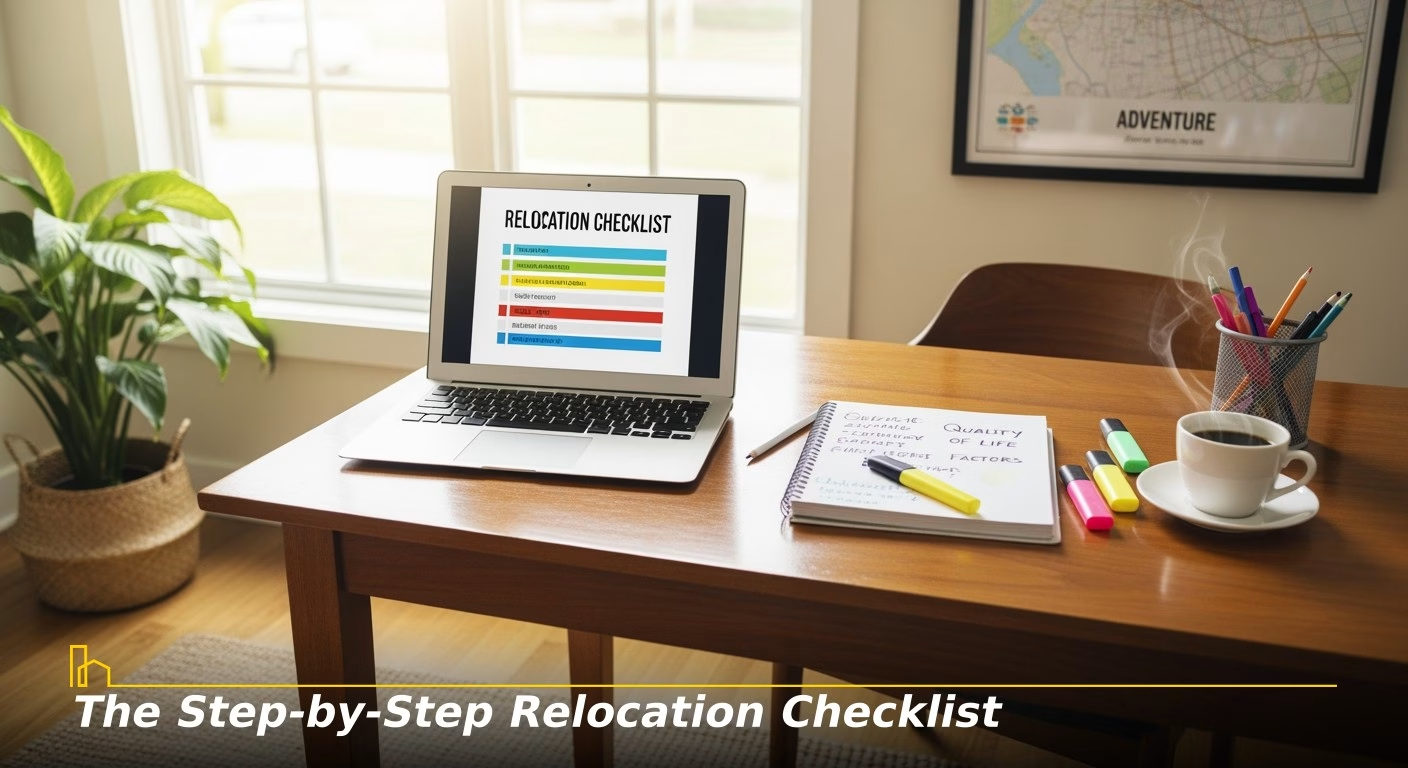
Step 1: Research & Create a Target City Shortlist
Before diving deep, leverage data and define your core priorities to create a manageable list of contenders.
- Leverage Data-Driven Tools: Use quality-of-life evaluations (like the HOMEiA Score) to identify cities that balance affordability, infrastructure, and community.
- Identify Your “Non-Negotiables”: What are your absolute must-haves? (e.g., Top-tier schools, specific outdoor access, proximity to a major airport, no state income tax). Rank these priorities.
- Create a Shortlist: Narrow your research to 3–5 top candidate cities for detailed analysis.
| City/State | HOMEiA Score | Key Remote Work Assets | Median Home Price | Key Differentiator |
| Overland Park, KS | 91/100 | High affordability, low stress, reliable infra | ~$387,000 | Best value and lowest cost of entry |
| Cary, NC | 94/100 | Research Triangle hub, economic stability | ~$621,000 | Best for tech professionals & economic opportunity |
| Carmel, IN | 95/100 | Arts, trails, strong community, fast internet | ~$540,000 | Midwest affordability with upscale amenities |
| Johns Creek, GA | 96/100 | Elite safety, top schools, premium fiber | ~$710,000 | Best-in-class infrastructure for families |
Step 2: Verify Critical Work Infrastructure (Non-Negotiable)
This step confirms your ability to work productively from the location you choose.
- Do Not Assume Internet Quality: A city-wide average is not applicable if the service isn’t available in your building.
- Verify at a Specific Address: Use tools including BroadbandNow.com or the local ISP’s website to check available providers and confirmed speeds at the exact house or apartment complex.
- Call Providers Directly: Before signing a lease, call the local provider (e.g., Google Fiber, AT&T, Xfinity) to confirm the highest available symmetrical (upload/download) plan.
- Coworking Spaces: Research the density and quality of professional workspaces. A prime coworking ecosystem indicates an established remote community and provides professional networking outside the home office.
Step 3: Dive Deep into Housing & True Cost of Living
Calculate the full financial picture — beyond the monthly mortgage or rent payment.
- Housing Market: Use Zillow and Redfin to analyze trends. Is the market competitive (quick sales)? Is it appreciating or cooling?
- Calculate Total Homeownership Cost (PITI + Fees):
- Property Taxes: These vary wildly and are the largest hidden cost in no-income-tax states (Texas is high, Indiana is low).
- Homeowners Insurance (HOI): Gather quotes early, especially in areas with natural disaster risk (e.g., hurricane zones in Florida or Texas).
- HOA Fees: Mandatory fees common in suburbs, often adding hundreds to your monthly bill.
- General Cost of Living (COL): Use calculators (like Numbeo or BestPlaces) to compare costs for groceries, utilities, and transportation against your current city.
Step 4: Check Tax & Legal Implications
A proactive check saves major legal and financial headaches later.
- Establish Domicile (Tax Residency): To avoid double taxation, you must break legal ties with your old state. This generally requires meeting the 183-Day Rule (spending the majority of the year in the new state).
- Driver’s License & Registration: Research the process and cost for transferring your driver’s license and vehicle registration. This is a critical legal step for establishing residency.
- Professional Licenses: If your career requires a state-specific license (e.g., law, real estate, medicine, architecture), verify reciprocity or re-licensing requirements with the new state board.
Related article
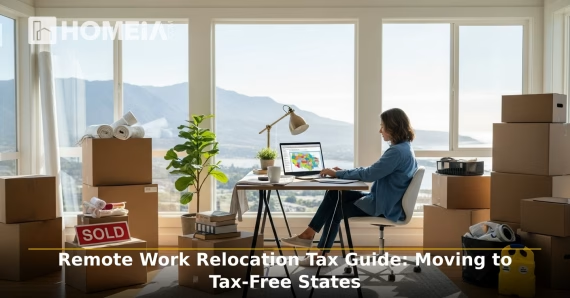
Remote Work Relocation Tax Guide: Moving to Tax-Free States
Remote work has freed professionals to choose where to live, making tax strategy a major factor. States with no personal income tax offer high earners significant financial advantages, but decisions must consider more than taxes. This guide evaluates all nine no-tax states using the HOMEiA Score to balance savings with overall livability.
Step 5: Assess Culture, Community & Lifestyle Fit
Determine if the city will sustain your personal well-being for the long term.
- Visit Before You Move: If possible, spend a minimum of a week working and living in your top choice. Use a local coffee shop or coworking space to gauge the daily atmosphere.
- Gauge the Vibe: Does the culture match your interests (e.g., outdoor activities, arts, nightlife, volunteer opportunities)?
- Check Community Platforms: Browse local subreddits, Meetup.com, and neighborhood-specific groups on Facebook, Instagram, and Whatsapp to see what events are happening and how residents interact.
Step 6: Plan the Move (Logistics & Timeline)
Create a practical project plan to manage the physical relocation without stress.
- Timeline: A 3-month minimum is recommended for a smooth move.
- Month 1: Deep-dive research and scouting trip (Steps 1–4).
- Month 2: Secure housing (lease signed or offer accepted), notify employers/banks, begin decluttering.
- Month 3: Execute move, handle registrations, finalize utility transfers.
- Housing Strategy: Decide whether to rent first (for flexibility and learning the neighborhoods) or buy (for long-term investment in stable markets like Carmel or Johns Creek).
Recommended for you




III. Tools & Resources

Pre-Move Verification Checklist
| Status | Item | Action |
| ☐ | Internet | Confirmed symmetrical speed and provider at specific address via phone call. |
| ☐ | Housing | Lease signed or purchase agreement finalized. |
| ☐ | Budget | Moving budget created, including deposits, moving truck, and travel. |
| ☐ | Address Change | Change of address submitted to USPS; employers and banks notified. |
| ☐ | Utilities | New utilities (electric, water, gas, internet) scheduled for activation. |
| ☐ | Legal/Tax | Driver’s license and vehicle registration transfer process verified. |
Related article
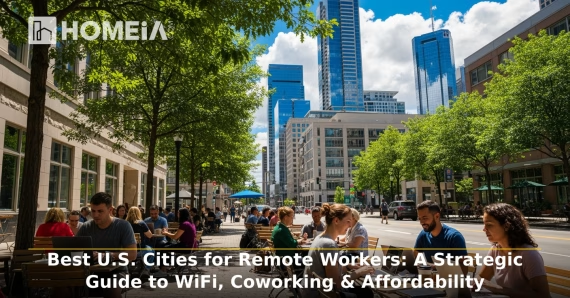
Best U.S. Cities for Remote Workers: A Strategic Guide to WiFi, Coworking & Affordability
Remote work now frees professionals to live where quality of life and affordability align. Ideal cities offer strong infrastructure, reasonable costs, and supportive communities. Using the proprietary HOMEiA Score, this guide ranks top U.S. locations for remote workers, helping individuals choose places that provide long-term value and a thriving lifestyle.
IV. Case Study: Maria’s Strategic Move from San Francisco to Cary, NC

Background: Maria, a software engineer, could work fully remotely. Tired of San Francisco’s high costs, she sought a vibrant tech community with greater affordability.
- Step 1 (Research): Using the HOMEiA guide, she shortlisted Cary, NC, for its high economic opportunity score and place in the Research Triangle.
- Step 2 (Infrastructure): She used BroadbandNow to confirm her apartment building had Google Fiber availability and booked a day pass at a local Industrious coworking space during her visit.
- Step 3 (Housing): While Cary’s median home price was high, it was a significant drop from SF. She decided it was best renting for a year (~$1,800/month) to ensure she liked the area before buying.
- Step 4 (Culture): Her visit confirmed a thriving food scene and easy access to hiking trails. She joined a “New to Raleigh” Meetup group online before moving.
- Step 5 (Tax/Legal): She updated her address with her employer’s HR department to establish NC residency.
- Step 6 (Move): She hired movers, drove cross-country over a week, and had her internet activated the day she arrived.
Result: Maria cut her living expenses by over 40%, found a developed peer network, and felt more connected to a community, all without sacrificing career trajectory.
Conclusion
Relocating as a remote worker is a powerful opportunity to design a life you love. By replacing the overwhelm of choice with a structured, strategic process, you can make a confident decision. Use this checklist to find a city that doesn’t just look good on a list, but truly works for your career, your wallet, and your well-being.
Remember: the right city isn’t about where you work—it’s about where you live, thrive, and build your future.
Recommended for you




Frequently Asked Questions About Remote Work Relocation Checklist
1. How far in advance should I start planning a remote work move?
A minimum of 3 monthsis recommended for a stress-free, well-researched move. This allows time for thorough research, a scouting trip, and smooth logistics.
2. Is it better to rent or buy when relocating?
Rent firstin almost all cases. It creates low-commitment time to learn the city’s neighborhoods and ensure it’s a long-term fit before making any major financial investment. The exception is if you are certain of the area and the market conditions are highly favorable.
3. What’s the biggest mistake remote workers make when relocating?
Failing to verify internet connectivity at a specific address. The second biggest mistake is underestimating the total cost of homeownership by ignoring property taxes, insurance, and HOA fees.
4. How can I build a social network in a new city where I don’t know anyone?
Prioritize cities with high “Coworking, Community & Safety”score. Use coworking spaces, join hobby-based Meetup groups, take local classes, and leverage apps like Bumble BFF to intentionally build your network.
5. Where can I find similar insightful articles with city-specific data like this?
Explore our other strategic guides for deeper insights:
- Best U.S. Cities for Remote Workers
- Most Affordable U.S. Cities with Top-Tier Amenities
- The Tax Implications of Moving to Another State


Related Content