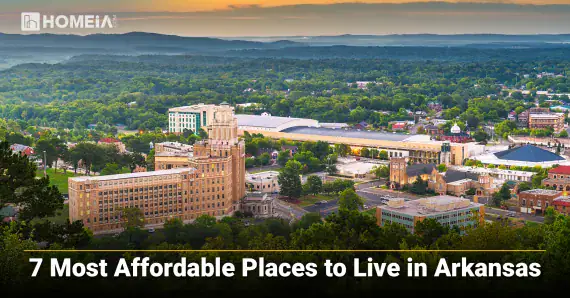








Arkansas offers standout affordability with low housing costs and access to nature, community, and opportunity. This guide highlights seven of the state’s most budget-friendly cities beyond popular hubs, helping families, retirees, and remote workers stretch their dollars while building a comfortable life in the Natural State…
Moving to Arkansas: THE Complete Relocation Guide & Checklist
- Local Editor:Local Editor: Clifton Kelly
-
Category: North America , City Living Guide
Share
Arkansas offers a compelling blend of natural beauty, deeply rooted community spirit, and exceptional affordability. Whether you’re drawn by career opportunities, renowned universities, or affordable living with access to diverse landscapes, the Natural State has plenty to offer.
This comprehensive Arkansas moving guide is your one-stop resource for everything you need to know before you relocate—including a cost-of-living breakdown, job market analysis, and a list of the best places to live and how to settle in. Whether you’re dreaming of Little Rock’s urban energy, Northwest Arkansas’s innovative scene, or Hot Springs’ natural wonders, we’ll help you make an informed decision about your move to Arkansas.
Mission Table: How This Guide Helps You Relocate to Arkansas
|
Mission Area |
How This Guide Supports You |
|---|---|
| Research & Planning | Provides detailed information on Arkansas cities, regional communities, living costs, and what to expect during relocation |
| Financial Preparedness | Assists in budgeting for Arkansas’s cost of living and preparing finances for life in the Natural State |
| Legal & Documentation | Navigates Arkansas residency requirements, vehicle registration, and essential paperwork for a seamless move |
| Community Integration | Offers practical advice for building connections, finding local resources, and feeling at home in a new community |
| Ongoing Support | Addresses common relocation questions and provides comprehensive checklists for every step of the moving process |


Related article
The Pros and Cons of Living in Arkansas (2026)
Thinking of moving to the Natural State? Discover the pros and cons of living in Arkansas, where affordable housing, scenic landscapes, and small-town charm meet modern conveniences. Explore top cities for families, retirees, and professionals to find the perfect community that fits your lifestyle, priorities, and long-term goals….
1. The Natural State Experience

Arkansas offers a unique blend of Southern charm, outdoor adventure, and distinct cultural identity. Its appeal lies in providing high quality of life at lower costs, surrounded by unparalleled natural beauty.
Table of Contents:
- A. Culture & Lifestyle
- B. Food Scene: Local Flavors and Regional Traditions
- C. Weather & Climate
- D. Outdoor Recreation
- 2. Cost of Living & Affordability
- 3. Jobs, Economy, and Career Opportunities
- 4. Education Excellence
- 5. Tax Structure (Major 2025 Updates)
- 6. Best Places to Live
- 7. Planning Your Move
- 8. Legal Requirements
- 9. Unique Considerations
- 10. Financial Planning
- 11. Insider Tips
- Frequently Asked Questions about Moving to Arkansas
A. Culture & Lifestyle
Arkansas life features a slower, relaxed pace contrasting with larger metropolitan areas, allowing for a focus on community living. The state is renowned for Southern hospitality, with Arkansans perceived as cordial and helpful.
Strong community bonds prevail, with neighbors gathering for potlucks, fairs, and social events. This makes newcomers feel welcome quickly. Many residents participate in community services and church activities.
Arkansas’s heritage reflects Native American, Spanish, and French influences, preserved in museums and historical trails. The culture emphasizes outdoor activities like hunting and fishing as significant aspects of daily life.
B. Food Scene: Local Flavors and Regional Traditions
Arkansas cuisine blends Southern comfort food with farm-to-table movement. Iconic dishes include chocolate gravy (served over biscuits), cheese dip, and Possum Pie (the state’s unofficial pie). Fried catfish, hushpuppies, and fried pickles are staples, with Atkins dubbed the “Pickle Capitol of the World.”
Growing farm-to-table restaurants like The Farmer’s Table Cafe (Fayetteville), The Hive (Bentonville), and The Root Cafe (Little Rock) source from Arkansas farms. The Market Center of the Ozarks (2024) strengthens local food systems.
C. Weather & Climate
Arkansas experiences a mild, four-season climate, allowing for year-round outdoor activities. The state is primarily located in the humid subtropical climate region, characterized by temperate winters, long, hot summers, and fairly evenly distributed rainfall throughout the year.
|
Climate Metric |
Value |
|---|---|
| Average Annual Temperature | 61.1°F |
| Average Annual Precipitation | 51.42 inches |
| Average Annual Snowfall | 4.0 inches |
| Average Annual Tornadoes | 37 |
| Days with Violent Thunderstorms | ~60 days |
The state’s location means significant risks from tornadoes and severe thunderstorms, requiring residents to be prepared for extreme weather despite generally favorable conditions.
D. Outdoor Recreation
Arkansas, “The Natural State,” offers abundant recreation with diverse landscapes including the Ozark and Ouachita Mountains, seven national park sites, and 52 state parks.
Hiking trails span thousands of miles, including the Ozark-St. Francis National Forest (1.2 million acres). Water activities include 9,700 miles of rivers and streams for kayaking, canoeing, fishing, and boating on the Buffalo National River and Lake Ouachita.
Urban areas integrate green spaces well. Fayetteville has 47 parks including The Ramble (2024). Little Rock and Fort Smith feature numerous recreational areas and trails.
Related article
2. Cost of Living & Affordability

Arkansas consistently ranks among America’s most affordable states, with costs 4-14% lower than the national average. The state maintains a cost-of-living index between 90.3 and 90.5 (Q1 2025), making it highly attractive for budget-conscious relocators. This affordability extends across various categories, including housing, transportation, utilities, and daily necessities.
While the median household income in Arkansas ($56,773) is lower than the national average ($80,610), the reduced cost of living often balances this, allowing residents to maintain comfortable lifestyles. For individuals and families moving from higher-cost areas, the purchasing power difference can be substantial.
A. Housing Market Overview
Housing costs are significantly below national averages—22% to 40.7% lower according to recent data. Updated 2025 figures show median home prices ranging from $255,900 to $282,400 depending on the source, with homes selling 5.4% higher than in 2024. For renters, the median rent in Arkansas was about $1,101 in 2024 and $1,065 in 2025, significantly lower than the national average.
Housing Costs by City (2025 Updated):
|
City/Region |
Median Home Price |
1BR Rent |
2BR Rent |
3BR Rent |
3BR House |
|---|---|---|---|---|---|
| Little Rock | $287,557 | $937 | $1,050 | $1,275 | $750-$2,900 |
| Fayetteville | $294,771 | $937 | $1,185 | $1,545 | $1,283-$1,386 |
| Fort Smith | $303,737 | $665 | $820 | $1,520 | $1,050 |
| Springdale | $402,600 | $1,045 | $1,275 | $1,499 | $1,595 |
| Rogers | $445,000 | $1,045 | $1,295 | $1,492 | $1,680 |
| Bentonville | $515,000 | $1,153 | $1,359 | $1,758 | $2,200 |
| Hot Springs | $210,000 | $1,168 | $1,237 | $1,266 | $1,300 |
| Texarkana | $195,000 | $725 | $830 | $900 | $1,200 |
The lower housing costs are a primary driver of Arkansas’s overall affordability, making it an excellent choice for those moving from more expensive areas.
B. Daily Living Expenses
Beyond housing, daily living expenses in Arkansas also tend to be lower than national averages, contributing to the state’s affordability.
|
Expense Category |
Average Monthly Cost |
National Average |
|---|---|---|
| Total Utilities | $404 – $412 | $580 – $600 |
| Electricity | $137.19 | $137 |
| Natural Gas | $65 | $80 |
| Water | $26 | $40-$60 |
| Sewer | $15.63 | N/A |
| Trash Disposal | $19.97 | N/A |
| Internet | $30 | $64-$95 |
| Phone Bill | $114 | $115-$125 |
| Streaming | $45.50 | $25-$60 |
| Groceries (per person) | $300 | $418 |
| Gas (per gallon) | $2.78 | $3.16 |
Transportation costs are notably lower than national averages. Gas prices in Arkansas are among the lowest in the nation, a notable advantage given the state’s car-dependent nature.

Related article
3 Most Affordable and Safe Neighborhoods to Live in Fort Smith, Arkansas
Fort Smith experiences a humid subtropical climate typical of the region, with hot, humid summers and relatively mild winters. The city’s position in the Arkansas River Valley provides some natural moderation of extreme weather, though seasonal changes are distinct. This climate supports the area’s lush vegetation…
3. Jobs, Economy, and Career Opportunities

Arkansas’s economy is characterized by steady growth and diversification, offering various career opportunities, particularly in key sectors. The state’s gross state product (GSP) reached $151.4 billion in 2025, with an annualized growth rate of 2.8% over the past five years.
The unemployment rate in Arkansas is 3.7% (up from 3.4% in 2024), which remains below the national average. The state added 17,600 jobs from June 2024 to June 2025, representing 1.3% growth compared to 1.1% nationally. This stable employment environment, combined with the state’s low cost of living, presents an appealing prospect for professionals.
A. Major Industries
The Arkansas economy is driven by several robust sectors:
- Manufacturing: Significant contributor to GDP and employment, including food processing (meat, beef, poultry), advanced manufacturing, and various goods production. Major players like Tyson Foods and George’s make Arkansas a global protein production leader.
- Healthcare and Social Assistance: Largest employment sector with jobs across hospitals, clinics, and social services. Major employers include Baptist Health and UAMS.
- Retail Trade: Walmart’s Bentonville headquarters drives the industry, attracting 1,600+ vendors and corporate offices to Northwest Arkansas.
- Logistics and Transportation: Companies like J.B. Hunt and Union Pacific Railroad leverage Arkansas’s strategic location and infrastructure.
- Agriculture: Traditional sector contributing significantly to GDP growth, with revitalized focus on small-to-mid-size farmers and local food systems.
B. Job Markets by Metro Area
Job opportunities vary across Arkansas’s metropolitan areas, with each region offering distinct industry strengths and notable employers.
|
Metro Area |
Key Industries |
Notable Employers |
|---|---|---|
| Little Rock | Government, Healthcare, Education, Telecommunications | State of Arkansas, UAMS, Baptist Health, Dillard’s, Arkansas Children’s Hospital, Verizon, Union Pacific Railroad, Entergy Arkansas |
| Northwest Arkansas | Retail, Food Processing, Logistics, Healthcare, Technology | Walmart, Tyson Foods, J.B. Hunt, George’s, Mercy Hospital Northwest Arkansas, Northwest Arkansas Community College |
| Fort Smith | Healthcare, Manufacturing, Financial Services, Food Processing | Mercy-Fort Smith, Baptist Health-Fort Smith, ArcBest Corporation, Farmers Bank, O.K. Foods |
| Hot Springs | Tourism, Healthcare, Hospitality, Manufacturing | Oaklawn Racing Casino Resort, CHI St. Vincent-Hot Springs, National Park Medical Center, Xpress Boats, Berry Global |
| Texarkana | Manufacturing, Transportation, Healthcare | Red River Army Depot, Cooper Tire & Rubber, CHRISTUS St. Michael Health System, Southern Refrigerated Transport |
The presence of major corporate headquarters and large employers across these cities indicates a robust and diverse job market, especially in Northwest Arkansas, which has seen significant job growth. The growth in remote work opportunities has also allowed more people to choose Arkansas for its quality of life and affordability.
Recommended for you




4. Education Excellence

Arkansas is committed to providing quality education, from public school systems to a wide array of higher education institutions.
A. Public Education
The public education system in Arkansas is evolving with a focus on accountability and student-centered learning. The School Rating System assigns letter grades based on achievement, growth, and graduation rates, aligned with federal ESSA requirements.
|
Education Initiative |
Details |
|---|---|
| LEARNS Act (2023) | Boosted per-pupil funding by 5% to $8,162 for 2025-2026 |
| Pre-Kindergarten Funding | $55.6 million appropriated for early learning in 2024-2025 |
| Transportation Program | Modernization Grant Program for enhanced student access |
| Phone Policy | “Bell to Bell, No Cell” Act requires phone-free learning environments |
| School Choice | Expanded laws allow greater flexibility for families |
| Community Schools | Initiative to transform schools into neighborhood hubs offering enrichment and essential services |
B. Higher Education
Arkansas boasts a diverse landscape of higher education institutions, offering a wide range of academic and career-oriented programs.
|
Institution Type |
Details |
|---|---|
| Major Public Universities | University of Arkansas (Fayetteville) 33,610 students, Arkansas State University (Jonesboro) 16,073 students, University of Central Arkansas (Conway) 10,123 students, Arkansas Tech University (Russellville) 8,746 students |
| Community College System | 15 institutions serving over 165,000 students annually |
| Notable Recognition | Northwest Arkansas Community College, Southeast Arkansas College recognized for excellence |
| Focus Areas | Accessible education, workforce training, career-oriented programs |
Arkansas has a robust community college system that serves over 165,000 students annually. These institutions provide accessible, high-quality education and workforce training, equipping students with the skills necessary for a prosperous future. This network of community colleges plays a vital role in expanding opportunities for students of all backgrounds and supporting the state’s workforce development.

Related article
21 Exciting things to do in Fayetteville, Arkansas
With a highly educated population, a business-friendly atmosphere, and a very high quality of life, it’s no surprise that Fayetteville will have something for everyone. From big-city amenities to quiet natural parks, there’s bound to be something exciting to do here for everyone, no matter what their preferences might be…
5. Tax Structure (Major 2025 Updates)

Arkansas significantly reduced income tax rates in 2024/2025, making it even more attractive for new residents:
Arkansas maintains a tax structure designed to be attractive to residents, particularly due to its low property taxes and recent substantial income tax cuts. The 2024 tax legislation reduced the top individual income tax rate from 4.4% to 3.9%, retroactive to January 1, 2024.
|
Tax Type |
Current Rate |
Notes |
|---|---|---|
| Income Tax | 0% – 3.9% (progressive) | Major Update: Top rate reduced from 4.4% to 3.9% in 2024; two-tier system for incomes above/below $92,300; retirement income generally exempt |
| Sales Tax | 6.5% statewide | Local rates can increase total to 6.5%-11.5%; food and certain medical/farm items have reduced rates or exemptions |
| Property Tax | 0.59% effective rate | Among lowest in U.S.; collected by cities/counties; based on 20% of market value; homestead credit available |
Income Tax Details: Arkansas uses a unique two-tier system with different tax brackets for taxpayers whose net income is $92,300 or less versus those earning more. The recent tax cuts save approximately 1.1 million Arkansas taxpayers money, with the state’s median household income of $56,335 expecting about $160 in annual savings.
Property Tax Rates: Property tax is calculated based on 20% of the market value of real and personal property, applied against millage rates set by individual school districts and county quorum courts. For owner-occupied homes, the average effective property tax rate statewide is approximately 0.59%. Homeowners aged 65 and older or those with disabilities may qualify for a homestead tax credit, which can freeze the taxable assessed value of their properties.

Related article
12 Important Things You Should Know When Hiring a Long-Distance Moving Company
Always consult your chosen moving company to clarify how they define different categories of moves. Understanding these nuances will allow you to plan your budget better and be informed about your legal rights…
6. Best Places to Live
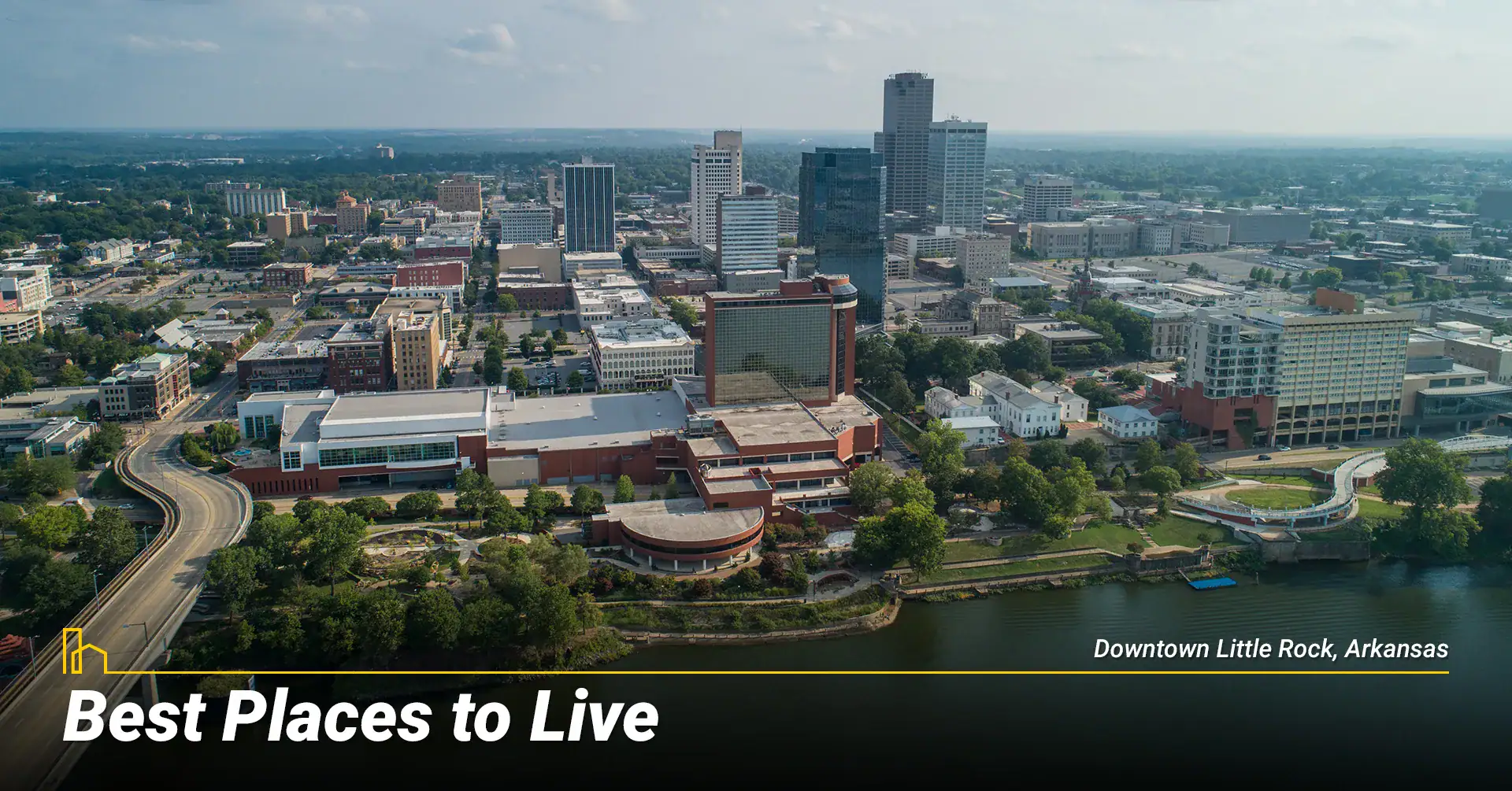
Arkansas offers a variety of communities, each with unique charm and advantages, catering to diverse preferences. The state was ranked as the 40th best U.S. state to move to in 2024, largely bolstered by its exceptional affordability and commendable safety.
A. Little Rock Metro: Capital City Vibrancy
As the capital and largest city, Little Rock combines big-city amenities with affordable living. Median home value is $287,557 (2025). The city offers strong job opportunities in state government, healthcare, and education, with major employers including UAMS and Baptist Health.
Little Rock features numerous parks, a lively entertainment district, and rich museums. It’s home to Little Rock Central High School National Historic Site, a Civil Rights Movement symbol. The cost of living remains affordable compared to national averages.
B. Northwest Arkansas: Innovation and Outdoor Living
Northwest Arkansas, encompassing cities like Fayetteville, Springdale, Rogers, and Bentonville, is a rapidly growing region known for its innovation, strong economy, and abundant outdoor opportunities. This area has become a global center of excellence in retail, food, and logistics, driven by the headquarters of Fortune 500 companies like Walmart, Tyson Foods, and J.B. Hunt Transport.
- Fayetteville: Home to the University of Arkansas, Fayetteville offers a vibrant college town atmosphere with a dynamic arts and culture scene. It features numerous parks, including Gulley Park and Lake Fayetteville, providing extensive trails for hiking and biking. The median home value is around $294,771 (2025).
- Springdale: An important industrial city, Springdale hosts the world headquarters of Tyson Foods. It offers a variety of parks, such as Randal Tyson Recreational Complex and Murphy Park, with extensive recreational facilities. The median home price in Springdale was $402,600 in 2025.
- Rogers: With major employers like Northwest Health and Mercy Health System, Rogers is a hub for medical services. The city provides numerous parks and trails, including Lake Atalanta Park and the newly opened Mt. Hebron Park, which features inclusive playgrounds and sports facilities. The median home sold price in Rogers was $445,000 in 2025.
- Bentonville: Home to Walmart’s headquarters, Bentonville is a thriving economic environment that attracts businesses of all sizes. The city is known for its focus on arts and culture, including the Crystal Bridges Museum of American Art and an extensive network of trails and green spaces, supported by initiatives from the Walton Family Foundation. The median home sold price in Bentonville was $515,000 in 2025.

Related article
27 Questions to Ask When Hiring a Moving Company
Hiring a moving company can be pretty daunting. You’re entrusting strangers with all your precious belongings, and you want to make sure they’re adequately insured, experienced, and licensed. In this blog post, we’ll cover some essential questions to ask when hiring a moving company and help you avoid moving mishaps…
C. Fort Smith: Frontier History and Family Focus
Fort Smith blends Civil War history with a family-oriented atmosphere. Median home value is $303,737 (2025). Fort Smith National Historic Site showcases Wild West era history, including “Hanging Judge” Isaac C. Parker’s legacy.
The city features outdoor amenities like Ben Geren Trail and major employers in healthcare (Mercy Hospital, Baptist Health-Fort Smith) and manufacturing.
D. Hot Springs: Relaxation and Natural Wonders
Hot Springs is renowned for natural thermal springs and spas, offering relaxation and wellness. The city has low living costs with a median home value of $210,000 (2025).
Historic downtown features boutiques, restaurants, and cultural attractions. Hot Springs National Park, located within the city, offers thermal springs, mountain views, and forested hikes integrated into an urban setting. This unique combination makes Hot Springs attractive for retirees and those seeking peaceful living.
E. Texarkana: Border Town Opportunities
Texarkana, a unique city straddling the Texas-Arkansas border, blends economic opportunity with surprising affordability. The median home price in Texarkana is $195,000 (2025), making it one of the most budget-friendly options. The city is actively building its remote workforce and has been recognized as one of America’s Most Welcoming Places. Its strategic location offers access to amenities and job markets in both Arkansas and Texas.
F. Other Family-Friendly Communities
Several other Arkansas communities are highly regarded for their family-friendly environments:
- Pine Bluff: Blends heritage, education, and affordability, home to the University of Arkansas at Pine Bluff (UAPB)
- Searcy: Known for its affordability and family-friendly amenities like Berryhill Park
- Conway: “City of Colleges” with Hendrix College, University of Central Arkansas, and Central Baptist College
- Russellville: Balances livability, character, and outdoor access, home to Arkansas Tech University
- Forrest City: Offers friendly community vibes and cultural life at the EACC Fine Arts Center

Related article
15 Things People Usually Forget When Moving
Whether or not you decide to hire a professional moving company, this guide includes everything you need for completing your move. It’s always best to have this list handy so you can check off each task and know that you’re on top of everything…
7. Planning Your Move

Successfully relocating to Arkansas requires careful planning and preparation to ensure a smooth transition. This comprehensive timeline breaks down the move into manageable phases.
Essential Timeline
|
Timeline |
Essential Tasks |
|---|---|
| 8-12 Weeks Before | Research Arkansas cities and communities to find the best fit. Calculate estimated moving costs, including housing, utilities, and daily expenses. Begin decluttering and creating an inventory of belongings. |
| 6-8 Weeks Before | Gather important documents (birth certificates, marriage licenses, school records, medical records). Obtain quotes from reputable moving companies and book services. Begin packing non-essential items, labeling boxes clearly. |
| 4-6 Weeks Before | Schedule utility disconnections at current residence and new utility setups in Arkansas (electricity, gas, water, internet). Research Arkansas auto insurance options. Arrange for mail forwarding through the postal service. |
| 2-4 Weeks Before | Confirm all moving details with the moving company. Prepare an essentials box with items needed immediately upon arrival. Arrange for temporary lodging if there will be a gap between leaving the old residence and moving into the new home. |
| Moving Week | Oversee the loading of belongings. Conduct a final walkthrough of the old residence. Travel to Arkansas with essential documents and immediate necessities. |
| Upon Arrival | Set up and confirm utilities are active. Register vehicle and obtain Arkansas driver’s license within 30-60 days. Enroll children in schools. Update addresses with banks, insurance companies, and service providers. |
=> Get the Relocation Guide & Checklist PDF — prepared for both Desktop and Mobile devices.
Recommended for you




8. Legal Requirements

New residents in Arkansas must adhere to specific legal requirements to establish residency:
- Driver’s License: New residents must obtain an Arkansas driver’s license within 30 days of becoming a resident, or within six months if a non-resident physically present in the state. This typically involves visiting a local Arkansas State Police Driver Services Testing Center and providing proof of identity and two proofs of residency.
- Vehicle Registration: New residents have 30 to 60 days after establishing residency to retitle and register their vehicles in Arkansas. Required documents typically include the out-of-state title and registration, proof of Arkansas-compliant auto insurance, and a completed Title & Registration Application.
- Vehicle Inspections: None required—major advantage over many states
- Documentation: Birth certificate, proof of residency, Arkansas auto insurance required
9. Unique Considerations

Advantages
- No vehicle inspections: Arkansas does not require routine safety checks or emissions testing for personal vehicles, simplifying vehicle ownership
- Completely toll-free state: No toll roads, bridges, or tunnels anywhere in the state—all highways and interstates are maintained without charging tolls
- Franchise alcohol system: Beer and light wine sold in grocery stores; wine and spirits at licensed liquor stores
- Sunday alcohol sales: Now permitted 10 AM-midnight (specific to county and city as of February 2025)
Challenges
- Car-dependent transportation: Limited public transit outside Little Rock makes personal vehicle essential
- Infrastructure challenges: D+ grade on 2020 infrastructure report card, including aging roads and bridges
- Tornado risk: Average of 37 annually, with peak activity in spring and late fall
- Limited nightlife: Options can be limited outside major urban centers
- Climate considerations: Hot, humid summers; insects due to warm climate

Related article
10 Important Things You Should Prepare for Long-Distance Moving
Moving long distances can be exciting, like an adventure of a lifetime. There is nothing as interesting and energizing as trying out new things and having the opportunity for a fresh start. But let’s be honest: moving is more complex than getting into a car or a bus and leaving for a new place…
10. Financial Planning

Effective financial planning is essential for a smooth relocation to Arkansas, despite its low cost of living.
Moving Costs:
- Local moves: $373-$1,915 (average $664 for 2-bedroom home)
- Long-distance: $2,200-$10,500 (average $3,500 for 2-3 bedroom household moving over 1,000 miles)
- Vehicle shipping: $150-$600 short distances, double/triple for cross-country
Additional Expenses:
- Security deposits: 1-2 months’ rent for rentals
- Utility setup fees: ~$150 plus application fees (example: Centerton Utilities requires $150 deposit plus $25 application fee)
- Emergency fund: 3-6 months living expenses recommended
Local 211 agencies provide information on assistance programs for housing, utilities, food, and medical expenses. The Arkansas Development Finance Authority (ADFA) offers Emergency Solutions Grant (ESG) funds to help prevent homelessness and assist with permanent housing placement.
11. Insider Tips

For those embarking on a new chapter in Arkansas, these insider tips can enhance the relocation experience:
- Embrace Outdoors: Arkansas truly lives up to its “Natural State” nickname. Explore the vast national forests, hike scenic trails in the Ozarks or Ouachita Mountains, and take advantage of numerous rivers and lakes for fishing, kayaking, or boating.
- Savor Local Flavors: Dive into Arkansas’s unique culinary traditions. Seek out local eateries for authentic chocolate gravy, cheese dip, fried catfish, and hushpuppies. Support local farmers by visiting farmers markets.
- Connect with Community: Arkansas is known for strong community bonds and Southern hospitality. Get involved in local events, volunteer, or join community organizations.
- Prepare for Climate: While Arkansas enjoys four distinct seasons, summers can be hot and humid, and severe weather, including thunderstorms and tornadoes, is possible, particularly in spring. Be prepared and stay informed about local weather advisories.
- Appreciate Affordability: Leverage the lower cost of living, especially in housing and daily expenses, to optimize your budget. While incomes may be lower than the national average, reduced expenses often lead to comfortable quality of life.
- Plan for Transportation: A reliable personal vehicle is generally essential due to limited public transit outside major cities.
Why Choose Arkansas?
Arkansas offers unmatched affordability, natural beauty, and growing economic opportunities. The state provides excellent value for families, retirees, and remote workers at significantly lower costs than most U.S. locations.
Recent tax cuts, no vehicle inspections, toll-free roads, and low property taxes create compelling financial advantages. While challenges include car dependency and limited urban nightlife, Arkansas’s genuine hospitality and outdoor recreation attract those seeking authentic Southern living with modern opportunities.

Related article
30 Best Packing Tips for Moving to a New City
How do you get everything safely from Point A to Point B on a tight schedule? With a lot of planning. Here are our best tips to make the process of moving to a new city as smooth as possible…
Frequently Asked Questions about Moving to Arkansas
1. Do I need a car in Arkansas? Yes, Arkansas is car-dependent with limited public transit outside Little Rock. While Little Rock has JTRAN bus services, most areas require a personal vehicle for daily convenience.
2. How safe is Arkansas? Arkansas’s violent crime rate is lower than the national average, ranking 39th among all states. However, safety varies by location—research specific neighborhoods and local crime statistics.
3. What should I budget for moving? Plan for $373-$1,915 for local moves and $2,200-$10,500 for long-distance relocations. Also budget for security deposits (1-2 months’ rent), utility setup fees (~$150), and 3-6 months emergency fund.
4. What are the biggest challenges for newcomers? Common challenges include adjusting to summer heat and humidity, understanding Southern culture, car-dependent transportation, and limited public transit infrastructure.
5. Is Arkansas family-friendly? Absolutely. Arkansas offers safe neighborhoods, strong communities, numerous family-friendly amenities, quality education options, and year-round activities including historical sites and outdoor recreation.
6. What’s the weather like? Arkansas experiences four distinct seasons with mild winters and hot, humid summers (often in the 90s). Spring and fall offer pleasant conditions, though the state is prone to thunderstorms and tornadoes in spring.
7. What are the tax advantages? Progressive income tax with maximum 3.9% rate (recently reduced from 4.4%), low property taxes (0.59% effective rate), and retirement income exemptions make Arkansas very tax friendly.
8. Do Arkansans love sports? Yes, sports are a significant part of Arkansas culture, particularly college athletics. The University of Arkansas Razorbacks compete in the SEC, with strong football, basketball, and baseball programs.



Related Content