



Waterfront Property Due Diligence Checklist for the Southern Caribbean Coastline
- Local Editor:Local Editor: The HOMEiA Team
- Category: Real Estate Investing
Share


Owning a piece of the southern Caribbean coastline is the ultimate dream, with a chance to wake up to turquoise horizons and the rhythmic sound of the surf awaiting. Whether you’re eyeing a modern villa in Aruba’s Gold Coast, a historic estate in Barbados, or exploring the thriving market for Curaçao real estate, you are investing in one of the most vibrant and beautiful regions in the world. However, because the coast is a dynamic environment where land meets sea, due diligence is your most powerful tool for ensuring that this slice of paradise remains a secure, high-value asset for generations.
In the southern Caribbean, due diligence isn’t a legal necessity; it’s an opportunity to fully understand the unique rights and protections that come with your property. Within the geographic corridor stretching from the ABC (Aruba, Bonaire, Curaçao) through the Windward Islands of Grenada and St. Lucia, and down to the coastal provinces of Panama and Colombia, ownership is fundamentally different from terrestrial inland properties. By engaging in a thorough review of boundaries, coastal rights, and local regulations, you aren’t looking for red flags, you’re actively securing this lifestyle and maximizing the future value of your home.
Table of Contents:
- Key Takeaways
- 1. Why Waterfront Due Diligence in the Southern Caribbean Is Different (and More Critical)
- 2. Step-By-Step Waterfront Property Due Diligence Checklist (Overview)
- 3. Understanding Property Boundaries on the Caribbean Coast
- 4. Coastal Rights, Public Access, and Shared Shoreline
- 5. Docks, Jetties, Seawalls, and Over-Water Structures
- 6. Zoning, Coastal Setbacks, and Building Constraints
- 7. Storm, Flood, and Erosion Risk: Building for the Future
- 8. HOA and Strata Rules: The Hidden Financial Liability
- 9. Coordinating with Your Local Expert Team
- 10. Putting It All Together: A Practical Caribbean Waterfront Pre-Closing Checklist
- FAQs About Waterfront Property Due Diligence Checklist for the Southern Caribbean Coastline
Key Takeaways
- Investment Security: Thorough due diligence ensures you acquire clear, enforceable rights, protecting investments from unforeseen local customs or regulatory shifts.
- Boundary Clarity: Implementing modern “Deslinde” surveys confirms exact land area, providing peace of mind as the natural coastline evolves over time.
- Optimized Rights: Understanding local doctrines like the Queen’s Chain or King’s Bottom allows for maximizing enjoyment of the shoreline and water-based activities.
- Building Resilience: Compliance with modern setbacks and building codes enhances the property’s durability against storms and significantly lowers long-term insurance costs.
- Governance Advantages: Auditing HOA or Strata rules ensures your community is financially healthy, protecting property value through well-maintained shared infrastructure.

Related article
15 Things People Usually Forget When Moving
Whether or not you decide to hire a professional moving company, this guide includes everything you need for completing your move. It’s always best to have this list handy so you can check off each task and know that you’re on top of everything…
1. Why Waterfront Due Diligence in the Southern Caribbean Is Different (and More Critical)

Buying a home on the water is a specialized endeavor offering rewards far beyond standard inland purchase. In the southern Caribbean, the coastline is governed by a rich tapestry of laws, ranging from Spanish and Dutch civil codes to British common law, treating the boundary between land and sea as a shared, precious resource.
The primary goal of due diligence is to align your vision for the property with the local social contract of the coast. This includes ensuring a private retreat respects traditional public access while securing your exclusive rights to the structures and land within your survey. Furthermore, because the Caribbean is at the forefront of Blue Economy initiatives, many jurisdictions now offer robust frameworks protecting the very reefs and waters that make your property valuable.
In this region, a property that was compliant with building setbacks in 1990 may find its structures now encroaching on the state-owned coastal strip due to thirty years of sea-level rise. This is why title searches are insufficient. You need a forensic investigation into the technical, fiscal, and regulatory viability of the asset. By understanding these early, you can design improvements, like docks or terraces, being legal and environmentally sustainable.
2. Step-By-Step Waterfront Property Due Diligence Checklist (Overview)

A successful purchase is built on a foundation of clear information. This roadmap allows you and your professional team to verify every aspect of the property during the inspection period:
- Clarify the Ownership Structure: Confirm that the property is Titled (registered in a national registry) or held under Rights of Possession as each carries vastly different legal protections and tax obligations.
- Execute a Current Boundary Survey: Use a licensed local surveyor to execute a Deslinde or official measurement to mark the current Mean High Water Mark and verify exactly where private land intersects with public coastal zone.
- Investigate Coastal and Riparian Rights: Clarify your rights to use the beach and waters in front of the home, including being able to install private moorings, piers, or boat lifts.
- Confirm Easements and Public Access: Identify any customary use paths or utility lines benefitting your property or allow neighbors to access the water.
- Audit Existing Coastal Structures: Confirm any existing docks, seawalls, or boathouses hold the necessary permits from planning and environmental authorities and are in pristine structural condition.
- Review Zoning and Setback Rules: Confirm the buildable footprint focusing on how coastal setbacks (often 30 to 50 meters) protect your home from natural erosion.
- Evaluate Environmental Resilience: Study local hazard maps and historical erosion data to ensure your home is built above the Base Flood Elevation to secure lower insurance premiums.
- Audit Community Governance (HOA/Strata): If buying in a resort or condo, review the Reserve Study to ensure funds are set aside for high-cost items like communal seawalls.
- Coordinate with Local Experts: Assemble a team composed of a maritime attorney, coastal engineer, and licensed surveyor to handle the technical verifications.

Related article
30 Best Packing Tips for Moving to a New City
How do you get everything safely from Point A to Point B on a tight schedule? With a lot of planning. Here are our best tips to make the process of moving to a new city as smooth as possible…
3. Understanding Property Boundaries on the Caribbean Coast

A. Do You Really Own the Beachfront?
In the southern Caribbean, beaches are often a dynamic zone of shared enjoyment. While your deed may outline beachfront most jurisdictions define a public coastal strip where the public has a right to pass. This is actually a benefit to you as a homeowner, ensuring the natural beauty of the coast remains accessible and preserved, preventing over-commercialization that could mar your view.
- The Queen’s Chain (Windward Islands): In jurisdictions like St. Lucia, the legal foundation for coastal land, is the Queen’s Chain an evolution of the French Cinquante Pas du Roi (Fifty Paces of the King). This principle designates a strip of land 186.5 feet (56.85 meters) inland from the high-water line as a dependency of the Crown. While you may lease this land for your garden or pool, it is not traditionally owned in “fee simple.”
- The Dutch Public Domain (ABC Islands): In Aruba, no private property truly borders the waterline. A ten-meter strip from the waterline is reserved for public usage, ensuring that private beaches do not exist in the legal sense. This regulatory stance ensures a market-friendly but public-centric environment.
- The Maritime-Terrestrial Zone (Panama/Colombia): In Panama, foreigners generally cannot own land within the first 22 meters of the high tide line. Most coastal land is set back 150 to 200 meters unless it’s part of a specifically titled historical grant.
B. Surveys, Site Plans, and Legal Descriptions
A modern “Deslinde” survey is your most valuable document. It provides a precise snapshot of your property’s dimensions relative to the current shoreline. Because sand moves and sea levels shift, relying on a 30-year-old survey is a common pitfall.
A new survey allows the surveyor to physically mark your lot lines on the ground. This is critical because of the concept of the ambulatory boundary. Because measurements are often taken from the current high-water line, the landward limit of the reserved zone shifts inland as the sea rises. A professional survey ensures you are building within your legal rights and avoids future disputes with the government over encroaching on the maritime zone.
Recommended for you





A. What Rights Do You Really Get?
Owning a waterfront lot typically grants you Riparian Rights, the right to access the water, enjoy the view, and protect your land from the sea. However, the ownership of the seabed, the King’s Bottom, generally remains with the state. This means that any structure built over the water, whether a dock, a boat lift, or a gazebo, requires a specific Coastal Works Permit or concession from the government.
B. Public Access and Customary Use
The southern Caribbean is home to a robust beach culture where the shoreline is viewed as a communal asset. Legally, most jurisdictions protect the public’s lateral access, the right to walk along the shore between the high and low-water marks.
In some cases, customary use rights may exist. This occurs when the local community has used a portion of the dry sand area for recreational purposes or fishing in an ancient and uninterrupted manner. As a savvy buyer, you should visit the property at different times of the week to observe these patterns. Embracing the local beach culture is often ideal to ensure long-term privacy and security for your home.
C. Shared Shoreline and Resort Amenities
Many buyers choose gated communities or resorts because they offer professionally managed common areas. You might share a high-end jetty or a private beach club with your neighbors, which often results in higher-quality facilities than a single owner could maintain alone. When reviewing these arrangements, ensure the association documents clearly define rules for guests, renters, and commercial use of shared docks.

Related article
For High-End Relocations, Luxury Moving Companies Deliver
Luxury moving experts offer personalized service and innovative solutions for transporting anything that requires extra care. Here are a few of the features a high-end moving company may be able to offer…
5. Docks, Jetties, Seawalls, and Over-Water Structures
A. Are Existing Structures Legal and Permitted?
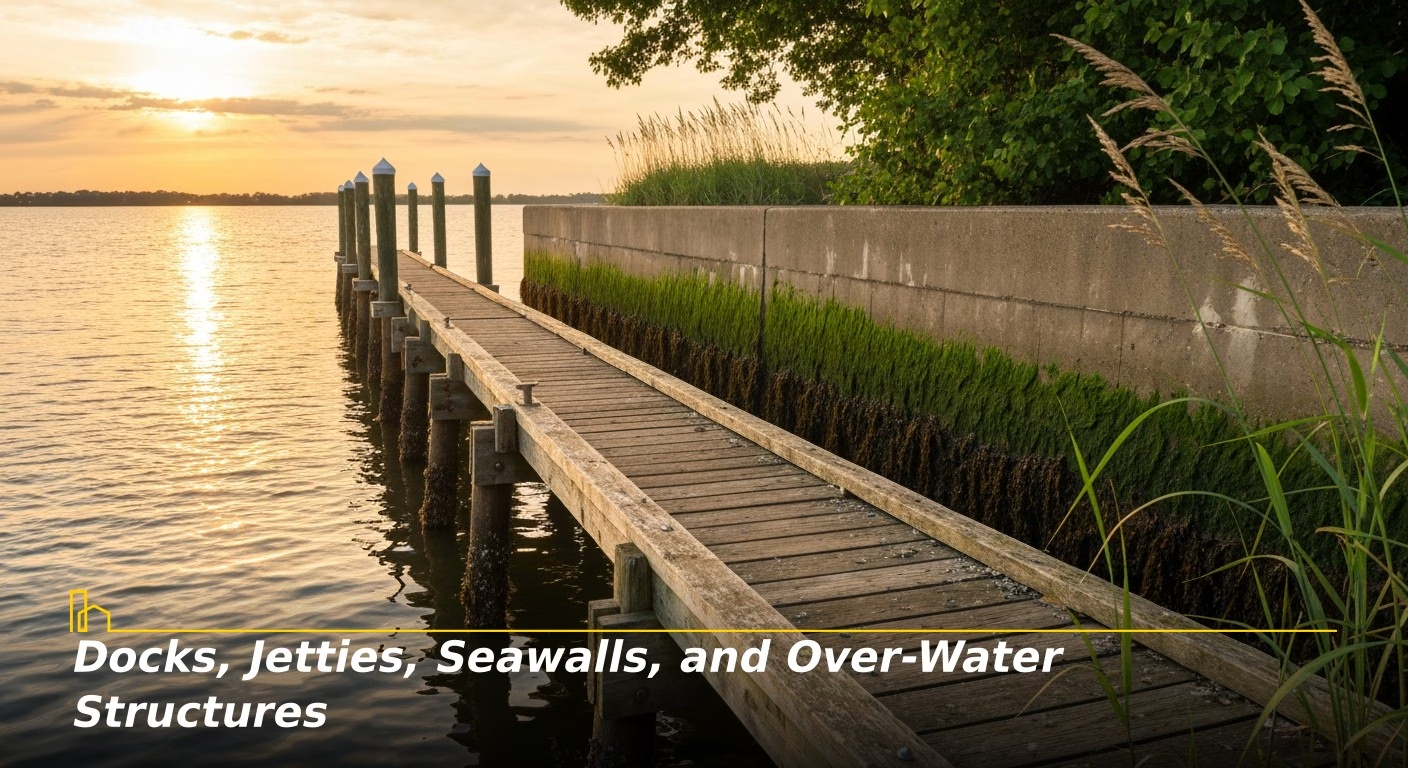
One of the most rewarding parts of waterfront living is having a place to park your boat. During due diligence, your team will verify that existing docks were built with proper Coastal Works permits. In the Cayman Islands, for example, a permit from the Cabinet is required for any dock seaward of the mean high water mark.
If you find a structure that was built without a permit years ago, don’t panic,many jurisdictions offer a path to after-the-fact permits. It allows for one to bring the structure into official compliance and secure your future use of it, though it may involve double royalty fees.
B. Seawalls and Erosion Control
A well-built seawall is the silent guardian of a waterfront property. Inspections by a coastal engineer can confirm the wall is in adequate shape, protecting your foundation and landscaping from the tides.
- Repair Costs: Minor seawall repairs (fixing small cracks or grouting joints) typically cost anywhere from $100 to $250 per linear foot.
- Full Replacement: If a wall is leaning or showing toe failure, a full replacement can cost between $150 and $800 per linear foot, depending on materials like vinyl, concrete, or steel.
- Maintenance: Investing in preventative maintenance, such as clearing weep holes to allow for drainage and inspecting tie-backs for corrosion, can extend the life of your wall by decades.
6. Zoning, Coastal Setbacks, and Building Constraints

A. Coastal Setbacks as Protection
Setbacks are often viewed as a restriction, but for the buyer, they are a form of insurance. In Grenada, regulations prohibit development closer than 165 feet (50 meters) from the high-water mark. With Barbados, the standard is generally 30 meters. These buffers ensure your villa is safe from seasonal storm surges and natural erosion.
B. Environmental and Heritage Protections
SouthCaribbean is home to incredible ecosystems including mangroves and coral reefs. Regulations protecting these areas are the reason the water in front of your home is so clear and full of life.
- Mangroves: In many jurisdictions, mangroves cannot be trimmed or removed without a permit, as they serve as natural gray infrastructure absorbing wave energy.
- Turtle Nesting: If your property is on a nesting beach, you may be required to use turtle-friendly lighting, specific red or amber LEDs that are invisible to hatchlings, to ensure they can find their way back to the sea using the moon’s light.
C. The “50 Percent Rule”
This is a critical legal threshold for buyers of existing homes. If the cost of repair or remodeling exceeds 50% of the market value of the building, the entire structure must be brought into compliance with current codes. Doing so entails raising the entire house on pilings to meet modern Base Flood Elevation standards. Always audit the history of previous improvements before you plan a major renovation.

Related article
12 Important Things You Should Know When Hiring a Long-Distance Moving Company
Always consult your chosen moving company to clarify how they define different categories of moves. Understanding these nuances will allow you to plan your budget better and be informed about your legal rights…
7. Storm, Flood, and Erosion Risk: Building for the Future

A. Hurricanes and Resilience
While the ABC islands are historically south of the main hurricane tracks, modern building codes are among the most robust in the world. Properties built to current standards, with impact-resistant glass and reinforced concrete foundations, not only withstand the elements but often qualify for significantly lower insurance premiums.
- Wind Speeds: Modern codes often require structures to be designed for 150 mph to 180 mph gusts.
- Insurance Discounts: Homes that exceed minimum standards can sometimes see the wind portion of their insurance premiums cut by 20% to 40% annually.
B. Sea-Level Rise and Long-Term Value
Sea-level rise (SLR) is a slow-onset hazard affecting property boundaries over decades. Coastal engineers use models to predict how the shoreline may move. Properties with a wide beach and high elevation (at least 10 feet above mean sea level) are inherently more resilient and will maintain their value as environmental standards tighten.
C. Water Quality and Sargassum
Health of the marine environment is a key driver of property value. Since 2011, Sargassum seaweed has become a seasonal factor for some Caribbean coasts. While unsightly and smelly if left to decompose, many luxury developments now deploy offshore floating barriers to keep the water clear.
- Cost of Barriers: Professionally installed sargassum barrier can cost upwards of $375,000 for a large development, but it reduces manual cleanup costs by 70% or more.
- Cleanup Success: The good news is that the negative effects of Sargassum do not persist once the seaweed is removed, with water quality returning to its pristine state quickly.

Related article
10 Important Things You Should Prepare for Long-Distance Moving
Moving long distances can be exciting, like an adventure of a lifetime. There is nothing as interesting and energizing as trying out new things and having the opportunity for a fresh start. But let’s be honest: moving is more complex than getting into a car or a bus and leaving for a new place…

Many luxury waterfront properties are part of Homeowners’ Associations (HOAs) or Strata communities. The financial health of these associations is paramount because they manage high-cost shared assets like seawalls and marinas.
- Special Assessments: If a communal seawall fails and the HOA has not saved enough money, they may levy a Special Assessment;a one-time fee charged to every homeowner. In high-profile cases, these have reached millions of dollars for the community.
- The Reserve Study: Your due diligence must include a review of the Reserve Study. A healthy HOA should be funded at 50% or higher for its long-term maintenance projects.
- Rental Rules: Associations often control short-term rental licensing and minimum stays. If you plan to list your property on Airbnb, verify these rules early.
9. Coordinating with Your Local Expert Team

A. Who Does What in the Caribbean Waterfront Due Diligence?
Item | Primary Professional | Recommended Timing |
|---|---|---|
| Boundary Verification | Cadastral Surveyor | During Inspection Period |
| Title & Rights Search | Attorney / Notary | Before Making Offer |
| Zoning & Setbacks | Planning Consultant | During Inspection Period |
| Structure Integrity | Coastal Engineer | During Inspection Period |
| Environmental Audit | Coastal Ecologist | Pre-Closing |
| HOA/Strata Review | Attorney / Buyer | Before Final Commitment |
B. Questions to Ask Your Team
- To the Attorney: “Is this land Titled or Right of Possession? Can I get a mortgage?”
- To the Surveyor: “Where exactly is the high-water mark today compared to the 1990 survey?”
- To the Engineer: “Is the seawall undermined? Does the ground floor have proper flood venting?”
- To the Agent: “How does the local community traditionally use this beach? Are there offshore sargassum barriers?”

Related article
An Ultimate Guide to Moving for Home Buyers and Sellers
Buying and selling a home doesn’t make you an expert in moving. Buying and selling are much more different when you’re actually moving. Carefully go through the tips listed below and uses these as your ultimate guide whenever moving…
10. Putting It All Together: A Practical Caribbean Waterfront Pre-Closing Checklist

A. Before Making an Offer
- Registry Check: Confirm the seller is the legitimate owner and that the title is free of cautionary annotations or liens.
- Visual Inspection: Walk the shoreline at different times to observe public access and boat traffic.
- Permit Check: Ask for copies of the Coastal Works Permits for the dock and seawall.
B. During the Inspection Period
- Order a Deslinde: Confirm the current boundaries and the buildable footprint relative to the setback line.
- Engineering Audit: Have a professional inspect the seawall, boat lift, and roof for storm resilience.
- Elevation Audit: Measure the lowest structural member to ensure it is above the Base Flood Elevation.
- Financial Audit: Request the HOA’s last audited statement and the Reserve Study.
C. Before Final Commitment
- Easement Verification: Ensure all public rights-of-way are clearly marked and do not interfere with your plans.
- Insurance Quote: Obtain a quote based on the property’s specific elevation and resilience features.
- Zoning Confirmation: Verify that the property is zoned for your intended use (e.g., residential vs. short-term rental).
Conclusion: Waterfront property in the southern Caribbean is more than a home; it’s an investment in a lifestyle defined by natural beauty and tranquility. By approaching due diligence prioritizing protection and optimization, you’re ensuring that your coastal sanctuary remains a secure asset for years to come.
Take your time, involve experienced local professionals, and lean into the process. When you finally sit on your terrace and watch the sunset over the sea, you will do so with the profound peace of mind that comes from knowing every boundary is marked, every right is secured, and every regulation is met. Welcome to the vibrant world of Caribbean waterfront living.
Recommended for you




FAQs About Waterfront Property Due Diligence Checklist for the Southern Caribbean Coastline
1. What is the legal difference between “Dry Sand” and “Wet Sand” ownership?
In most jurisdictions, private ownership covers the dry sand above the high-water mark, while the wet sand ( intertidal zone) is public domain. This creates a shared coastal culture where you own the land and the view, while the public can walk along the edge of the waves.
2. If my dock is destroyed by a storm, can I automatically rebuild it?
Generally, yes, provided you rebuild the exact same footprint and dimensions as your original permitted structure. If planning to expand or change materials, you must usually apply for a new Coastal Works Permit.
3. Does standard insurance cover my seawall?
Standard homeowner policies often exclude exterior structures like seawalls and docks. However, a well-maintained wall is highly durable, and a coastal engineer’s report can help you secure specialized coverage if desired.
4. What is “Right of Possession” (ROP) land?
Common in Panama, ROP land is technically owned by the government, but you hold the right to occupy and improve it. While affordable, it cannot be mortgaged and requires careful documentation to avoid ownership disputes. Most buyers prefer to convert ROP to Titled land for maximum security.
5. How does the “Queen’s Chain” affect my mortgage?
Banks are accustomed to Crown leases in islands like St. Lucia. They will typically grant mortgages as long as the lease term is significantly longer than the life of the loan.


Related Content