






How To Document Landlord Harassment and Retaliation For Building A Legal Case
- Local Editor:Local Editor: The HOMEiA Team
-
Category: Rent , Home Maintenance
Share


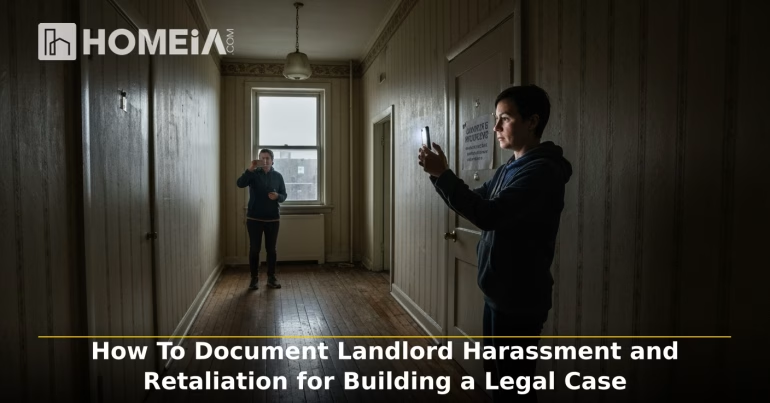
Landlord harassment and retaliation are illegal tactics used to force tenants out of their homes without formal eviction proceedings. Whether it be aggressive behavior, neglect, or rent hikes, these actions threaten housing security. However, the law protects tenants who assert their rights. The difference between losing your home and winning a settlement often comes down to one thing: a rigorous, admissible evidence record. This guide outlines how to build that record.
Table of Contents:
Key Takeaways
- Harassment is Illegal: Landlords cannot disturb your quiet enjoyment, cut off essential services, or use intimidation to force you to vacate. These actions violate civil statutes and, in cases like lockouts, criminal laws.
- Retaliation is Prohibited: It is unlawful for a landlord to raise rent, decrease services, or threaten eviction because you exercised a legal right, notably reporting code violations.
- Documentation is Evidence: A tenant’s memory is not enough in court. You need a contemporaneous, detailed log of incidents to prove a pattern of bad faith behavior.
- Preserve Metadata: Text messages and emails must be exported with dates, times, and sender information intact. Screenshots are often inadmissible without proper authentication.
- Know Your Remedies: Administrative bodies like HUD and local rent boards can penalize landlords. Small claims courts allow you to sue for damages and statutory penalties.
Disclaimer: This report is for educational purposes and does not constitute legal advice. Laws vary by state and city. Always verify local statutes and consult a qualified attorney or legal aid organization before taking legal action.

Related article
Step by Step Renters Guide on How To File a Complaint or Lawsuit Against Your Landlord
Filing a formal complaint or a lawsuit is a serious step shifting the conflict from a private disagreement to a public legal matter. It requires preparation, evidence, and a clear understanding of your rights. This guide walks you through the escalation process, from organizing your trial binder to filing…
1. Quick Answer: What Counts as Harassment or Retaliation?
A. Landlord Harassment: Harassment is a course of conduct intended to disturb a tenant’s peace and quiet enjoyment of their home. It is often used in bad faith to force a tenant to vacate a rent-controlled unit or waive their rights.
- Legal Standard: Behavior that has no legitimate business purpose and causes the tenant distress. This includes “constructive eviction” tactics including cutting heat or removing doors.
- Statutory Protections: California Civil Code § 1940.2 explicitly prohibits using force, threats, or menacing conduct to influence a tenant to move, offering penalties of up to $2,000 per violation.
B. Landlord Retaliation: Retaliation is a punitive action taken by a landlord because a tenant engaged in a protected activity, such as complaining to code enforcement or organizing a tenant union.
- Adverse Actions: Retaliatory acts include raising rent, decreasing services (e.g., removing parking), or filing for eviction.
- The “Rebuttable Presumption”: California, Arizona, and Illinois are a few of the many states where if a landlord takes adverse action within a specific window (often 6 months to 1 year) after a tenant’s complaint, the court presumes it is retaliation. The burden shifts to the landlord to prove otherwise.

Related article
What To Do If Your Landlord Won’t Make Repairs: Tenant Rights, Evidence Checklist, and Legal Remedies
When a landlord ignores repair requests, renters can be left in unsafe, stressful living conditions. But tenants have legal rights. By documenting issues, providing proper notice, and using local housing laws, renters can push for repairs, protect their health, and hold landlords accountable…
2. Common Examples of Misconduct
- Disrupting Services: Cutting off water, heat, or electricity to freeze out tenants.
- Privacy Violations: Entering the unit without proper notice (usually 24 hours) or excessive inspections used to harass.
- Construction Harassment: Performing noisy, non-essential work at odd hours or leaving dangerous debris in common areas.
- Fraudulent Notices: Issuing baseless eviction notices or demanding fees not outlined in the lease.
- Discriminatory Harassment: Targeting tenants based on race, disability, or family status, or refusing reasonable accommodations.

Related article
Tenant Rights When a Rental is Unsafe or Uninhabitable: From Code Complaints to Breaking Your Lease Legally
Living without heat, dealing with leaks, or facing pest infestations in a rental endangers health and safety. Landlords cannot legally charge rent for uninhabitable housing. Tenants who understand habitability standards…
3. Step-by-Step: Protecting Yourself Today
- Move Communications to Writing: Stop verbal agreements immediately. Send follow-up emails or texts summarizing any in-person conversations: “To confirm our talk today, you stated you would not fix the leak.” This creates a paper trail.
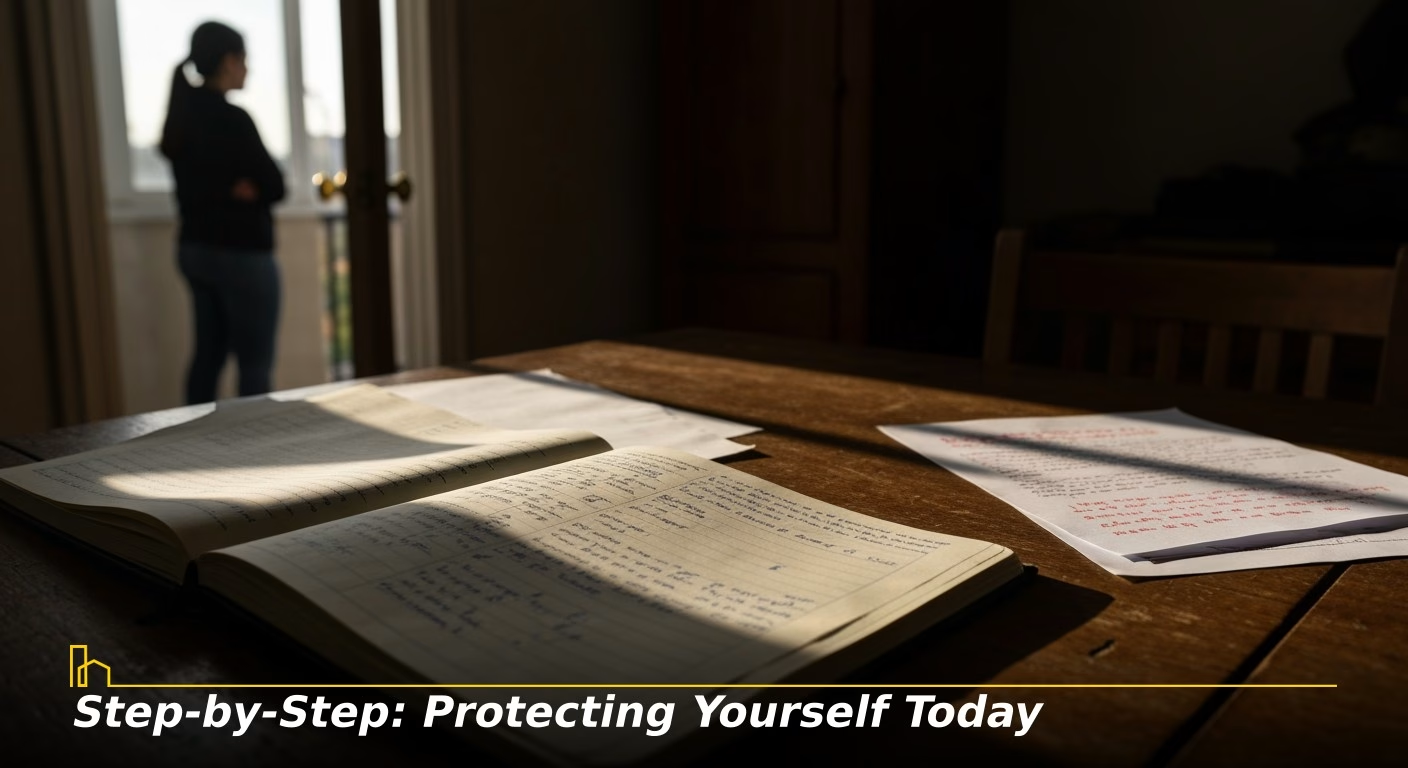
- Start a Harassment Log: Keep a dedicated log (digital or physical) of every incident. This “contemporaneous record” is highly credible evidence in court.
- Send a “Cease and Desist” Letter: Formally notify the landlord that their behavior violates the lease and local laws. Send this via Certified Mail, Return Receipt Requested. The signed receipt proves they were notified, defeating any “I didn’t know” defense.
- Secure Witnesses: Ask neighbors if they have experienced similar issues. A pattern of behavior against multiple tenants strengthens a legal case for bad faith.
4. Building a Strong Documentation File (Evidence Framework)
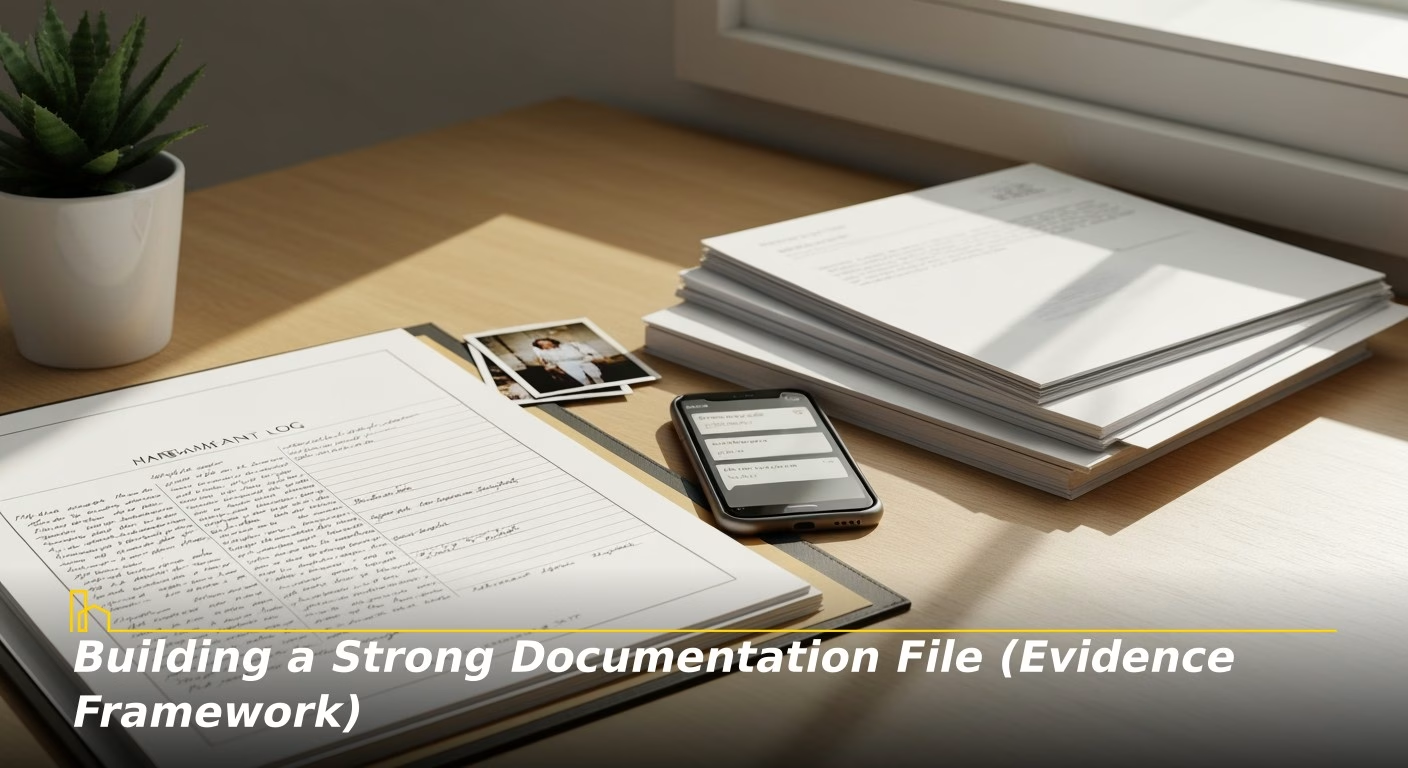
Organize your evidence into a Trial Binder or secure cloud folder. Admissibility is key.
A. The Harassment Log: Use a spreadsheet or notebook with these columns:
- Date & Time
- Incident Description (Be specific: quotes, actions)
- Witnesses Present
- Evidence Reference
B. Texts and Emails (Metadata Matters): Courts may reject simple screenshots that lack context.
- Best Practice: Use software like Decipher TextMessage or TouchCopy to export conversations as PDFs. It preserves the time, date, and sender’s phone number for every message.
- Screenshots: If you must use screenshots, capture the date and the contact’s phone number, not only “Landlord”.
C. Photos and Videos
- Photos: Use a Timestamp Camera app to overlay the date/time on images of conditions (mold, leaks, debris).
- Videos: Record noise violations or water leaks in real-time. Warning: Be careful recording conversations; many states require two-party consent.
D. Official Records: Include copies of Code Enforcement reports, police incident reports, and certified mail receipts. These are neutral, third-party proof of your claims.

Related article
Illegal Evictions and Lockouts: How Tenants Can Fight Back and Reclaim Their Home
Being locked out or having utilities shut off by a landlord is illegal in most states and can feel terrifying. Staying calm and responding strategically is critical. Tenant protection laws prohibit “self-help” evictions, and emergency legal remedies, like court orders or police assistance…
5. Legal and Administrative Options
A. Administrative Complaints:
- HUD/Fair Housing: File a complaint for discriminatory harassment. HUD investigates and can issue charges.
- Code Enforcement: Report habitability issues. Fines pressure landlords to comply.
- Rent Boards: In rent-controlled cities, file for a rent reduction due to decrease in services.
B. Civil Harassment Restraining Orders: If you experience threats of violence, stalking, or excessive entry, you can petition for a restraining order. Violating this order can lead to the landlord’s arrest.
C. Small Claims Court: Sue for money damages without a lawyer. You can claim return of rent, statutory penalties (e.g., unlawful entry), and emotional distress damages in some jurisdictions. Limits vary (e.g., $12,500 in California, $10,000 in Indiana).
D. Constructive Eviction: If conditions are unlivable and the landlord refuses to fix them, you may be legally entitled to break your lease and move. You must provide notice and allow reasonable time for repairs first. Consult a lawyer before taking this high-risk step.
Sample Scenario: From Complaint to Response
a. The Situation: Tenant “Alex” reports a heater failure. Landlord ignores the request. Alex calls Code Enforcement, who cites the landlord.
b. The Retaliation: Three days later, the landlord texts Alex: “Rent is going up $200 next month.” The landlord also removes Alex’s assigned parking spot.
c. The Response:
- Documentation: Alex saves the text message with metadata showing the date (establishing temporal proximity to the complaint).
- Action: Alex sends a Certified Letter citing the state’s anti-retaliation statute, noting the rent hike is illegal because it followed a protected act.
- Outcome: If the landlord sues for non-payment of the increase, Alex uses the text and Code report to prove retaliation. The court voids the increase and may award Alex statutory damages.
Conclusion: Landlord harassment is designed to make you feel powerless, but a rigorous evidence record is the ultimate equalizer. By treating every interaction as potential evidence and meticulously logging incidents, texts, and official reports, you transform a chaotic situation into a winnable legal case. Do not wait for the situation to escalate. Start your documentation binder today, consult with local tenant advocates, and remember: the law protects those who can prove their story, not only those who are right.
Recommended for you




FAQs About How To Document Landlord Harassment and Retaliation For Building A Legal Case
1. Can I record my landlord?
It depends on your state. In one-party consent states (e.g., NY, TX), you can record conversations you are part of. In two-party consent states (e.g., CA, IL, FL), recording confidential conversations without permission is illegal and inadmissible. However, video recording in common areas (no audio) is generally allowed.
2. Can I withhold rent for harassment?
Withholding rent is risky and generally reserved for severe habitability issues (no water/heat), not behavioral harassment. Improper withholding can lead to eviction. Certain states require placing rent into a court escrow account first.
3. Can I install a doorbell camera (e.g., Ring)?
Generally, yes, if it does not permanently damage the door (use a peephole mount) and does not record the interior of a neighbor’s unit. In two-party consent states, disable audio recording to avoid wiretap violations.
4. Is the landlord liable for neighbor harassment?
Yes, under the Fair Housing Act and HUD rules, landlords can be liable for tenant-on-tenant harassment if they knew about it and failed to act, especially if harassment is discriminatory.
5. How do I print text messages for court?
Do not rely on screenshots alone. Use tools like Decipher TextMessage (iPhone) or SMS Backup+ (Android) to export conversations. If using screenshots, ensure the date, time, and sender’s phone number (not just name) are visible to authenticate the evidence.


Related Content