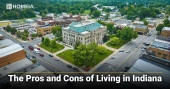








Indiana offers more than farmland and the Indy 500; it’s an affordable state with strong communities and a central location. But challenges include harsh winters, limited diversity, and uneven economic growth. This guide provides a balanced look at Indiana’s pros and cons and highlights the best cities for young professionals, families, and retirees…
The 5 Best Places to Live in Indiana: A City Comparison
- Local Editor:Local Editor: Ashley Theirin

Indiana is a state of surprising contrasts, where Midwestern charm meets economic opportunity and vibrant urban centers coexist with picturesque small towns. Choosing the right community is crucial to unlocking a lifestyle that fits your ambitions, no matter the goal.
This guide provides an in-depth, data-driven analysis of the five best places to live in Indiana. We’re going past simple charm to evaluate these population centers on the factors that matter most: economic opportunity, most affordable places to live in Indiana, safety, access to amenities, and unique quality of life. From the bustling energy of Indianapolis to the academic excellence of Bloomington, we break down what makes each city a premier destination for building your future in the Midwest.
Key Takeaways
- Diverse Options for Diverse Needs: These top cities offer distinctly different lifestyles, from the urban economic engine of Indianapolis to the tight-knit, high-performing community of Carmel.
- Affordability is a Constant: A major advantage across each city is a cost of living at or below the national average, with accessible housing costs compared to other Midwestern states.
- Safety Varies Significantly: Safety ratings range from excellent to moderate, making it crucial to research specific neighborhoods and cities based on your personal tolerance and priorities.
- Economic Drivers Differ: Each job market is anchored by a different sector—manufacturing, education, healthcare, or technology—requiring alignment with your career field.
- Culture is Key: The intangible sense of place, community, and access to culture and nature are often the defining factors in choosing between these exceptional locations.
I. Methodology: How We Chose the Best
To ensure a comprehensive and objective ranking, our analysis is based on a multi-factor methodology that evaluates each city on key criteria essential for quality of life in the Indiana context.
Our evaluation criteria are weighted as follows:
- Employment & Economy (25%): Assesses job market health, major employers, economic diversity, and income levels relative to the local cost of living.
- Housing & Affordability (25%): Evaluates median home value, average rent, and home-price-to-income ratios, acknowledging Indiana’s overall affordability but important local variations.
- Quality of Life & Culture (20%): Encompasses access to unique outdoor recreation, cultural attractions, dining, entertainment, and overall lifestyle.
- Access & Infrastructure (15%): Considers connectivity (road, air), healthcare access, internet reliability, and other critical services.
- Safety & Community (15%): Reviews crime statistics and overall community engagement, resilience, and family-friendliness.

Related article
Our Methodologies to create HOMEiA Score Ratings for Each Group of Content
HOMEiA uses a consistent, data-driven methodology to evaluate U.S. states for livability, affordability, and long-term value. Our analysis centers on key factors such as Housing and Affordability, Cost of Daily Living, Access and Infrastructure, Community Strength, Safety and Quality of Life, Economic Resilience and Job Market…
II. The 5 Best Cities: A Portrait of Indiana’s Diversity
1. Indianapolis: The Economic Powerhouse
HOMEiA Score: 82/100
- Cost of Living: 8% below U.S. average
- Monthly Rent: $1,200
- Home price to income ratio: 4.8:1
- Income to rent ratio: 52.1x
- Safety rating: 58/100
A. Employment & Economy: Indianapolis is Indiana’s economic engine and state capital. The Crossroads of America, it’s home to major corporations including Eli Lilly, Salesforce, and Cummins. Here provides a diverse economy spanning healthcare, finance, manufacturing, and tech. Downtown continues to see significant investment, while the suburbs offer ample employment opportunities. Their job market is the most robust in the state, with opportunities across multiple sectors.
B. Housing & Affordability: It offers a diverse housing stock comprising downtown condos and historic neighborhoods and suburban developments. Home-price-to-income ratio is a healthy 4.8:1, making homeownership accessible to many. While more expensive than smaller cities in-state, it remains budget-friendly compared to other major Midwestern metros. The Indianapolis real estate market provides options for every budget, though desirable neighborhoods near downtown can be competitive.
C. Quality of Life & Culture: Life consists of an “urban meets community” experience. Boasting world-class cultural institutions including the Indianapolis Museum of Art, Children’s Museum of Indianapolis, and numerous performing arts venues. Sports enthusiasts enjoy professional teams including the Colts (NFL), Pacers (NBA), and Fever (WNBA). The downtown canal walk, White River State Park, and expanding trail system provide excellent outdoor recreation. Its restaurant scene continues to evolve, with diverse culinary options emerging throughout the city.
D. Access & Infrastructure: As the most connected city in the state, it possesses the state’s largest hospital network, multiple universities, and an international airport (IND). Serving as the commercial and logistical hub for the entire state, with exceptional highway connectivity via I-65, I-69, and I-70. Public transportation includes bus service, though car ownership remains essential for most residents.
E. Safety & Community: With a safety rating of 58/100, safety varies significantly by neighborhood. Family-friendly areas like Meridian-Kessler and Broad Ripple are well-regarded, while some urban core areas face challenges. The population is increasingly diverse, with established neighborhood associations creating pockets of tight-knit community throughout the metropolitan area.
Related article
2. Fort Wayne: The Revitalized City
HOMEiA Score: 83/100
- Cost of Living: 10% below U.S. average
- Monthly Rent: $950
- Home price to income ratio: 4.5:1
- Income to rent ratio: 57.9x
- Safety rating: 62/100
A. Employment & Economy: Fort Wayne’s economy is a steady mix of manufacturing, healthcare, and defense. As the Hoosier State’s second-largest city, it serves as a regional economic hub with major employers including Parkview Health, Lincoln Financial Group, and BAE Systems. This economy has diversified while maintaining its manufacturing roots. Recent downtown revitalization has attracted new businesses and young professionals to the area.
B. Housing & Affordability: FW offers the best balance of affordability and amenities among larger cities. Home-price-to-income ratio is a healthy 4.5:1, and the cost of living at 10% below the national average makes it highly accessible. The housing market provides a mix of historic homes in established neighborhoods and newer construction in developing areas.
C. Quality of Life & Culture: The City That Saved Itself holds a pristine quality of life with significant recent investments in downtown development. The Parkview Field baseball stadium, Embassy Theatre, and the Fort Wayne Museum of Art are notable attractions. Riverfront development has created new parks and recreational opportunities, while the extensive trail system connects neighborhoods throughout the city.
D. Access & Infrastructure: As a regional hub, there is convenient connectivity via I-69 and I-469, along with a regional airport (FWA). The city boasts standout healthcare systems, quality public services, and ongoing infrastructure improvements. The downtown revitalization has included significant public investment in parks, trails, and public spaces.
E. Safety & Community: With a safety rating of 62/100, it has seen improvements in public safety alongside its downtown revitalization. The community is welcoming, with a strong sense of identity tied to its manufacturing heritage and recent renewal. The population represents a blend of multi-generational families and new residents attracted by the city’s affordability and quality of life.

Related article
3. Bloomington: The College Town
HOMEiA Score: 84/100
- Cost of Living: 5% below U.S. average
- Monthly Rent: $1,100
- Home price to income ratio: 5.2:1
- Income to rent ratio: 54.5x
- Safety rating: 65/100
A. Employment & Economy: Bloomington’s economic prosperity is tied to Indiana University, which provides consistent employment in education, research, and healthcare. The university’s presence creates a knowledge-based economy with opportunities in technology, life sciences, and professional services. It also benefits from a growing healthcare sector and small business community. While the job market is robust within these sectors, opportunities outside education and healthcare are limited.
B. Housing & Affordability: There’s a mix of historic homes near downtown, student housing, and suburban developments. Home-price-to-income ratio is 5.2:1, reflecting the balance between academic salaries and housing costs. This market provides diverse options, though competition can be intense for properties in desirable locations near campus or downtown.
C. Quality of Life & Culture: Authentic way of life is defined by intellectual engagement, natural beauty, and cultural richness. The city offers access to the stunning landscapes of Brown County State Park and Lake Monroe. IU brings world-class cultural events, Division I athletics, and a vibrant restaurant scene focused on diverse cuisines. Downtown features unique shops, galleries, and the historic Buskirk-Chumley Theater.
D. Access & Infrastructure: Bloomington has a regional airport (BMG) while being about an hour’s drive from Indianapolis International Airport (IND). Here is home to ranked healthcare facilities for its size and a walkable, bike-friendly downtown. Public transportation includes campus and city bus systems, though car ownership remains important for most residents.
E. Safety & Community: With a safety rating of 65/100, there’s an established sense of community and cultural engagement. The population blends students, faculty, long-time residents, and retirees, creating a diverse and intellectually stimulating environment. The community is environmentally conscious and politically engaged, with active neighborhood associations throughout the city.
Recommended for you




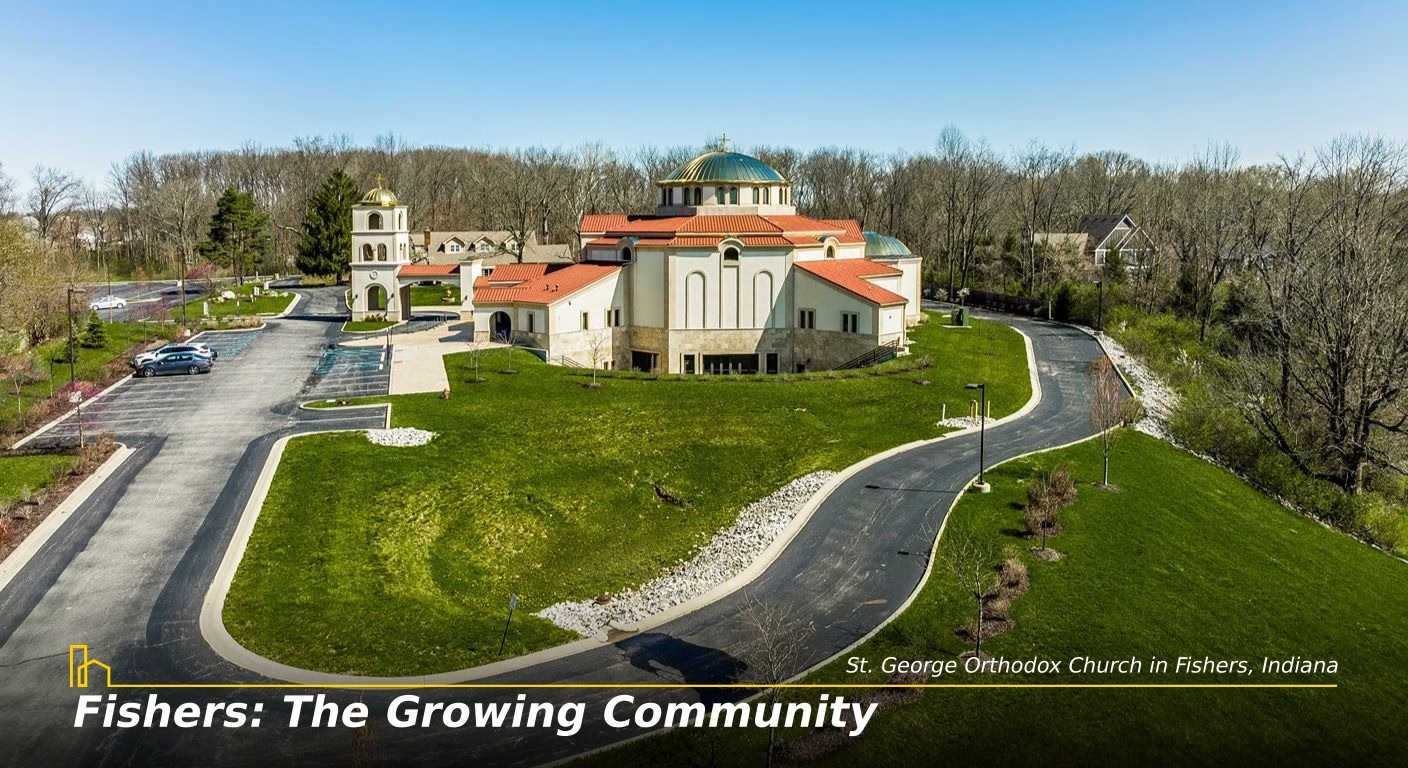
4. Fishers: The Growing Community
HOMEiA Score: 85/100
- Cost of Living: 2% below U.S. average
- Monthly Rent: $1,350
- Home price to income ratio: 4.2:1
- Income to rent ratio: 63.5x
- Safety rating: 78/100
A. Employment & Economy: Fishers benefits from its location in the booming Hamilton County corridor, with convenient access to both Indianapolis and Carmel job markets. The city has developed its own economic identity with corporate campuses for companies like Topgolf and numerous tech firms. The local economy is diverse, with established healthcare, education, and professional services sectors. The job market continues to expand as it attracts new businesses and residents.
B. Housing & Affordability: This area offers a balance of newer construction and established neighborhoods at prices slightly more accessible than Carmel. Home-price-to-income ratio of 4.2:1 indicates healthy affordability for the area’s well-compensated workforce. The housing market provides options ranging from apartments and townhomes to single-family homes across various price points.
C. Quality of Life & Culture: Life is defined by family-friendly amenities and community engagement. It’s home to flourishing parks, the Nickel Plate District for dining and entertainment, and numerous community events throughout the year. The Fishers AgriPark provides agricultural education and events, while the growing downtown area offers increasing cultural opportunities. The community maintains a balance between suburban convenience and urban amenities.
D. Access & Infrastructure: Well-connected via I-69 and numerous arterial roads, locals enjoy clear access to the broader metropolitan area. The city has invested significantly in infrastructure, including road improvements, parks, and public facilities. Healthcare access is pristine with multiple facilities nearby, and the community continues to expand its trail system for alternative transportation.
E. Safety & Community: With a safety rating of 78/100, it maintains a respectable safety record and active community involvement. The population is educated and engaged, with numerous neighborhood associations and community organizations. City government emphasizes transparency and resident involvement, contributing to the overall sense of community well-being.
Related article
5. Carmel: The Premier Suburb
HOMEiA Score: 88/100
- Cost of Living: 5% above U.S. average
- Monthly Rent: $1,450
- Home price to income ratio: 3.9:1
- Income to rent ratio: 69.0x
- Safety rating: 82/100
A. Employment & Economy: Carmel’s prime strength is its proximity to Indianapolis’s robust economy while maintaining a personalized corporate presence. Many residents are spoiled by a modest 20-30 minute commute to the highest-paying jobs. Within Carmel proper, corporate headquarters like Allegion and numerous financial services firms provide local employment. The high median income results in strong purchasing power and economic stability.
B. Housing & Affordability: As a master-planned suburb, newer homes, exceptional infrastructure, and top-rated schools at a premium price point are available. High median income results in a home-price-to-income ratio of 3.9:1, indicating ideal purchasing power for residents. The market features well-maintained properties across various price points, from starter homes to luxury estates.
C. Quality of Life & Culture: Residents experience a pristine, convenient, and family-centric lifestyle. It features an extensive network of roundabouts for smooth traffic flow, exceptional parks, and the acclaimed Center for the Performing Arts. The Arts & Design District provides shopping and dining options, while the Monon Trail connects residents to outdoor recreation. The community consistently ranks among the best places to live in the United States.
D. Access & Infrastructure: Fully integrated into the metropolitan area, the city has modern roads, reliable utilities, and top-notch emergency services. Primelocation provides seamless connectivity to Indianapolis while maintaining its distinct identity. Public services are well-funded and efficiently managed, contributing to the high quality of life.
E. Safety & Community: With a safety rating of 82/100, it’s consistently ranked one of the safest cities in Indiana. Having low crime rates, beautifully maintained properties, and a strong, engaged community focused on family life, education, and civic involvement.


Related article
21 Top-Rated Fun Things to do in Lafayette, Indiana
Lafayette is considered a great place to live, located within an easy drive of the larger cities of Chicago and Indianapolis and offering some terrific things to do for its citizens. Purdue University calls Lafayette home and, like many college towns, has plenty of fun options for students and permanent residents alike…
Comparative Data Table
City | HOMEiA Score | Cost of Living | Avg. Rent (2-Bed) | Home Price to Income Ratio | Income to Rent Ratio | Safety Rating |
|---|---|---|---|---|---|---|
| Indianapolis | 82 | -8% | $1,200 | 4.8:1 | 52.1x | 58 |
| Fort Wayne | 83 | -10% | $950 | 4.5:1 | 57.9x | 62 |
| Bloomington | 84 | -5% | $1,100 | 5.2:1 | 54.5x | 65 |
| Fishers | 85 | -2% | $1,350 | 4.2:1 | 63.5x | 78 |
| Carmel | 88 | +5% | $1,450 | 3.9:1 | 69.0x | 82 |
Conclusion: Finding Your Perfect Indiana Match
The best Indiana city is subjective and depends on personal priorities and lifestyle needs. Carmel delivers premier suburban living with top-tier schools and safety, while Fishers offers growing community amenities at a slightly more accessible price point. Bloomington provides intellectual stimulation and natural beauty in a college town setting, and Fort Wayne combines affordability with significant urban revitalization. Indianapolis serves as the economic and cultural hub with diverse opportunities across the metropolitan area.
Each location presents a unique trade-off between cost, opportunity, and lifestyle. Your ideal choice hinges on aligning these factors with personal, financial, and professional goals for life in the Hoosier State. For those still considering options, our guide to the best places to live in Indiana might provide additional insights for Midwestern living.
Recommended for you




FAQs About Living in Indiana’s Best Cities
1. Which city has the best job market?
Indianapolis has the largest, most diverse, and most dynamic job market in the state, spanning numerous industries including healthcare, finance, technology, and manufacturing. Carmel offers high-paying corporate jobs but requires commuting or employment in specific sectors.
2. I’m a remote worker. Where should I move?
For the best blend of reliable infrastructure, amenities, and quality of life, Carmel or Fishers are top choices with their excellent internet infrastructure and community amenities. For more affordable living with cultural opportunities, consider Bloomington or Fort Wayne. Always confirm internet reliability at your specific address before moving.
3. Are these cities safe?
Safety varies significantly. Carmel is considered the safest (82/100), followed by Fishers (78/100). Indianapolis (58/100) has protected suburbs and districts alongside an urban core that requires more discernment. Always research specific neighborhoods within each city.
4. What’s the best city for young professionals?
Indianapolis offers the most vibrant social scenes, networking opportunities, and diverse career paths for young professionals. Bloomington provides an energetic, intellectual alternative with a lower cost of living and university-town atmosphere.
5. What’s the best city for families?
Families often choose based on schools and safety. Carmel offers top-tier education and highest safety rating (82/100) but comes with a higher cost of living. Fishers provides an ideal family-friendly environment with great parks and community amenities at a slightly more accessible price point with an excellent safety rating (78/100).
6. Which city offers the best value for money?
Fort Wayne provides the best balance of affordability and amenities, with a cost of living 10% below the national average—though before choosing a city, it pays to check the Indiana vs. Tennessee cost of living breakdown to see if Midwestern affordability beats Southern tax perks. Bloomington offers excellent cultural and educational opportunities at an affordable price point, though housing near campus can be competitive.
7. How do the seasons affect life in these cities?
All Indiana cities experience four distinct seasons, with hot summers and cold winters. Indianapolis and northern suburbs like Carmel and Fishers typically see more snow than southern cities like Bloomington. Each city has adapted to seasonal changes with indoor amenities and seasonal activities, but winter preparedness is important throughout the state.
Share