






California Housing Market Analysis (2025-2026): Legislation, Economic Stability, and Regional Affordability
- Local Editor:Local Editor: Christopher Gorrie
- Category: USA , California


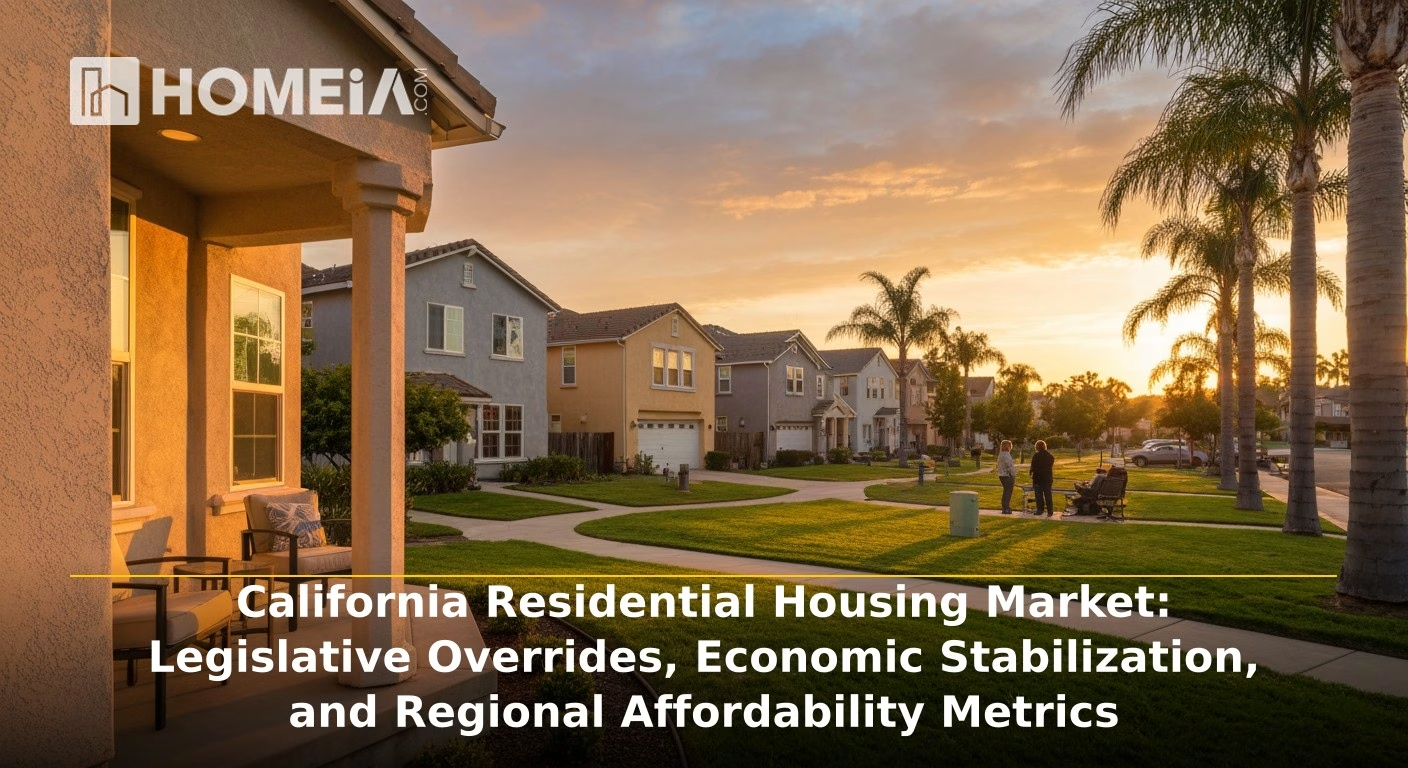
The residential real estate landscape in California as of late 2025 and early 2026 is defined by a growing tension between long-standing zoning constraints and a new wave of state-level legislative interventions that directly affect where Californians can realistically afford to live.
This report examines the intersection of Senate Bill 79, the 2025-2026 state budget priorities, and the evolving protections for tenants in the Central Valley, the Inland Empire, and Northern California. By synthesizing demographic data, income-to-housing ratios, and social sentiment, this analysis provides a professional framework for understanding the viability of California’s interior markets compared to its globally unique but cost-prohibitive coastal corridors.
Unlike most U.S. residential housing markets, California’s affordability crisis is not driven by land scarcity alone, but by a combination of regulatory constraints, infrastructure concentration, climate pressures, and income-to-housing mismatches. According to data from the California Association of Realtors and the Legislative Analyst’s Office, fewer than one in five California households can currently afford the state’s median-priced home, even under favorable financial conditions. This reality has accelerated intrastate migration rather than a simple “exodus” from the state.
For many households, the question is no longer whether California is affordable, but where affordability still exists within the state.

Related article
10 Cheapest Places to Live in California (updated)
California still offers budget-friendly communities for those who know where to look. This guide highlights ten affordable cities, comparing housing, rents, incomes, jobs, schools, safety, and lifestyle to help residents find value without sacrificing quality of life.
I. The Legislative Paradigm: Senate Bill 79 and the Future of Urban Density
The most significant regulatory shift in the 2025-2026 period is the enactment of California Senate Bill 79, known as the “Abundant and Affordable Homes Near Transit Act.” Signed into law on October 10, 2025, this legislation is designed to address California’s chronic housing undersupply by limiting the ability of local municipalities to block high-density residential development near existing transit infrastructure.
Importantly, SB 79 does not mandate construction, nor does it guarantee immediate affordability gains. Instead, it removes local zoning barriers that historically prevented multi-family housing near transit investments already funded by the state. Research from the California Department of Housing and Community Development consistently shows that zoning capacity, not demand, is the primary bottleneck in high-cost metros.
1. The Mechanism of Zoning Overrides
Beginning July 1, 2026, SB 79 will force local governments within designated transit-rich areas to permit residential structures reaching 7 to 9 stories in height. This mandate applies specifically to sites located near major transit hubs, effectively creating high-density corridors where single-family zoning previously predominated. The legislative intent is to maximize the utility of state-funded transit infrastructure by placing residents in immediate proximity to light rail, bus rapid transit, and commuter rail stations.
Sacramento serves as the primary case study for this transition. As an Urban Transit County, the city is projected to experience a transformation of its urban core and transit-adjacent neighborhoods. The state’s override of local zoning is intended to encourage long-term affordability through a dramatic increase in supply, which is theorized to lead to rent stabilization over time, as new units are delivered and market pressure gradually eases.
Sacramento is uniquely positioned to absorb SB 79-enabled density due to its existing light rail network, concentration of state government employment, and comparatively lower land acquisition costs than coastal metros. The Sacramento Area Council of Governments has already identified transit-adjacent land that can support tens of thousands of additional units under revised zoning assumptions.
2. Legislative Outlook: The SB 79 Factor: What Renters Need to Know
Effective July 1, 2026, California Senate Bill 79—the “Abundant and Affordable Homes Near Transit Act”—will fundamentally alter the rental landscape in “Urban Transit Counties.” As outlined above, SB 79 standardizes zoning allowances near qualifying transit hubs, enabling significantly denser residential development than was previously permitted under many local ordinances.
Sacramento is a key city expected to feel the impact of this mandate. For renters, this legislative shift is a signal of hope; the increased density is designed to encourage long-term affordability and potential rent stabilization by dramatically expanding the supply of apartment units in high-demand, transit-accessible areas.


Related article
Moving to California: The Complete Relocation Guide & Checklist
This comprehensive guide helps you plan a successful move to California, covering cost of living, job market, moving timelines, and top cities like Silicon Valley, Los Angeles, San Diego, and Sacramento. Make informed decisions for your West Coast relocation with practical checklists and real insights for a smooth transition…
II. Economic Stabilization and Budgetary Metrics for 2025-2026
The California 2025-2026 budget reflects an economy entering a cooling phase after sustained volatility, with stabilization that has direct implications for housing affordability in lower-cost regions. While the state has not officially modeled for a recession, the data reflects a cautious approach to fiscal planning, balanced by a rebound in specific labor sectors.
1. Inflationary Cooling and Commodity Pricing
The cooling of inflation to approximately 2.5% is a critical metric for the residents of affordable cities. In regions like the Central Valley and the Inland Empire, where a higher percentage of household income is spent on basic necessities, this cooling trend has stabilized the costs of groceries and gasoline. For a resident in San Jacinto or Fontana, where the average commute can exceed 33 minutes, the stabilization of fuel prices is as vital as the stabilization of rent.
In inland California regions, where transportation and utilities account for a higher share of household spending in coastal metros, even modest inflation cooling translates into meaningful monthly relief. Data from the California Energy Commission shows that summer electricity usage in Central Valley households can exceed coastal usage by more than 30%, magnifying the impact of stabilized energy prices.
2. Labor Market Dynamics: The Low-Wage Sector Rebound
The economic viability of California’s most affordable cities is currently sustained by a rebound in “low-wage sector” jobs. This sector includes the logistics, service, and agricultural workers who form the demographic backbone of cities like Stockton, Fresno, and Bakersfield. The state’s reliance on this sector to keep the housing market viable indicates that affordability is currently tethered to the health of the supply chain and service industries.
Economic Metric (2025-2026) | Value / Status | Impact on Affordability |
|---|---|---|
| Inflation Rate | ~2.5% | Stabilizes grocery and gas expenditures. |
| Primary Job Growth | Low-Wage Sectors | Sustains demand in inland rental markets. |
| Recession Modeling | Not Modeled | Suggests potential for unexpected volatility. |
| State Median Home Price | ~$832,500 | Drives migration to inland cities. |
| State Projection Median Income | $91,905 | Highlights income gap in low-cost regions. |
3. Economic Forecast: Economic Outlook 2025-2026
As we move through 2025 and into 2026, California’s economic landscape is showing signs of stabilization that directly benefit those in affordable housing markets. While the state budget has not yet modeled for a full-scale recession, the ongoing economic viability of regions like the Central Valley and the Inland Empire relies heavily on a rebounding “low-wage sector.” Without continued job growth in these sectors, affordability in inland California cities would deteriorate quickly, as housing costs would outpace already modest wage gains.
Recommended for you




III. The Legal Fortification of Tenants: Habitability and Protections
In the pursuit of low rent, many California residents migrate to older, established cities such as Fresno, Bakersfield, and Stockton. However, the age of the housing stock in these regions presents significant challenges regarding maintenance and living conditions. The 2025 updates to the Tenant Protection Act address these challenges by reinforcing the “right to habitability.”
1. Habitability Standards in Arid Climates
California law strictly enforces the right to live in an environment free from pests and vermin. In the context of the Central Valley, where summer temperatures are extreme, this right to habitability has been functionally extended to include environmental safety. The 2025 legal framework acknowledges that a failure to provide working air conditioning during a heatwave or failing to address a pest infestation constitutes a breach of the landlord’s duty.
In practice, Central Valley jurisdictions report higher volumes of habitability complaints during prolonged heat events, and courts increasingly treat prolonged lack of cooling or pest mitigation as material health risks rather than minor maintenance issues.
2. Retaliatory Eviction Protections
A critical component of the 2025 Tenant Protection Act is the strengthened shield against retaliatory eviction. Historically, tenants in lower-income brackets often hesitated to report code violations for fear of being evicted in retaliation. The updated law provides explicit protections for tenants who complain about habitability issues, ensuring that they cannot be removed for exercising their right to a safe home.
These protections are particularly consequential in cities with older rental stock, where deferred maintenance is more common and tenants historically faced higher risk when asserting their rights.
3. Renter’s Safety: Your Rights: Safe & Pest-Free Living
In many of California’s most affordable cities, such as Fresno and Bakersfield, the lower cost of living often coincides with older housing inventories. It is vital for tenants to understand their “right to habitability,” which legally guarantees a living environment free from pests, vermin, and significant structural defects. Under the 2025 updates to the Tenant Protection Act, California law has strengthened safeguards against “retaliatory eviction.” This means that if you report a legitimate issue, such as a pest infestation or a broken air conditioning unit during a dangerous heatwave, your landlord cannot legally evict you as a form of punishment for making the complaint. Ensuring your home is safe and functional is a right, not a luxury.

Related article
The 7 Best Cities to Live in California
For those looking at California as a potential home base, there are a variety of considerations to make when weighing a decision. Some may value safety and community, while others could not care less and just want to club all night. More factors like climate, recreation, and, certainly for most, proximity to the sea will be major considerations…
IV. Regional Profiles: The 10 Most Affordable Cities Analyzed
The core of the Californian affordability narrative is found in the city-specific data. Using metrics from the HOMEiA research materials, we can analyze the cost of living through the lens of income-to-rent and home-price-to-income ratios.
1. San Jacinto: The Expanding Inland Frontier

San Jacinto has emerged as a high-growth area, with its population expanding by 25% over the last decade to reach 55,440. Its median household income of $73,682 and median home value of $345,800 create a home-price-to-income ratio of 4.69, which is significantly lower than the coastal average.
San Jacinto appeals to residents seeking lower housing costs and proximity to outdoor recreation, though daily life often requires longer drives for healthcare and employment.
However, residents must also account for healthcare access gaps and higher transportation dependency, which can offset lower housing costs if no planned for carefully.
2. Fresno and Bakersfield: The Central Valley Anchors
Fresno and Bakersfield remain the traditional bastions of affordability. Fresno offers a median household income of $63,001 and a median home value of $321,800. Its HOMEiA score of 85/100 reflects a balance between budget-friendly living and proximity to state parks.
Bakersfield, with a HOMEiA score of 88/100, presents an even more favorable income-to-rent ratio. With a median household income of $73,827 and an annual rent spend of $15,396, the ratio of 4.80 indicates that renters here have more disposable income than in almost any other major California city.
These cities consistently rank among the most affordable in California, but they also face some of the state’s highest summer heat exposure and air quality challenges, factors that increasingly influence relocation decisions.
3. Stockton: The Logistics Crossroads
Stockton, located along the San Joaquin Delta, serves as a primary hub for logistics and Bay Area commuters. Its HOMEiA score of 88/100 and median home value of $382,000 make it a viable alternative for those working in the high-cost Bay Area who are willing to take the ACE Train or Amtrak for their daily commute.
4. Clearlake: The Rural Remote Work Haven

Clearlake offers the lowest housing costs on the list, with a median home value of only $184,200. Its rural location in Lake County makes it ideal for remote workers, though the trade-off is a limited local job market and potential internet reliability issues.
Broadband access and wildfire insurance availability remain key considerations for prospective buyers despite the city’s exceptionally low home prices.
City | HOMEiA Score | Median Home Value | Median Household Income | Home Price to Income Ratio |
|---|---|---|---|---|
| San Jacinto | 84/100 | $345,800 | $73,682 | 4.69 |
| Fresno | 85/100 | $321,800 | $63,001 | 5.11 |
| Clearlake | 87/100 | $184,200 | $41,047 | 4.49 |
| Bakersfield | 88/100 | $320,600 | $73,827 | 4.34 |
| Stockton | 88/100 | $382,000 | $71,612 | 5.33 |
| Sacramento | 89/100 | $450,500 | $63,000 | 7.15 |

Related article
10 Best Places to Live in Southern California in 2026
HOMEiA is here to help you explore ten of the best places to live in Southern California. Each place has its own charm and unique qualities. Let’s take a quick dive into what Southern California has to offer! Here’re 10 best places to live in Southern California…
The decision to relocate within California is rarely based on financial data alone. Social sentiment data from platforms like Reddit, while anecdotal, consistently reflects the lived trade-offs reported by Californians relocating from coastal to inland regions.
These sentiments also align closely with migration patterns documented by the California Department of Finance, reinforcing their relevance to affordability decision-making.
1. The Coastal vs. Inland Divide
There is a near-universal consensus that coastal California, particularly San Diego, Santa Monica, and Palo Alto, represents a “global paradise” that boasts ocean views, year-round mild weather, and world-class amenities such as Balboa Park, La Jolla Shores, and Stanford University. Yet, current residents increasingly describe the lifestyle as a “crushing cost.” with median home prices in San Diego reaching $1.1 million in 2025, forcing many to consider moving inland.
When residents move inland, they report a clear “trade-off”:
- Moving from Santa Monica to Van Nuys in the San Fernando Valley can mean summer highs that are 15 degrees hotter, along with poorer air quality.
- Central Valley cities like Fresno and Bakersfield regularly see summer temperatures above 100°F, with persistent wildlife smoke affecting air quality.
2. Sacramento: The Middle Ground
Sacramento is often viewed as a “middle ground” city. It offers the cultural scene, nightlife, and healthcare systems of a major city without the “crushing cost” of the Bay Area. The median home price is about $490,000 compared to $1.5 million in San Francisco. Residents enjoy the access to Lake Tahoe, the Golden 1 Center, Crocker Art Museum and wine country across Napa and Lodi. Despite this, the “Vibe Check” reveals consistent complaints about summer highs in the mid-90sF and humidity.
3. Local Sentiment: The Trade-Offs
- The “Paradise” Factor: Residents acknowledge that coastal hubs like San Diego, Santa Barbara, and Malibu offer world-class lifestyle dining, easy access to some of the nation’s best beaches, and elite schools such as Torrey Pines High, but the “paradise” comes with a cost of living that is increasingly out of reach for many.
- The Inland Trade-Off: In affordable Central Valley cities, like Fresnoa, Bakersfield, and Visalia the primary trade-offs for lower rent and home prices are summer heat, periodic air quality issues, and limited cultural attractions.
- The Sacramento Balance: Sacramento is widely viewed as a “middle ground” city. It provides the amenities such as midtown nightlife and the UC Davis Medical Center, with housing that’s still relatively affordable. Still, summer heat remains a common complaint.
- The Commuter Sacrifice: For those choosing cities like Stockton or Fontana, the affordability is often balanced against long commute times or an industrial environment dominated by the logistics industry. Many Stockton residents, for instance, use the ACE Train to reach Bay Area offices.

Related article
7 Cheapest Places to Live in Southern California
Looking for the cheapest places to live in Southern California? This guide highlights seven cities near Los Angeles that offer affordable housing, low living costs, and great amenities. Whether you’re a first-time buyer, retiree, or remote worker, these budget-friendly communities provide quality of life without the typical SoCal price tag…
VI. Commuter and Remote Work Realities: Logistics and Connectivity
The 2025-2026 data emphasize the importance of carrier-specific city selection. As the economy relies on the low-wage sector and logistics, cities like Stockton and Fontana have become specialized hubs.
1. Stockton and the Bay Area Link
Stockton is not merely an affordable city; it is a developing logistics hub near a major port. As previously noted, its proximity to the Bay Area makes it a target for commuters who use the ACE Train or Amtrak. This connectivity allows residents to earn Bay Area wages while paying Central Valley housing prices (~$405,000 median home). The trade-off: commute times exceeding 90 minutes, which can affect quality of life, especially if endured for years.
2. Fontana: The Inland Empire’s Industrial Engine
Fontana serves as the major logistics and trucking hub for the Inland Empire. Large employers include Auto Warehouse Company and the Target Distribution Center, while healthcare is served by the Kaiser Permanente Fontana Medical Center. However, its industrial focus means residents must contend with heavy truck traffic and the associated air quality issues.
3. Clearlake and the Remote Work Niche
For those who are not tethered to a physical workplace, Clearlake, in Lake County, offers the ultimate affordability play. With a median home price of $184,200, it is a “remote work haven” for those who value nature and low density. The population density is so low that each person could theoretically have 10,740 square feet of space. The trade-off, however, is the rural isolation and the risk of internet reliability issues, which are critical for remote employment.
City | Best For (Career Type) | The Trade-Off |
|---|---|---|
| Stockton | Logistics / Bay Area Commuters (via ACE Train/Amtrak) | High daily commute times. |
| Fontana | Logistics / Supply Chain (Inland Empire Hub) | Heavy truck traffic and air quality issues. |
| Clearlake | Remote Workers (Low cost, nature) | Rural isolation and potential internet reliability issues. |

Related article
The 5 Best Places for a Waterfront Vacation Home in California Under $1.5 Million
Your California waterfront dream may be closer than you think. You don’t need a Malibu budget, just smart choices. Imagine waking up to Pacific waves in Redondo Beach or sipping wine by Lake Tahoe’s alpine waters. This isn’t just about buying property, it’s about creating a lifestyle and investing in value. Welcome!…
VII. Demographic Divergence and Educational Access
The affordability of California’s interior cities is also reflected in the demographic shifts and the availability of educational and family-oriented resources.
1. San Jacinto’s Growth and Family Environment
Despite its high poverty rate, San Jacinto is noted for providing a “safe, family-friendly environment”. The city is served by the San Jacinto Unified School District (SJUSD) and provides solid options for higher education through transfer programs and associate degrees. Its 25% growth rate indicates that families are increasingly choosing the San Jacinto Valley for its relaxed atmosphere and mountain access.
2. Imperial and Vacaville: The Outlying Options
Other cities such as Imperial and Vacaville offer unique niches. Imperial, located near the Salton Sea, is popular for outdoor activities like camping and dune buggies, with a median household income of $85,163—the highest among the affordable cities surveyed. Vacaville, positioned between Sacramento and the Bay Area, serves as a “private retreat” for those who want a mix of country and city life, with a median home value of $354,600.
3. Small Town Safety: Clovis and Livingston
Clovis is frequently cited as one of the top three cheapest cities in the state and is known for being “much friendlier” and safer than other cities in the Fresno metropolitan area. Livingston, located in the heart of the Central Valley, offers the lowest monthly rent on the list at approximately $883, making it the premier choice for extreme budget-consciousness.
Conclusion: Synthesizing the 2026 Outlook
The California housing market in 2026 is defined by a move toward verticality and state-mandated density in cities like Sacramento, while the Central Valley and Inland Empire cities of Fresno, Bakersfield, and Fontana continue to serve as the economic engines for the logistics and service sectors. The 2025-2026 budget’s cooling of inflation to 2.5% provides a necessary buffer for residents in these regions, who are often the most sensitive to commodity price fluctuations.
The legislative “override” provided by SB 79 represents the most aggressive attempt yet to stabilize rents by increasing apartment density near transit hubs. For the renter, these laws, combined with the 2025 Tenant Protection Act’s habitability safeguards, create a more secure environment for living in older, more affordable buildings.
Ultimately, choosing one of California’s most affordable cities requires a deliberate balancing of career access, climate tolerance, and long-term financial stability — trade-offs that are becoming unavoidable for a growing share of residents. Whether it is the logistics-driven hustle of Stockton, the rural isolation of Clearlake, or the “middle ground” of Sacramento, the data indicates that affordability in California is alive, though it requires a willingness to navigate the environmental and infrastructural trade-offs of the state’s vast interior.
Recommended for you




FAQs about California Housing Market
1. How quickly can SB 79 realistically impact rents?
SB 79 won’t lower rents overnight; it simply expands zoning capacity near transit, so any downward price pressure depends on actual construction, which usually takes years to materialize. Early analysis by planners estimates that implementation will begin in 2026, but realistic effects on rents at scale likely won’t appear until the late 2020s or early 2030s, especially given permitting timelines and construction costs.
2. Are California tenant protections meaningful in 2026?
Yes. Under the Tenant Protection Act (AB 1482), most landlords cannot raise annual rent more than either 5% plus inflation or 10% total, and unlawful retaliatory evictions are prohibited, gives renters real legal recourse. These protections apply broadly to older multifamily units and are actively enforced through consumer alerts from the California Attorney General.
3. Are inland California cities truly more affordable once other costs are considered?
Generally, yes. Cities like Fresno, Bakersfield, and Stockton have significantly lower home prices and rents than coastal metros, but overall cost of living (utilities, transportation, insurance, etc.) still matters. California’s housing cost burden remains the highest in the nation, with roughly 20% of households spending more than half their income on housing, so even in affordable inland cities, trade-offs with other living costs are real.
Final Note on Metrics: The analysis of home price to income ratios and income to rent ratios suggests that while homeownership is “somewhat expensive” in cities like Sacramento ($7.38$ ratio), the rental market remains “somewhat affordable” ($3.28$ ratio), providing a clear pathway for those not yet ready to enter the high-cost California mortgage market.2 Because higher ratios signal greater financial strain, this divergence will be a key metric to monitor as SB 79 begins reshaping housing supply after mid-2026.
Share