






Moving to Austin is exciting, but choosing the right neighborhood matters most, especially for young families. This guide highlights communities that balance strong schools, safe streets, reasonable commutes, and family-friendly amenities. Using current data and on-the-ground insights, we identify Austin neighborhoods where parents can connect easily, children can thrive, and long-term home value stays strong…
Up-and-Coming Neighborhoods: Where to Buy Before Prices Rise
- Local Editor:Local Editor: The HOMEiA Team
- Category: USA
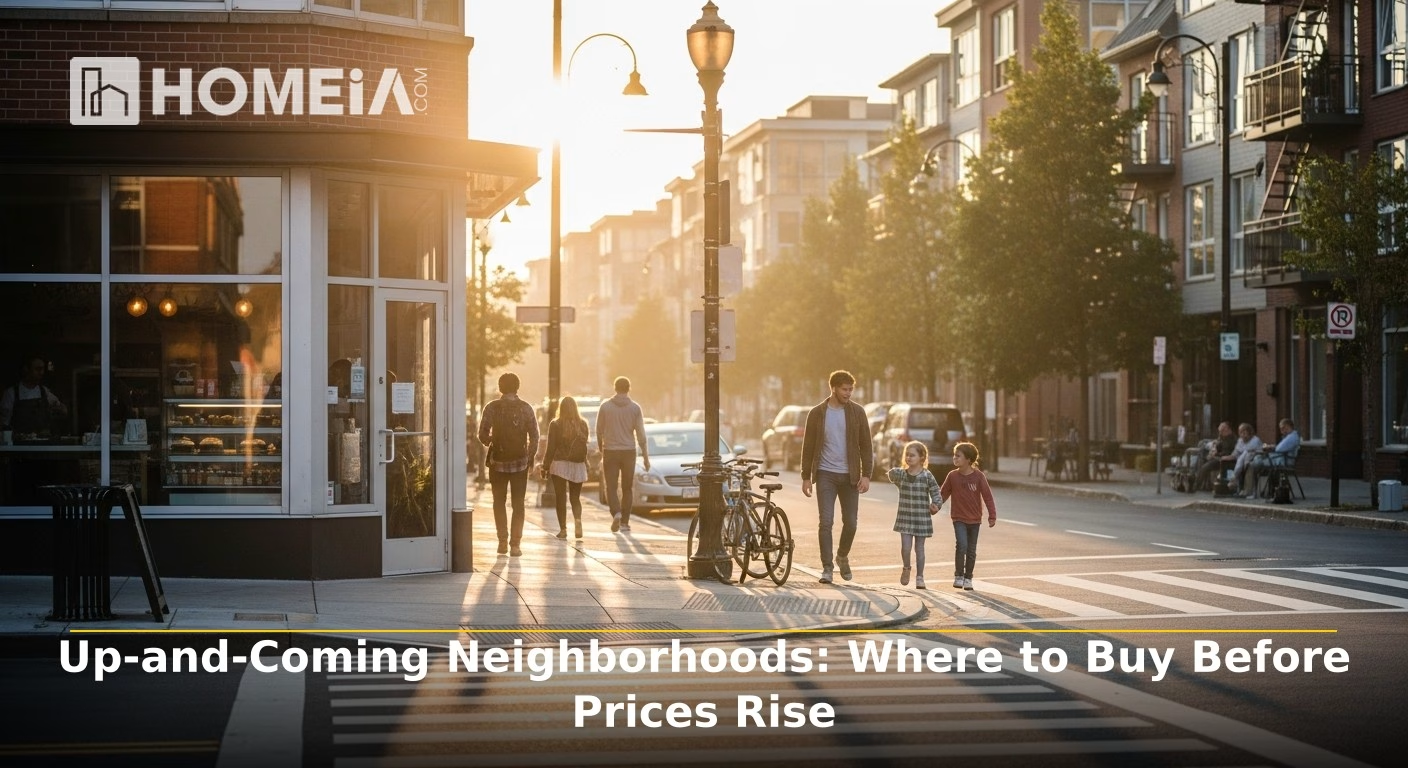
In real estate, major gains are often found in transitional zones on the cusp of transformation. An “up-and-coming” neighborhood in 2026 shows tangible momentum: home price growth outpacing the city average, influx of new amenities and businesses, strategic public/private investment, and demographic shifts leaning toward younger residents and families.
This guide targets first-time homebuyers, move-up buyers, and long-term investors. Rewards include faster equity build and securing a home in an area transforming into one coveted over a 5-10 year horizon. Risks involve uncertain development timelines, gentrification impacts, and potential stalled growth. We focus on neighborhoods at the source of change already supported by data and observable trends.
Key Takeaway for Up-and-Coming Neighborhoods
Identifying profitable neighborhoods requires digging deeper than low prices and focusing on catalyst projects—large, funded infrastructure or institutional investments. The sweet spot for buying is where median price points are below city averages but appreciation rates can be 1.5x to 2.0x the city’s average, signaling high demand before peak pricing. Successful investments require a 7-10 year horizon and intense, block-by-block due diligence, balancing the high risk of transitioning areas with the potential for substantial equity build.
I. Our Methodology: Identifying Real Growth Potential
We evaluated neighborhoods against rigorous indicators to separate true momentum from hype.
- Price & Appreciation Metrics (35%): We sought neighborhoods where the median home price is still below the city average but has shown appreciation rates 1.5x to 2.0x the city’s average over the past 3-5 years.
- Catalyst Investments (20%): Key drivers are concrete, funded catalyst projects, encompassing new transit lines (BRT/light rail), major employer expansions, or large-scale mixed-use developments.
- Amenity & Demographic Inflection (15%): We tracked the opening of new, independent businesses (coffee shops, breweries, restaurants) signaling entrepreneur confidence. Data showing an increase in residents with college degrees and rising household incomes is a strong signal.
- Housing Market Dynamics (15%): Low inventory and decreasing days-on-market suggest competitive pressure. We also noted a mix of renovation activity and new construction.
- Policy & Community Framework (15%): Consideration was given to neighborhoods with active community land trusts or established neighborhood associations, which help manage growth sustainably.
We created the HOMEiA Growth Potential Score (0-100) based on these factors.

Related article
Our Methodologies to create HOMEiA Score Ratings for Each Group of Content
HOMEiA uses a consistent, data-driven methodology to evaluate U.S. states for livability, affordability, and long-term value. Our analysis centers on key factors such as Housing and Affordability, Cost of Daily Living, Access and Infrastructure, Community Strength, Safety and Quality of Life, Economic Resilience and Job Market…
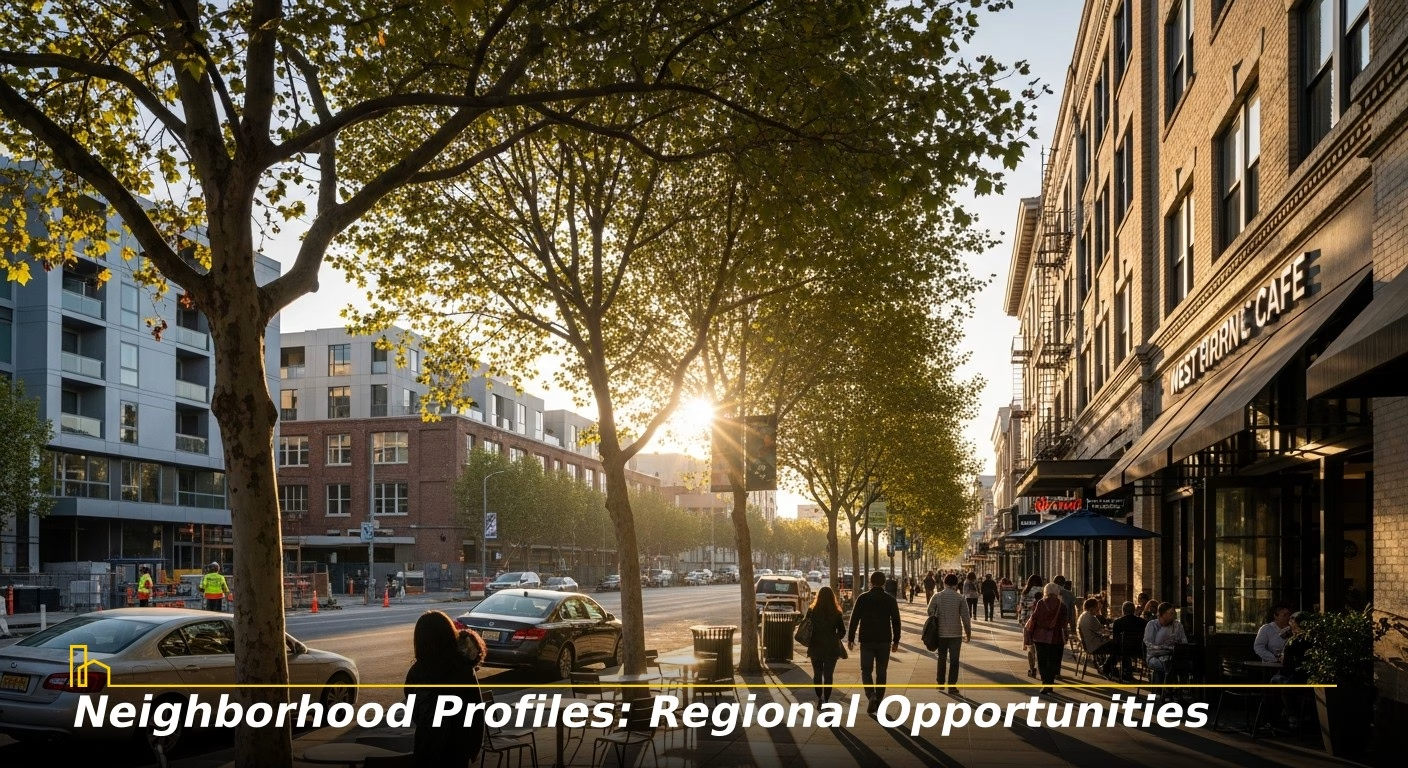
II. Neighborhood Profiles: Regional Opportunities
The West
1. West Oakland, Oakland, California
Overview: A historic heart of culture transforming due to unparalleled transit access, attracting professionals and families priced out of San Francisco and the East Bay.
- The Numbers: Median Price: ~$850,000$ | 5-Yr Growth: 35% (vs. Oakland avg. of 22%).
- Catalyst Developments: The West Oakland BART Station is a major transit hub. The old Army Base redevelopment into a logistics and innovation district and adaptive-reuse residential projects are driving massive reinvestment.
- Main Draws: Direct 15-minute BART access to San Francisco. Historic Victorians and Craftsmans offering “sweat equity” potential.
- Key Risks: Intense gentrification and displacement are paramount concerns. Industrial contamination can complicate and raise renovation costs.
- HOMEiA Growth Potential Score: 88/100.
2. Westside, Reno, Nevada
Overview: Reno’s hottest market champions mid-century homes and walkable streets, with quick access to downtown and the burgeoning Innovation District.
- The Numbers: Median Price: ~$550,000 | 5-Yr Growth: 60% (vs. Reno avg. of 45%).
- Catalyst Developments: The UNR Innovation District is a billion-dollar public-private partnership setting the foundation for hubs in tech, healthcare, and research, attracting high-wage roles within a 10-minute drive.
- Main Draws: Charming, tree-lined streets and character compared to newer suburbs. Direct path to high-growth employment centers.
- Key Risks: Rapid price escalation is pricing out service workers. Its market is sensitive to tech sector slowdowns. Limited inventory leads to fierce competition.
- HOMEiA Growth Potential Score: 82/100.
Related article
The South
1. East Nashville (Cleveland Park Area), Nashville, Tennessee
Overview: The next wave of momentum eastward from Five Points, including Cleveland Park and McFerrin Park, retains the creative vibe despite containing lower prices and more space.
- The Numbers: Median Price: ~$650,000 | 5-Yr Growth: 70% (vs. Nashville avg. of 50%).
- Catalyst Developments: The Cleveland Street Murals and Streetscape Project improves pedestrian safety and spurs business. The upcoming Riverchase redevelopment promises new parks and mixed-use space on the Cumberland Riverfront.
- Main Draws: Authentic neighborhood vibe with rapid influx of popular bars, coffee shops, and restaurants. Devout sense of community. Offers “fixer-upper” opportunities.
- Key Risks: Rapid transformation is altering the neighborhood’s character. Traffic congestion is significant. Prices have skyrocketed.
- HOMEiA Growth Potential Score: 85/100.
2. Historic Southside, Fort Worth, Texas
Overview: Adjacent to the booming Near Southside district, this historic, predominantly African American neighborhood offers stunning early-20th century architecture and close commute to downtown.
- The Numbers: Median Price: ~$400,000 | 5-Yr Growth: 55% (vs. Fort Worth avg. of 35%).
- Catalyst Developments: Adjacency to the $3 billion Near Southside innovation district (hospitals, law school) is the primary driver, creating a recession-resistant employment hub. Local government invests in home repair and facade grants.
- Main Draws: Irreplaceable historic homes (Prairie-style, Craftsmans) at a fraction of the cost of similar stock elsewhere. Walking distance to Near Southside amenities.
- Key Risks: Acute gentrification and displacement pressure. Renovating historic homes to code can be costly and complex.
- HOMEiA Growth Potential Score: 80/100.
The Midwest
1. Clark-Fulton, Cleveland, Ohio
Overview: Cleveland’s best example of equitable, transit-oriented development, home to the largest concentration of artists and the Cleveland Innovation District.
- The Numbers: Median Price: ~$175,000 | 5-Yr Growth: 65% (vs. Cleveland avg. of 30%).
- Catalyst Developments: The HealthLine Bus Rapid Transit runs through the neighborhood. The Cleveland Innovation District promises 10,000+ new bio-sciences jobs. Housing authority fronts community-focused redevelopment.
- Main Draws: Highest upside potential relative to cost in the nation. Incredible affordability. Established arts community and cultural institutions.
- Key Risks: Success is tied to the biomedical sector’s performance. Requires a long investment horizon and navigation of current social challenges. Their local school district is a challenge.
- HOMEiA Growth Potential Score: 87/100.
2. North Loop, Minneapolis, Minnesota
Overview: The next frontier lies on its eastern edges near the Mississippi River, where former industrial zones are being reimagined with new construction and riverfront access.
- The Numbers: Median Price (New Construction): ~$600,000+ | 5-Yr Growth: 40%.
- Catalyst Developments: The Upper Harbor Terminal redevelopment is a multi-phase project creating a new mixed-use neighborhood on the riverfront. Light rail system expansion (Green Line Extension) enhances connectivity.
- Main Draws: New, low-maintenance housing stock. Walkability to downtown amenities. Expansive riverfront park access.
- Key Risks: Prices are already at a premium for new construction. Less “value” situation compared to other regions. Potential for oversupply of similar units.
- HOMEiA Growth Potential Score: 78/100.
Recommended for you



The Northeast
1. Kensington, Philadelphia, Pennsylvania
Overview: North of Fishtown, the southern end of Kensington, near the Berks stop on the Market-Frankford Line, is a massive, diverse neighborhood benefitting from rapid investment.
- The Numbers: Median Price: ~$350,000 | 5-Yr Growth: 50% (vs. Philly avg. of 25%).
- Catalyst Developments: The $400 million Norfolk Southern rail yard redevelopment (“The Bellwether District”) promises to bring light industrial, commercial, and green space, fundamentally shifting the economy. Proximity to the El train provides a 10-minute commute to Center City.
- Main Draws: Economical pricing for rapid transit access to downtown. A true “frontier” market with high risk/reward. Plethora of row homes with renovation potential.
- Key Risks: Extreme block-by-block variability. Area grapples with entrenched poverty and social challenges. Not for the faint of heart.
- HOMEiA Growth Potential Score: 75/100.
2. Jamaica Plain (Hyde Square area), Boston, Massachusetts
Overview: The Hyde Square area represents dynamic and affordability for this established neighborhood, attracting young professionals seeking relative value.
- The Numbers: Median Price: ~$750,000 | 5-Yr Growth: 38% (vs. Boston avg. of 20%).
- Catalyst Developments: The Southwest Corridor Park and the Orange Line subway provide best-in-class transit and recreation. Public investment is directed towards preserving affordability and supporting local businesses.
- Main Draws: Unbeatable 15-minute access to the Orange Line and downtown Boston. Unmatched street life and dining. Proximity to the Arnold Arboretum and Jamaica Pond.
- Key Risks: Even “affordable” here is lavish. Tensions around cultural preservation and gentrification are palpable. Intense competition for limited housing stock.
- HOMEiA Growth Potential Score: 83/100.
Growth Potential vs. Affordability Entry Point (2026 Outlook)
Neighborhood | Metro | Median Home Price (Entry Point) | HOMEiA Growth Potential Score (0-100) | Risk/Reward Profile |
|---|---|---|---|---|
| Clark-Fulton | Cleveland, OH | ~$175,000 | 87/100 | Maximum upside due to accessible affordability and major job catalyst. |
| Kensington | Philadelphia, PA | ~$350,000 | 75/100 | High risk, high reward. Low entry point for a transit-rich urban core. |
| Historic Southside | Fort Worth, TX | ~$400,000 | 80/100 | Excellent balance of affordability and stability due to institutional anchors. |
| Westside | Reno, NV | ~$550,000 | 82/100 | Balanced play on tech growth in an established, desirable neighborhood. |
| North Loop (Eastern Edge) | Minneapolis, MN | ~$600,000+ | 78/100 | Low-risk urban infill; premium for new construction in a proven walkable district. |
| East Nashville (Cleveland Park) | Nashville, TN | ~$650,000 | 85/100 | High momentum investment; sought-after cultural demand at a higher entry price. |
| Jamaica Plain (Hyde Sq.) | Boston, MA | ~$750,000 | 83/100 | Safest growth play near a major East Coast core; high entry cost. |
| West Oakland | Oakland, CA | ~$850,000 | 88/100 | Highest cost of entry, but backed by unparalleled Bay Area transit fundamentals. |
III. Investment & Lifestyle Guidance for 2026 Buyers
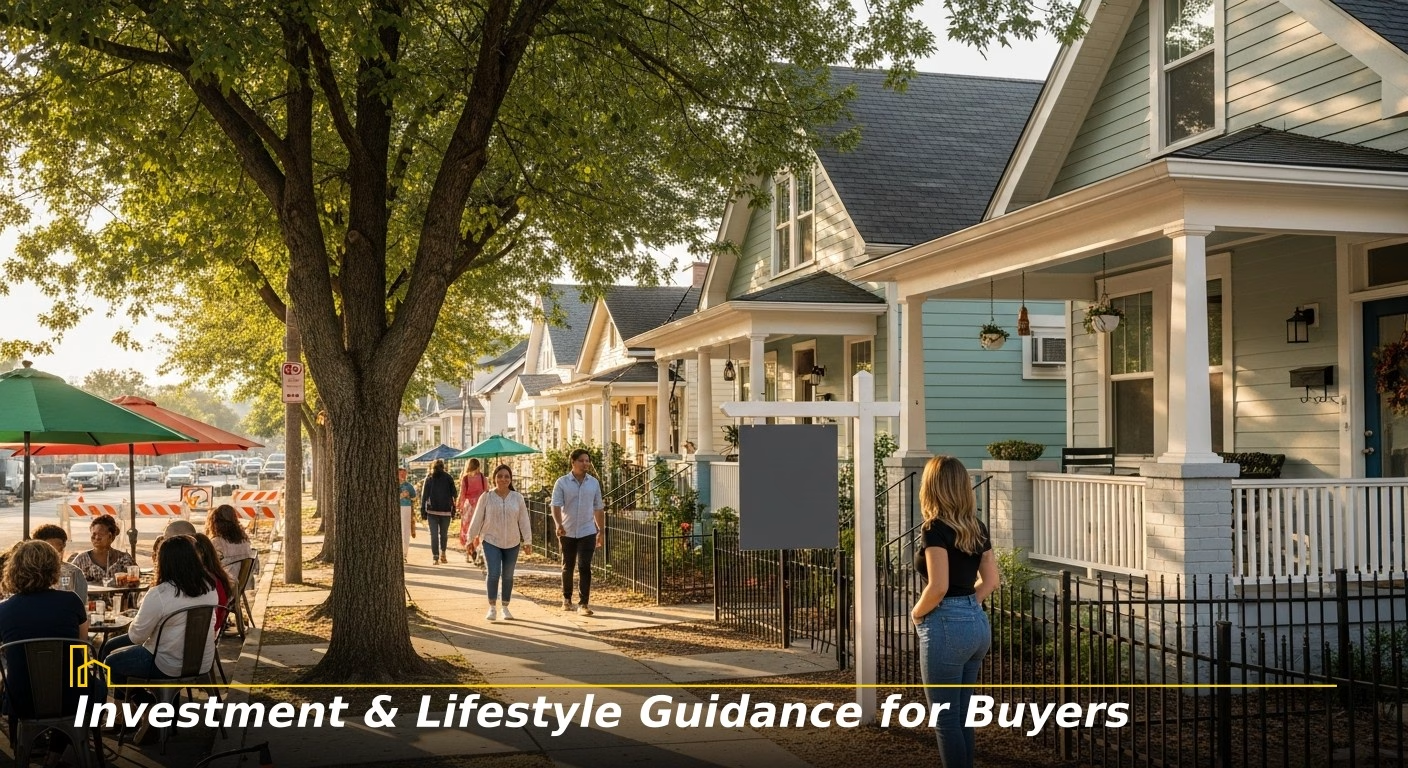
Purchasing in an up-and-coming area requires a different mindset:
- Embrace a 7-10 Year Horizon: True stabilization and peak appreciation take time. Be prepared to ride out market fluctuations.
- Conduct Hyper-Local Due Diligence: Evaluate the specific block, not only the neighborhood. Walk it at night. Talk to neighbors.
- Balance Numbers with Nuance: Although data might showcase growth, assess your comfort with construction, changing demographics, and short-term lack of amenities.
- Understand the “Why”: Prioritize growth driven by a sustainable pipeline (university/transit) over a one-time event (stadium).
- The Remote Work Effect: Remote work increases the appeal of these areas as buyers prioritize affordability and character over proximity to a single job center.
IV. How to Identify Your Own Emerging Neighborhood
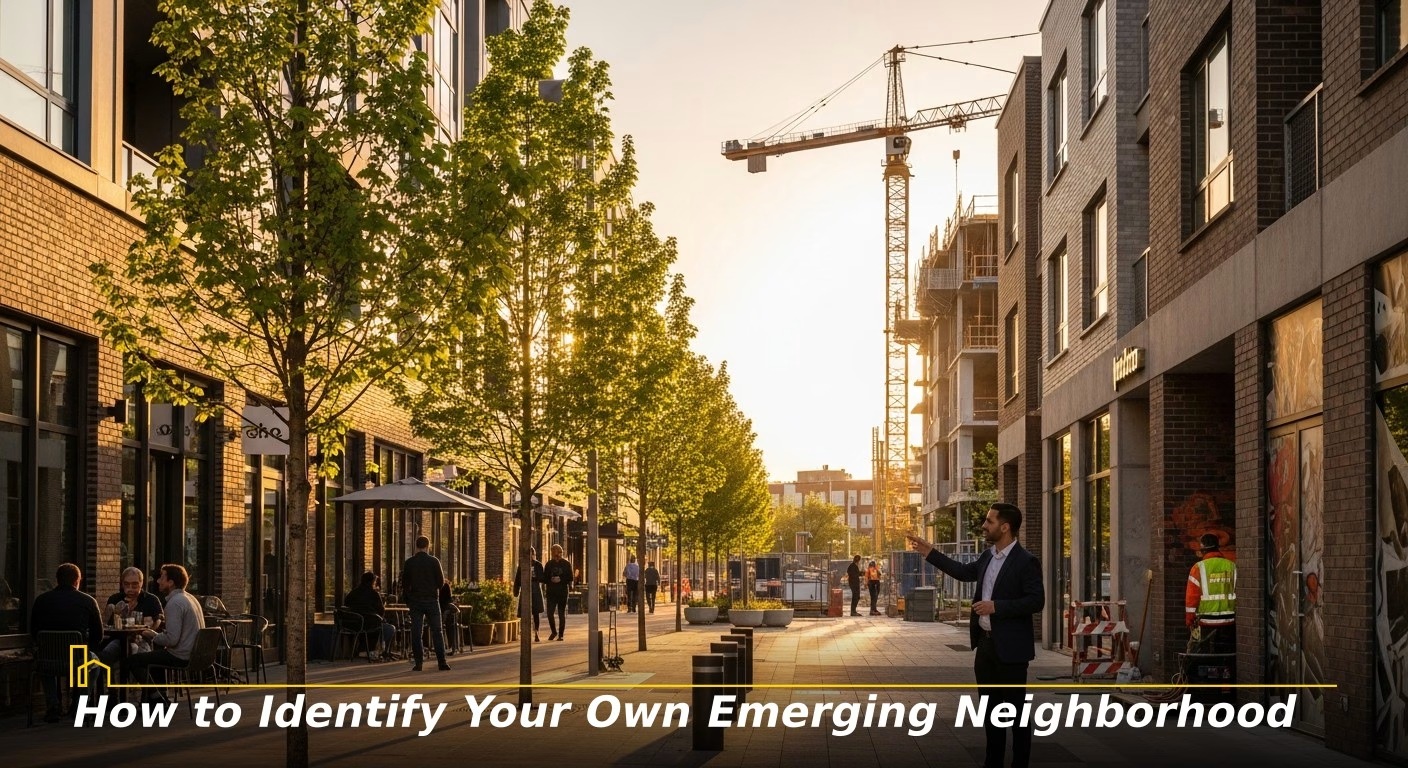
Use this checklist to spot potential:
- Track the Cranes & Permits: See where commercial and multi-family residential permits are concentrated.
- Follow the Coffee and Beer: A specialty coffee shop, followed by a brewery, then a fitness studio is a classic gentrification indicator.
- Map the Infrastructure: Identify neighborhoods near a new or planned transit station or major park/trail project.
- Analyze the Sales Data: Find zip codes where price per square foot is increasing faster than the metro, but the median sale price remains below it.
- Talk to the Pros: Engage a real estate agent specializing in the city’s urban core, or consult local planners/non-profits.
Conclusion: A path to maximizing real estate equity lies in securing a home in an area on the verge of its next economic chapter. The six profiled neighborhoods, from Oakland’s transit hub to Cleveland’s innovation district, share a common thread: funded catalysts driving guaranteed long-term demand. Buying here is a long-term strategic investment, allowing you to participate directly in community revitalization while capturing substantial appreciation before the market fully realizes the area’s potential.
Recommended for you




FAQs about Up-and-Coming Neighborhoods in the U.S.
1. What’s the biggest risk of buying in an up-and-coming area?
The largest risk is that projected catalyst developments are delayed or canceled (e.g., a promised transit line loses funding).
2. How can I be an ethical buyer in a transitioning neighborhood?
Engage respectfully. Shop at local businesses, join community associations, and listen more than you speak.
3. Is it better to buy a fixer-upper or a renovated home in these areas?
A fixer-upper offers higher potential equity build through sweat equity and customization. Renovated homes provide immediate livability and lower risk of cost overruns.
4. Are these neighborhoods good for rental property investors?
Yes, due to high demand from renters seeking the vibe at a lower cost. However, research local short-term rental regulations carefully, and be prepared for higher turnover/maintenance occurring.
5. How important are school districts in these selections?
For long-term family buyers, schools are critical. Improving but lower-rated public schools can cap appreciation for family-sized homes.
6. Should I wait for more proof of change before buying?
Waiting reduces risk but increases cost. The goal is to buy when change is probable but not fully realized.
Share