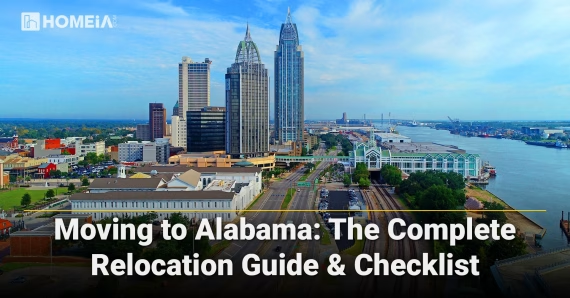








Alabama offers rich Southern heritage, diverse landscapes, and a strong sense of community. Over 5 million residents enjoy affordable living, low taxes, and growing job opportunities. Birmingham and Huntsville anchor economic growth, while the Gulf Coast adds natural appeal. This guide covers relocation essentials, including climate, costs, and legal steps for becoming an Alabama resident.
The Pros and Cons of Living in Alabama (Updated)
- Local Editor:Local Editor: The HOMEiA Team
Share
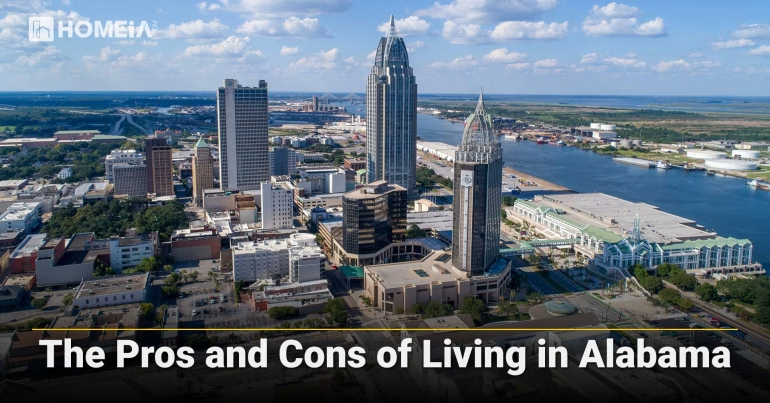
When picturing Alabama, what comes to mind are rolling hills, Southern hospitality, and rich Civil Rights history. But the Heart of Dixie offers more than Southern clichés; here exists a world where affordable living, natural beauty, and a relaxed pace of life define everyday living. Yet, moving here comes with significant trade-offs, from a challenging education system to unrelenting summers and limited public transportation. This guide provides a balanced, comprehensive analysis of the pros and cons of living in Alabama while offering detailed insights into the best cities for young professionals, families, and retirees. For those considering other unique states, you might explore the pros and cons of living in Tennessee.
Table of Contents:
- Key Takeaways
- I. Methodology: How We Evaluated Alabama
- II. Pros: Why Choose Alabama? Top Benefits
- II. Cons: Alabama Living Challenges — What to Know
- III. Best Alabama Cities for Young Professionals
- IV. Best Alabama Communities for Families with Young Kids
- V. Best Places to Retire in Alabama
- VI. Alabama Lifestyle: Arts, Food, and Recreation
Key Takeaways
- Cultural Richness: A deep Southern heritage combined with Civil Rights history, reflected in world-class museums, historic architecture, and iconic cuisine centered around barbecue and soul food.
- Affordable Living: Overall costs are typically 12% lower than the national average, driven by one of the most accessible housing markets in the nation, making it one of the most affordable states to buy a house. Housing is 29% lower than the national average.
- Natural Beauty & Climate: Diverse ecosystems from Appalachian foothills to Gulf Coast beaches, offering year-round outdoor recreation under a warm, humid subtropical climate.
- Economic Challenges: Faces a transitioning economy with limited job opportunities outside manufacturing, healthcare, and government sectors, requiring careful career planning.
- Education & Infrastructure: Struggles with education rankings and limited public transportation options, particularly in rural areas.
- Summer Heat: Intense humidity and scorching temperatures from June through September can be challenging for those unaccustomed to Southern summers.
I. Methodology: How We Evaluated Alabama
Our analysis is based on a multi-factor review of key elements impacting residents’ quality of life and financial well-being. We compiled data from reputable 2026 sources, including the U.S. Census Bureau, Bureau of Labor Statistics, Zillow housing market reports, FBI crime statistics, and state agencies.
Our evaluation criteria are weighted as follows:
- Cost of Living (25%): This foundational metric analyzes day-to-day expenses defining a household budget, including the cost of groceries, utilities, transportation, and healthcare, all benchmarked against national and regional averages to gauge true purchasing power.
- Economic Health & Opportunity (25%): Long-term stability is non-negotiable. This criterion assesses the robustness of their local economy by examining median household income, unemployment trends, and the diversity of key industries to ensure a community is resilient, growing, and full of potential for its residents.
- Housing & Affordability (20%): The most significant financial decision for most. We delve past median home prices and rental costs to use crucial ratios like home-price-to-income and income-to-rent—providing a clear picture of how housing costs align with local earnings. The median home price in Alabama is approximately $272,000.
- Quality of Life & Community (20%): Affordability means little without well-being. This metric evaluates the essential factors that contribute to daily life, including access to unique cultural amenities, outdoor recreation, climate, public safety, and the strength of community engagement.
- Access & Infrastructure (10%): A community’s potential is tied to its connections. This evaluates critical modern infrastructure, including reliable high-speed internet, healthcare access, transportation links, and proximity to major employers and commercial centers.

Related article
Our Methodologies to create HOMEiA Score Ratings for Each Group of Content
HOMEiA uses a consistent, data-driven methodology to evaluate U.S. states for livability, affordability, and long-term value. Our analysis centers on key factors such as Housing and Affordability, Cost of Daily Living, Access and Infrastructure, Community Strength, Safety and Quality of Life, Economic Resilience and Job Market…
II. Pros: Why Choose Alabama? Top Benefits

A. Unmatched Affordability and Low Cost of Living: One of Alabama’s greatest strengths is its exceptional affordability. Overall cost of living hovers around 12% lower than the national average, driven by a housing market ranking among the most budget-friendly in the nation. This allows Alabamians to enjoy a comfortable lifestyle without the financial pressure found in many other states. For those more inclined to the outdoors, there are numerous state parks and Gulf Coast beaches. For a different coastal lifestyle, consider the best places to live in Florida.
B. Rich Cultural Heritage and Southern Hospitality: Life is steeped in a culture found nowhere else in the US, a unique blend of Deep South traditions and modern Southern charm. You can learn about pivotal Civil Rights history at the Birmingham Civil Rights Institute, attend historic Southern festivals, and explore iconic barbecue joints across the state. This deep, authentic heritage provides a daily living experience rich with history and flavor.
C. Diverse Natural Beauty and Outdoor Recreation: Alabama’s landscape offers unexpected diversity from the Appalachian foothills in the north to the white sand beaches of the Gulf Coast. Creating a paradise for outdoor enthusiasts, residents can hike in pristine state parks, fish in abundant lakes and rivers, explore caverns, and enjoy beach life on the Gulf. The state’s nickname, Alabama the Beautiful, is well-earned, with endless opportunities for four-season recreation.
D. Strong Sense of Community and Family Values: Alabama is renowned for its deeply-rooted communities and traditional family values. Neighbors know each other, communities support local businesses, and there’s a genuine warmth in interpersonal interactions. It creates a supportive environment for raising families and building lasting relationships, particularly in smaller towns and suburban areas.
E. Growing Economic Development and Job Opportunities: While facing challenges, AL has seen significant economic development in recent years, particularly in automotive manufacturing (Mercedes, Hyundai, Honda), aerospace (NASA’s Marshall Space Flight Center), and healthcare. Major cities including Huntsville and Birmingham offer diverse employment opportunities with competitive salaries relative to the low cost of living.
Related article
II. Cons: Alabama Living Challenges — What to Know
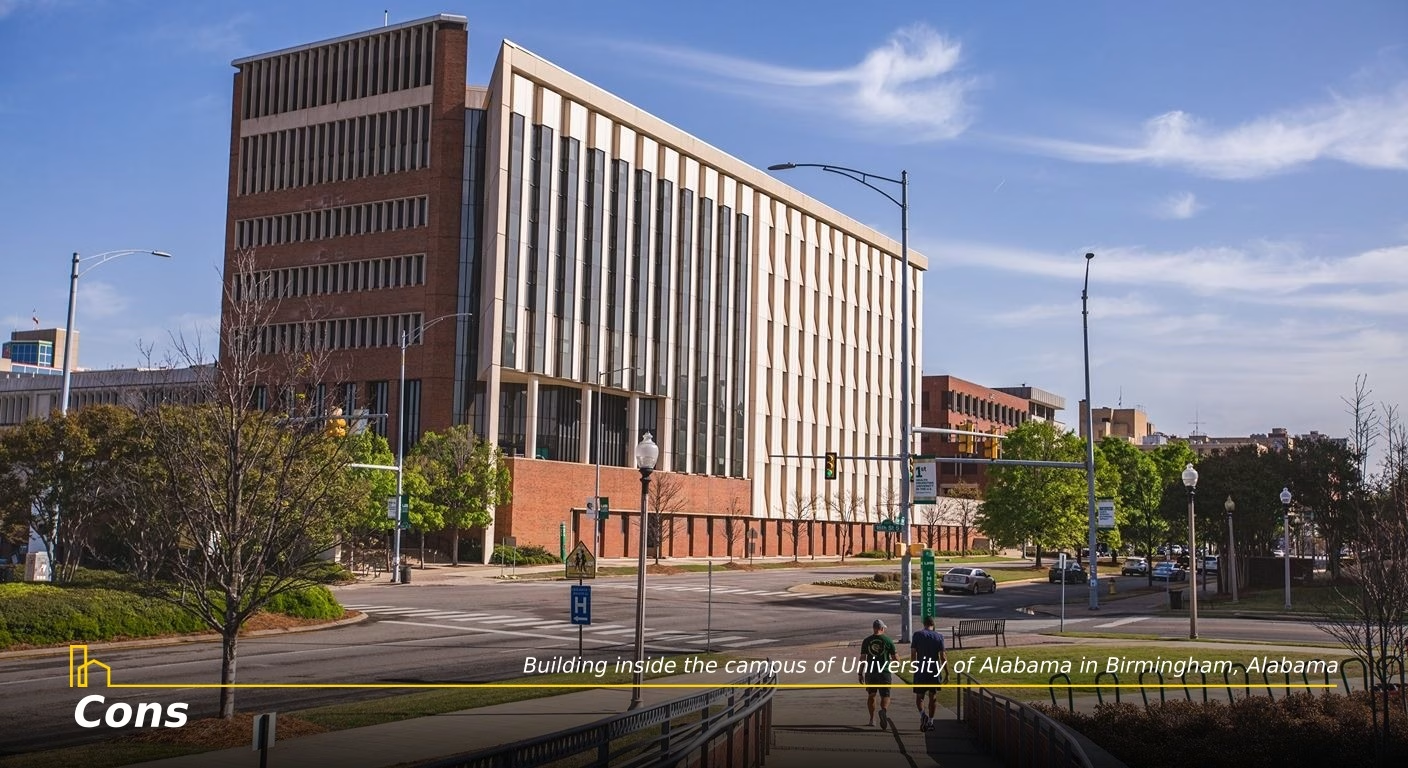
A. Challenging Education System: This is one of the state’s most significant drawbacks. Public education often ranks near the bottom nationally for funding and outcomes. While there are exceptional schools and dedicated teachers, families must choose carefully. This has also impacted the state’s literacy and graduation rates, making it a primary concern for parents. For a comparison of states with better education systems, see our guide on the best places to live in Massachusetts.
B. Hot, Humid Summers: A subtropical climate means intense heat and humidity from June through September, with temperatures frequently reaching the 90s and high humidity levels making it feel in the triple digits. This can be challenging for those unaccustomed to Southern summers and may limit outdoor activities during peak heat hours.
C. Limited Public Transportation: Outside major metropolitan areas, public transportation is virtually non-existent. This makes car ownership essential for most residents and can create challenges for those who cannot drive or prefer not to own a vehicle. Even in cities with public transit, coverage may be limited compared to larger metropolitan areas.
D. Economic Disparities and Poverty Rates: The state has persistent poverty problems, with 15.6% of residents living at or below the poverty line, being one of the highest in the nation. This can manifest in limited access to services in rural communities and strains on public resources. Newcomers should be prepared for these visible socioeconomic disparities.
E. Healthcare Access in Rural Areas: Access to healthcare is ideal in Birmingham and Huntsville, which have large, modern medical centers. It becomes increasingly limited in smaller towns and remote areas, where clinics may be smaller and specialized care requires travel to larger cities.
Related article
III. Best Alabama Cities for Young Professionals
1. Mobile
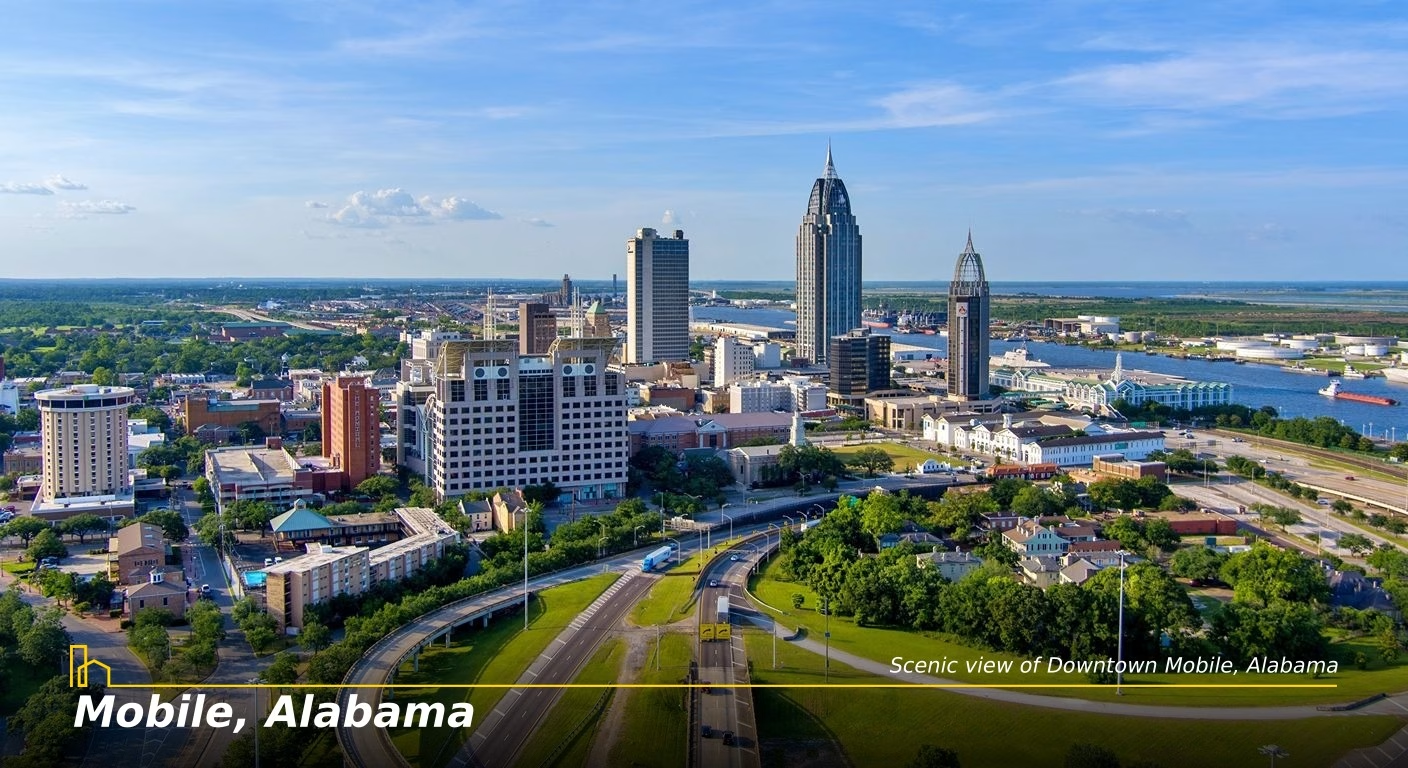
HOMEiA Score: 78/100
- Cost of Living: 15% below U.S. average
- Monthly Rent: $950
- Home price to income ratio: 4.5:1
- Income to rent ratio: 57.9x
- Safety rating: 60/100
Alabama’s only saltwater port city attracts Millennials and Gen Z seeking coastal living, historic charm, and growing opportunities in shipping, manufacturing, and healthcare. With a specialized job market, salaries in key industries help offset the low cost of living. Port City has a unique cultural blend, Mardi Gras traditions, and immediate access to Gulf Coast beaches. Proximity to larger markets fosters professional opportunities for those who value coastal lifestyle over rapid career advancement.
2. Birmingham
HOMEiA Score: 82/100
- Cost of Living: 12% below U.S. average
- Monthly Rent: $1,100
- Home price to income ratio: 4.8:1
- Income to rent ratio: 54.5x
- Safety rating: 55/100
As its largest metropolitan area, Birmingham serves as the state’s economic and cultural center. Recent college graduates are drawn to opportunities in healthcare (UAB Medical Center), finance, and education. Magic City boasts a revitalized downtown, diverse dining scene, and cultural attractions like the Birmingham Museum of Art. It’s a vibrant, affordable urban center with growing job opportunities and opportunities to grow one’s network.
3. Huntsville
HOMEiA Score: 88/100
- Cost of Living: 8% below U.S. average
- Monthly Rent: $1,200
- Home price to income ratio: 4.2:1
- Income to rent ratio: 58.3x
- Safety rating: 72/100
As Alabama’s tech and aerospace hub, Huntsville offers the most diverse and growing job market in the state. Young professionals that are and aren’t alumni of the University of Alabama-Huntsville find opportunities in aerospace engineering (supported by NASA and Redstone Arsenal), innovation, defense contracting, and advanced manufacturing. Rocket City provides a unique blend of high-tech amenities—including a growing downtown scene with breweries and restaurants—with access to outdoor recreation in the nearby mountains. With networking events and a relatively short average commute, here is the best place to launch a career in the state.
Recommended for you




IV. Best Alabama Communities for Families with Young Kids
1. Auburn
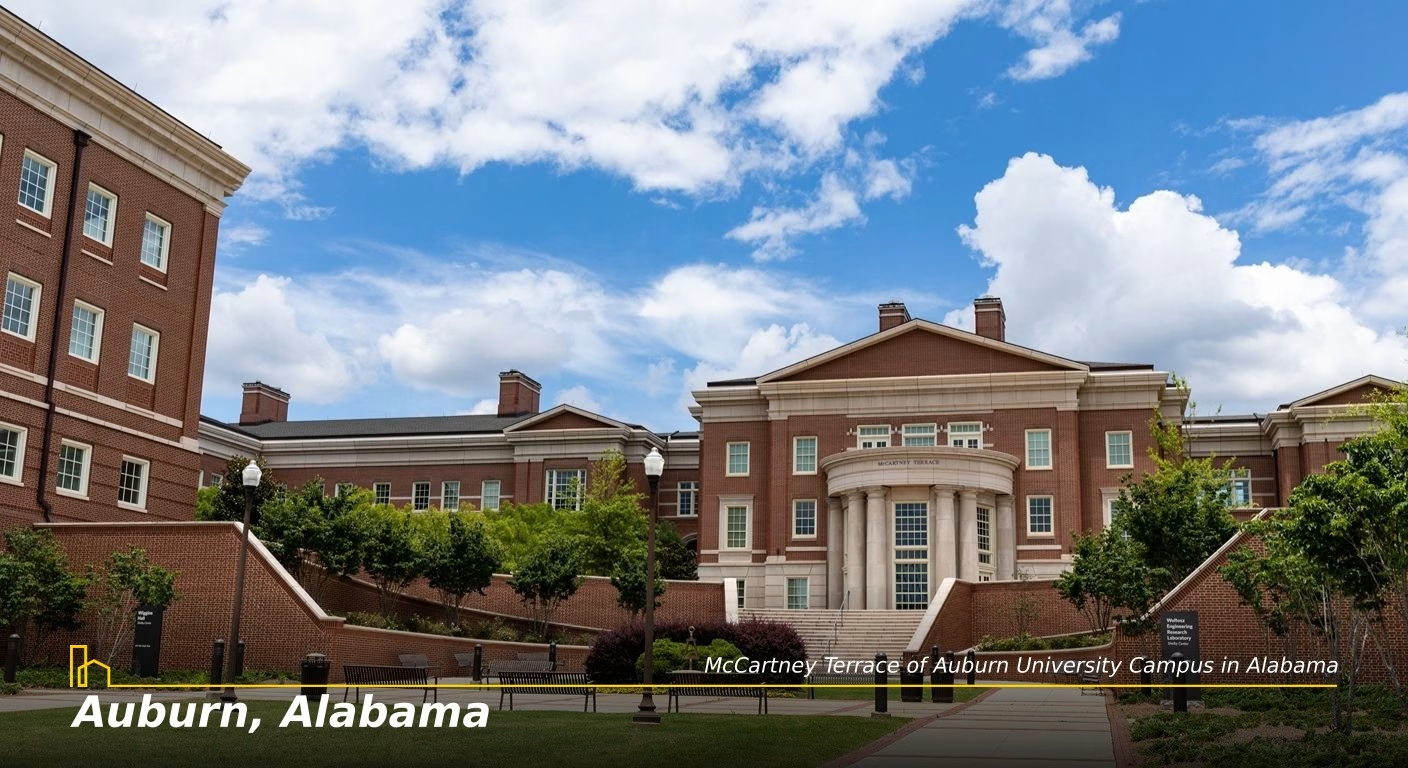
HOMEiA Score: 83/100
- Cost of Living: 8% below U.S. average
- Monthly Rent: $1,100
- Home price to income ratio: 4.3:1
- Income to rent ratio: 59.1x
- Safety rating: 75/100
Home to Auburn University, this college town offers a youthful, energetic vibe perfect for families. Academia provides employment and drives innovation in various fields. Families are drawn to the well-ranked school system, established community, and the cultural and sporting events associated with the university. It’s an educated, engaged community with a focus on family life and education.
2. Vestavia Hills

HOMEiA Score: 87/100
- Cost of Living: On par with U.S. average
- Monthly Rent: $1,400
- Home price to income ratio: 5.2:1
- Income to rent ratio: 50.0x
- Safety rating: 80/100
A suburb of Birmingham, Vestavia Hills offers an unparalleled combination of assets for families: top-ranked public schools, desirable safety ratings, and convenient access to urban amenities. These communities are known for its strong school system, beautiful neighborhoods, and family-oriented activities. A higher median income easily offsets the cost of living, making it the premier choice for families valuing education and community.
3. Madison

HOMEiA Score: 90/100
- Cost of Living: 5% below U.S. average
- Monthly Rent: $1,300
- Home price to income ratio: 4.1:1
- Income to rent ratio: 61.5x
- Safety rating: 85/100
Located slightly west of Huntsville, Madison is a classic suburban community that has become a top choice for families. It offers exceptional schools within the Madison City Schools district, newer housing stock, and a significantly higher safety rating than many other cities found in-state. With numerous parks, community centers, and family-friendly events, it provides a calm, secure environment while still being a short commute from the job opportunities in Huntsville.
Related article
V. Best Places to Retire in Alabama
1. Florence

HOMEiA Score: 80/100
- Cost of Living: 15% below U.S. average
- Monthly Rent: $850
- Home price to income ratio: 4.2:1 (Calculated)
- Income to rent ratio: 58.8x (Calculated)
- Safety rating: 70/100
In the scenic northwest corner of Alabama, Florence offers an affordable, culturally rich retirement. This historic city on the Tennessee River has a vibrant arts scene, thanks to the University of North Alabama and its famous music heritage (the “Muscle Shoals Sound”). Retirees are drawn to the low cost of living, walkable downtown, and access to cultural events. It’s a budget-friendly option for retirees appreciating arts and history. For other retirement options, explore the best places to retire in Florida.
2. Gulf Shores/Orange Beach

HOMEiA Score: 82/100
- Cost of Living: 10% above U.S. average
- Monthly Rent: $1,500
- Home price to income ratio: 7.2:1 (Calculated)
- Income to rent ratio: 40.0x (Calculated)
- Safety rating: 75/100
Beach communities attract golden agers looking to have their skin tone match their age. The Gulf Coast offers beautiful beaches, fishing, golf, and a relaxed lifestyle. While costs are higher due to the desirable location, quality of life and recreational opportunities make it popular among retirees who want an active, coastal retirement.
3. Fairhope

HOMEiA Score: 85/100
- Cost of Living: 5% above U.S. average
- Monthly Rent: $1,300
- Home price to income ratio: 6.5:1 (Calculated)
- Income to rent ratio: 46.2x (Calculated)
- Safety rating: 78/100
For retirees seeking a charming coastal lifestyle, Fairhope is a top contender. Known for its beautiful parks, arts scene, and mild climate on Mobile Bay. While housing is more expensive than other locations, the array of activities, lifelong learning opportunities, and a mature, socially active community make it a rewarding place to retire. Their walkable downtown and vibrant arts scene provide endless engagement for active retirees.

Related article
The 30 Best Things to Do in Montgomery, Alabama
Montgomery is Alabama’s state capital and the seat of Montgomery County. It’s a lively city with over 200,000 people. With a diverse selection of culture, history, and activities, there’s plenty for people to enjoy…
VI. Alabama Lifestyle: Arts, Food, and Recreation

A. Arts and Culture: Culture is a unique blend of Southern heritage, musical history, and Civil Rights legacy. Cities including Birmingham and Montgomery boast impressive museums such as the Birmingham Museum of Art and the Legacy Museum, alongside thriving music scenes. The state is famous for its musical contributions, particularly in Muscle Shoals and the birth of blues in the Black Belt region.
B. Food Scene: Their cuisine is famously distinct, featuring barbecue (particularly white sauce in northern Alabama), Southern comfort food, and fresh Gulf seafood. It’s home to unique culinary traditions and famous restaurants. Farmers’ markets across the state provide fresh local produce, and the farm-to-table movement is growing in urban areas.
C. Outdoor Activities: Recreation is a way of life for residents, with diverse landscapes offering everything from mountain hiking to beach relaxation. An extensive river system, state parks, and Gulf Coast provide endless opportunities for fishing, boating, hiking, and water sports. The climate allows for year-round outdoor activities, though summer heat may limit midday excursions.
D. Sports and Community Life: Community life often revolves around college football (particularly Alabama and Auburn), local festivals, and church activities. High school sports are the talk of the town in smaller communities, and events like the Hangout Music Festival in Gulf Shores capture the state’s attention. This creates a strong sense of regional identity and connection.
Conclusion: Is Alabama Right for Your Lifestyle?
AL’s appeal lies in its exceptional affordability, rich cultural heritage, and strong sense of community. Whether you’re building a career in Huntsville’s tech sector, raising a family in Madison’s excellent schools, or enjoying a coastal retirement in Fairhope, the 22nd state presents a compelling case if you can adapt to its educational challenges and summer climate. Weigh the benefits and trade-offs in terms of career, community, affordability, and personal preferences to decide if Alabama is the right fit for your next chapter. For those still considering their options, our guide on essential steps for moving to a new city is a great resource.
Recommended for you




FAQs About Living in Alabama
1. What is the cost of living in Alabama compared to other states?
Their cost of living is approximately 12% lower than the national average, driven by the low cost of housing, which is significantly below national averages. However, prices for certain services and goods can vary between urban and rural areas.
2. How severe are the education challenges?
This education system faces significant challenges, often ranking in the bottom tier nationally for test scores and funding. However, there are excellent school districts, particularly in suburban areas like Madison and Vestavia Hills. Families should research specific school districts carefully when considering relocation.
3. Is Alabama a good place for families?
Yes, for families who value connected communities, outdoor recreation, and affordable living. Examples including Madison and Vestavia Hills offer excellent schools and safe neighborhoods. The state’s family-friendly atmosphere and lower costs can provide a high quality of life for children.
4. What are Alabama’s job prospects?
Job prospects are plentiful within key industries like automotive manufacturing, aerospace, healthcare, and education. The market for other professional fields is growing, particularly in Huntsville’s technology sector. The state often has competitive unemployment rates, but it’s important to secure employment in your field before moving.
5. How is healthcare access across the state?
Access to healthcare is ideal in major cities like Birmingham and Huntsville, which have large, modern medical centers and research hospitals. It becomes more limited in rural areas, where specialized care may require travel to larger cities. Major metropolitan areas offer comprehensive healthcare services.
6. What are the best outdoor activities in Alabama?
Hiking in state parks, fishing in lakes and rivers, beach activities on the Gulf Coast, and exploring caverns are top pastimes. The diverse landscape provides opportunities for water sports, mountain recreation, and coastal activities throughout the year.
7. What is Alabama’s social and cultural environment?
Alabamians are generally friendly, community-oriented, and deeply connected to their cultural heritage. There is a strong appreciation for family, tradition, and outdoor activities. The culture blends Deep South traditions with modern Southern living, creating a unique social environment that values hospitality and community connection.


Related Content