






5 Best Places to Live in New York State
- Local Editor:Local Editor: The HOMEiA Team
Share


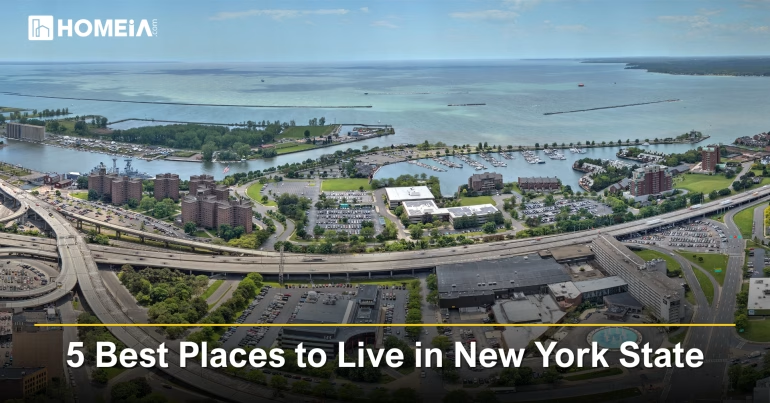
New York State offers one of the country’s most diverse residential landscapes, spanning global financial centers, semiconductor mega-campuses, and Finger Lakes gorges. This state is backed by aggressive investment in artificial intelligence (AI), clean energy, and advanced manufacturing.
This guide delivers a rigorous, data-driven evaluation of the five best places to live in New York State, examining the fundamentals that define lasting quality of life: job markets, housing affordability, education, culture, and community safety.
Table of Contents:
I. Methodology: How We Built Our Rankings
Each city was evaluated across five weighted criteria drawn from 2025–2026 data sourced from the U.S. Census Bureau, the Bureau of Labor Statistics, Zillow, Redfin, NeighborhoodScout, and regional economic development authorities.
A. Employment and Economy (30%): Evaluates local labor market health, the diversity of anchor employers, industry growth trajectories, and the presence of innovation ecosystems that generate durable, high-wage employment.
B. Housing and Affordability (25%): Analyzes median home values, price trends, home-price-to-income ratios, and rental costs to assess market accessibility at various income levels.
C. Quality of Life and Culture (20%): Considers parks, cultural institutions, culinary diversity, walkability, transit access, and community events.
D. Education (15%): Reviews public school performance, college preparatory outcomes, resident educational attainment, and access to higher education.
E. Safety and Community (10%): Analyzes crime trends, neighborhood stability, civic engagement, and community cohesion.
Note: Data compiled from the U.S. Census Bureau, Bureau of Labor Statistics, Zillow, Redfin, NeighborhoodScout, and regional economic development authorities. All figures reflect 2025–2026 reporting periods.

Related article
Our Methodologies to create HOMEiA Score Ratings for Each Group of Content
HOMEiA uses a consistent, data-driven methodology to evaluate U.S. states for livability, affordability, and long-term value. Our analysis centers on key factors such as Housing and Affordability, Cost of Daily Living, Access and Infrastructure, Community Strength, Safety and Quality of Life, Economic Resilience and Job Market…
II. The 5 Best Cities in New York State
Ranked by composite score from lowest to highest
① Ithaca: The Intellectual and Natural Enclave
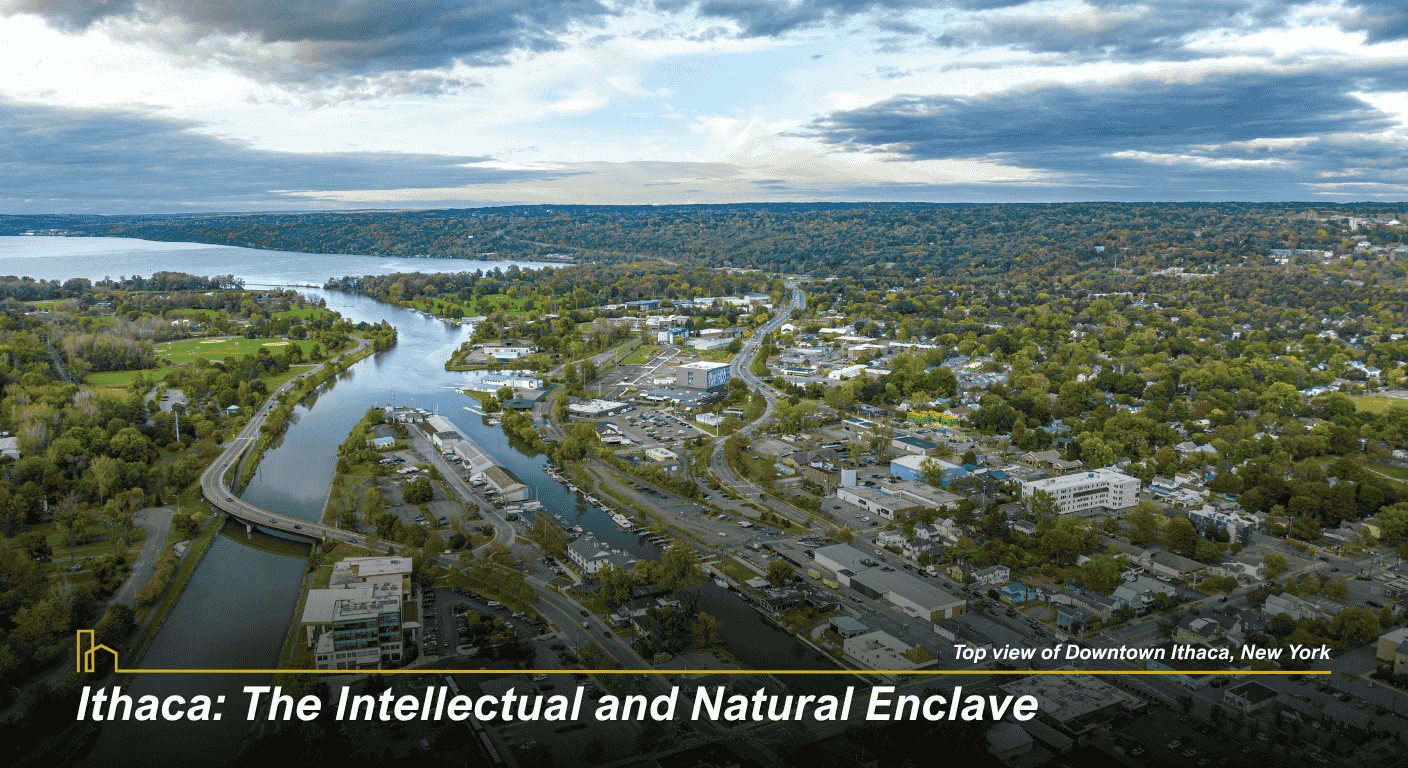
HOMEiA Score: 85/100
- Monthly Rent: $1,862
- Home price to income ratio: 4.6:1
- Population: 32,137
- Median Home Value: $368,700
- Median Household Income: $80,625
A. Employment and Economy: Ithaca’s economy rests on a globally recognized academic ecosystem. Cornell University employs more than 11,000 people in Tompkins County, injecting nearly half a billion dollars annually through research grants and salaries, while Ithaca College further anchors the professional employment base.
- The region ranks second in New York State for Small Business Innovation Research (SBIR) award funding, with innovation activity heavily concentrated in life sciences and STEM disciplines that account for 85.2% of all doctoral degrees conferred locally.
- Beyond academia, major private-sector employers, including BorgWarner Morse Systems and Cayuga Health System, provide industrial and healthcare anchors that diversify the employment base.
B. Housing and Affordability: Ithaca’s housing market reflects persistent demand from students and institutions. In early 2026, median sale prices in competitive segments reached approximately $530,000, a surge of 125.5% year-over-year, reflecting a thin, fast-moving market rather than a broad repricing.
- The home-price-to-income ratio of 4.6:1 places Ithaca firmly within reach for established dual-income households, particularly those employed by Cornell or the region’s growing tech sector.
- Rental costs run approximately 14% above the national average, with a standard one-bedroom averaging $1,862 per month, competitive for a university city of this caliber.
- Homes in desirable neighborhoods typically go under contract within 17 days, underscoring the need for buyers to move decisively with strong pre-approval in hand.
C. Quality of Life and Culture: Few small cities match Ithaca’s natural drama: more than 150 waterfalls within ten miles, world-class hiking in the Finger Lakes, and two major state parks within minutes of downtown. Ithaca Commons (a four-block pedestrian zone) serves as the cultural heart, anchored by a celebrated farmers market and a thriving farm-to-table dining scene.
D. Education: The Ithaca City School District ranks in the top quartile statewide, and Ithaca High School holds a Gold-level AP designation. Resident educational attainment is exceptional: 52.6% of adults hold a bachelor’s degree or higher.
E. Safety and Community: Ithaca maintains low violent crime rates, particularly in Cayuga Heights and South Hill, with highly engaged neighborhood associations and a strong civic culture.

Related article
The Pros and Cons of Living in New York State
New York offers striking contrasts, from the energy of New York City to the calm of the Finger Lakes and Adirondacks. This guide examines the state’s opportunities, costs, and lifestyle trade-offs to help you decide if living in New York fits your goals…
② Buffalo: The Resurgent Queen City
HOMEiA Score: 87/100
- Monthly Rent: $1,419
- Home price to income ratio: 4.2:1
- Population: 276,617
- Median Home Value: $209,900
- Median Household Income: $50,041
A. Employment and Economy: Buffalo’s economic transformation is now well-documented. Kaleida Health and the Catholic Health System employ over 15,000 workers, while the University at Buffalo’s $400 million Empire AI initiative is positioning the city as a genuine force in the national AI landscape.
- Buffalo-born unicorn ACV Auctions demonstrates the city’s capacity to produce venture-scale companies, while global SaaS leader Odoo’s selection of Buffalo for its U.S. East Coast headquarters signals growing international corporate confidence in the market.
- M&T Bank, one of the nation’s top-25 banks by assets and headquartered downtown, continues to expand its technology workforce locally, reinforcing the financial services ecosystem.
B. Housing and Affordability: Zillow named Buffalo the nation’s hottest housing market for 2025, driven by exceptional value-per-dollar. The median home value of $209,900 is roughly 52% below the national median, making homeownership realistic for early-career professionals.
- A home-price-to-income ratio of 4.2:1 (the lowest on this list) makes Buffalo unrivaled for first-time buyers and those relocating from high-cost metros.
- Monthly housing costs consume only 27.3% of median household income, versus a national average of 34.4%.
C. Quality of Life and Culture: Buffalo’s cultural infrastructure is a genuine asset. Frederick Law Olmsted’s park system (his only complete urban network still intact) anchors 350-acre Delaware Park, and the renovated Buffalo AKG Art Museum ranks among the finest in the Northeast. The Bills, Sabres, and major food festivals give the city a strong communal identity, with Niagara Falls 20 minutes away.
D. Education: The University at Buffalo is the SUNY system’s largest and most research-intensive institution, contributing enormously to regional talent production and intellectual capital. Within the city, Buffalo Public Schools offer specialized magnet programs, including P.S. 64 Frederick Law Olmsted and the Buffalo Academy for Visual and Performing Arts, which rival private alternatives. Suburban districts like Amherst and Williamsville consistently rank among the best in New York State and offer excellent options for families seeking top public K–12 education within commuting distance of the city.
E. Safety and Community: Buffalo’s public safety trajectory is one of the most encouraging in the state. Overall crime fell by 11% in 2025, with homicides down 29% and motor vehicle thefts declining 26% year-over-year, improvements that reflect both targeted policing strategies and a broader civic renewal. Neighborhoods like Park Meadow and Deerhurst Park offer quiet, family-friendly environments with strong community cohesion. The “Buffalo Strong” ethos, a phrase that emerged from community solidarity during difficult years, captures the genuine resilience and hospitality that newcomers consistently cite as one of the city’s most underrated assets.
Recommended for you




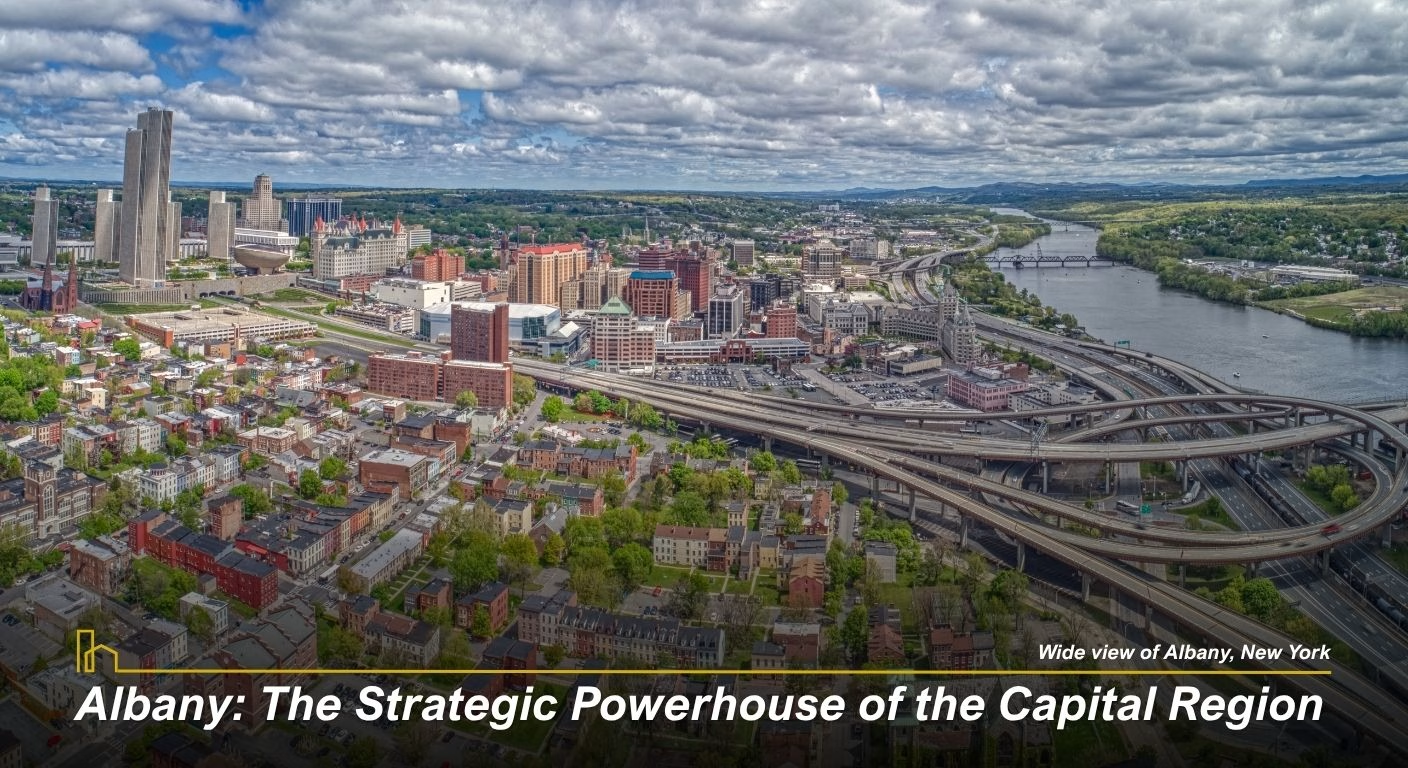
③ Albany: The Strategic Powerhouse of the Capital Region
HOMEiA Score: 89/100
- Monthly Rent: $1,575
- Home price to income ratio: 4.4:1
- Population: 101,317
- Median Home Value: $269,900
- Median Household Income: $61,986
A. Employment and Economy: Albany holds a unique Northeast position: simultaneously a government stronghold, semiconductor epicenter, and growing AI hub. The New York State government provides more than 23,000 direct jobs. It also creates enormous downstream demand for legal, consulting, and technology services.
- The Albany NanoTech Complex, operated by the SUNY Polytechnic Institute, is the largest semiconductor research and development facility in North America, having attracted over $20 billion in cumulative investment from leading chipmakers, including IBM and Applied Materials.
- The Brookings Institution recently designated Albany an AI “Focused Mover,” recognizing the metro’s high density of AI-adjacent talent relative to its population size, a leading indicator of future industry growth.
B. Housing and Affordability: Albany’s housing market pairs historically significant inventory, including Victorian rowhouses, Federal-style townhomes, and brick colonials, at prices approximately 38% below the national median. Rental costs have trended down 7.35% year-over-year.
- A home-price-to-income ratio of 4.4:1 is well within the comfort zone for dual-income households in government, healthcare, and technology.
C. Quality of Life and Culture: Albany’s cultural identity is anchored by the Empire State Plaza and the iconic Egg performing arts center. Center Square, with gas-lit brownstones and Lark Street galleries, offers one of the most walkable neighborhoods in Upstate New York, while the Adirondack and Catskill Mountains are accessible within 90 minutes.
D. Education: The Capital Region’s concentration of research institutions is exceptional: the University at Albany (a Carnegie R1 research university), Rensselaer Polytechnic Institute, and Albany Law School together create a vibrant post-secondary ecosystem that directly feeds the local labor market. Albany High School is recognized statewide for its Advanced Placement outcomes and student diversity. For families prioritizing K–12 excellence, nearby suburban districts; Bethlehem Central and North Colonie in particular; rank consistently among the finest in New York. Overall, 45.3% of Albany residents hold a bachelor’s degree or higher.
E. Safety and Community: Overall crime declined 15% in 2024. Neighborhoods like Buckingham Lake-Crestwood and Eagle Hill are stable and low-crime, with active civic associations and a heightened security presence near state government facilities.
Related article
Moving to New York: The Complete Relocation Guide & Checklist
Relocating to New York offers diverse lifestyles, from the energy of New York City to the calm of the Adirondacks and Hudson Valley. This guide covers housing, costs, legal steps, and lifestyle factors to help you plan a successful move…
④ White Plains: The Corporate and Urban Hub of Westchester
HOMEiA Score: 91/100
- Monthly Rent: $3,094
- Home price to income ratio: 5.6:1
- Population: 62,561
- Median Home Value: $620,800
- Median Household Income: $110,763
A. Employment and Economy: White Plains is Westchester County’s corporate command center, hosting Heineken USA, the New York Power Authority, and a cluster of financial and professional services firms in one of the state’s most active commercial leasing markets. With an unemployment rate of just 2.8%, the city is at effective full employment.
- Education and healthcare collectively account for 24% of regional employment, providing a stable, recession-resistant base that complements the county’s private corporate presence.
- The city’s most powerful economic asset may be its geographic position: a 35-minute, single-seat Metro-North ride to Grand Central Terminal places the entire New York City labor market, the largest in the countr.
B. Housing and Affordability: White Plains is the most expensive market on this list, with a median home value of $620,800 and a home-price-to-income ratio of 5.6:1. That premium buys direct Metro-North access, one of New York State’s highest-rated school districts, and a violent crime rate 70% below the national average, a compelling value proposition for professionals priced out of Manhattan.
C. Quality of Life and Culture: White Plains strikes a compelling urban-suburban balance. The Westchester mall, anchored by luxury and premium retailers, serves as a regional shopping destination. Saxon Woods Park offers 700 acres of public recreation, including a competition-grade swimming pool complex and an 18-hole golf course. The city’s restaurant scene benefits from Westchester County’s extraordinary demographic diversity, creating a culinary landscape that spans virtually every global cuisine at multiple price points. Historic sites, including the Jacob Purdy House, used as a headquarters by General George Washington, give the city a tangible connection to American Revolutionary history. The annual Restaurant Month in January is a beloved community tradition that showcases the depth and excitement of the local dining scene.
D. Education: The White Plains City School District receives an overall A grade from Niche, making it one of the most highly rated urban school districts in New York State. White Plains Senior High School is distinguished for its combination of rigorous academic programming and exceptional student body diversity, a rare pairing that prepares graduates for competitive colleges and a globalized professional environment. The presence of Pace University’s Elisabeth Haub School of Law adds a significant intellectual and professional dimension to the city’s profile. Educational attainment among adult residents is among the highest on this list, with 53.9% holding a bachelor’s degree or higher.
E. Safety and Community: White Plains maintains a violent crime rate 70% below the national average, with one of the highest police-to-resident ratios in the country. Neighborhoods like Highlands and Gedney Farms consistently report high safety and quality-of-life satisfaction.
Related article
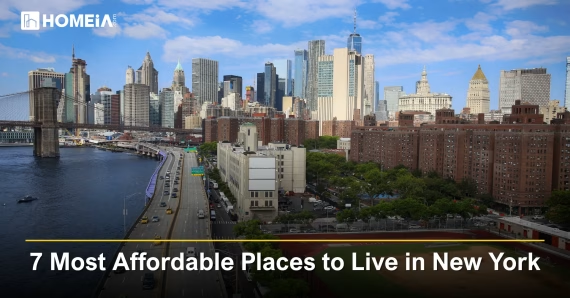
7 Most Affordable Places to Live in New York State
New York offers diverse living options, from New York City to more affordable upstate communities. This guide highlights seven budget-friendly places that balance housing costs, job opportunities, and quality of life; helping you enjoy New York’s culture and lifestyle without overspending…
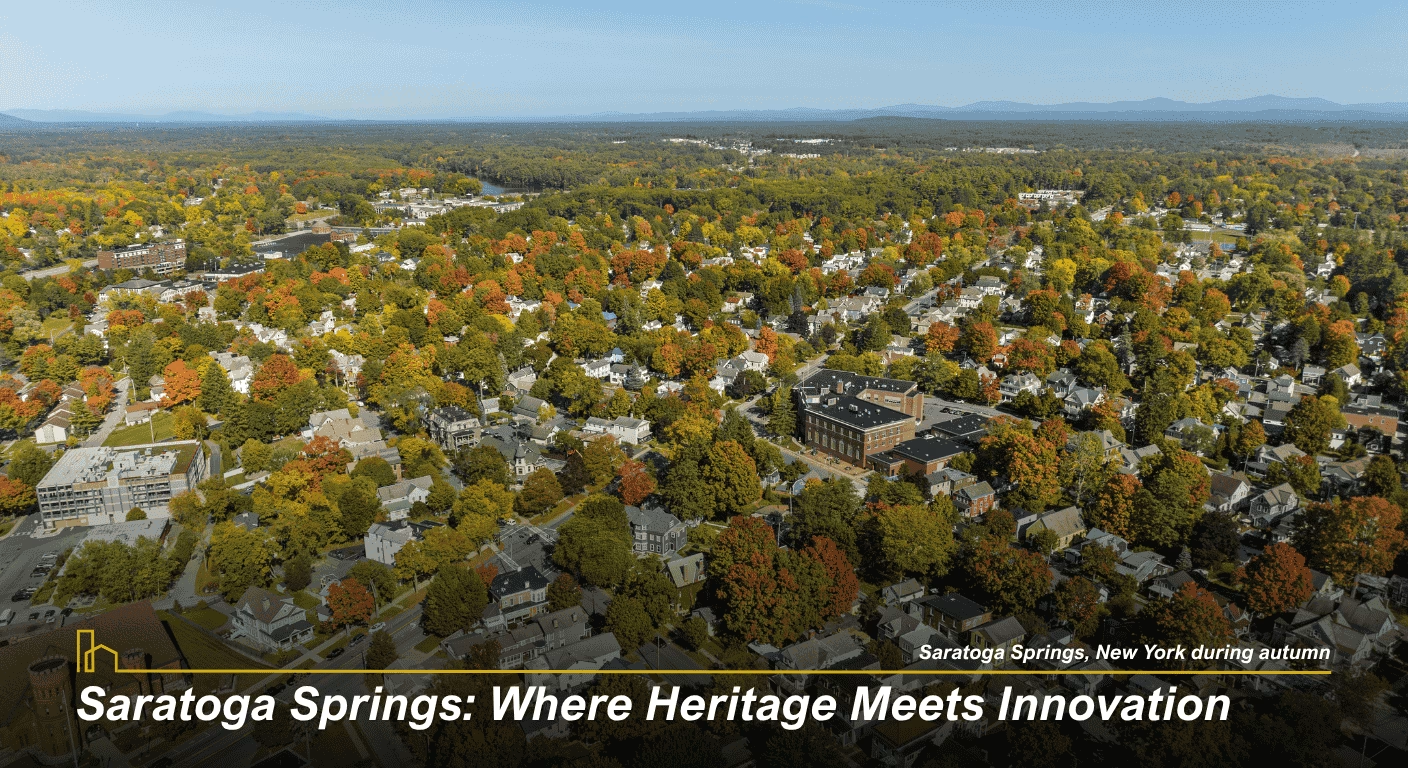
⑤ Saratoga Springs: Where Heritage Meets Innovation
HOMEiA Score: 92/100
- Monthly Rent: $1,982
- Home price to income ratio: 5.8:1
- Population: 28,741
- Median Home Value: $617,768
- Median Household Income: $105,944
A. Employment and Economy: Saratoga Springs has achieved rare economic diversification: world-renowned tourism, a Tech Valley semiconductor node, an equine industry capital, and an emerging life sciences hub. Tourism contributes over $900 million in annual visitor spending, supporting approximately 11,000 local jobs.
- The $15 billion GlobalFoundries semiconductor fabrication campus in neighboring Malta is the single largest private-sector economic anchor in the region, and its workforce demands, including engineers, technicians, and supply chain professionals, have reshaped the Saratoga County labor market.
- The Saratoga County unemployment rate of 2.7% is one of the lowest in the state and reflects genuine structural employment strength rather than a temporary cyclical improvement.
B. Housing and Affordability: Saratoga Springs real estate is an investment-grade asset class with structurally limited supply. The average home value of $617,768 reflects historic zoning and preservation constraints, with premium properties near the Race Course exceeding $1 million. Rental prices have risen 9.3% year-over-year, the highest rate among Upstate cities on this list.
- The home-price-to-income ratio of 5.8:1 is the highest on this list, but it is supported by a median household income of $105,944 and the expectation of continued appreciation driven by semiconductor-sector income growth.
- An owner-occupancy rate of 58%, well above most comparably sized cities, reflects a community of long-term, invested residents rather than a transient rental market.
C. Quality of Life and Culture: Saratoga Springs routinely ranks among the top small cities in America for quality of life, and the evidence is compelling. The Saratoga Race Course, the oldest major thoroughbred racing venue in the nation, dating to 1863, anchors a six-week summer season of world-class horse racing that draws visitors from across the globe. The Saratoga Performing Arts Center (SPAC) hosts the New York City Ballet and the Philadelphia Orchestra for extended summer residencies, placing Saratoga in an elite tier of small American cities for high-culture programming. Saratoga Spa State Park, a designated National Historic Landmark, features mineral springs, the Roosevelt Baths, a world-class golf course, and miles of walking and cross-country ski trails. The downtown core, defined by Victorian-era gas-lit streetscapes, upscale boutiques, and award-winning restaurants, is widely regarded as one of the most beautiful and activated in Upstate New York.
D. Education: The Saratoga Springs City School District is the premier public school system in the Capital Region, consistently earning top-tier rankings for academic performance, extracurricular breadth, and college readiness. Saratoga Springs High School maintains a 93% graduation rate and has received state and national recognition for excellence in STEM programming. At the post-secondary level, Skidmore College, a highly selective liberal arts institution, and SUNY Empire State University contribute meaningfully to the city’s intellectual atmosphere. The combination of exceptional K–12 options and direct access to elite undergraduate education is a decisive draw for families. An extraordinary 59.9% of adult residents hold a bachelor’s degree or higher, the highest rating on this list.
E. Safety and Community: Saratoga Springs is broadly recognized as one of the safest and most cohesive communities in New York State. WalletHub consistently ranks it among the “Best Small Cities in America” for its safety metrics and overall quality of life scores. Community engagement is exceptionally high, particularly around historic preservation initiatives; residents actively steward the city’s Victorian architectural heritage through well-funded neighborhood associations and local advocacy. The economic multiplier effect of tourism is also a meaningful quality-of-life subsidy: visitor spending helps fund the well-maintained public parks, streetscapes, and cultural institutions that permanent residents enjoy year-round.
III. Comparative Market Overview
A side-by-side summary of key data points for all five cities.
|
City |
Score |
Population |
Median Home Value |
Median Rent |
Median Income |
Price-to-Income |
|---|---|---|---|---|---|---|
| Ithaca | 85 | 32,137 | $368,700 | $1,862 | $80,625 | 4.6:1 |
| Buffalo | 87 | 276,617 | $209,900 | $1,419 | $50,041 | 4.2:1 |
| Albany | 89 | 101,317 | $269,900 | $1,575 | $61,986 | 4.4:1 |
| White Plains | 91 | 62,561 | $620,800 | $3,094 | $110,763 | 5.6:1 |
| Saratoga Springs | 92 | 28,741 | $617,768 | $1,982 | $105,944 | 5.8:1 |
Buffalo leads on affordability; Saratoga Springs and White Plains command a lifestyle premium; Ithaca and Albany represent strong mid-range value for knowledge-economy professionals.
Conclusion: Matching Your Priorities to the Right City
New York State’s residential landscape is not a monolith; it is a portfolio, and the right choice depends on your priorities and desired lifestyle.
- Buffalo leads on affordability and financial leverage.
- Albany suits government professionals and semiconductor researchers seeking stability and Tech Valley upside.
- Ithaca is the premier choice for academics and those who prioritize intellectual community and natural beauty.
- White Plains is unmatched for corporate professionals seeking Manhattan connectivity without Manhattan costs.
- Saratoga Springs is the pinnacle: elite schools, world-class culture, and a booming economy in one of the country’s most beautiful small cities.
The common thread is momentum: New York State is investing aggressively in AI, semiconductors, and clean energy, and all five cities sit at an inflection point. The Empire State is not declining; it is evolving.
Recommended for you




FAQs About Living in New York State’s Best Cities
1. Which city has the best job market?
Albany and Saratoga Springs lead on long-term growth via Tech Valley’s semiconductor and AI corridor; Buffalo excels in healthcare; Ithaca is the top choice for academic careers.
2. Best city for remote workers?
Buffalo is the outstanding choice; below-average housing costs, improving amenities, and a walkable downtown make it one of the best cities in the country for location-independent professionals.
3. Are these cities safe?
Yes. All five cities outperform national safety benchmarks, with White Plains and Saratoga Springs among the safest communities in the state.
4. Best city for young professionals?
White Plains for Manhattan career access; Buffalo for financial leverage and a growing, vibrant local scene.
5. Best city for families?
Saratoga Springs and the Albany suburbs, with top-ranked schools, low crime, abundant parks, and stable real estate, are the strongest choices for families.


Related Content