






The Pros and Cons of Living in New York State
- Local Editor:Local Editor: The HOMEiA Team
Share


New York State is a land of dramatic contrasts, offering both the unparalleled energy of a global metropolis and the serene beauty of vast natural landscapes. From the iconic skyscrapers of New York City to the tranquil shores of the Finger Lakes and the rugged peaks of the Adirondacks, living in New York presents a unique set of opportunities and challenges. The state’s powerful economy and rich cultural tapestry are compelling draws, but they come with a high cost of living and significant regional disparities.
This balanced evaluation explores what it truly means to call the Empire State home in 2026, helping you weigh its vibrant lifestyle against its practical demands and affordability. Here are the pros and cons of living in New York State.
Related article
Moving to New York: The Complete Relocation Guide & Checklist
Relocating to New York offers diverse lifestyles, from the energy of New York City to the calm of the Adirondacks and Hudson Valley. This guide covers housing, costs, legal steps, and lifestyle factors to help you plan a successful move…
Table of Contents:
Key Takeaways
- Unmatched Economic and Cultural Hub: New York City remains a global epicenter for finance, media, arts, and technology, offering career opportunities and cultural experiences found nowhere else in the U.S.A.
- Geographic and Recreational Diversity: The state provides year-round outdoor activities, from beaches on Long Island to world-class skiing in the Catskills and Adirondacks, offering a nature-made escape for every season.
- High-Quality Education and Healthcare: New York is home to prestigious universities such as Columbia and Cornell, and boasts a network of top-ranked hospitals, ensuring access to excellent education and medical care.
- Extremely High Cost of Living: Particularly in the NYC metro area, housing costs, taxes, and everyday expenses are among the highest in the nation, creating a significant financial barrier for many.
- Significant Tax Burden: Residents face some of the highest state and local income taxes in the country, with NYC adding an additional city tax, which can substantially impact take-home pay.
- Aging Infrastructure and Congestion: Major transit systems, especially in NYC, grapple with aging infrastructure leading to delays, while dense urban areas and some highways suffer from chronic traffic congestion.

Related article
5 Best Places to Live in New York State
New York offers one of the nation’s most diverse housing landscapes, from global hubs like New York City to regions like the Finger Lakes. This guide evaluates the five best places to live using data on jobs, affordability, education, safety, and overall quality of life…
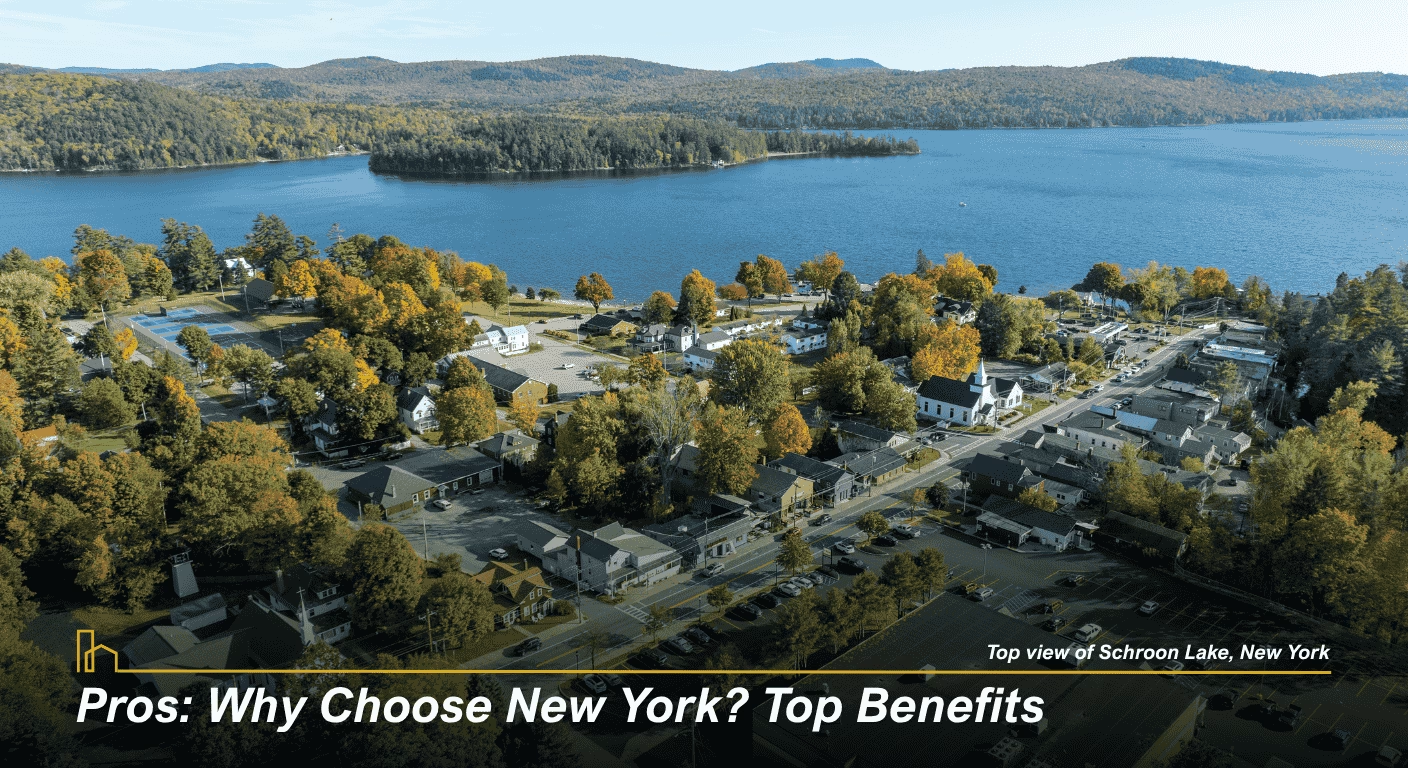
I. Pros: Why Choose New York? Top Benefits
1. World-Class Career Opportunities and Economic Power
New York’s economy is a global powerhouse, anchored by New York City but with strengths spread across the state. NYC is the undisputed capital of finance, housing the New York Stock Exchange and the headquarters of giants like JPMorgan Chase and Citigroup. The tech sector has seen explosive growth, with major hubs for Google, Amazon, and countless startups. Beyond finance and tech, the state is a leader in healthcare, education, media, fashion, and the arts. This economic diversity means career opportunities exist across a wide spectrum of industries and skill levels. Upstate cities such as Albany (government), Rochester (optics and imaging), and Buffalo (advanced manufacturing) offer robust regional economies, providing alternatives to the NYC intensity while still benefiting from the state’s overall economic strength.
2. Unrivaled Cultural and Entertainment Scene
The cultural offerings in New York are simply incomparable. New York City alone is home to Broadway theater, iconic museums like the Metropolitan Museum of Art and MoMA, legendary music venues, and a culinary scene representing every corner of the globe. This cultural wealth extends beyond the five boroughs. Cities like Buffalo boast impressive art galleries and architecture, the Hudson Valley is dotted with world-class sculpture parks and historic estates, and the Saratoga Performing Arts Center draws top musical acts. From the Glimmerglass Festival in Cooperstown to the film festivals in Woodstock and Tribeca, residents have access to a constant, vibrant calendar of events that enrich daily life and provide endless avenues for exploration and entertainment.
3. Prestigious Educational Institutions at All Levels
New York offers an exceptional education pipeline. It is home to Ivy League institutions such as Columbia University and Cornell University, as well as other top-tier schools such as New York University (NYU) and the University of Rochester. The state’s public university system (SUNY) is one of the largest and most comprehensive in the country, providing high-quality, affordable education across dozens of campuses. For families, many suburban areas in Westchester, Long Island, and upstate are renowned for their excellent public school districts. New York City’s specialized high schools and diverse array of charter and private schools offer unique educational pathways, making the state a prime destination for academic pursuit from kindergarten through graduate school.
4. Diverse Geography and Four-Season Outdoor Recreation
The state’s geographic variety is astounding. Residents can enjoy Atlantic Ocean beaches on Long Island, hike through the waterfalls of the Finger Lakes, sail on the Hudson River, or ski in the Adirondack Mountains—all within state borders. This provides a four-season playground for outdoor enthusiasts. State parks like Letchworth (“The Grand Canyon of the East”) and the vast Adirondack Park (larger than Yellowstone, Yosemite, Glacier, and the Grand Canyon combined) offer unparalleled access to nature. This proximity to diverse landscapes means weekend getaways and recreational activities are incredibly varied, allowing for a high quality of life that balances urban excitement with natural retreat.
5. Robust Public Transportation Networks in Metro Areas
While car dependency is high in rural regions, New York’s metropolitan areas—especially New York City—offer some of the most extensive public transit in the nation. The Metropolitan Transportation Authority (MTA) operates the largest subway and bus network in the United States, enabling millions to commute without a car. Extensive commuter rail systems (Metro-North, Long Island Rail Road, NJ Transit) connect suburbs to the city core. Upstate cities like Buffalo, Rochester, and Albany have their own public bus systems. This infrastructure reduces transportation costs, alleviates traffic congestion for users, and contributes to a more sustainable urban environment, though its reliability is a separate challenge.
Related article
7 Most Affordable Places to Live in New York State
New York offers diverse living options, from New York City to more affordable upstate communities. This guide highlights seven budget-friendly places that balance housing costs, job opportunities, and quality of life; helping you enjoy New York’s culture and lifestyle without overspending…
II. Cons: New York Living Challenges — What to Know

1. Extremely High Cost of Living and Housing Crisis
New York consistently ranks among the most expensive states to live in, with New York City being one of the priciest cities in the world. As of 2025, the median asking rent for a two-bedroom apartment in NYC exceeds $5,000, and median home prices are well above $900,000. Even outside the city, housing costs in desirable suburbs and resurgent upstate cities have risen sharply. The high cost extends to groceries, childcare, and dining out. This creates a severe affordability crisis, where a significant portion of household income is consumed by housing alone, making it difficult for middle-class families to save or achieve financial stability, and pushing essential service workers into long, costly commutes.
2. One of the Nation’s Highest Overall Tax Burdens
New York residents face a steep tax load. The state has a progressive income tax with a top marginal rate of 10.9%, and New York City adds its own income tax of up to 3.876%. Property taxes, while complex and varying widely, are notably high in many suburban and upstate counties, often exceeding 2% of assessed value. The combined state and local sales tax can reach 8.875%. This multifaceted tax burden significantly reduces disposable income, particularly for high earners and homeowners, and is a primary reason cited by residents and businesses considering relocation to lower-tax states.
3. Aging Infrastructure and Chronic Transit Delays
The state’s critical infrastructure, celebrated for its scale, is showing its age. In New York City, the century-old subway system suffers from frequent signal failures, track maintenance delays, and overcrowding, making daily commutes unpredictable and stressful. Major airports like LaGuardia and JFK have undergone renovations but still experience congestion and issues. Roads and bridges across the state, including vital arteries like the Brooklyn-Queens Expressway and upstate throughways, require constant and disruptive repair. These infrastructure challenges not only impact quality of life through longer commute times but also pose economic risks and high public costs for modernization.
4. Dense Urban Congestion and Stressful Pace of Life
The intensity of life in New York’s urban centers, particularly NYC, can be overwhelming. Population density leads to crowded streets, packed public transit, and constant noise. The competitive, fast-paced “hustle” culture can contribute to burnout and stress. Finding personal space and quiet is a challenge. For those unaccustomed to this environment, it can feel impersonal and abrasive. This density also exacerbates other issues like traffic gridlock, competition for parking, and long waiting times for popular restaurants or services, demanding a high tolerance for inconvenience and waiting.
5. Harsh Winter Weather and Climate Variability
New York experiences a true four-season climate, with winters that can be particularly severe. Upstate regions such as Buffalo and the Adirondacks are famous for heavy lake-effect snow, often measuring in feet, which can paralyze travel and increase heating costs. Even in NYC, winters are cold and damp, with snowstorms causing significant disruption. Summers can be hot and humid, especially in the city. These seasonal extremes require preparedness—investing in winter tires, dealing with high heating bills, and managing the challenges of snow removal—which adds to the cost and complexity of daily life for several months each year.
Recommended for you




III. Cost of Living Overview
| Category | New York Index | National Average Index | Notes |
| Housing | 224 | 100 | NYC metro housing costs are over twice the national average. |
| Utilities | 151 | 100 | Energy costs, particularly in winter, are significantly higher. |
| Groceries | 115 | 100 | Food costs are above average, especially in urban areas. |
| Transportation | 125 | 100 | Costs vary; high in NYC (transit fares, parking) but near average upstate. |
| Healthcare | 110 | 100 | Slightly above average, but access to top-tier care is excellent. |
*Note: Indices are approximate and vary significantly by region (e.g., NYC vs. upstate). Source: 2025 cost of living data aggregates.*
IV. Best Places to Live in New York
1. New York City, New York
Best For: Ambitious professionals, culture enthusiasts, and students.
Median Home Price: ~$940,000+
Key Advantage: Unmatched concentration of career opportunities, culture, and amenities.
New York City is in a category of its own. It’s a global capital for finance, arts, media, and dining, offering a plethora of experiences found nowhere else. Neighborhoods range from the financial powerhouse of Manhattan to the artistic enclaves of Brooklyn and the diverse cultural hubs of Queens. The trade-off is extreme cost, density, and pace. It’s ideal for those who thrive on energy and opportunity and can manage the high financial and personal costs.
2. Buffalo, New York
Best For: First-time homebuyers, families, and those seeking affordable city life.
Median Home Price: ~$250,000
Key Advantage: Remarkable affordability and a strong sense of community amidst a genuine urban revival.
Buffalo represents the best of New York’s affordability comeback. Once a declining industrial center, it has reinvented itself with a thriving medical campus, a growing tech sector, and a revitalized waterfront. Historic architecture, a passionate sports culture, and proximity to Niagara Falls are major perks to this New York region. While winters are snowy, the cost of living is manageable, and the community vibe is strong and alluring.


Related article
3 Most Affordable and Safe Neighborhoods to Live in Yonkers, New York
The combination of relative affordability (compared to New York City), excellent transportation options, and diverse neighborhoods makes Yonkers an increasingly attractive option for residents seeking value without sacrificing urban amenities and convenience…
3. Albany, New York

Best For: Government professionals, academics, and families seeking stability.
Median Home Price: ~$300,000
Key Advantage: Stable economy centered on state government and higher education, with good schools and manageable size.
As the state capital, Albany’s economy is anchored by government jobs, providing remarkable stability. It’s also a hub for education, home to the University at Albany (SUNY) and several other colleges. The city offers museums, a great dining scene, and is centrally located for trips to the Adirondacks, Hudson Valley, and NYC. It provides a balanced, less hectic alternative to downstate living.
4. Ithaca, New York
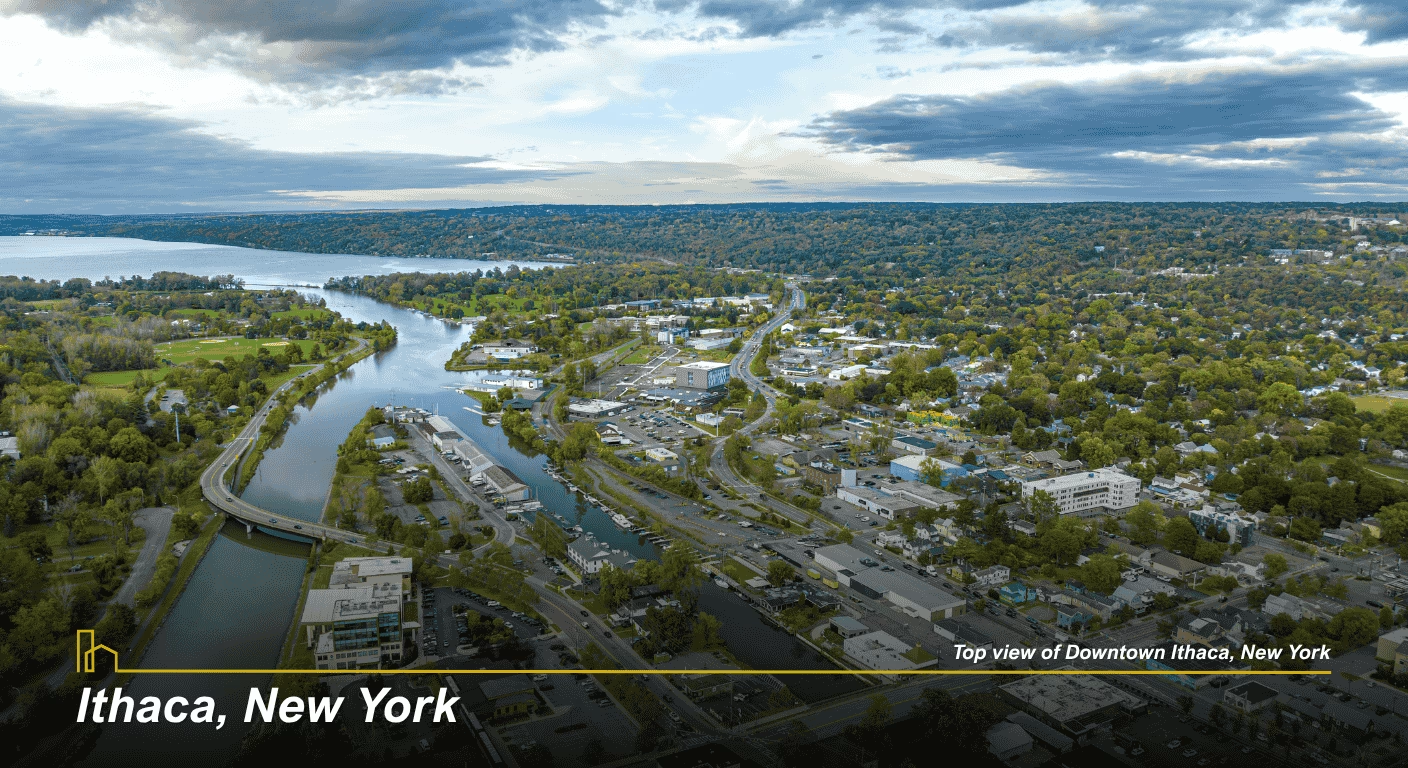
Best For: Academics, nature lovers, and families prioritizing education and environment.
Median Home Price: ~$350,000
Key Advantage: Stunning natural beauty intertwined with the intellectual energy of Cornell University and Ithaca College.
Nestled in the Finger Lakes, Ithaca is famously scenic, with gorges, waterfalls, and Cayuga Lake defining the landscape. The presence of two major universities creates a highly educated, progressive, and culturally active community. The focus on sustainability, local food, and the arts is pronounced. The trade-off is a higher cost of living than in other upstate towns and a somewhat isolated location.
5. Saratoga Springs, New York
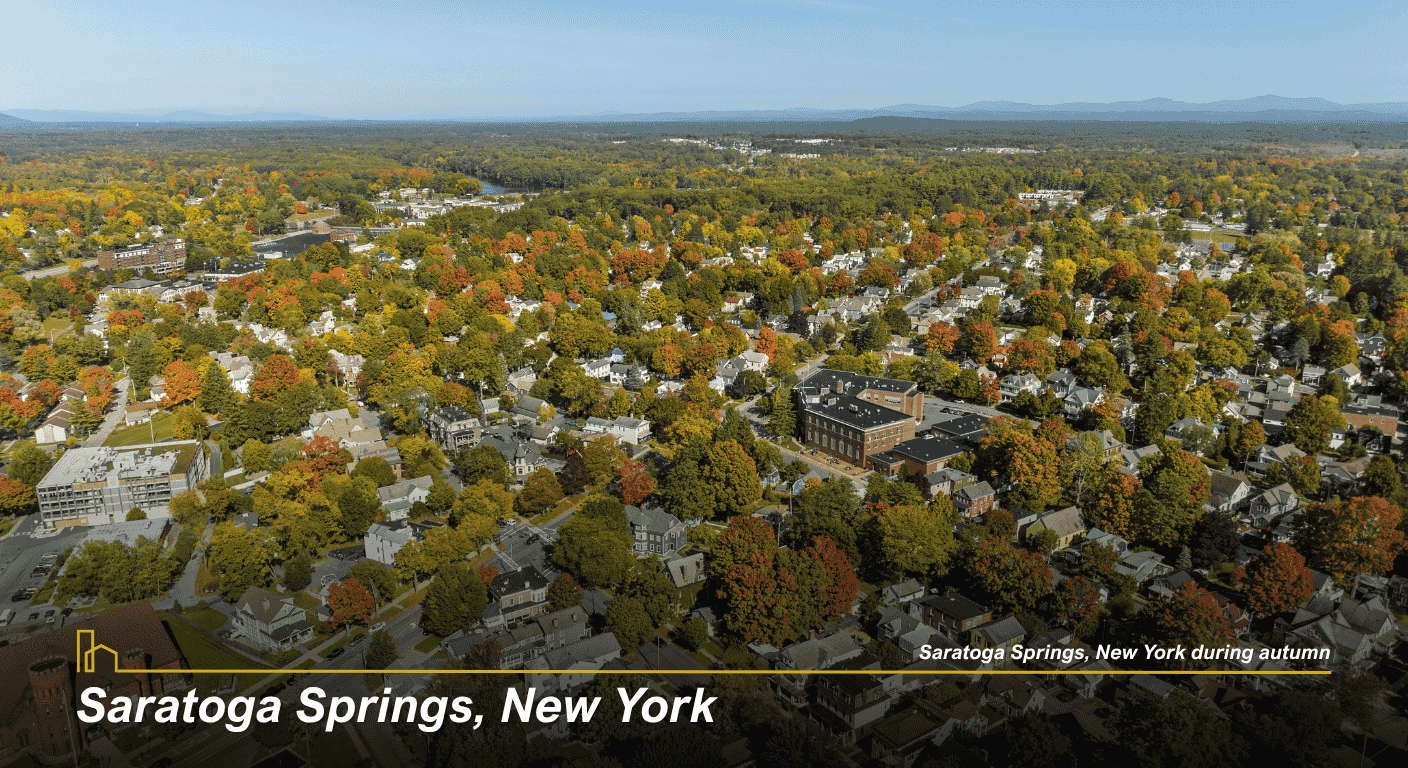
Best For: Retirees, equestrian enthusiasts, and those seeking an upscale small-town feel.
Median Home Price: ~$500,000
Key Advantage: Historic charm, world-class horse racing, and a vibrant downtown with spas and performing arts.
Saratoga Springs is a picturesque and affluent city known for the Saratoga Race Course, the Saratoga Performing Arts Center (SPAC), and mineral springs. Its beautifully preserved downtown is filled with boutiques, restaurants, and historic hotels. It offers a high quality of life with excellent amenities, but it comes with a price tag that reflects its desirability and proximity to the Adirondacks.

Related article
The 8 Safest Neighborhoods to Live in New York City in 2026
Let’s embark on an exploration of some of New York City’s most attractive residential districts — those that notably contribute to the city’s culture and real estate landscape. If you are seeking a new haven amid the city’s vibrant and thriving aura, below are the top 8 safest places in New York City…
Lifestyle + Comparative Table + Conclusion
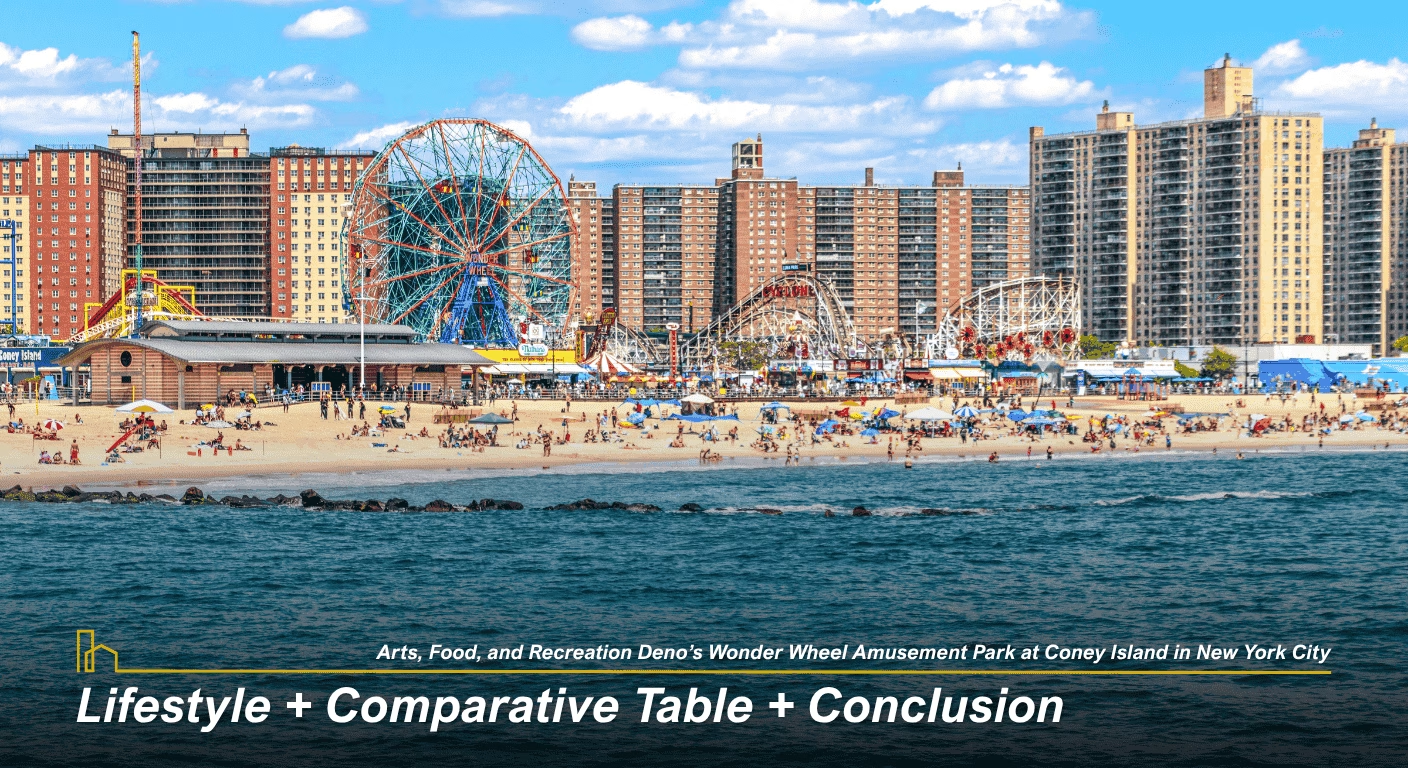
New York Lifestyle: Arts, Food, and Recreation
The New York lifestyle is defined by access and variety. Arts and Culture are not confined to NYC; they pulse throughout the state in venues like the Albright-Knox Art Gallery in Buffalo, the Corning Museum of Glass, and the Storm King Art Center. Food Scene diversity is legendary, from NYC’s Michelin-starred temples to Rochester’s “garbage plate,” Buffalo wings, and the farm-to-table bounty of the Hudson Valley. Outdoor Activities shift with the seasons: hiking and boating in summer, leaf-peeping in fall, skiing and snowboarding in winter. Sports and Community Life are passionate, from the professional teams in NYC to the intense loyalty for the Buffalo Bills and Sabres, fostering deep local identity.
Comparative Overview of Major Cities
| City | HOMEiA Score | Cost of Living vs. Avg. | Median 2-BR Rent | Key Vibe |
| New York City | 82 | +72% | $5,200+ | Global, fast-paced, expensive |
| Buffalo | 76 | -5% | $1,400 | Affordable, community-focused, resilient |
| Albany | 74 | -2% | $1,500 | Stable, governmental, family-friendly |
| Rochester | 73 | -8% | $1,300 | Innovative, historic, festival-loving |
| Syracuse | 70 | -10% | $1,200 | Central, university-driven, affordable |
*Note: HOMEiA Score is a proprietary metric evaluating overall livability. Cost of Living is relative to the U.S. national average of 100.*
Conclusion: Is New York Right for Your Lifestyle?
New York offers a compelling but demanding proposition. It is ideal for those who prioritize world-class career trajectories, cultural immersion, and geographic diversity, and who have the financial means or willingness to navigate high costs. It rewards ambition and tolerance for density and pace. Conversely, it is challenging for those on a tight budget, those who desire a slow-paced or low-tax lifestyle, or those sensitive to harsh winters and urban stress. The decision hinges on a personal cost-benefit analysis of its spectacular opportunities against its very real sacrifices.
Recommended for you




FAQs About Living in New York
1. What salary do you need to live comfortably in New York City?
Comfort is subjective, but financial advisors often suggest a single person needs at least $85,000-$100,000 annually to cover rent, utilities, groceries, transportation, and modest leisure in NYC, while a family of four likely requires a combined income of $150,000-$200,000 or more to afford a larger apartment, childcare, and savings. These figures assume careful budgeting and exclude aspirations like homeownership in the city.
2. Is it worth living in New York State outside of New York City?
Absolutely. Upstate and Hudson Valley cities offer a dramatically different quality of life. You gain affordability, more space, easier access to nature, and often a stronger sense of community, while still benefiting from New York’s robust infrastructure, good schools, and cultural offerings on a smaller scale. The trade-off is fewer ultra-specialized job opportunities and a less frenetic, 24/7 urban environment.
3. How bad are the taxes really?
The tax burden is substantial and multi-layered. A high-earning NYC resident can face a combined marginal income tax rate exceeding 14% between state and city taxes. Property taxes in many suburbs are among the highest in the nation. While you receive services in return, the out-of-pocket cost is a significant factor in personal finance and is often the top complaint among New York residents, who may consider relocation.
4. How do you deal with the harsh winters?
Preparation is key. This includes investing in a quality winter coat, boots, and home insulation; budgeting for higher heating bills; considering snow tires if you drive; and embracing winter activities like skiing or cozy indoor pursuits. Upstate communities are well-equipped to handle snow, but storms can still disrupt travel for a day or two. It is a seasonal reality that requires planning and the right attitude.
5. Is public transportation reliable outside of NYC?
It is more limited. Upstate cities like Buffalo, Rochester, Albany, and Syracuse have public bus systems that serve main corridors but often lack the frequency and comprehensive coverage of NYC transit. In these areas and in the suburbs, owning a car is generally essential for daily life, errands, and full mobility. Commuter rail is excellent for traveling into NYC from certain suburbs.
6. Is New York a good place to retire?
It can be, depending on lifestyle preferences and resources. Retirees who value culture, top-tier healthcare, and proximity to family may find areas like Westchester, Long Island, or certain upstate communities appealing. However, the high cost of living and property taxes can strain fixed incomes. Many retirees choose to leave for lower-cost states, though some find smaller, charming towns in New York that offer a good balance.


Related Content