









For today’s single professionals, choosing a city is a major life and career decision. The focus has shifted from salary alone to places offering strong job growth, vibrant dating pools, engaging social scenes, and sustainable living costs. This guide ranks U.S. cities by these pillars to help you find a place to work — and play…
Most Affordable Cities for Singles Under 30 in 2026
- Local Editor:Local Editor: The HOMEiA Team
- Category: USA
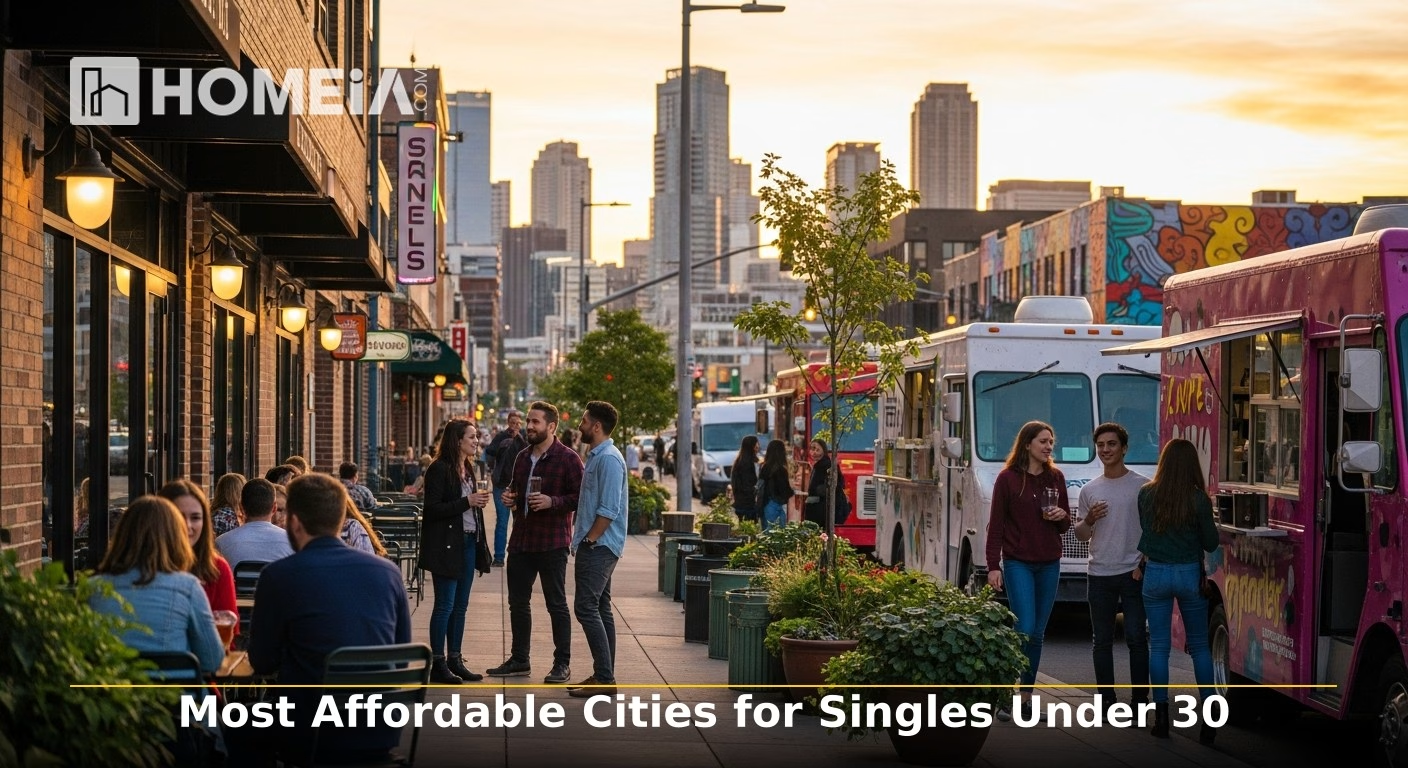
For singles under 30, financial pressure isn’t only focused on rent, it’s a constant calculation between paying student loans, saving for the future, and actually enjoying your youth. With average rents consuming a staggering share of entry-level incomes in many major metros, the dream of financial independence feels increasingly out of reach. This guide cuts through the noise to spotlight cities where your pay isn’t entirely consumed by survival costs. We define “affordable” as places where a single person can rent their own space (or share comfortably), cover essentials, have fun, and still build savings. Here, we prioritize a healthy bank balance as the foundation for a fulfilling life.
Here are the most affordable cities for singles under 30:
Key Takeaways
True affordability for young bachelors and bachelorettes means your housing costs leave room for life. The best cities combine rents at or below 30% of a typical early-career salary with a lower baseline cost for groceries, utilities, and transportation. A thriving social scene doesn’t have to be expensive; look for cities with robust free events, outdoor activities, and communities where connection happens beyond bars draining bank accounts. The optimal choice balances this financial breathing room with enough job opportunity and peer density to ensure you’re not saving money at the expense of a career or social well-being.
I. Our Methodology: The HOMEiA Affordability Score for Singles
We rated cities based on the specific financial realities of a person under 30. Our HOMEiA Affordability Score for Singles (0-100) is calculated using the following weighted criteria:
- Housing Cost (40%): The average monthly rent for a studio or one-bedroom apartment in a safe, viable neighborhood for young adults. We also factor in the cost of a room in a shared apartment.
- Daily Cost of Living (25%): Estimated costs for groceries, utilities (internet, electricity), transportation (public transit pass or average gas/insurance), and a modest “fun” budget.
- Income Potential & Job Market (25%): The availability of entry-level and early-career roles and the typical wages associated. A city is not affordable if it’s nearly impossible to secure a job that supports the cost of living.
- Quality-of-Life Basics (10%): Access to free social amenities (parks, community events), general safety, and the presence of a peer population. This ensures affordability doesn’t come at the cost of complete isolation.

Related article
Our Methodologies to create HOMEiA Score Ratings for Each Group of Content
HOMEiA uses a consistent, data-driven methodology to evaluate U.S. states for livability, affordability, and long-term value. Our analysis centers on key factors such as Housing and Affordability, Cost of Daily Living, Access and Infrastructure, Community Strength, Safety and Quality of Life, Economic Resilience and Job Market…
II. City Profiles: Where Your Budget Goes Further

1. Pittsburgh, Pennsylvania
A. HOMEiA Affordability Score for Singles: 94/100
B. Affordability Overview: Pittsburgh is the undisputed champion of value for young singles. It’s home to the culture, amenities, and career foundations of a major city with the rent prices of a bygone era. Metamorphing from steel town to a hub for education, tech, and healthcare means you have affordability without sacrificing opportunity or a vibrant urban vibe.
C. Housing Costs:
- Studio/1-Bed: $950 – $1,350
- Shared Room (per person): $600 – $900
- Budget-Friendly Neighborhoods: Bloomfield, Friendship, Squirrel Hill (near universities).
D. Income & Jobs: An ample job market in healthcare (UPMC), tech, robotics, and finance. Entry-level roles are plentiful. Typical wages for roles like Marketing Coordinator ($48,000) or Junior IT Support ($52,000) align perfectly with the low cost structure.
E. Daily Cost of Living: Groceries and utilities are below the national average. A robust, free bus system within the county reduces car dependency. Your “fun money” for dining out or a concert at Stage AE stretches significantly further here.
F. Social Life on a Budget: Free festivals, extensive park systems (Schenley, Frick), iconic incline rides for skyline views, and affordable galleries abound. Neighborhoods like Lawrenceville are packed with character and lower-cost bars and eateries.
G. Pros & Cons:
- Pros: Arguably the best rent-to-amenities ratio in the U.S.
- Pros: Sustainable job market with respected employers.
- Pros: Walkable, distinct neighborhoods with authentic character.
- Cons: Frequent gray, cloudy weather.
- Cons: Some neighborhoods feel isolated without a car.
2. Kansas City, Missouri (KS/MO)
A. HOMEiA Affordability Score for Singles: 90/100
B. Affordability Overview: Kansas City delivers big-city perks, legendary BBQ, a thriving arts district, major league sports, with small-to-mid-sized city costs. Its spread-out nature means it’s easy to find incredibly cheap housing, especially if you’re willing to have roommates. Vibes are friendly, creative, and surprisingly cool.
C. Housing Costs:
- Studio/1-Bed: $1,000 – $1,450
- Shared Room (per person): $650 – $850
- Budget-Friendly Neighborhoods: Westport, Midtown, Crossroads Arts District (for creatives).
D. Income & Jobs: The place to be for finance, healthcare, and logistics (with many distribution centers). Entry-level jobs in administration, customer service, and support roles are readily available. Starting salaries are competitive for the region.
E. Daily Cost of Living: Reasonable across the board. While cars are helpful, it’s not as financially punitive as in coastal cities (cheaper insurance, parking). Groceries and utilities are affordable.
F. Social Life on a Budget: Free world-class museums (Nelson-Atkins), a massive free streetcar line in downtown, countless parks and fountains, and live jazz. The Crossroads district has free gallery walks on First Fridays.
G. Pros & Cons:
- Pros: Exceptionally low housing costs for a city with major amenities.
- Pros: Free cultural attractions and a great food scene (not only BBQ).
- Pros: Growing tech and entrepreneurial scene.
- Cons: Public transit is limited outside the downtown core.
- Cons: Can feel spread out, requiring more effort to connect socially.
3. Cincinnati, Ohio
A. HOMEiA Affordability Score for Singles: 88/100
B. Affordability Overview: Nestled on the Ohio River, Cincinnati offers stunning hillside views, historic architecture, and a fiercely loyal community at a shockingly low price point. Its affordability is its superpower, allowing those seeking a soulmate to live in trendy, revitalized neighborhoods without financial strain.
C. Housing Costs:
- Studio/1-Bed: $900 – $1,300
- Shared Room (per person): $550 – $800
- Budget-Friendly Neighborhoods: Northside, Clifton (near UC), parts of Over-the-Rhine (OTR).
D. Income & Jobs: Home to major corporations (Procter & Gamble, Kroger, Fifth Third Bank) offering commendable entry-level corporate roles. Healthcare and education are also consistent employers. Job availability is sound.
E. Daily Cost of Living: Very manageable. The city is drivable but also has a reliable bus system. Groceries and utilities are inexpensive, leaving more for enjoying the brewery scene.
F. Social Life on a Budget: Explore the massive Findlay Market, hike the steps of Mount Adams for views, stroll along the Smale Riverfront Park, or catch a free concert. The museum center and zoo are top-tier and affordable.
G. Pros & Cons:
- Pros: Incredibly economicalcost of living, especially for housing.
- Pros: Rich history, beautiful urban parks, and major league sports.
- Pros: Strong sense of community and neighborhood identity.
- Cons: Economic growth can be slower than in Sunbelt cities.
- Cons: Some areas still feel economically divided.
Recommended for you




4. Indianapolis, Indiana
A. HOMEiA Affordability Score for Singles: 87/100
B. Affordability Overview: Indianapolis makes living in a clean, organized, and sports-obsessed state capital remarkably easy on the wallet. It’s a city built for stress-free living, commutes are short, rents are low, and the downtown is designed for major events. It’s an ideal place to gain early-career experience and save money.
C. Housing Costs:
- Studio/1-Bed: $1,050 – $1,500
- Shared Room (per person): $700 – $950
- Budget-Friendly Neighborhoods: Fountain Square, Broad Ripple, Irvington.
D. Income & Jobs: An epicenter for life sciences, logistics, and insurance (the “Crossroads of America”). Many corporate HQs (Eli Lilly, Salesforce) offer stable entry-level opportunities. The market is not hyper-competitive, making it seamless to land a first job.
E. Daily Cost of Living: One of the most budget-friendly total packages. Gas, groceries, and dining out are all priced below the national average. Compact downtown layouts can minimize transportation costs.
F. Social Life on a Budget: The Cultural Trail, a world-class bike/walk path, connects neighborhoods for free. Canal Walk located downtown is a social hub. Free festivals and inexpensive tickets to Pacers, Fever, or Colts games (by NBA/WNBA/NFL standards) are common.
G. Pros & Cons:
- Pros: Low-stress, easy-to-navigate city with short commutes.
- Pros: Very stable job market in recession-resistant industries.
- Pros: Great infrastructure for biking and community events.
- Cons: Social scene can feel quieter compared to coastal cities.
- Cons: Weather features cold, gray winters.

Related article
5. San Antonio, Texas
A. HOMEiA Affordability Score for Singles: 86/100
B. Affordability Overview: San Antonio offers authentic Texas culture and sunbelt growth without the skyrocketing prices of Austin or Dallas. It’s a city where one can enjoy a vibrant downtown riverwalk, a community spirit felt throughout, and low tax burden (no state income tax), all while keeping housing costs firmly in check.
C. Housing Costs:
- Studio/1-Bed: $1,100 – $1,550
- Shared Room (per person): $750 – $1,000
- Budget-Friendly Neighborhoods: Southtown, Mahncke Park, areas near the Pearl District.
D. Income & Jobs: Growing in cybersecurity (due to military presence), healthcare, and tourism. Entry-level job availability is present, though starting salaries in some service-oriented sectors can be modest. The trade-off is the very low cost structure.
E. Daily Cost of Living: No state income tax gives a small boost to take-home pay. Groceries and utilities are reasonable. A car is necessary, but insurance and fuel costs are typical for Texas.
F. Social Life on a Budget: The River Walk is a free public park and social spine. Explore the historic missions (a UNESCO site), enjoy massive free festivals like Fiesta, and take advantage of the city’s famous and affordable Tex-Mex cuisine.
G Pros & Cons:
- Pros: Rich cultural heritage and warm, community-oriented vibe.
- Pros: Sunbelt growth with lagging (but rising) housing costs.
- Pros: No state income tax increases disposable income.
- Cons: Job market, while growing, is less dynamic than in other Texas hubs.
- Cons: Summers are extremely hot and humid.
(Additional featured cities would follow the same format, such as: Louisville, KY; Oklahoma City, OK; Birmingham, AL; Memphis, TN; and Cleveland, OH.)
Comparison Table: Affordability at a Glance
City | Typical 1-Bed Rent | Shared Rent (per person) | Monthly Budget for Comfort* | HOMEiA Score |
|---|---|---|---|---|
| Pittsburgh, PA | $950 – $1,350 | $600 – $900 | $2,800 – $3,400 | 94 |
| Kansas City, MO | $1,000 – $1,450 | $650 – $850 | $2,900 – $3,500 | 90 |
| Cincinnati, OH | $900 – $1,300 | $550 – $800 | $2,700 – $3,300 | 88 |
| Indianapolis, IN | $1,050 – $1,500 | $700 – $950 | $3,000 – $3,600 | 87 |
| San Antonio, TX | $1,100 – $1,550 | $750 – $1,000 | $3,100 – $3,700 | 86 |
| Louisville, KY | $950 – $1,400 | $600 – $850 | $2,800 – $3,500 | 85 |
| Oklahoma City, OK | $900 – $1,300 | $600 – $800 | $2,700 – $3,400 | 84 |
*”Monthly Budget for Comfort” is an estimated take-home pay needed to cover rent, utilities, groceries, transportation, modest dining/entertainment, and savings.

Related article
III. How Singles Under 30 Should Decide: A Financial Framework

- Calculate Your Real Take-Home Pay: Don’t look at gross salary. Use an online paycheck calculator to estimate net income after taxes, health insurance, and 401(k) contributions. This is the money you actually have to spend.
- Apply the 30% Rule to Your Net Income: For true financial comfort, your rent (including utilities) should not exceed 30% of your take-home pay. If your net is $3,300/month, target rent at or below $990. This rule instantly filters city options.
- Run a Full Mock Budget: For the top 2-3 cities, itemize estimated monthly costs: Rent, Utilities, Internet/Phone, Groceries, Transportation, Debt Payment, Savings, and Fun. Does the math work without being razor-thin?
- Weigh the Trade-off: Vibrancy vs. Savings: A slightly more expensive city (ex. Atlanta or Dallas) may offer a denser social/dating pool and faster career jumps. Ask: Is that potential worth an extra $300/month in rent and a slower savings rate? Only you can decide.
Looking for more options? If your career allows full remote work, explore our guide to Tax-Efficient Cities for Remote Workers to maximize income. Once you pick a city, dive into our Neighborhood Guides for Young Professionals to find the right local fit. And for a broader view of social and dating scenes, see our companion article on the Best Cities for Single Professionals.
Recommended for you




FAQs about Most Affordable Cities for Singles Under 30
1. I see low rents, but are these cities safe for a single person living alone?
Safety varies by neighborhood as opposed to city. Those highlighted are generally considered viable for young adults. Always use specific neighborhood crime mapping tools (like SpotCrime or local police department maps) and, if possible, visit at different times of day. Many affordable cities have very safe, vibrant pockets.
2. Is it smarter to get my own apartment or find roommates in these affordable cities?
Even in affordable cities, having roommates is the single biggest lever for accelerating savings or debt payoff. Splitting a $1,500 apartment three ways at $500 each frees up hundreds of dollars versus a $1,100 studio. View a year with roommates not as a compromise, but rather, a strategic financial decision to build your emergency fund or attack student loans.
Leverage the cities’ strengths. Join a free social sports league (kickball, softball), frequent the same coffee shop or gym, volunteer, or attend free workshops at libraries or community centers. Cities with major universities often have adult education classes. The key is consistency—friendships form through repeated, low-pressure interaction.
Transportation. A city with low rent but no transit may require a car, adding $400-$600/month for payment, insurance, gas, and maintenance. Always factor this in. Conversely, a location with accessible transit systems (like Pittsburgh’s bus network) can save you that expense entirely, making its slightly higher rent a better overall value.
5. Can I still find a “good” job in one of these cities, or will I be stuck in low-wage work?
Absolutely. These cities are home to Fortune 500 companies (Kroger in Cincy, Eli Lilly in Indy, USAA in San Antonio), major healthcare systems, and growing tech scenes. The key is to research the dominant industries in your target city and tailor your job search accordingly. Competition may be less fierce than in coastal hubs, offering a clearer path to responsibility early on.
Share