








Maine blends rugged coastal beauty, historic towns, and thriving communities, making location choice essential. This guide ranks the state’s five best places to live in 2025 using data on jobs, affordability, safety, amenities, and quality of life. From Portland’s cultural energy to Orono’s academic appeal…
7 Most Affordable Places to Live in Maine
- Local Editor:Local Editor: The HOMEiA Team
- Category: City Living Guide
Share

In a nation where there seems to be no end in sight for rising housing prices, Maine stands out, not for its rugged coastline and pristine wilderness, but their remarkably affordable cost of living in many communities. With a median home price significantly below the national average and a quality of life that’s hard to match, the Pine Tree State offers a compelling case for families, remote workers, and retirees seeking a life rich in experience, not expense. However, affordability varies widely across the state, and finding the right community is key to balancing budget with lifestyle.
This guide moves beyond iconic scenery to provide a detailed, data-driven analysis of the most affordable places to live in Maine. We’ve crunched the numbers on housing, utilities, transportation, and more to bring you seven cities and towns where you can achieve financial stability without sacrificing the unique New England experience. If you’re also considering other regions, you might find our guide on the most affordable places to live in Massachusetts helpful for comparison.
Table of Contents:
Key Takeaways
- Widespread Affordability: Maine’s overall cost of living is 5%-10% below the U.S. average in many communities, with particularly budget-friendly housing compared to other New England states.
- Variety of Options: Affordable living isn’t limited to remote towns; it includes riverfront communities, college towns, and areas with access to employment centers, offering choices for every lifestyle.
- Trade-Offs Exist: The most affordable cities often come with trade-offs, such as fewer job opportunities outside key sectors, seasonal employment patterns, or more remote locations that require longer drives for major amenities.
- Beyond the Purchase Price: True affordability includes utility costs, which can be high in Maine’s unforgiving winters, and transportation expenses, which are substantial in isolated communities.
- Essential to Research: Safety and school ratings vary dramatically, making it crucial to research specific neighborhoods rather than relying on statewide generalizations.
I. Methodology: How We Chose the Most Affordable Places
Our selection of these seven locations is based on a weighted criterion prioritizing key metrics relevant to residents seeking value. Our goal is to identify places that offer a harmonious balance of affordability, access to essentials, and community, not just the lowest price tag.
- Housing & Affordability (30%): A primary driver for relocation. We’ve examined median home price, average monthly rent, and overall affordability compared to state averages—using crucial ratios like home-price-to-income to gauge true accessibility in a high-cost environment.
- Cost of Living (25%): Beyond housing, this metric evaluates day-to-day expenses defining a budget, including cost of groceries, utilities, transportation, and healthcare relative to other parts of the state.
- Access & Infrastructure (20%): Here, affordability can be negated by isolation. This criterion assesses critical access to groceries, healthcare facilities, major employers, and reliable internet and transportation links.
- Community & Safety (15%): A fundamental need. This assesses crime rates and takes into account the importance of community engagement, social offerings, and amenities that contribute to a high quality of life.
- Economic Resilience & Opportunity (10%): For long-term viability, we evaluate economic diversity, key industries, and employment trends to ensure a community is built for a stable and prosperous future.
Data for this article is compiled from verified 2025 sources, including Zillow, the U.S. Census Bureau, Bureau of Labor Statistics, FBI crime data, and local market reports.

Related article
Our Methodologies to create HOMEiA Score Ratings for Each Group of Content
HOMEiA uses a consistent, data-driven methodology to evaluate U.S. states for livability, affordability, and long-term value. Our analysis centers on key factors such as Housing and Affordability, Cost of Daily Living, Access and Infrastructure, Community Strength, Safety and Quality of Life, Economic Resilience and Job Market…
7 Maine Communities, One State: A Quick Comparison Table
City | HOMEiA Score | Cost of Living | Avg. Rent (2-Bed) | Home Price to Income Ratio | Income to Rent Ratio | Safety Rating |
|---|---|---|---|---|---|---|
| Sanford | 78/100 | -18% | $800 | 4.1:1 | 56.3x | 45 |
| Biddeford | 80/100 | -10% | $950 | 4.1:1 | 49.5x | 65 |
| Augusta | 81/100 | -12% | $900 | 4.5:1 | 61.1x | 60 |
| Lewiston | 82/100 | -15% | $850 | 3.6:1 | 56.5x | 58 |
| Waterville | 84/100 | -12% | $900 | 3.9:1 | 55.6x | 62 |
| Bangor | 85/100 | -5% | $1,300 | 4.1:1 | 57.7x | 70 |
| Presque Isle | 87/100 | -10% | $950 | 5.1:1 | 54.7x | 55 |
II. Detailed Community Analysis: Seven Affordable Enclaves
1. Sanford: The Southern Gateway

HOMEiA Score: 78/100
- Cost of Living: 18% below U.S. average
- Monthly Rent: $800
- Home price to income ratio: 4.1:1
- Income to rent ratio: 56.3x
- Safety rating: 45/100
A. Cost of Living & Housing: Sanford is one of the most affordable cities in southern Maine, with incredibly economical rent and home prices. This is the place to go for those who need to minimize housing costs above all else while maintaining access to employment centers.
B. Economy & Job Market: Economic prosperity is driven by manufacturing, healthcare, and retail sectors. Pratt & Whitney’s large facility provides stable aerospace jobs, while healthcare and education provide additional employment opportunities. The city serves as a bedroom community for Portland and Portsmouth job markets.
C. Access & Infrastructure: Located near the New Hampshire border, it has ideal highway access via I-95 and Route 109. Having all essential amenities, including a hospital and major retailers, while being less than an hour from Portland and 30 minutes from Portsmouth.
D. Quality of Life & Culture: Being home to an authentic New England experience with historic downtown areas and access to outdoor recreation at Mousam Lake. However, it faces socioeconomic challenges leading to its lower safety rating. The community requires resilience but offers rich rewards for the right person seeking affordability near major employment centers.

Related article
The Pros and Cons of Living in Maine
Maine offers more than rugged coastlines and lobster shacks—it’s a state shaped by maritime heritage, outdoor adventure, and a resilient spirit. But challenges include long winters, limited job markets, and high taxes. This guide provides a balanced look at the pros and cons of living in the 207 and highlights the best cities…
2. Biddeford: The Riverfront Revival

HOMEiA Score: 80/100
- Cost of Living: 10% below U.S. average
- Monthly Rent: $950
- Home price to income ratio: 4.1:1
- Income to rent ratio: 49.5x
- Safety rating: 65/100
A. Cost of Living & Housing: Biddeford provides fantastic affordability in southern Maine’s growing region. Its housing market is stable and easy on the checkbook, with a plethora of homes well under $300,000. Cost of living allows for a comfortable lifestyle with access to urban amenities.
B. Economy & Job Market: As a former mill town experiencing revitalization, the economy consists of healthcare, education, and manufacturing. University of New England provides consistent employment while the downtown revitalization has attracted new businesses and restaurants to the area.
C. Access & Infrastructure: Fully connected via I-95 and Route 1, this is a 20 minute commute from Portland and 15 minutes from the Maine Turnpike. The city has a well-regarded hospital system, major retailers, and public transportation options to the metropolis.
D. Quality of Life & Culture: Residents embrace their industrial heritage while fostering new growth, which creates a tried-and-true community. The city has riverfront parks, historic architecture, and an ideal location for those seeking small-city feels with urban access. For those wanting other affordable options, you might explore the cheapest places to live in Massachusetts.
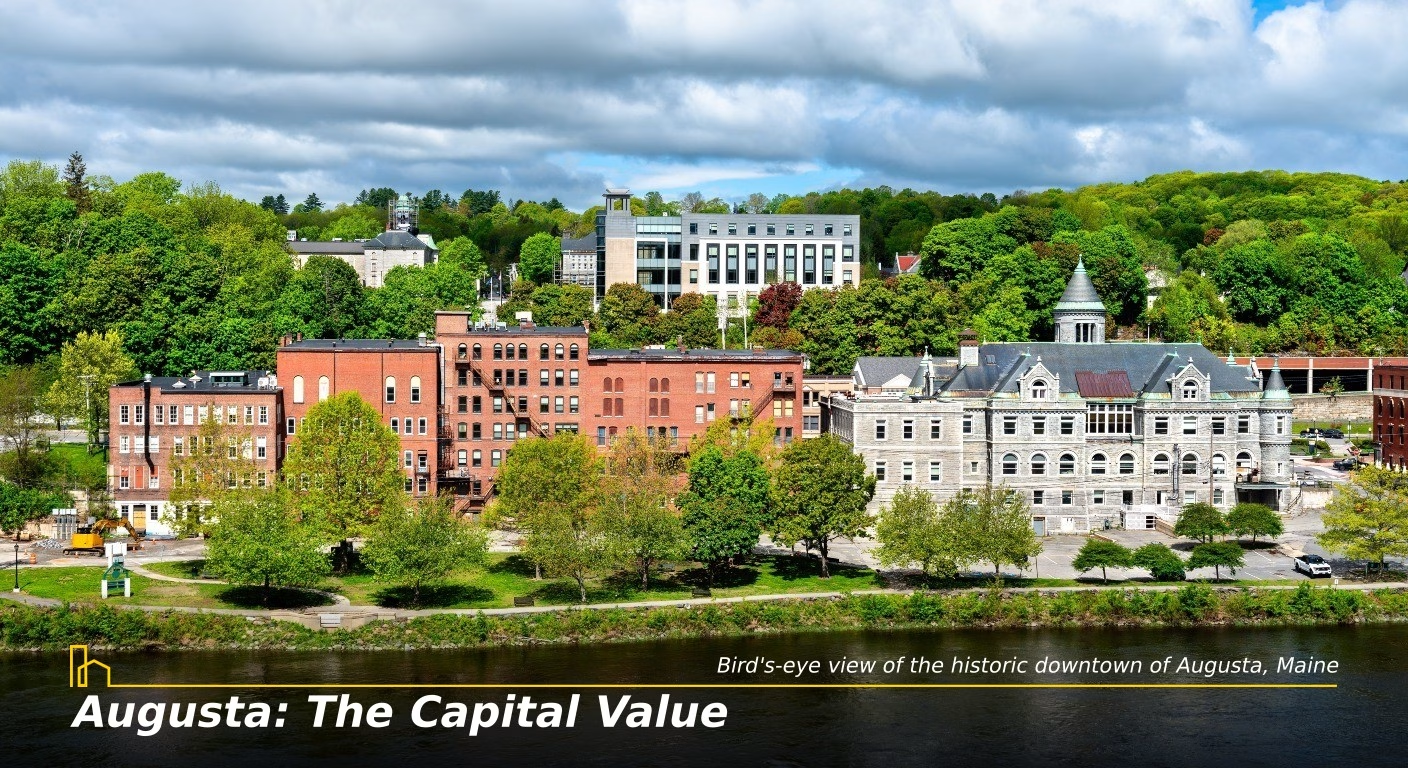
3. Augusta: The Capital Value
HOMEiA Score: 81/100
- Cost of Living: 12% below U.S. average
- Monthly Rent: $900
- Home price to income ratio: 4.5:1
- Income to rent ratio: 61.1x
- Safety rating: 60/100
A. Cost of Living & Housing: Augusta provides optimal value as Maine’s capital city. Median home sale price is slightly below $300,000, and the average sale price per square foot is $213, indicating a stable, moderately affordable market for a city of its size. Cost of living is manageable, especially for those who take advantage of state government employment opportunities and local amenities.
B. Economy & Job Market: Their economy relies on state government, healthcare, and education. Government work provides stable employment while MaineGeneral Medical Center serves as the region’s largest employer. Diversity provides stability against market fluctuations.
C. Access & Infrastructure: Being centrally located with I-95 access makes this region well-connected to the entire state. Possessing a regional airport (AGS), well-equipped hospital, and major stores, serving as a hub for the Kennebec Valley region.
D. Quality of Life & Culture: Life in Maine’s capital revolves around government, healthcare, and outdoor recreation along the Kennebec River. It has museums, performing arts centers, and access to nearby lakes. Its safety rating and family-friendly atmosphere make it ideal for those looking for consistent employment with outdoor access.
Recommended for you
4. Lewiston: The Twin City Bargain

HOMEiA Score: 82/100
- Cost of Living: 15% below U.S. average
- Monthly Rent: $850
- Home price to income ratio: 3.6:1
- Income to rent ratio: 56.5x
- Safety rating: 58/100
A. Cost of Living & Housing: Lewiston offers the lowest barrier to homeownership in the Androscoggin Valley. The median home sale price is $300,000, and while many homes can be found under $250,000, the current median figure should be noted as market conditions have changed. Overall cost of living is among the lowest in southern Maine.
B. Economy & Job Market: Like many former mill towns throughout the state, their economy is evolving with healthcare, education, and light manufacturing. Central Maine Medical Center provides stable jobs while Bates College adds educational and cultural opportunities to the community.
C. Access & Infrastructure: The L-A Twin Cities serve as a regional hub for central Maine, with exceptional highway access via I-95 and the Maine Turnpike. The cities have all necessary amenities, including major hospitals and retailers, while maintaining their distinct cultural identities.
D. Quality of Life & Culture: Life here is community-oriented and deeply connected to its Franco-American heritage. Low cost of living allows residents comfort on a single income. An average safety rating reflects its urban character with ongoing revitalization efforts.
5. Waterville: The College Town Value

HOMEiA Score: 84/100
- Cost of Living: 12% below U.S. average
- Monthly Rent: $900
- Home price to income ratio: 3.9:1
- Income to rent ratio: 55.6x
- Safety rating: 62/100
A. Cost of Living & Housing: Waterville is one of the most affordable homeownership markets in central Maine. Their home-price-to-income ratio is highly attractive, allowing families and college employees to easily own a home. Utility costs are manageable despite its frigid winters.
B. Economy & Job Market: A dependable economy driven by Colby College, academia creates a steady stream of employment while supporting local businesses. Healthcare and retail are other key employers, with MaineGeneral Medical Center and local businesses supporting the community.
C. Access & Infrastructure: Situated on I-95, it’s centrally located between Augusta and Bangor. Home to all essential services, including reliable internet infrastructure and access to major retail centers while maintaining its small-college-town charm.
D. Quality of Life & Culture: Arguably the greatest asset is its educational and cultural institutions. Residents have Colby’s arts programming and the new downtown revitalization in their backyard. The community is family-friendly and retiree-heavy, with a slower pace of life and secure safety profile.

Related article
Moving to Maine: The Complete Relocation Guide & Checklist
Maine offers coastal living, vast wilderness, and dramatic seasons, attracting about 1.5 million residents. Portland anchors urban life, while small towns line forests, lakes, and rugged shores. With no state sales tax, moderate living costs, and a strong sense of community, this guide covers relocation essentials…
6. Bangor: The Queen City Value

HOMEiA Score: 85/100
- Cost of Living: 5% below U.S. average
- Monthly Rent: $1,300
- Home price to income ratio: 4.1:1
- Income to rent ratio: 57.7x
- Safety rating: 70/100
A. Cost of Living & Housing: While not for the faint of heart financially, Bangor offers the best value in eastern Maine. As the region’s commercial hub, diverse housing options, modern infrastructure, and top-rated healthcare at a price that remains below the national average awaits. The median home sale price is $286,750. Your dollar stretches farther here.
B. Economy & Job Market: Residents find employment in healthcare, retail, and education. The Queen City has its own growing economy with Northern Light Eastern Maine Medical Center being a major employer, alongside retail, hospitality, and transportation sectors.
C. Access & Infrastructure: Fully integrated into the regional transportation network, Bangor possesses reliable roads, reliable utilities, and top-notch emergency services. Being connected to the entire state via Bangor International Airport (BGR) while maintaining its distinct identity is a plus.
D. Quality of Life & Culture: This is consistently ranked one of the safest cities in Maine while boasting numerous parks, the waterfront concert venue, and family-friendly events. It is the premier choice for families wanting access to urban jobs without sacrificing safety, space, and established schools.
7. Presque Isle: The Aroostook County Anchor

HOMEiA Score: 87/100
- Cost of Living: 10% below U.S. average
- Monthly Rent: $950
- Home price to income ratio: 5.1:1
- Income to rent ratio: 54.7x
- Safety rating: 55/100
A. Cost of Living & Housing: As the largest city in Aroostook County, Presque Isle offers a rare combination of regional amenities and rural affordability. With a floor-level cost of living, driven by a housing market holding significant value. Homebuyers can find spacious properties for a fraction of the cost of southern Maine cities.
B. Economy & Job Market: Their economy is anchored by agriculture, healthcare, and education. University of Maine at Presque Isle provides consistent roles in education while Northern Maine Medical Center and agricultural industries offer additional employment opportunities.
C. Access & Infrastructure: Fully connected via major state routes, PIis the commercial hub for The County. There is a regional airport (PQI), well-regarded hospital system, and every major big-box store and grocery chain, providing all the conveniences of a developed city.
D. Quality of Life & Culture: Life in Star City is defined by an agricultural heritage, outdoor recreation, and tight-knit community. UMPI attracts educational opportunities while Aroostook State Park provides incredible outdoor access. Its above-average safety rating for a city its size reflects a community-oriented feel despite its remote location.

Related article
III. A Relocation Checklist for Your Maine Home
- Budget for the True Cost: Account for utility costs, which can be high for heating during Maine’s long winters. Factor in transportation costs, especially when commuting or living in a more remote area.
- Secure Employment First: Job markets can be hyper-localized in Maine. Secure employment before moving, especially if not in a high-demand field like healthcare, education, or skilled trades.
- Visit in Person: When possible, visit your chosen community during different seasons. Maine’s character changes dramatically from summer to winter. Get a feel for the area, community, and the amenities firsthand.
- Confirm Internet Reliability: For remote workers, this is non-negotiable. While larger towns have fast service, confirm the provider and available speeds at your specific address before signing a lease or mortgage.
Conclusion: Your Affordable Maine Future Awaits
From the revitalized riverfront of Biddeford to the agricultural heartland of Presque Isle, these seven communities prove it’s possible to access the New England dream without a premium price tag. Maine offers a unique opportunity to build a future where your appreciation for natural beauty and community is matched by the financial wisdom of the chosen home. By carefully considering what each of these affordable enclaves has to offer, you can find the perfect spot to plant one’s roots and thrive in the Pine Tree State. For those considering a different New England state, you might also explore the most affordable cities to live in Massachusetts.
Recommended for you




FAQs About The Most Affordable Places to Live in Maine
1. Is it possible to find a home under $250,000 in Maine? Yes, absolutely.
Markets including Lewiston, Sanford, Waterville, and Presque Isle regularly have numerous homes listed below $250,000. These may be older homes that require modernization, but they are livable and represent an incredible value.
2. What is the biggest hidden cost of moving to Maine? Utilities and transportation.
Winter heating bills can be pricey throughout the state, especially in northern regions. In more remote communities, gas prices and vehicle maintenance for trips to larger cities for shopping or healthcare can become a significant monthly expense.
3. Are these communities good for remote workers? It varies.
Developed towns including Bangor, Augusta, and Lewiston have multiple providers with reliable high-speed internet. Remote communities may have service, but it can be slower, with data caps, and pricier. It’s essential to confirm reliable internet availability at your specific address before moving.
4. What is the property tax situation like?
Maine has relatively high property tax rates comparable to the national average, though it varies by municipality. There are property tax relief programs for seniors and veterans, which can help reduce the tax burden for eligible residents.
5. How do I choose between these cities?
Prioritize your needs:
- For Jobs: Look at Bangor (healthcare hub) or Augusta (state government).
- For Lowest Cost: Consider Sanford or Lewiston.
- For Families: Bangor and Waterville are top choices for safety and schools.
- For Retirees: Presque Isle and Waterville offer great value and amenities.
- For Culture & Outdoor Access: Bangor and Augusta are fantastic choices.
Always research specific neighborhoods within these cities, as conditions can vary.


Related Content