






7 Most Affordable Places to Live in Missouri
- Local Editor:Local Editor: The HOMEiA Team
-
Category: City Living Guide
Share


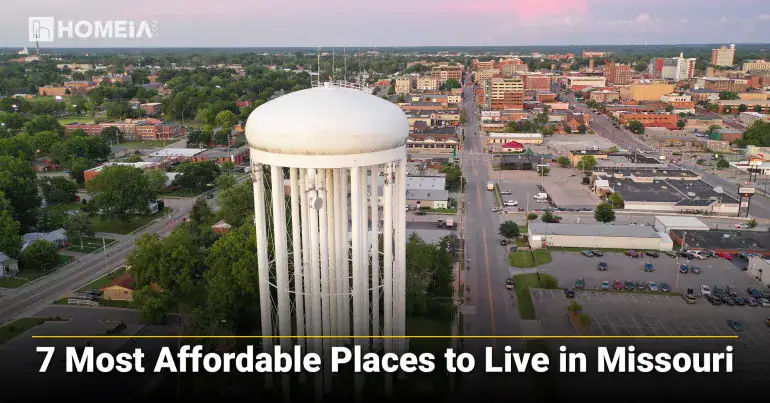
In a nation where housing costs continue to climb, Missouri stands out, rather than its enchanting landscapes and rich culture, it’s for a remarkably affordable cost of living. Having a median home price significantly below the national average and no state tax on Social Security income, the Show Me State offers a compelling case for families, remote workers, and retirees seeking a life rich in experience, not expense. However, affordability fluctuates across the state, and finding the right community is key to balancing budget with lifestyle.
This guide moves beyond postcard imagery to provide a detailed, data-driven analysis of the most affordable places to live in Missouri for 2026. We’ve crunched the numbers on housing, utilities, transportation, and more to bring you seven cities and towns where you can achieve financial stability without sacrificing the unique Midwestern experience. If you’re also considering other regions, you might find our guide on the cheapest places to live in Texas helpful for comparison.
Table of Contents:
Key Takeaways
- Widespread Affordability: Missouri’s overall cost of living is about 5%-10% below the U.S. average, with many communities offering budget-friendly housing, especially compared to neighboring states.
- Variety of Options: Affordable living extends beyond remote towns; it includes suburbs, college towns, and communities with prosperous job markets, offering choices for every lifestyle.
- Trade-Offs Exist: The most affordable cities often come with trade-offs, notably fewer job opportunities outside key sectors, higher crime rates, or more remote locations that require longer drives for major amenities.
- Beyond the Purchase Price: True affordability includes utility costs, which can be higher in areas with extreme temperatures, and transportation expenses, which are substantial in isolated communities.
- Essential to Research: Safety and school ratings vary dramatically from city to city, making it crucial to research specific neighborhoods rather than relying on statewide generalizations.
I. Methodology: How We Chose the Most Affordable Places
Our selection of these seven locations is based on a weighted criterion prioritizing key metrics relevant to residents seeking value. Here, the goal is to identify places that offer a harmonious balance of affordability, access to essentials, and community, not only the lowest price tag.
- Housing & Affordability (30%): Primary driver for relocation. We’ve examined median home prices, average monthly rent, and overall affordability compared to state averages—using crucial ratios like home-price-to-income to gauge true accessibility in a high-cost environment.
- Cost of Living (25%): Beyond housing, this metric evaluates day-to-day expenses that define a budget, including groceries, utilities, transportation, and healthcare relative to other parts of the state.
- Access & Infrastructure (20%): Here, affordability can be negated by isolation. This criterion assesses critical access to groceries, healthcare facilities, major employers, and reliable internet and transportation links.
- Community & Safety (15%): A fundamental need. This assesses crime rates and considers the strength of community engagement, social offerings, and amenities that contribute to a high quality of life.
- Economic Resilience & Opportunity (10%): For long-term viability, we evaluate economic diversity, key industries, and employment trends to ensure a community is built for a stable and prosperous future.
Data for this article is compiled from verified 2026 sources, including Zillow, the U.S. Census Bureau, Bureau of Labor Statistics, FBI crime data, and local market reports.

Related article
Our Methodologies to create HOMEiA Score Ratings for Each Group of Content
HOMEiA uses a consistent, data-driven methodology to evaluate U.S. states for livability, affordability, and long-term value. Our analysis centers on key factors such as Housing and Affordability, Cost of Daily Living, Access and Infrastructure, Community Strength, Safety and Quality of Life, Economic Resilience and Job Market…
7 Missouri Communities, One State: A Quick Comparison Table
|
City |
HOMEiA Score |
Cost of Living |
Avg. Rent (2-Bed) |
Home Price to Income Ratio |
Income to Rent Ratio |
Safety Rating |
|---|---|---|---|---|---|---|
| Poplar Bluff | 78 | -18% | $800 | 4.1:1 | 56.3x | 45 |
| Jefferson City | 80 | -10% | $950 | 4.1:1 | 49.5x | 65 |
| Cape Girardeau | 81 | -12% | $900 | 4.5:1 | 61.1x | 60 |
| St. Joseph | 82 | -15% | $850 | 3.6:1 | 56.5x | 58 |
| Columbia | 84 | -12% | $900 | 3.9:1 | 55.6x | 62 |
| Springfield | 85 | -5% | $1,300 | 4.1:1 | 57.7x | 70 |
| Joplin | 87 | -10% | $950 | 5.1:1 | 54.7x | 55 |
II. Detailed Community Analysis: Seven Affordable Enclaves
1. Poplar Bluff: The Gateway to the Ozarks
HOMEiA Score: 78/100
- Cost of Living: 18% below U.S. average
- Monthly Rent: $800
- Home price to income ratio: 4.1:1
- Income to rent ratio: 56.3x
- Safety rating: 45/100
A. Cost of Living & Housing: Poplar Bluff is one of the most affordable cities here, with incredibly low rent and home prices. This is the place to be for those needing to minimize housing costs above all else.
B. Economy & Job Market: Economic output is steered by its role as a regional hub for the surrounding agricultural and timber industries. Healthcare, manufacturing, and retail are other key employers in this southeastern Missouri community.
C. Access & Infrastructure: Located at the intersection of US-67 and US-60, PB serves as a major transportation center for the region. It contains essential services but can feel isolated for some while serving as a critical center for a vast rural area.
D. Quality of Life & Culture: The Gateway to the Ozarks offers an authentic immersion into rural life with access to beautiful natural landscapes. However, there are significant socioeconomic challenges awaiting, contributing to a lower safety rating. It is a community requiring resilience but offers rich rewards for the right person.


Related article
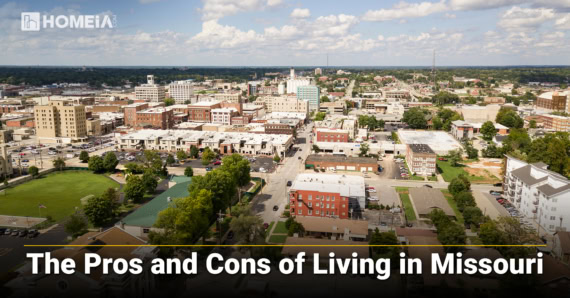
The Pros and Cons of Living in Missouri (updated)
When people picture Missouri, they think of rolling hills, the Mississippi River, and the Gateway Arch. Beyond the clichés, Missouri offers affordability and geographic advantage, but also faces weather extremes and uneven economic conditions. This guide explores the state’s pros, cons, and best cities for every stage of life…
2. Jefferson City: The Capital Value

HOMEiA Score: 80/100
- Cost of Living: 10% below U.S. average
- Monthly Rent: $950
- Home price to income ratio: 4.1:1
- Income to rent ratio: 49.5x
- Safety rating: 65/100
A. Cost of Living & Housing: Jefferson City provides fantastic affordability in central Missouri. A reliable and economical housing market, it contains many homes well under $200,000. Cost of living allows for a comfortable lifestyle.
B. Economy & Job Market: As the state capital, the economy is swarming with roles in government, healthcare, and education. Presence of state government here provides consistent employment opportunities and supports local businesses.
C. Access & Infrastructure: Located on the Missouri River and connected by I-70 and US-50, JC has all essential amenities, including a hospital and major retailers, serving as a regional hub for central Missouri.
D. Quality of Life & Culture: Residents embrace its role as the state capital, which fosters a deep-rooted community. Possessing a relatively high safety rating and a low-key pace of life makes it ideal for those seeking a small-city feel with all necessary services. For those seeking other affordable options, you might explore the cheapest places to live in Georgia.

Related article
Moving to Missouri: The Complete Relocation Guide & Checklist
Planning a move to Missouri? The Show-Me State draws newcomers with affordable living, welcoming communities, and diverse scenery—from Kansas City to the Ozarks and the Mississippi River. This guide covers costs, jobs, timelines, and top destinations like St. Louis and Lake of the Ozarks to help you relocate confidently…
3. Cape Girardeau: The Riverfront Retreat

HOMEiA Score: 81/100
- Cost of Living: 12% below U.S. average
- Monthly Rent: $900
- Home price to income ratio: 4.5:1
- Income to rent ratio: 61.1x
- Safety rating: 60/100
A. Cost of Living & Housing: Cape Girardeau provides fantastic value in the scenic Mississippi River region. Housing is fair, and the cost of living is manageable, especially for those taking advantage of local recreational activities.
B. Economy & Job Market: Consistent employment can be found in healthcare, education, and manufacturing sectors. Southeast Missouri State University provides a multitude of positions and cultural opportunities, while healthcare and retail serve the regional population.
C. Access & Infrastructure: Being located on I-55, CG has developed a well-equipped hospital, major stores, and serves as a regional hub for southeastern Missouri. It feels connected while maintaining its distinct river town character.
D. Quality of Life & Culture: Life revolves around the Mississippi River and the university community. The city offers riverfront parks, historic districts, and cultural events. Its safety rating and family-friendly atmosphere make it ideal for those looking to immerse themselves in a river town lifestyle.
Recommended for you




4. St. Joseph: The Historic Value
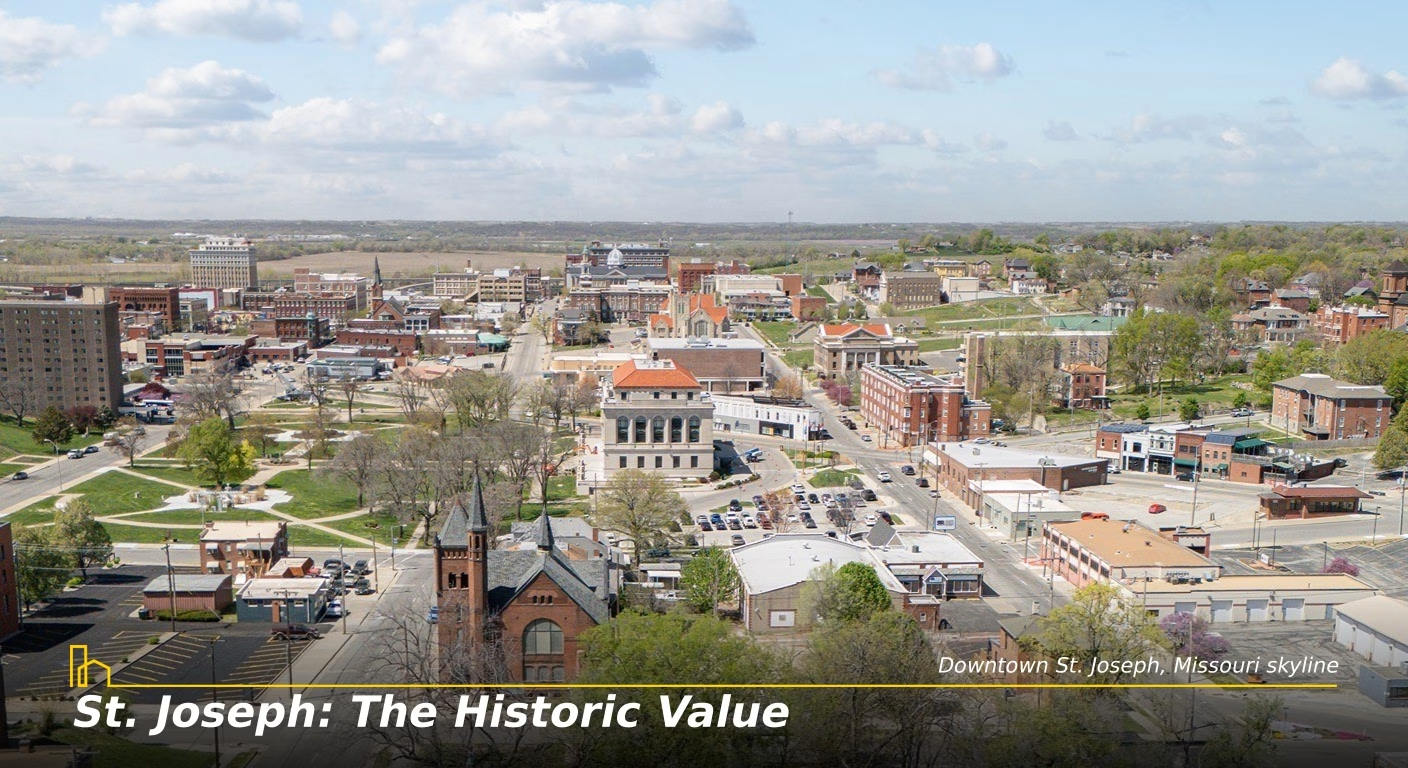
HOMEiA Score: 82/100
- Cost of Living: 15% below U.S. average
- Monthly Rent: $850
- Home price to income ratio: 3.6:1
- Income to rent ratio: 56.5x
- Safety rating: 58/100
A. Cost of Living & Housing: St. Joseph offers the lowest barrier to homeownership on this list. The market is full of numerous homes under $200,000, making it ideal for first-time buyers or those looking to maximize their budget. Overall cost of living is among the lowest in Missouri.
B. Economy & Job Market: St. Joseph’s economy includes manufacturing, healthcare, and distribution. Being near Kansas City provides some economic prosperity while maintaining its own industrial base and historic character.
C. Access & Infrastructure: Serving as a regional hub for northwestern Missouri, with connections to I-29 means it has all necessary amenities, including hospitals and major retailers. This creates a unique blend of small-town charm with access to urban amenities.
D. Quality of Life & Culture: Locals community-oriented and deeply connected to its Western heritage and Pony Express history. Cost of living allows residents comfort on a single income. It has an average safety rating reflecting its small-city status.

Related article
The 10 Best Places to Live in Missouri in 2026
Location, decent wages, a low cost of living, a strong job market, and good schools make Missouri a great place to settle down. A closer look reveals that it is much more than a flyover state. If you’re looking to relocate to the “Show Me State,” consider one of these ten communities and see for yourself…
5. Columbia: The University Town Value
HOMEiA Score: 84/100
- Cost of Living: 12% below U.S. average
- Monthly Rent: $900
- Home price to income ratio: 3.9:1
- Income to rent ratio: 55.6x
- Safety rating: 62/100
A. Cost of Living & Housing: Columbia is one of the most affordable homeownership markets among college towns. The home-price-to-income ratio is highly attractive, allowing families and students to easily own or rent a home. Utility costs are manageable despite this atmosphere.
B. Economy & Job Market: A secure economy driven by the University of Missouri, means roles are readily available leading to supporting local businesses. Healthcare and research are growing, alongside education and retail.
C. Access & Infrastructure: Situated on I-70, it’s centrally located between St. Louis and Kansas City for major travel and specialized shopping. It has essential services, including multiple hospitals and reliable internet infrastructure.
D. Quality of Life & Culture: Columbia’s greatest asset is its vibrant university community. Residents have access to Division I athletics, cultural events, and a youthful energy. The community is family-friendly and retiree-heavy, with a slower pace of life and a secure safety profile.

Related article
Best Affordable Places to Live in Missouri for Retirees
The lower cost of living in Missouri is a big draw for retirees, but there is so much more this Midwestern state has to offer seniors including beautiful landscapes, a milder climate, thriving communities, and a vibrant cultural scene. Whether you seek a cheaper or finer option, or you want to live over or under the radar, the state of Missouri has certainly got you covered…
6. Springfield: The Family-Friendly Value Play
HOMEiA Score: 85/100
- Cost of Living: 5% below U.S. average
- Monthly Rent: $1,300
- Home price to income ratio: 4.1:1
- Income to rent ratio: 57.7x
- Safety rating: 70/100
A. Cost of Living & Housing: While not a complete steal like others on this list, Springfield offers the best value. As the third-largest city in Missouri, options include newer homes, better infrastructure, and top-rated schools at a price remaining below the national average. Your dollar stretches farther here.
B. Economy & Job Market: Home to a growing economy, most notably in healthcare, education, and manufacturing. Major employers include CoxHealth, Mercy health systems, Missouri State University, and numerous manufacturing facilities.
C. Access & Infrastructure: Fully integrated into the regional economy, it possesses modern roads, reliable utilities, and top-notch emergency services. Being connected to the region’s jobs and amenities while maintaining its own distinct, family-oriented identity is a plus.
D. Quality of Life & Culture: This city is consistently ranked one of the safest in the state while boasting numerous parks, community centers, and family-friendly events. Bass Pro Shops’ national headquarters adds to the outdoor recreation culture. It is the premier choice for families seeking access to urban jobs without sacrificing safety, space, and established schools.

Related article
3 Most Affordable and Safe Neighborhoods to Live in Kansas City, Missouri
Kansas City, Missouri combines Midwestern charm with urban vibrancy, offering rich culture, famous barbecue, and a strong job market. With rent well below the national average and diverse, affordable neighborhoods, it’s an ideal city for those seeking a high quality of life without the high cost of major metro areas…
7. Joplin: The Resilient Value Hub
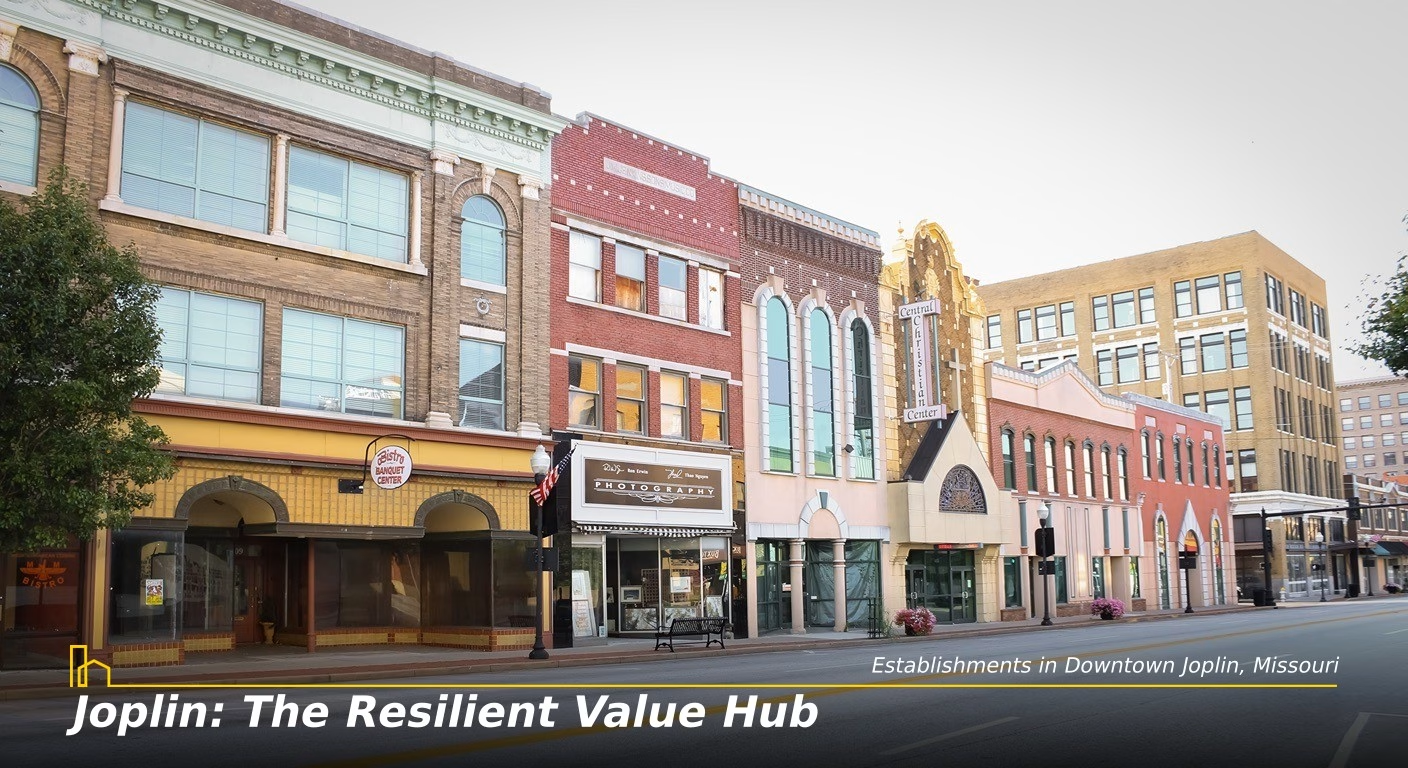
HOMEiA Score: 87/100
- Cost of Living: 10% below U.S. average
- Monthly Rent: $950
- Home price to income ratio: 5.1:1
- Income to rent ratio: 54.7x
- Safety rating: 55/100
A. Cost of Living & Housing: As a major city in southwestern Missouri, Joplin offers a rare combination of urban amenities and small-town affordability. With a floor-level cost of living, driven by a housing market providing significant value. Homebuyers can find spacious properties for a fraction of the cost of other Midwestern cities.
B. Economy & Job Market: Economic prosperity is anchored by healthcare, manufacturing, and distribution. Major employers include Freeman Health System and Mercy Hospital, providing stable jobs in this industry. Situated at the crossroads of I-44, US-71, and US-400 supports its distribution industry.
C. Access & Infrastructure: Fully connected via major highways, it is a major transportation hub for the region. There are well-regarded hospital systems and every major big-box store and grocery chain, providing all the conveniences of a much larger city.
D. Quality of Life & Culture: Life is defined by its resilience and community spirit, famously demonstrated after the 2011 tornado. MSSU attracts cultural events and educational opportunities. Its safety rating for a city its size reflects a tight-knit, community-oriented feel.

Related article
24 Exciting Things to Do in Joplin, Missouri
Joplin has lots of fun and exciting things to do if you know where to look. The region’s natural splendor, historical stops, monuments, and recreational activities abound here. These are our picks for the 24 most exciting things to do in Joplin, Missouri…
III. A Relocation Checklist for Your Missouri Home
- Budget for the True Cost: Account for utility costs, which can be pricey for heating in the winter and cooling in humid summers. Factor in transportation costs, especially when commuting or living in a more remote area.
- Secure Employment First: Job markets can be hyper-localized. Secure employment before moving, especially if you’re not in a high-demand field like healthcare, education, or a skilled trade.
- Visit in Person: If possible, visit your chosen community. Neighborhoods can change from block to block in some cities. Get a feel for the area, traffic, and the amenities firsthand.
- Confirm Internet Reliability: For remote workers, this is non-negotiable. While larger towns have fast service, confirm the provider and available speeds at your specific address before signing a lease or mortgage.
Conclusion: Your Affordable Missouri Future Awaits
From the resilient streets of Joplin to the family-friendly neighborhoods of Springfield, these seven communities prove that you can access the Midwestern dream without a premium price tag. Missouri offers a unique opportunity to build a future where your spirit for community and culture is matched by the financial wisdom of the chosen home. By carefully considering what each of these affordable enclaves has to offer, you can find the perfect spot to plant your roots and thrive in the Heartland. For those considering a different state, you might also explore the most affordable places to live in Ohio.
Recommended for you




FAQs About the Most Affordable Places to Live in Missouri
1. Is it possible to find a home under $200,000 in Missouri?
Yes, absolutely. Markets like St. Joseph, Poplar Bluff, Jefferson City, and Joplin regularly have numerous homes listed below $200,000. These may be older homes or require renovations, but they are livable and represent an incredible value.
2. What is the biggest hidden cost of moving to Missouri?
Utilities and transportation. In the winter, heating bills can be drastic. In the summer, cooling costs in humid areas add up. In more remote communities, gas prices and vehicle maintenance for trips to larger cities for shopping or healthcare can become a significant monthly expense.
3. Are these communities good for remote workers?
It varies. Larger towns including Springfield, Columbia, and Joplin have multiple providers with reliable high-speed internet. Remote communities may have service, but it can be slower, with data caps, and pricier. It’s essential to confirm reliable internet availability at your specific address before moving.
4. What is the property tax situation like?
Missouri has relatively low property tax rates compared to the national average. There are also favorable tax provisions for seniors and veterans, which can further reduce the tax burden for eligible residents, adding to the overall affordability.
5. How do I choose between these cities?
Prioritize your needs:
- For Jobs: Look at Springfield or Columbia.
- For Lowest Cost: Consider St. Joseph or Poplar Bluff.
- For Families: Springfield is the top choice for safety and schools.
- For Retirees: Jefferson City and Columbia offer great value and amenities.
- For Culture & Outdoor Access: Columbia and Cape Girardeau are fantastic choices.
Always research specific neighborhoods within these cities, as conditions can vary.


Related Content