







Delaware offers tax-free shopping, coastal beauty, and access to major East Coast cities, blending historic charm with corporate and beachside living. But moving here involves trade-offs, including higher housing costs, limited transit, and seasonal crowding. This guide outlines the key pros and cons and highlights the best cities for professionals, families, and retirees.
Moving to Delaware: The Complete Relocation Guide & Checklist
- Local Editor:Local Editor: The HOMEiA Team
Share
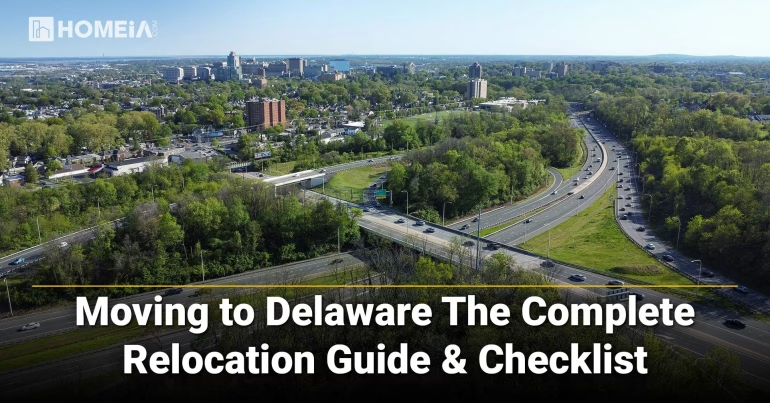
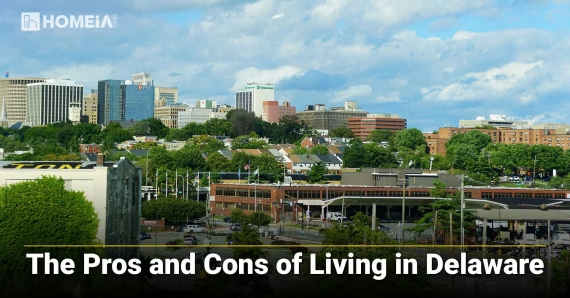
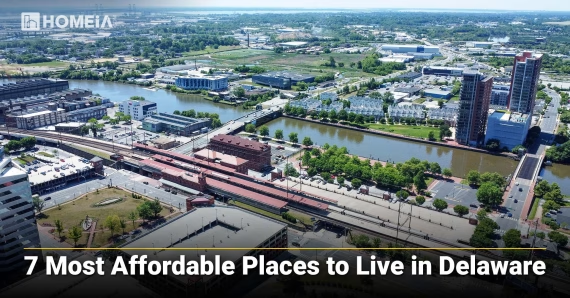
Bordered by Maryland, Pennsylvania, and New Jersey, and home to beautiful beaches and tax-friendly policies, Delaware offers a lifestyle defined by coastal living, historic charm, and financial advantages. Nearly 950,000 residents call The First State home, drawn by its strategic location along the Mid-Atlantic corridor. Wilmington provides urban amenities with corporate headquarters, while coastal towns like Rehoboth Beach and Lewes offer resort-style living against a backdrop of Atlantic Ocean views.
Known for tax-free shopping, corporate-friendly business laws, and rich colonial history, this small but mighty state offers even more to newcomers—a unique financial structure with no sales tax, reasonable property taxes, and a culture blending modern convenience with historic preservation. This comprehensive guide in Moving to Delaware covers essential relocation information, from preparing for coastal weather and understanding costs to navigating the legal requirements of becoming a Delaware resident.
Table of Contents:
Key Takeaways
- The Tax-Friendly Advantage: Delaware has no state or local sales tax, making everyday purchases more affordable. Property taxes are among the lowest in the nation, though income tax rates can be progressive.
- Coastal Climate Zones: Prepare for a humid subtropical climate with four distinct seasons. Coastal areas experience milder winters and cooler summers due to ocean influence, while northern areas have more temperature variation.
- Strategic Economy: Corporate law, finance, healthcare, and tourism are the state’s economic pillars, offering consistent employment with proximity to major East Coast markets. The state’s corporate-friendly environment attracts businesses and professionals.
- Rich Historical Heritage: Daily life is infused with colonial history and coastal traditions, influencing everything from architecture to community events and local festivals.
- Accessibility & Infrastructure: Small size means easy access to major cities like Philadelphia, Baltimore, and Washington D.C., with well-maintained highways and public transportation options.
I. Methodology: How We Built This Guide
- The Tax-Friendly Advantage: Delaware has no state or local sales tax, making everyday purchases more affordable. Property taxes are among the lowest in the nation, though income tax rates can be progressive.
- Coastal Climate Zones: Prepare for a humid subtropical climate with four distinct seasons. Coastal areas experience milder winters and cooler summers due to ocean influence, while northern areas have more temperature variation.
- Strategic Economy: Corporate law, finance, healthcare, and tourism are the state’s economic pillars, offering consistent employment with proximity to major East Coast markets. The state’s corporate-friendly environment attracts businesses and professionals.
- Rich Historical Heritage: Daily life is infused with colonial history and coastal traditions, influencing everything from architecture to community events and local festivals.
- Accessibility & Infrastructure: Small size means easy access to major cities like Philadelphia, Baltimore, and Washington D.C., with well-maintained highways and public transportation options.

Related article
Our Methodologies to create HOMEiA Score Ratings for Each Group of Content
HOMEiA uses a consistent, data-driven methodology to evaluate U.S. states for livability, affordability, and long-term value. Our analysis centers on key factors such as Housing and Affordability, Cost of Daily Living, Access and Infrastructure, Community Strength, Safety and Quality of Life, Economic Resilience and Job Market…
1. What Is It Really Like to Live in Delaware?

A. Culture & Lifestyle: Delaware’s culture reflects its unique position as the First State with deep colonial roots and modern coastal living. There’s an emphasis on community, history, and enjoying the natural beauty of the coastline and countryside. Here, pace of life varies from the corporate hustle of Wilmington to the relaxed beach town atmosphere of coastal communities. Community events including historical reenactments, beach festivals, and farmers’ markets provide newcomers with natural opportunities to integrate and experience the state’s authentic character.
B. Arts, Sports, and Entertainment: Wilmington boasts a vibrant arts scene with the Delaware Art Museum, Grand Opera House, and numerous galleries. Beach towns offer summer concerts, art shows, and cultural events. For sports, there are minor league baseball teams (Wilmington Blue Rocks) and professional soccer (Wilmington Hammerheads). Outdoor recreation includes beach activities, hiking in state parks, and water sports along the Delaware Bay and Atlantic coast. For a look at cultural life in another state, you might explore what it’s like to live in Tennessee.
C. Food Scene & Nightlife: Culinary staples feature fresh seafood, particularly blue crabs and oysters from the Delaware Bay. A craft brewery scene with numerous breweries, notably Dogfish Head Brewery. Fine dining thrives in Wilmington, while beach towns offer casual seafood shacks and waterfront restaurants. Nightlife ranges from upscale bars in Wilmington to laid-back beach bars and live music venues in coastal communities.
D. Outdoor Recreation & Natural Beauty: Outdoor recreation is central to this lifestyle, with easy access to beach and countryside activities.
- Beaches & Coastal Activities: Rehoboth Beach, Dewey Beach, and Bethany Beach offer swimming, surfing, fishing, and boardwalk entertainment.
- State Parks & Preserves: Cape Henlopen State Park, Brandywine Creek State Park, and Bombay Hook National Wildlife Refuge provide hiking, birdwatching, and nature exploration.
- Water Sports: Kayaking, paddleboarding, and boating are popular along the Delaware River, Bay, and inland waterways.
- Cycling & Trails: The Junction & Breakwater Trail and other paved paths offer scenic biking routes through coastal landscapes.
E. Climate: DE has a humid subtropical climate with regional variations:
- Northern (Wilmington, Newark): More continental influence with colder winters (25°F to 45°F) and warmer summers (75°F to 90°F). Greater temperature swings.
- Central (Dover): Transitional climate with moderate winters (30°F to 50°F) and warm summers (70°F to 90°F).
- Coastal (Rehoboth, Lewes): Ocean-moderated climate with milder winters (35°F to 55°F) and cooler summers (65°F to 85°F). Higher humidity and more precipitation.
Related article
2. Cost of Living & Affordability

Affordability is enhanced by its tax structure. Let’s break down the costs.
A. Housing Market
Housing costs vary significantly by region, with coastal areas commanding premium prices.
|
Housing Type |
Wilmington |
Dover |
Rehoboth Beach |
Newark |
Middletown |
|---|---|---|---|---|---|
| Median Home Price | $285,000 | $265,000 | $550,000 | $320,000 | $350,000 |
| Avg. 2-Bedroom Rent | $1,300 | $1,100 | $1,800 | $1,400 | $1,500 |
B. Daily Expenses
|
Monthly Expense Category |
Average Cost |
Notes |
|---|---|---|
| Utilities (HVAC Focus) | $150-$250 | Moderate seasonal variation; heating costs in winter and AC in summer. |
| Groceries (Family of 4) | $600-$800 | Slightly above national average; better prices in northern areas. |
| Gasoline | ~$3.40/gallon | Prices typically align with regional averages. |
| Internet | $70-$90 | Generally reliable service throughout the state. |
3. Jobs & Economy

Their economy is driven by several key sectors:
- Corporate & Financial Services: The largest sector, with a plethora of corporations incorporated in Delaware and major banking institutions headquartered in Wilmington.
- Healthcare: Growing sector with ChristianaCare and other major healthcare systems providing stable employment.
- Government: State government in Dover and federal facilities provide numerous public sector jobs.
- Tourism & Hospitality: Significant coastal tourism industry, particularly in beach communities during summer.
- Agriculture & Manufacturing: Remains important, particularly in southern Delaware with poultry farming and food processing.
Recommended for you




4. Planning Your Move: A Timeline

A successful move to Delaware requires planning, especially if coming from a distance.
|
Timeline |
Essential Tasks |
Important Details |
|---|---|---|
| 8-12 Weeks Before | Plan & Research | Get moving quotes, create budget, research new state laws, start decluttering. |
| 6-8 Weeks Before | Notify & Pack | Give notice to your landlord, collect boxes, pack off-season items, transfer medical files. |
| 4-6 Weeks Before | Transfer Services | Schedule utility shutoff/start, file USPS change of address, find new doctors, register kids for school. |
| 2-4 Weeks Before | Finalize Details | Finish packing, plan travel route, confirm mover schedule, fill prescriptions. |
| 1-2 Weeks Before | Prepare to Go | Pack essentials box, defrost fridge, clean home, confirm utility dates. |
| Moving Day | Execute Move | Oversee loading, do final walkthrough, keep documents handy. |
| After Arrival | Settle In | Unpack basics first, update license/registration, explore new town. |
=> Get the Relocation Guide & Checklist PDF — prepared for both Desktop and Mobile devices.
5. Transportation

- Driving: I-95 runs north-south through Wilmington, connecting to Philadelphia and Baltimore. Route 1 is the primary coastal highway. Miniscule state size means most destinations are within a 2-hour drive.
- Public Transit: DART First State provides bus service statewide, with more frequent service in northern areas. SEPTA rail service connects Wilmington to Philadelphia.
- Amtrak: Wilmington Station offers Amtrak service along the Northeast Corridor to major cities.
- Airports: Philadelphia International Airport (PHL) is the closest major airport, about 30 minutes from Wilmington. Smaller regional airports include New Castle Airport and Salisbury Regional Airport.
- Ferries: The Cape May-Lewes Ferry provides scenic transportation across the Delaware Bay to New Jersey.
Related article
6. Legal Requirements & Paperwork

New residents must complete several tasks:
- Vehicle Registration: Required within 60 days of establishing residency. You’ll need your out-of-state title, proof of Delaware insurance, and a VIN inspection.
- Driver’s License: Required within 60 days. You must surrender your previous license. You must have proof of identity, residency, and Social Security Number.
- Voter Registration: Can be completed when applying for your driver’s license or separately at any DMV office.
- Other: If you plan to use Delaware’s beaches, consider purchasing a state park pass for vehicle access to beach parking areas.
7. Financial Planning

Create a realistic budget accounting for moving expenses and the higher housing costs in desirable areas. Keep housing expenditures below 30% of your income. Build an emergency fund (3-6 months) to account for seasonal employment variations in some industries. Take advantage of the no sales tax policy to save on everyday purchases, but budget for potentially higher income taxes.
8. Insider Tips from Locals

- Embrace the Seasons: Climate offers four distinct seasons—enjoy the beautiful fall foliage, mild springs, beach summers, and occasional snowy winters.
- Learn Beach Etiquette: Respect private property lines, follow parking regulations, and understand beach tag requirements during summer months.
- Explore Beyond the Beaches: While the coast is beautiful, don’t miss the historic sites, state parks, and charming small towns all throughout.
- Get a E-ZPass: Essential for easy travel on toll roads and bridges throughout the Mid-Atlantic region.
- Join Community Activities: From historical societies to beach cleanups, participating in local events is the best way to meet people and feel at home.
Conclusion
Moving here offers the perfect blend of historic charm, coastal beauty, and financial advantages. The state’s strategic location provides easy access to major East Coast cities while maintaining its own unique identity. Tax benefits, combined with diverse lifestyle options from urban corporate centers to relaxed beach communities, make DE an attractive destination for many.
The rewards of living in The First State include financial savings from the tax-friendly policies, access to beautiful natural environments, and a rich historical heritage. With thorough preparation and an open mind, your relocation to Delaware can be the start of a rewarding new chapter. For those still considering options, our guide on moving to Colorado might provide an interesting comparison.
Recommended for you




Frequently Asked Questions About Moving to Delaware
1. What is the first step to moving to Delaware?
The first step is to secure housing and employment. Despite offering many advantages, the job market can be competitive in certain sectors, and having these secured will ensure a smooth transition.
2. Should I drive or ship my car to Delaware?
Driving is typically the most practical option. Here is easily accessible via I-95 and other major highways. The state’s small size makes car ownership convenient for most residents.
3. How do I get my belongings to Delaware?
For large moves, national moving companies or truck rentals work well. Pod services are also available. For smaller loads, freight services or driving a rented trailer can be cost-effective options.
4. What should I pack vs. buy there?
Bring essential documents, specialized items, and personal belongings. Everyday household goods and furniture can be purchased locally to save on moving costs. Take advantage of the no sales tax for major purchases.
5. Is it hard to make friends in Delaware?
Generally no—Delaware residents are known for being friendly and welcoming. Join local organizations, participate in community events, or get involved in beach activities to meet people quickly. The state’s small size makes it easier to build connections across different communities.
If you’re considering other relocation options, you might also explore the pros and cons of living in Tennessee, moving to Virginia, moving to Pennsylvania, moving to Maryland, or moving to New Jersey for comparisons with neighboring states.


Related Content