







7 Types of Limestone and Their Benefits for Your Landscape
- Local Editor:Local Editor: The HOMEiA Team
- Category: Home Improvement


Limestone has, from time to time, been employed in landscaping due to its natural appearance and hardiness. It has also been used with considerable success in the reconstruction of specific areas of residential homes such as the patio or garden walls that may have been brought down. Due to this, many people who own houses, yards, and gardens often use limestone when decorating their terraces, among other outdoor spaces.
Not only is it more durable as compared to the traditionally framed wood, it might be useful for multiple landscaping operations as well. Choosing a good limestone is perfect for retaining walls, pathways towards the home, or just an excellent way to make an impression for anyone who owns property.
We’ll introduce you to seven different varieties of limestone in this post, along with some amazing landscape applications. It is critical if you are going to start such a job to arrange for consultation with a custom limestone fabricator who will help you choose the right size and type of limestone for the job. By doing so, you will not get overwhelmed by the choices that are offered to you and can thereby make the most suitable decisions.
1. Crushed Limestone

Crushed limestone is regarded as one of the most popular garden materials because of its efficiency and cost. This is a material which is produced by reducing large pieces of limestone into much smaller stones with a surface that has more edges in order to be compacted. You may use crushed limestone for developing roads and paths, and you may also use it as a base for other hard materials such as concrete or brick.
If crushed limestone can be said to have any benefits, then one of those must be that it is a relatively cheap material. As we have seen, it is very cost effective, especially to those who are operating under a tight budget. With the help of a custom limestone fabricator, the beauty of the product remains intact, as does its functionality. This is because crushed limestone has a rough surface, meaning it compacts well to form a very firm surface, and this makes it suitable for areas which are subjected to a lot of traffic or in areas where weight is concentrated, for instance, in a driveway.
Additionally, it is well recognized that crushed limestone is a highly effective way to improve the soil, particularly in terms of drainage. This is because of the uneven soil surface, which helps with water drainage and reduces the likelihood of idle water or flash floods. This then makes it a very adaptable soil that works well in garden beds and along paths where drainage is crucial. Limestone’s long life span ensures that it won’t break easily over time from repeated usage or exposure to inclement weather.

Related article
Unlocking the Future of Landscape Design: From Imagination to Reality
Beyond aesthetics, a well-designed yard can substantially impact property value and resale potential. Homebuyers are increasingly looking for houses that offer a complete package, and attractive, thoughtfully designed surroundings can significantly boost a property’s appeal…
2. Travertine Limestone

One of the most luxurious types of limestone is travertine, which is famously used for upgrading patios, stairwells, and areas surrounding swimming pools. Travertine is the kind of limestone that has a polished, smooth, and finely grained appearance with colors that come in beige, cream, and light brown. Travertine is so commonly used in outdoor design owing to its intricacy of patterns, richness of appearance, and its ability to increase the aesthetics of any given area.
One of the many advantages of travertine limestone is that even if it is placed under direct sunlight, it will not get hot. Because comfort is a key consideration in areas like patios and pool decks, this makes it perfect for usage there. It gets rid of the issue of hot concrete or black stones that burn your feet, especially in the summer.
Another benefit of using travertine limestone is that it doesn’t provide a slippery surface in wet or high-traffic areas like the surroundings of swimming pools or outdoor water features. Travertine is one of the most popular stones for luxurious and outdoor areas due to its beauty, comfort, and safety.
Additionally, despite enduring a variety of environmental conditions, travertine has a long-term resilience that prevents fading or dulling. By using custom limestone fabrication services, your travertine will be sized to your specifications and strategically positioned to enhance interior design, giving your house or place of business the distinctive appearance you’ve always wanted.
3. Lueders Limestone

Popular for its strength and aesthetic feel, Lueders limestone is found to be the best for landscaping projects and building tasks that require resilience over harsh times. Most Lueders limestone is lightly colored and comes in tan, buff, blue, and gray tones. It complements a variety of architectural styles and ideas, from modern to classical. Large paving blocks, fireplaces, retaining walls, and outdoor culinary facilities are all frequently built with this stone.
The longevity of Lueders limestone is the main factor accounting for the majority of its advantages. Because of its density and hardness, this type of limestone is perfect for withstanding heavy traffic and even extreme climatic change. After a length of time, this kind of limestone will maintain both its structure and appearance, regardless of the weather—whether it is extremely hot, freezing, or under heavy snowfall.
Lueders limestone is good to use for many other reasons besides its strength alone. Homeowners may choose the perfect surface for their selected style and color scheme just by implementing it. Another benefit of Lueders limestone is that it offers a wide range of design options, whether you’re going for a natural style with a rough and gritty surface or a sleek and glossy look for a modern design.
Moreover, because the stiff material can resist erosion and the harshness of the weather, it requires little upkeep. Lueders limestone requires little maintenance after installation, allowing customers to enjoy the outdoors without worrying about regular product replacement or repairs. This makes it highly recommended by many custom limestone fabricators.

Related article
12 Best Modern Address Plaque Ideas
With several modern address plaque ideas evolving daily in the market, it’s essential to acknowledge some of the best among many. The purpose of this article is to address the 12 best modern address plaque ideas…
4. Indiana Limestone

Indiana limestone is referred to as the country building stone and has been used for construction purposes from the early 1900s. This one is hard, is said to have a color which does not fade, and has been used most often in garden walls, stairs, and columns. This stone has been deemed appropriate for those who want both a modern and classic touch to whichever area they decide.
The fact that Indiana limestone is virtually immune to deterioration is just another fantastic benefit of using it. Indiana limestone may be easily maintained without worrying about its elegance, unlike other materials that need to be sealed or treated periodically to keep their finished look. For those who are looking for long-lasting and low-maintenance stones, be them homeowners, gardeners, or anybody in general, this would be their best shot.
Its neutral color scheme affects keen-eyed customers because of its simplicity and flexibility to be added in different locations and styles. This makes it an option for both hardscapes and softscapes because of the stone’s gray tones, which provide a tidy, clean, and sleek appearance. Indeed, Indiana limestone offers your gardens a smooth, polished look when it is used for paths, ornamentation, or garden walls.
Its ability to withstand any extreme weather condition is just one of its perks. The capacity of Indiana limestone to withstand hot-cold weather cycles without developing cracks or losing its structure makes it highly valuable. This guarantees that the landscaping elements you’ve built, such as planter boxes, retaining walls, and steps, won’t break over time or become visually awkward.
5. Cut Limestone
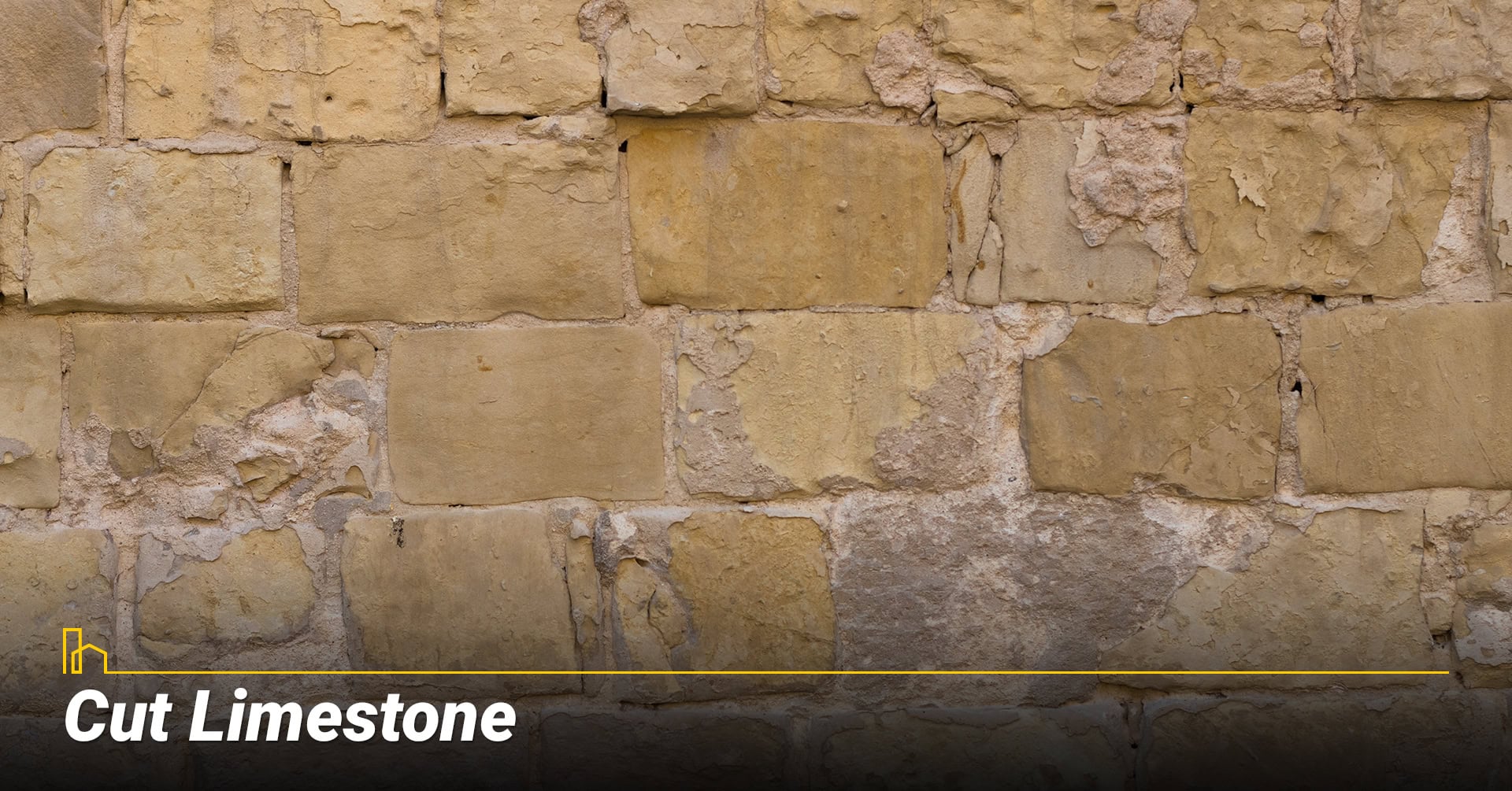
On the other hand, cut limestone is limestone that has been roughly cut into various sizes and shapes in order to fit projects that call for straight edges. This type of limestone is perfect for patios and pathways, border edging, wall engraving, and seat-out applications. Two other fairly complex applications are the lifting of planters and outdoor fireplaces that can be made using uncut limestone.
The main advantage of cut limestone is that it is easily inserted into a mold. When you hire a limestone fabricator, you can order them to take measurements and make your limestone pieces fit the environment. Achieving this degree of detail makes it fit into larger projects with several design aspects rather easily, which creates a pleasing synchronization between the pieces.
Cut limestone works well with modern, formal landscape designs because of its uniform and smooth texture. Contrasting the raw roughness of the material, it provides a clean, elegant appearance that blends in with surroundings seamlessly. Although cut limestone has a smooth surface, it is a long-lasting material for hardscape projects since it is extremely robust and weather resistant.
Additionally, cut limestone may be utilized to create extremely beautiful engravings to provide a more personalized touch to various locations, such as patios, walkways, and even garden perimeters. Its attractiveness and versatility have made it popular among those who want to add precise geometric patterns to their lawn or property to make it look more beautiful.

Related article
Top 12 Tips for Eco-Friendly Gardening Year-Round
Gardening is not just a hobby – it is a way of life. For many, tending to plants and watching them grow is therapeutic. But as we become more environmentally conscious, there’s a growing need to ensure our gardening practices are sustainable…
6. Tufa Limestone

Tufa is a permeable, light kind of limestone that comes in various appealing organic shapes and patterns. As a result, it’s often used by custom limestone fabricators, not only in residential but also natural designs, such as rock gardens, waterscapes, garden layouts, and other accent items.
One noteworthy benefit of tufa limestone is that it is among the lightest varieties, which makes it possible to use it in the construction of intricate or even prominent buildings. It is especially helpful in regions with sandy soils, such as beside a body of water or in a rock garden, since it has a loose structure that allows water to drain through. Additionally, it retains and absorbs moisture, which makes it the perfect partner for plants and greatly improves the overall health of the garden.
Tufa is the perfect stone to use for maintaining natural settings because of its very uneven proportions and rough texture. It is ideal for giving your garden a natural rather than a contrived appearance, making it look like it has always been there.
7. Coquina Limestone

Among all the types of limestone, coquina is the most appreciated for its material composition that includes coral pieces and shattered shells. Its distinct fossil-like appearance highlights the roughness of a structure in any given environment and lends it a head-turning visual appeal. When it comes to application, coquina limestone can be most suitable if the intended landscape design has a tropical or seaside feel.
Coquina is used for a variety of decorative purposes, such as retaining walls, seating, and garden walls. The rocks provide interest to your landscape by presenting more different textures when compared to the ordinary plants and stones, even though their surface is smooth to the touch.
Coquina limestone also has good sensuous qualities; besides, it’s very light and easy to work with, which makes it apt for any construction project that requires ease of handling during installation. It is also good for environmentally conscious homes because the structure is made of organic marine material.

Related article
5 Best Ways to Soundproof Your Walls and Doors
Whether you are the lead percussionist in a rockin’ band or live in a noisy neighborhood, we are about to dive into the five best ways to soundproof your walls and doors. From simple DIY fixes to more comprehensive structural changes, these strategies cater to various needs and budgets — so let’s get started!…
Other Recommended Limestones for Landscaping
In case the seven sorts of limestone we’ve discussed don’t completely suit your needs, there exist a few other limestone types that might offer distinct allure and practicality to your landscape:
A. Jerusalem Stone
Jerusalem stone is actually a type of dolomitic limestone; it has a long history and is widely used in modern landscape architecture. For instance, Jerusalem stone gives rooms an old-world appearance since it comes in warm earth tones ranging from light cream to warm golden yellow. Because it does not deteriorate quickly or become impacted by the weather, it is also ideal for usage in patios, walkways, and outside architectural elements like walls. This specific type of stone is very versatile which makes it appropriate for different projects. Its elegant and organic look can also blend well with classic and chic architectural designs.
B. Shell Limestone
This highly fossilized limestone might be old, but it can still give you a fresh and modern look. Also known as “shelly limestone,” the distinct texture and milky appearance of this limestone make it ideal for usage in gardens, patios, and swimming areas. One of the most natural stones that can be used in yards with a beach or tropical theme to give the impression that your yard is a part of the world’s history is shell limestone.
C. Blue Limestone
Blue limestone is sometimes referred to as Belgian blue stone because of its rich blue or gray hues, which give it an ultramodern look. It is usually used to spike up a dramatic effect, and in modern or minimalistic arrangements. Many find this type to be the perfect one for paving stones, garden borders, and even sculptures intended for outdoor installation due to its fine grain and consistent texture. Since the stone is a blue limestone, it fits in really well with natural elements surrounding it and can be used to make an awesome statement in your landscape.

Related article
7 Tips for Choosing a Gate Opener for Your House
In this article, we’ll go over the different types of gate openers, from single and dual swing gate openers to sliding and underground, and we’ll help guide you in choosing the best one for your gate and your home…
Final Thoughts
Choosing the right limestone should not be overlooked. Although an overview of possible choices has been presented to you in this article, it is also advisable to contact the experts for a more informed decision. Getting in touch with the right custom limestone fabricator will ensure that you get the landscape design of your dreams.
Limestone in Landscaping: FAQs Answered
1. How do different types of limestone impact soil chemistry and plant health?
Limestone can significantly influence soil pH and nutrient profiles, affecting what plants thrive in your landscape. Calcitic limestone is primarily calcium carbonate and raises a soil’s pH more effectively and swiftly than dolomitic limestone, which also adds magnesium, a nutrient some plants need.
Take heed: it’s crucial to test your soil before applying limestone; over-liming can push pH too high and reduce nutrient availability for acid-loving plants like blueberries. A balanced pH (often near 7.0) increases nutrient availability for many garden plants, improving growth and reducing deficiencies.
2. Is limestone the best choice, compared to gravel or mulch, for garden beds?
Limestone and alternatives like gravel or wood mulch each have distinct strengths. Limestone gravel creates durable, low-maintenance beds and pathways that often improve drainage and resist weeds, compared to organic mulches that improve soil structure over time but need regular replenishing.
Unlike wood mulch, limestone doesn’t break down and doesn’t add to weed growth — a benefit for homeowners seeking a long-lasting surface. For purely decorative beds where soil enrichment matters, though, mulch might be preferable; but for functional areas like walkways and borders that need drainage and minimal upkeep, limestone is often better.
3. What maintenance considerations should homeowners know about limestone installations?
Once installed, limestone requires minimal maintenance, but you’ll want to pay attention for certain conditions. Because limestone absorbs moisture, walking tiles or pavers can become slippery when wet unless they are textured or sealed properly. Applying a quality sealant helps protect limestone from staining and weathering, extending lifespan and preserving color.
Annual visual inspections can catch shifting stones or settling areas that need adjustment. In snowy or icy climates, avoid spreading de-icing salt on limestone pavers, as it can accelerate surface wear over many seasons.
4. How does limestone perform under different climate conditions?
Limestone is durable, weather-resistant, and typically holds up well in both hot and cold climates. Its high calcite content strengthens it against constant freeze-thaw cycles and heat, making it suitable for most regions. In areas with heavy rainfall, limestone gravel enhances drainage and prevents water pooling around plants’ roots, which can prevent growth.
Limestone can react negatively with acid rain or highly acidic conditions, so sealing and proper installation techniques are important in regions with frequent storms.
5. What are the practical differences between crushed limestone and full-sized limestone blocks?
Crushed limestone and dimensional limestone blocks serve different landscaping purposes. Crushed limestone is ideal for walkways, driveways, or garden beds where good drainage and a single, consistent surface are priorities because it compacts into a firm surface that resists erosion and promotes water flow.
Full-sized limestone blocks, on the other hand, are often better for structural features like retaining walls, steps, or decorative borders that need visual heft and stability. Choosing the right form of limestone depends on your project goals: the rule of thumb is crushed stone for fluid surfaces, blocks for defined architectural features.
6. Can limestone affect pest presence or weed growth in my landscape?
Yes, Limestone can help create an environment that’s definitely less favorable for weeds and some pests. Its dense structure blocks sunlight and circulation at ground level, reducing the germination of weeds, compared with organic mulch that breaks down and can inadvertently feed weeds.
While limestone doesn’t repel bugs like chemical treatments do, the clean, dry surface doesn’t provide the shelter or food that attracts many pests. That makes limestone a practical choice for low-maintenance zones and high-traffic areas.
7. How do I choose the right limestone type and color to match my landscape design?
Design considerations go beyond functionality. Limestone colors can cover the entire palette — from soft whites and creams to deeper grays and tans — allowing you to complement your home’s exterior and match your favorite plants and flowers. Finer, smoother stones like oolite, or lithographic varieties, are excellent for formal paths and patios, while fossil-based limestone adds rustic texture and visual interest.
Travertine’s distinctive pattern can elevate decorative seating spaces or pool surrounds. Think about both your aesthetic goals and application needs when selecting a limestone color and type; consulting with a landscape architect can help ensure your choice harmonizes with outdoor elements.
8. Are there sustainability or environmental benefits to using limestone in landscaping?
Absolutely, and this gives limestone a huge environmental advantage. Limestone is a natural, non-toxic material that doesn’t leach harmful chemicals into the soil or groundwater — a plus for eco-conscious gardeners. It also improves drainage, reducing water runoff and erosion, which helps preserve soil structure and support healthier plant environments.
Because limestone can often be locally sourced, transportation emissions may be lower compared to imported or heavily processed materials.
Finally, limestone is recyclable, and can be repurposed in future landscape updates, aligning with sustainable landscape design principles.
Share