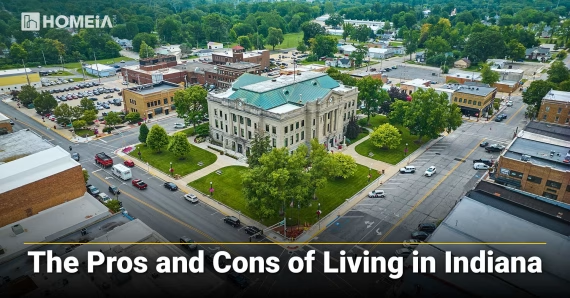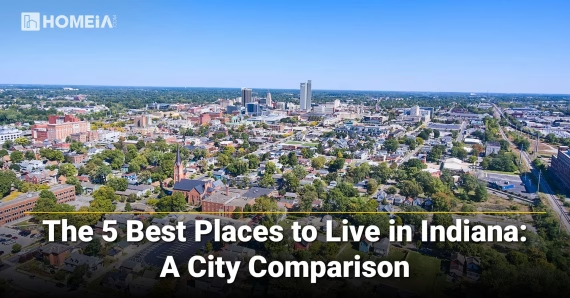








Indiana offers more than farmland and the Indy 500; it’s an affordable state with strong communities and a central location. But challenges include harsh winters, limited diversity, and uneven economic growth. This guide provides a balanced look at Indiana’s pros and cons and highlights the best cities for young professionals, families, and retirees…
7 Most Affordable Places to Live in Indiana
- Local Editor:Local Editor: Ashley Theirin

In a nation where housing costs continue to climb, Indiana stands out; not only for their Midwestern charm and central location, but for a remarkably affordable cost of living. With a median home price significantly below the national average and a business-friendly tax environment, the Hoosier State offers a compelling case for families, remote workers, and retirees seeking a life rich in experience, not expense. However, affordability varies widely throughout, and finding the right community is key to balancing budget with lifestyle.
This guide moves beyond the postcard imagery to provide a detailed, data-driven analysis of the most affordable places to live in Indiana for 2026. We’ve crunched the numbers on housing, utilities, transportation, and more to bring you seven cities and towns where you can achieve financial stability without sacrificing the unique Midwestern experience.
Key Takeaways
- Widespread Affordability: Indiana’s overall cost of living is 10%-15% below the U.S. average, with many communities offering wallet-friendly housing, especially compared to neighboring states.
- Variety of Options: Affordable living isn’t limited to remote towns; it includes suburbs, university cities, and communities with prosperous job markets, offering choices for every lifestyle.
- Trade-Offs Exist: The most affordable cities often come with trade-offs, including fewer job opportunities outside key sectors, higher crime rates, or more remote locations that require longer drives for major amenities.
- Beyond the Purchase Price: True affordability includes utility costs, which can be high in areas with extreme temperatures, and transportation expenses, which are substantial in isolated communities.
- Essential to Research: Safety and school ratings vary dramatically from city to city, making it crucial to research specific neighborhoods rather than relying on statewide generalizations.
I. Methodology: How We Chose the Most Affordable Places
Our selection of these seven locations is based on a weighted criterion prioritizing key metrics relevant to residents seeking value. The goal is to identify places offering a harmonious balance of affordability, access to essentials, and community, not just the lowest price tag.
- Housing & Affordability (30%): The primary driver for relocation. We’ve examined median home price, average monthly rent, and overall affordability compared to state averages—using crucial ratios like home-price-to-income to gauge true accessibility in a high-cost environment.
- Cost of Living (25%): Beyond housing, this metric evaluates day-to-day expenses that define a budget, including the cost of groceries, utilities, transportation, and healthcare relative to other parts of the state.
- Access & Infrastructure (20%): Here, affordability can be negated by isolation. This criterion assesses critical access to groceries, healthcare facilities, major employers, and reliable internet and transportation links.
- Community & Safety (15%): A fundamental need. This assesses crime rates and considers the strength of community engagement, social offerings, and amenities that contribute to a high quality of life.
- Economic Resilience & Opportunity (10%): For long-term viability, we evaluate economic diversity, key industries, and employment trends to ensure a community is built for a stable and prosperous future.

Related article
Our Methodologies to create HOMEiA Score Ratings for Each Group of Content
HOMEiA uses a consistent, data-driven methodology to evaluate U.S. states for livability, affordability, and long-term value. Our analysis centers on key factors such as Housing and Affordability, Cost of Daily Living, Access and Infrastructure, Community Strength, Safety and Quality of Life, Economic Resilience and Job Market…
7 Indiana Communities, One State: A Quick Comparison Table
City | HOMEiA Score | Cost of Living | Avg. Rent (2-Bed) | Home Price to Income Ratio | Income to Rent Ratio | Safety Rating |
|---|---|---|---|---|---|---|
| Richmond | 78/100 | -13% | $820 | 3.9:1 | 53.7x | 65/100 |
| Marion | 80/100 | -16% | $780 | 3.4:1 | 50.2x | 60/100 |
| Anderson | 81/100 | -15% | $800 | 3.6:1 | 51.8x | 55/100 |
| Kokomo | 82/100 | -11% | $950 | 4.3:1 | 56.1x | 68/100 |
| Terre Haute | 84/100 | -14% | $900 | 4.1:1 | 54.9x | 62/100 |
| Gary | 85/100 | -18% | $750 | 3.2:1 | 48.7x | 45/100 |
| Muncie | 87/100 | -12% | $850 | 3.8:1 | 52.3x | 58/100 |
II. Detailed Community Analysis: Seven Affordable Enclaves
1. Richmond, IN: The Eastern Gateway
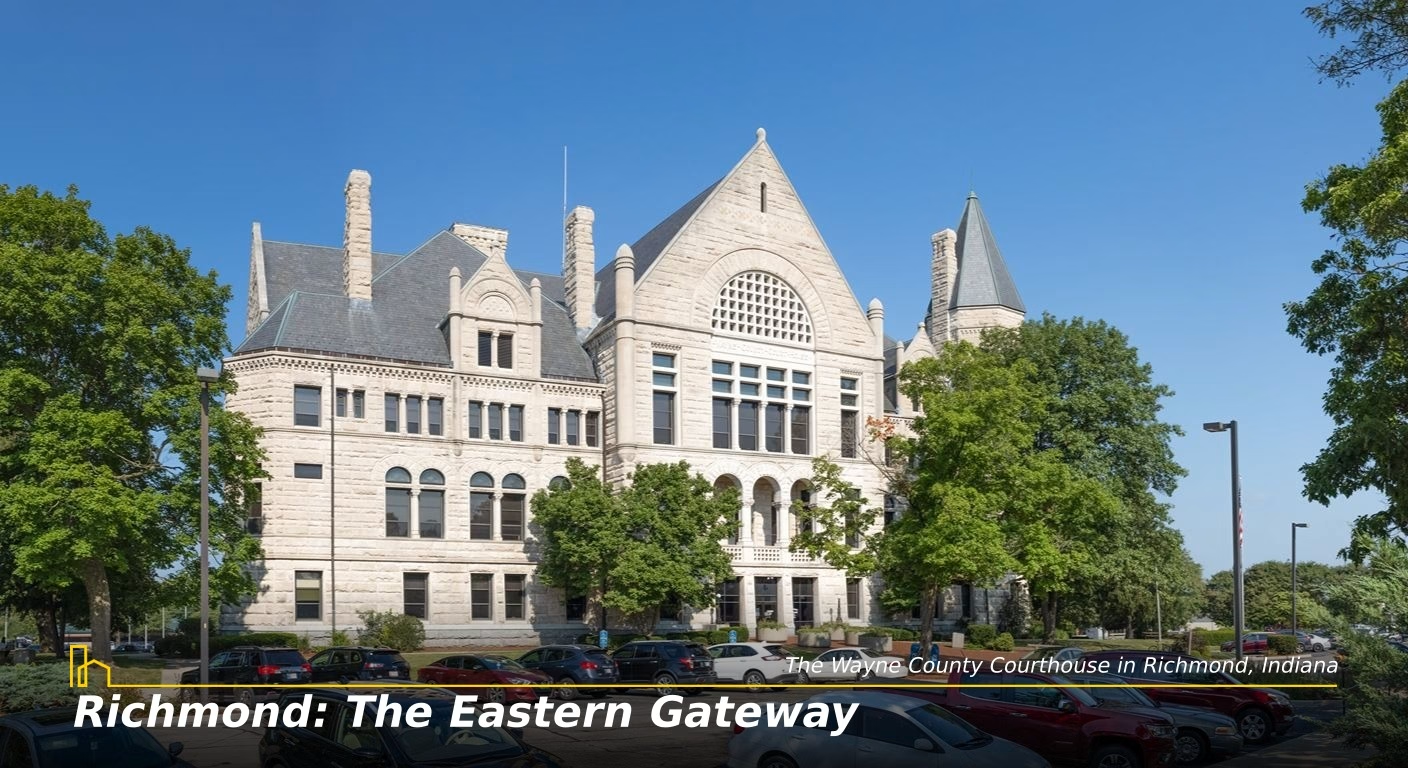
HOMEiA Score: 78/100
- Cost of Living: 13% below U.S. average
- Monthly Rent: $820
- Home price to income ratio: 3.9:1
- Income to rent ratio: 53.7x
- Safety rating: 65/100
A. Cost of Living & Housing: Richmond provides admirable value in eastern Indiana, with affordable housing and a reasonable cost of living. The city offers a balance of historic charm and modern amenities at accessible prices. Many homes available under $150,000, making it ideal for first-time buyers and those seeking to maximize their budget.
B. Economy & Job Market: A diversified economy, it thrives in manufacturing, healthcare, and education (Earlham College). Being near the Ohio border provides access to the job market of two states. The city serves as a regional hub for the surrounding agricultural areas, offering stable employment opportunities.
C. Access & Infrastructure: Situated along I-70 near the Ohio border, it has accessible transportation connections to Dayton and Indianapolis. There’s comprehensive healthcare facilities and all essential services, including reliable internet infrastructure for remote workers.
D. Quality of Life & Culture: It boasts a rich history, beautiful architecture, and cultural attractions like the Richmond Art Museum. Their safety rating is above average for its size, reflecting its stable community character.
Related article
2. Marion, IN: The Historic Value Town

HOMEiA Score: 80/100
- Cost of Living: 16% below U.S. average
- Monthly Rent: $780
- Home price to income ratio: 3.4:1
- Income to rent ratio: 50.2x
- Safety rating: 60/100
A. Cost of Living & Housing: Marion offers some of the most affordable housing in the north, with cost of living for comfortable living on modest incomes. Here lies unbeatable value for families and retirees, with many homes available well below the state average.
B. Economy & Job Market: Employment opportunities are consistent throughout manufacturing, healthcare, and education (Indiana Wesleyan University). Maintaining stability has been achieved through economic diversification and benefits from its location in Grant County. Healthcare and public service sectors provide reliable employment opportunities.
C. Access & Infrastructure: Located along the Mississinewa River with succinct highway connections, it serves as a regional center. The city has comprehensive medical facilities and all necessary retail and service options, making it convenient for daily living.
D. Quality of Life & Culture: Residents keep their sense of community alive with historic architecture, parks, and cultural events. This safety rating reflects its stable, family-oriented character and ongoing community improvement efforts. Cost of living allows residents to enjoy a comfortable lifestyle without financial stress.

Related article
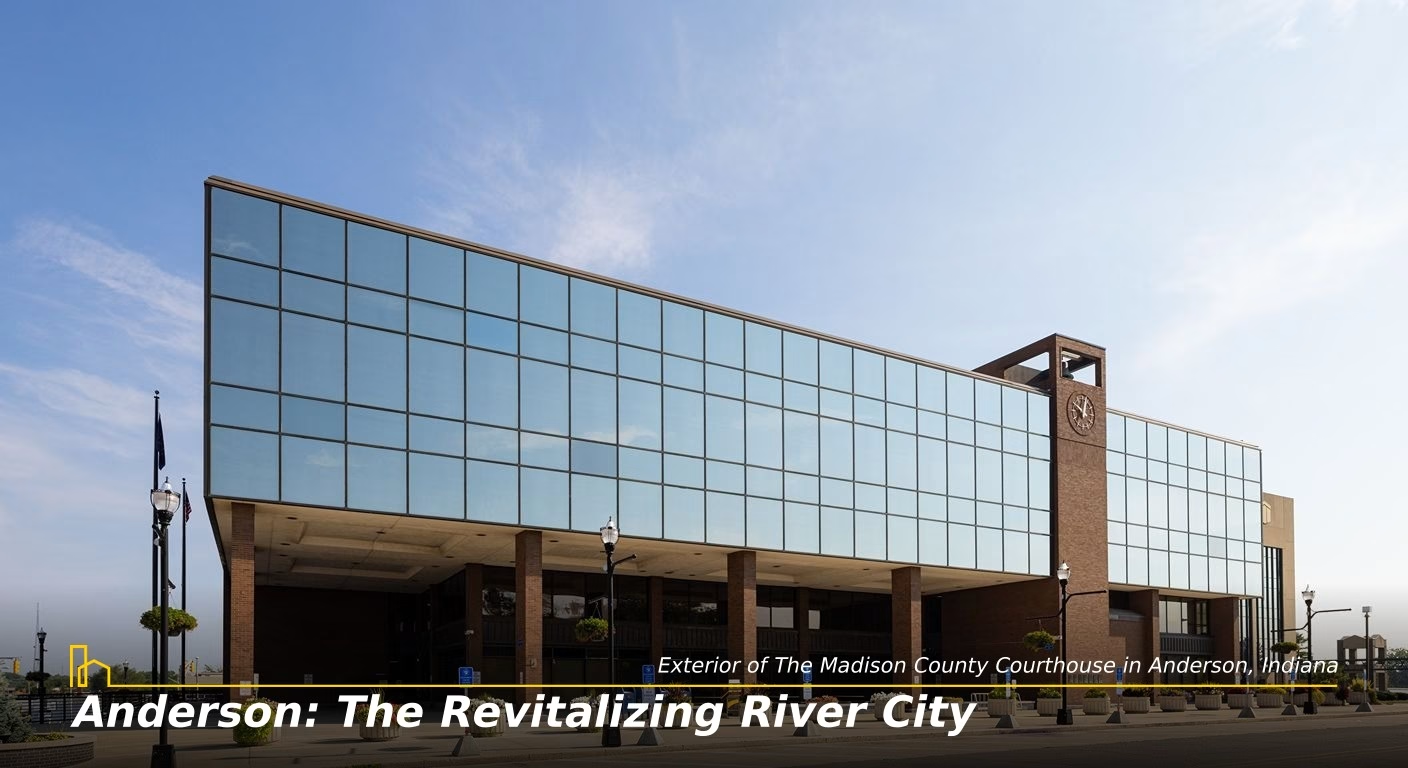
3. Anderson, IN: The Revitalizing River City
HOMEiA Score: 81/100
- Cost of Living: 15% below U.S. average
- Monthly Rent: $800
- Home price to income ratio: 3.6:1
- Income to rent ratio: 51.8x
- Safety rating: 55/100
A. Cost of Living & Housing: Anderson provides exceptional affordability with housing costs among the lowest in central Indiana. There’s tremendous value for homebuyers and renters seeking proximity to Indianapolis without the high costs. Many properties are available for renovation and investment.
B. Economy & Job Market: Once a major automotive manufacturing center, it has diversified into healthcare, education, and light manufacturing. A main benefit is proximity to Indianapolis while maintaining its own economic identity. Healthcare and education sectors provide stable employment.
C. Access & Infrastructure: Located only 35 miles northeast of Indianapolis along I-69, it provides easy access to the state capital’s amenities and job market. The city has its own healthcare system and all essential services, making it convenient for commuters.
D. Quality of Life & Culture: Here is currently undergoing revitalization with new investments in downtown and community facilities. This is made up of parks, cultural events, and a growing arts scene. While the safety rating is average, many neighborhoods offer excellent living conditions and community engagement.
Recommended for you




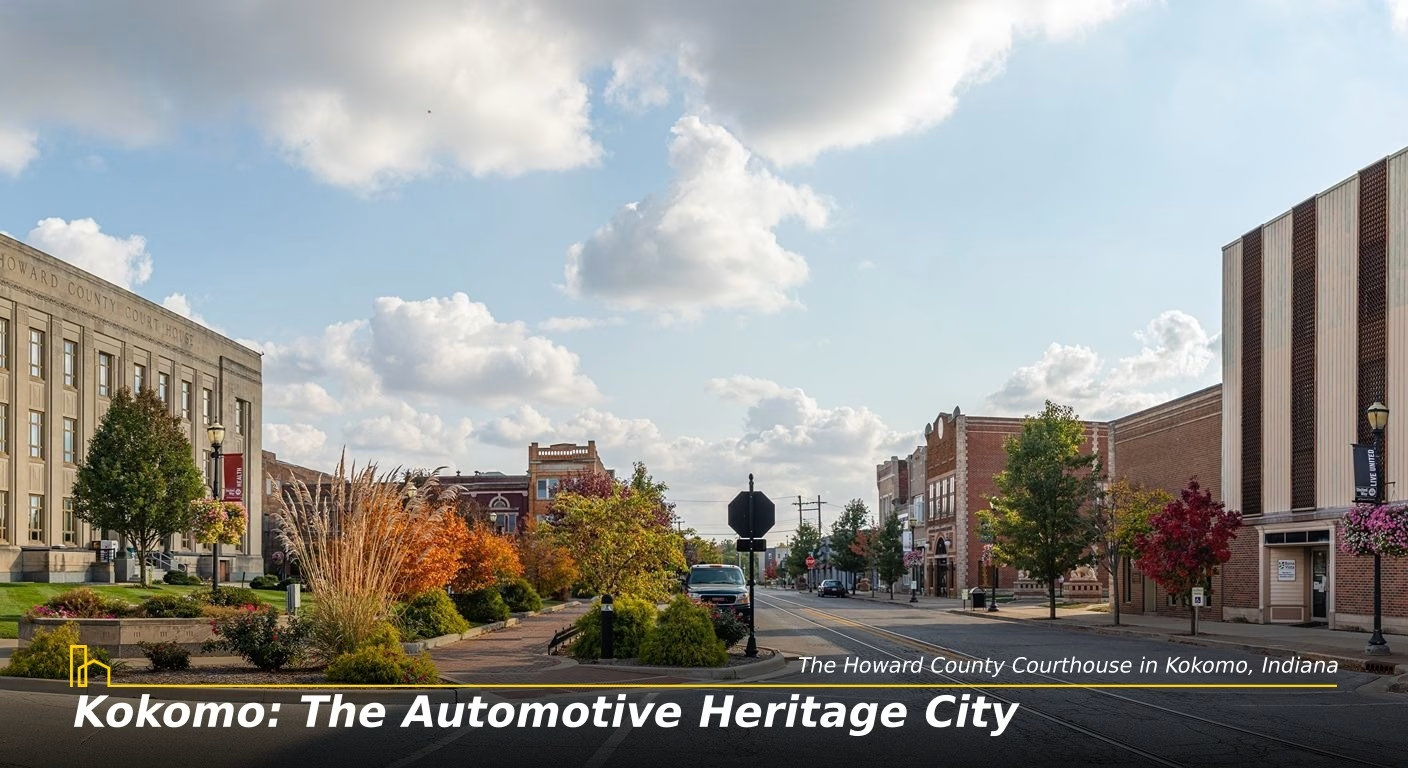
4. Kokomo, IN: The Automotive Heritage City
HOMEiA Score: 82/100
- Cost of Living: 11% below U.S. average
- Monthly Rent: $950
- Home price to income ratio: 4.3:1
- Income to rent ratio: 56.1x
- Safety rating: 68/100
A. Cost of Living & Housing: Kokomo offers respectable value with a housing market providing ideal quality for the price. The city has maintained affordability while offering modern amenities and well-maintained neighborhoods. This home price to income ratio reflects a stable economic foundation.
B. Economy & Job Market: As a historic automotive manufacturing center, this economy is anchored by Stellantis (formerly Chrysler) and other manufacturing companies. Diversification has transpired into healthcare, education, and technology, providing economic stability and diverse employment opportunities.
C. Access & Infrastructure: Located along US-31 with easy access to I-65 and I-69, it’s well-positioned for transportation. Koko has excellent healthcare facilities, including Community Howard Regional Health, and comprehensive retail options for daily needs.
D. Quality of Life & Culture: Boasting a high safety rating and family-friendly atmosphere, it’s home to luscious parks, vibrant downtown, and cultural attractions like the Kokomo Automotive Museum.
Related article
5. Terre Haute, IN: The Crossroads Community

HOMEiA Score: 84/100
- Cost of Living: 14% below U.S. average
- Monthly Rent: $900
- Home price to income ratio: 4.1:1
- Income to rent ratio: 54.9x
- Safety rating: 62/100
A. Cost of Living & Housing: Terre Haute provides unreal value in western Indiana, with a stable housing market and reasonable cost of living. There’s a good balance of affordability and amenities, making it attractive to families and professionals seeking quality living at accessible prices.
B. Economy & Job Market: Economic prosperity is diversified with healthcare, education (Indiana State University and Rose-Hulman Institute of Technology), manufacturing, and distribution. The city serves as a regional hub for the surrounding agricultural areas, providing diverse employment opportunities.
C. Access & Infrastructure: Located at the crossroads of US-41 and I-70, TH has excellent transportation connections. There’s comprehensive medical facilities, including Union Hospital and Terre Haute Regional Hospital, and all necessary retail and services for convenient living.
D. Quality of Life & Culture: Hereoffers a rich cultural scene with museums, theaters, and university events. Known for its numerous parks and recreational facilities, plus a safety rating reflecting a stable, family-friendly character. The community provides a balanced lifestyle with access to education and cultural opportunities.

Related article
The 16 Best Things to Do in Fort Wayne, Indiana
Fort Wayne is the second most populous city in Indiana and is considered the cultural center of the state. Museums, restaurants, nightlife and a thriving tourism industry help to keep it on the map…
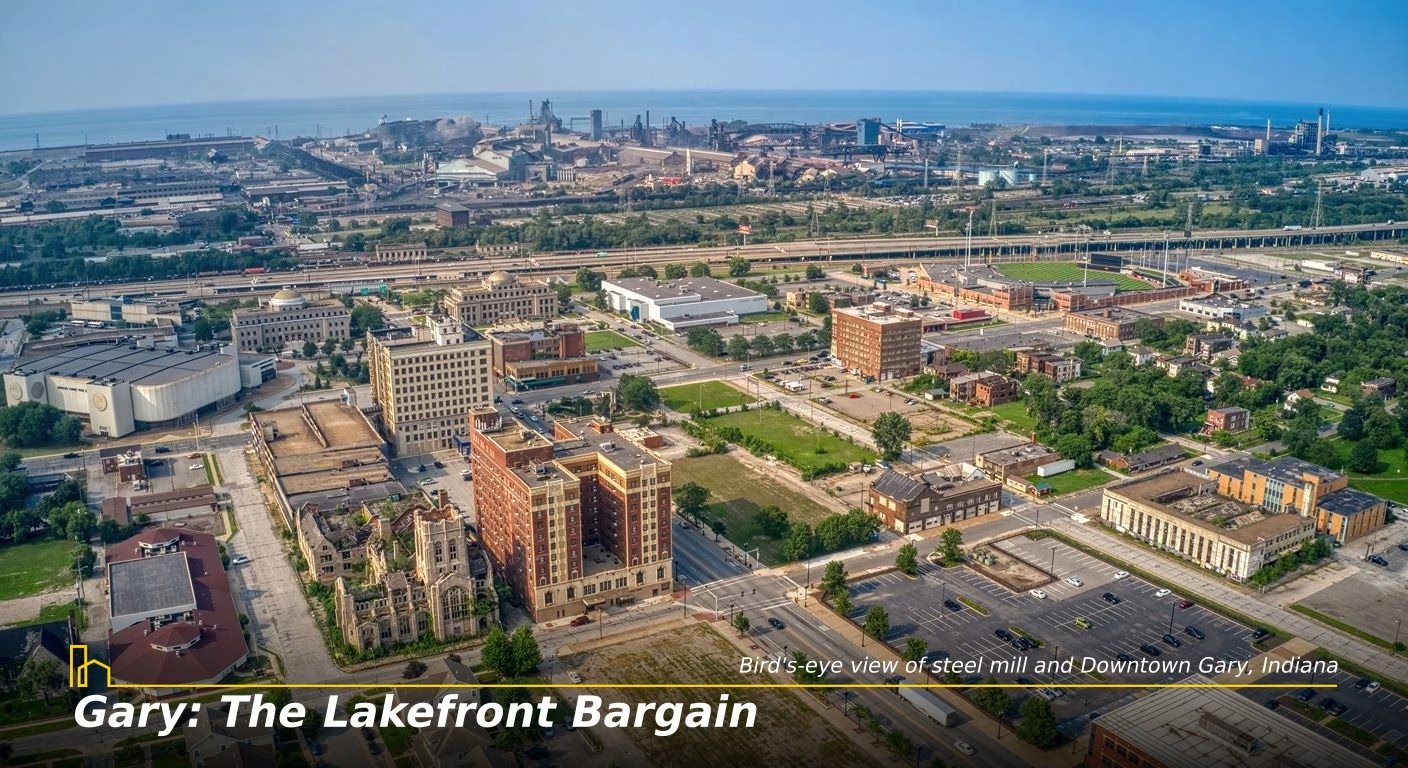
6. Gary, IN: The Lakefront Bargain
HOMEiA Score: 85/100
- Cost of Living: 18% below U.S. average
- Monthly Rent: $750
- Home price to income ratio: 3.2:1
- Income to rent ratio: 48.7x
- Safety rating: 45/100
A. Cost of Living & Housing: Gary offers the lowest cost of living on our list, with housing prices among the most affordable in the entire Midwest. There’s provides incredible opportunities for homeownership at rock-bottom prices, though many properties require renovation. The median home price is approximately $79,000, consistent with the latest 2026 data.
B. Economy & Job Market: Once a steel industry powerhouse, it is in transition with opportunities in healthcare, education, and public service. The city benefits from its proximity to Chicago, with many residents commuting for higher-paying jobs while enjoying Indiana’s lower cost of living.
C. Access & Infrastructure: Being located on Lake Michigan and proximity to Chicago (about 30 miles) provides ideal access to major urban amenities. The city has a regional airport (GYY), major highway connections, and is served by the South Shore Line commuter rail to Chicago.
D. Quality of Life & Culture: Unique access to Lake Michigan beaches and the Indiana Dunes National Park are pros. A rich musical heritage and cultural institutions exist here. While facing significant challenges, certain neighborhoods are experiencing revitalization, and the safety rating varies widely by area.


Related article
21 Top-Rated Fun Things to do in Lafayette, Indiana
Lafayette is considered a great place to live, located within an easy drive of the larger cities of Chicago and Indianapolis and offering some terrific things to do for its citizens. Purdue University calls Lafayette home and, like many college towns, has plenty of fun options for students and permanent residents alike…
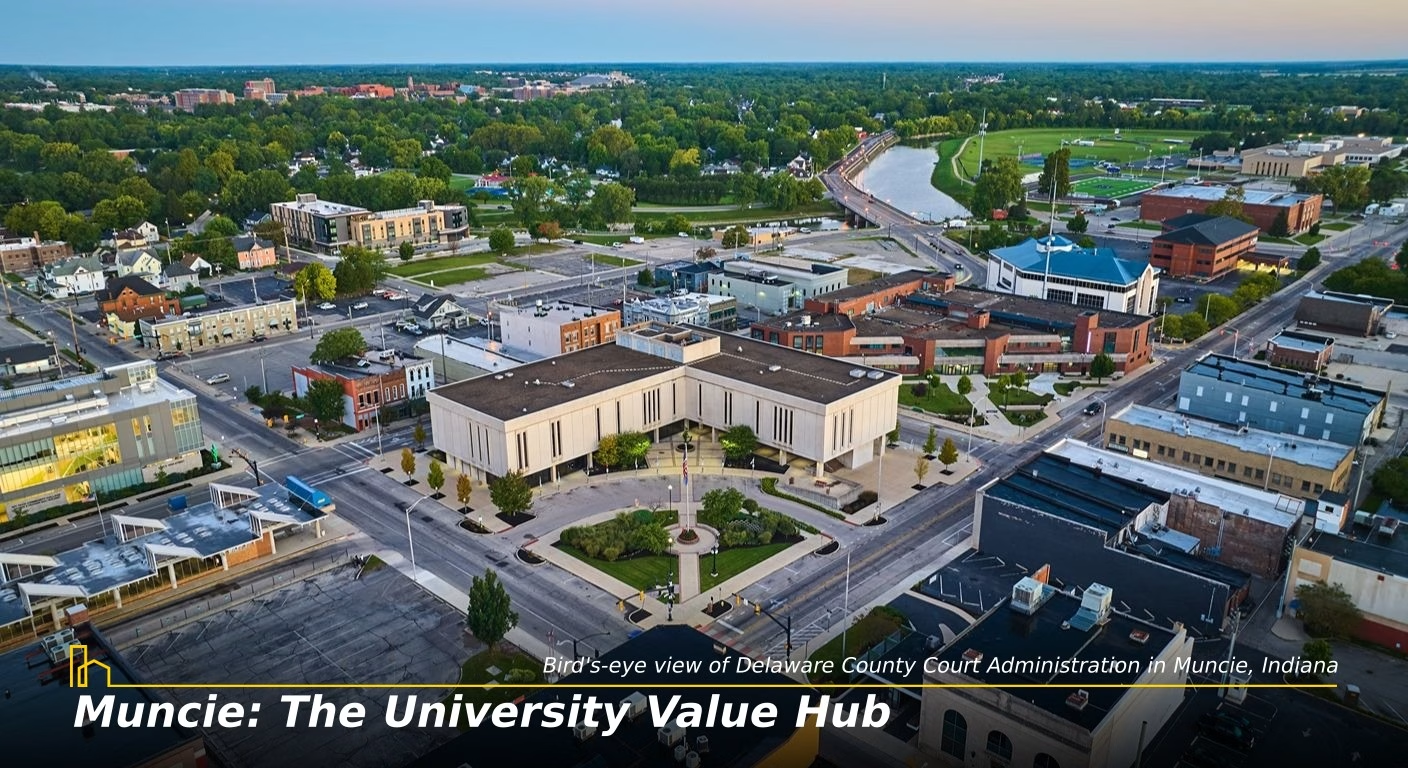
7. Muncie, IN: The University Value Hub
HOMEiA Score: 87/100
- Cost of Living: 12% below U.S. average
- Monthly Rent: $850
- Home price to income ratio: 3.8:1
- Income to rent ratio: 52.3x
- Safety rating: 58/100
A. Cost of Living & Housing: Muncie offers exceptional value as a college town with Ball State University anchoring the local economy. The housing market is remarkably affordable, with many homes available under $150,000. Cost of living allows for a comfortable lifestyle on a modest income, making it ideal for students, faculty, and families seeking educational opportunities.
B. Economy & Job Market: BSU is the largest employer, providing stability in education and research positions. Healthcare, manufacturing, and retail sectors also contribute significantly to the local economy. The university presence creates a steady stream of cultural events and intellectual stimulation.
C. Access & Infrastructure: Located along I-69 means it’s well-connected to Indianapolis (about an hour’s drive) and Fort Wayne. The city has comprehensive healthcare facilities, including IU Health Ball Memorial Hospital, and all essential retail and service amenities.
D. Quality of Life & Culture: Life revolves around the university, offering access to Division I athletics, cultural events, and educational resources. There’s has a vibrant arts scene, numerous parks, and a strong sense of community. While the safety rating is average, specific neighborhoods offer excellent living conditions for families and professionals.
III. A Relocation Checklist for Your New Indiana Home
- Budget for the True Cost: Account for utility costs, which can vary by region. Factor in transportation costs, especially if commuting to larger cities like Indianapolis or Fort Wayne.
- Secure Employment First: Job markets can be localized. Secure employment before moving, especially if you’re not in high-demand fields like healthcare, education, or skilled trades.
- Visit in Person: If possible, visit your chosen community. Neighborhoods can vary within cities. Get a feel for the area, traffic, and amenities firsthand.
- Confirm Internet Reliability: For remote workers, this is essential. While larger towns have reliable service, confirm provider and speeds at your specific address before committing.
- Research School Districts: If you have children, investigate school ratings and programs, as they can vary significantly even within affordable communities.
Conclusion: Your Affordable Indiana Future Awaits
From the university town atmosphere of Muncie to the lakefront potential of Gary, these seven communities prove that you can access the Midwestern dream without a premium price tag. Indiana offers a unique opportunity to build a future where your quality of life is matched by the financial wisdom of your chosen home. By carefully considering what each of these affordable enclaves has to offer, you can find the perfect spot to plant your roots and thrive in the Heartland. For those considering a different region, you might also explore the most affordable cities to live in Michigan.
Recommended for you




FAQs About the Most Affordable Places to Live in Indiana
1. Is it possible to find a home under $150,000 in Indiana?
Yes, absolutely. Markets including Gary, Anderson, and Marion regularly have numerous homes listed below $150,000. These may require some updates but represent incredible value for homebuyers.
Property taxes and insurance. While overall costs are low, property tax rates can vary by county. Also, some areas may have higher insurance premiums due to weather risks or other factors.
3. Are these communities good for remote workers?
Generally yes. Developed towns including Muncie, Terre Haute, and Kokomo have reliable high-speed internet from multiple providers. More rural areas may have limited options, so confirm service availability before moving.
4. What is the job market like in these affordable cities?
It varies by location. College towns like Muncie have stable education and healthcare jobs. Manufacturing centers like Kokomo offer industrial opportunities. Many residents commute to larger cities for higher-paying positions while enjoying lower living costs.
5. How do I choose between these cities?
Prioritize your needs.
For Jobs: Look at Kokomo (manufacturing) or Muncie (education/healthcare).
For Lowest Cost: Consider Gary or Anderson.
For Families: Kokomo and Terre Haute offer good safety ratings and amenities.
For Retirees: Marion and Richmond provide great value and community.
For Education/Culture: Muncie with Ball State University is ideal.
Always research specific neighborhoods within these cities, as conditions can vary significantly.
Share