












If you’re a veteran or service member refinancing in 2026, you may encounter VA Type I and Type II cash-out refinances. While the VA classifies both as cash-out loans, these distinctions determine how much you can borrow, applicable fees, and whether you receive cash at closing…
How Cash Home Buyers Really Work. A Step-by-Step Guide: From First Call to Closing
- Local Editor:Local Editor: The HOMEiA Team
-
Category: Buy House
Share

Selling a home is one of the most stressful events in a person’s life. For decades, the only path was to hire an agent, prepare the property, and wait months for a bank-financed buyer. Today, nearly a third ofU.S. home sales are an all-cash transaction, the highest share in over a decade.
A cash home buyer is an investor or company that purchases properties outright using their own funds, with no mortgage required. Whether you are exploring Maryland cash home buyers or searching for investors in another state, this guide walks you through every stage of the process, from your very first phone call to the day funds land in your account.
Table of Contents:
Key Takeaways
- Cash sales close in 7-30 days, compared to the 44-day average for mortgage-financed closings.
- Investors buy as-is with no repairs, cleaning, or staging needed before you sell.
- Most cash buyers use the 70% Rule: offer = (after-repair value x 70%) minus estimated repair costs.
- Always request a Proof of Funds letter and insist on a neutral, third-party title company.
- The lower offer is often offset by zero commissions, no closing cost contributions, and eliminated holding costs.

Related article
VA Cash-Out Refinance vs HELOC vs Home Equity Loan: Best Way to Tap Home Equity as a Veteran
As a veteran homeowner in 2026, you have unique advantages for tapping home equity. Specialized VA programs often offer better terms than civilian options, but more choices can create confusion. This guide helps you…
Part 1: Understanding Cash Home Buyers

A. What Is a Cash Home Buyer?
A cash home buyer is any person or company with liquid funds to purchase a house outright. Without a lender involved, there is no financing contingency, the single most common reason traditional home sales fall apart.
B. The Three Types of Cash Buyers
Not all cash buyers are the same. Knowing who you’re dealing with helps you set the right expectations.
| iBuyers (e.g., Opendoor, Offerpad) | “We Buy Houses” & Local Investors | Buy-and-Hold Investors |
| Algorithm-driven offers on move-in-ready homes. Charge ~5% service fee. Best for newer homes in respectable condition. | Specialize in fixer-uppers and distressed properties. No fees charged, but offers are lower to cover heavy repair costs. | Want your home as a long-term rental. May offer slightly more than a flipper. Focused on location and rental income potential. |
C. When Homeowners Typically Consider a Cash Sale
Most sellers turn to cash buyers because a specific situation makes waiting impossible:
- Avoiding foreclosure: A cash buyer can close in two weeks, protecting your credit score.
- Job relocation: When you need to move in days, not months, there is no time for a traditional listing.
- Costly repairs: Banks typically won’t finance homes with major structural issues like foundation damage or a failing roof.
- Inherited property: Heirs often receive distressed homes they lack the time or budget to fix and list.
Related article
VA Cash-Out Refinance in 2026: How It Works, Who Qualifies, and When It Actually Makes Sense
A VA cash-out refinance lets eligible veterans replace their existing mortgage with a VA-backed loan, often for more than they owe, receiving the difference in cash after closing costs. Unlike most programs, it can convert non-VA loans, such as conventional or FHA, into VA financing, unlocking home equity with more favorable terms…
Part 2: The 6-Step Process
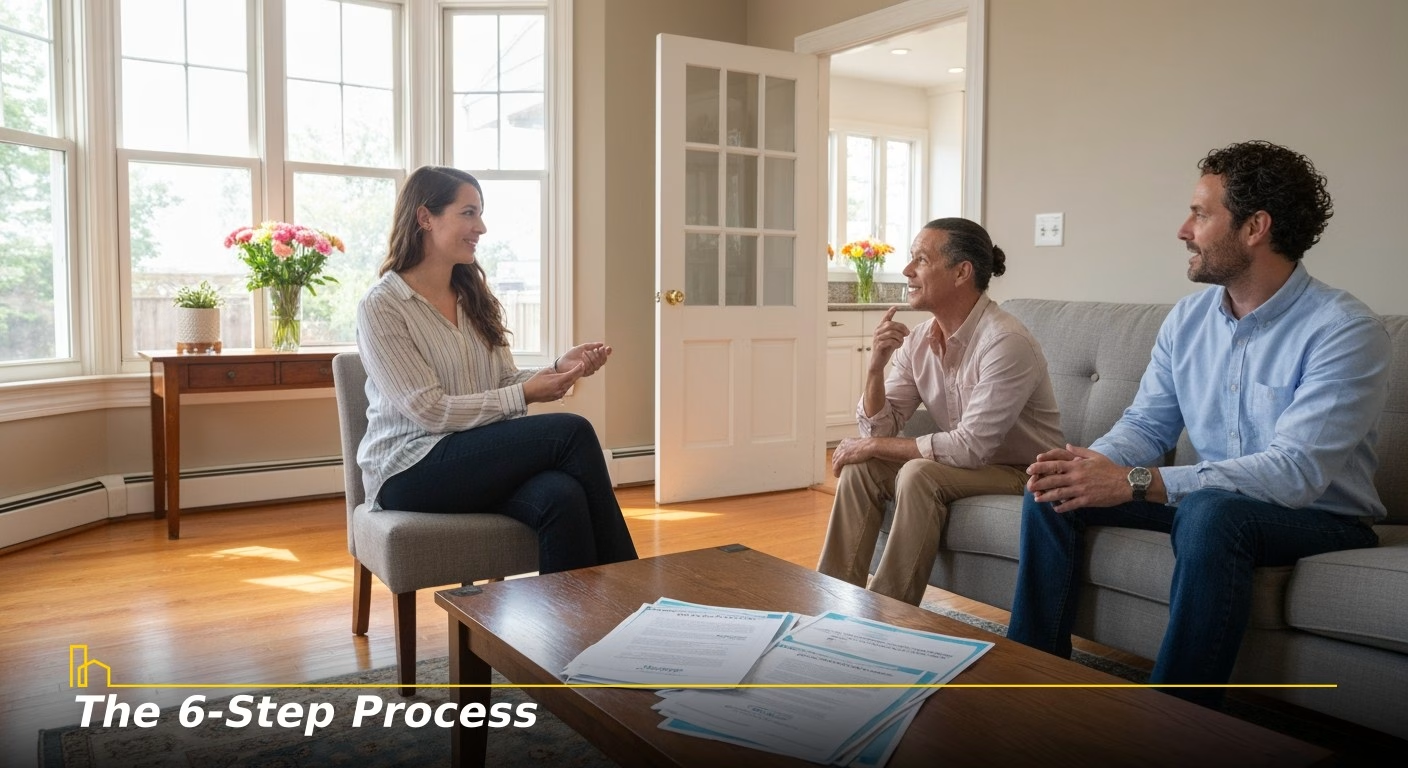
Here is the complete timeline at a glance, followed by a detailed breakdown of each step.
| # | Stage | Typical Timing |
| 1 | First Contact | Day 1-3 |
| 2 | Property Walkthrough | Day 3-7 |
| 3 | Receiving the Cash Offer | Day 5-10 |
| 4 | Signing the Contract | Day 7-10 |
| 5 | Title Work & Closing Prep | Day 10-20 |
| 6 | Closing Day & Getting Paid | Day 7-30 |
| STEP 1 | First Contact | Day 1-3 |
The process begins with a simple inquiry. Most homeowners find cash buyers through an online search (“sell my house for cash”), direct mail postcards, or referrals from probate and divorce attorneys.
A. What You Will Be Asked on the First Call
- Property basics: address, square footage, and bedroom/bathroom count
- Major systems: age of the roof, HVAC, and plumbing
- Your timeline: why you are selling and how quickly you need to close
- Financials: outstanding mortgage balance and whether property taxes are current
B. Questions You Should Ask the Buyer
- Are you the actual buyer, or a wholesaler assigning the contract to someone else?
- Can you provide a recent Proof of Funds letter from your bank?
- Which local title company do you use for your closings?
Recommended for you
| STEP 2 | Property Walkthrough | Day 3-7 |
This is not a traditional showing. You do not need to stage, clean, or make any preparations. Local investors typically visit in-person to assess the structure and mechanical systems. Tech-based buyers may ask for a video walkthrough or high-quality photos instead.
A. What Cash Buyers Evaluate
- Structural health: foundation, roof, and windows
- Mechanicals: electrical panel, furnace, and water heater
- Renovation potential: what the finished home will be worth after a full remodel
B. How “As-Is” Really Works
- You can leave behind unwanted furniture, clothes, or debris since the buyer handles all removal.
- Outdated kitchens, stained carpet, and worn fixtures are all factored into the buyer’s renovation budget.
- Full disclosure still applies: you are legally required to reveal known material defects including mold or lead paint, even in an as-is sale.
| STEP 3 | Receiving the Cash Offer | Day 5-10 |
After the walkthrough, the buyer analyzes local comparable sales and repair costs to produce a written offer.
A. How Buyers Calculate Their Numbers: The 70% Rule
Most house flippers use this formula to ensure they do not overpay:
|
Offer = (After-Repair Value x 70%) – Estimated Repair Costs Example: ($300,000 x 0.70) – $50,000 = $160,000 offer |
The 30% gap covers the investor’s profit margin plus holding costs including property taxes, insurance, and utilities paid while the home is being renovated.
B. Why the Offer Is Lower Than a Retail Listing Price
- Risk transfer: The buyer absorbs liability for any hidden problems discovered after purchase.
- Speed premium: You receive funds in weeks, not months.
- Net savings: With no 5%-6% agent commission or seller-paid closing costs, your true net proceeds are often closer to a retail sale than the headline numbers suggest.
| STEP 4 | Signing the Contract | Day 7-10 |
If the offer works for you, a Purchase and Sale Agreement is signed. Review this carefully, ideally with a real estate attorney, before putting pen to paper.
A. Key Contract Clauses to Understand
- Inspection period: Most buyers request 5-10 business days to conduct a final due-diligence check.
- Clear title requirement: The sale only proceeds once the title company confirms clean ownership.
- Earnest money deposit: Expect $1,000-$5,000 held in escrow as a good-faith deposit.
B. How Cash Contracts Differ from Traditional MLS Contracts
- No financing contingency: A cash buyer cannot cancel simply because a lender denied a loan.
- No appraisal contingency: The buyer is not bound by a bank’s appraisal, so a low valuation will not ruin your deal.
| STEP 5 | Title Work & Closing Preparation | Day 10-20 |
Once the contract is signed, a title company or real estate attorney takes over the logistics. Your main job at this stage is to respond promptly to any document requests.
A. What the Title Company Does
- Ownership search: Reviews public records to confirm there are no clouds on the title.
- Lien payoffs: Calculates exact payoff amounts for your mortgage, tax liens, or any utility judgments.
- Document preparation: Drafts the deed that legally transfers the property to the buyer.
B. Common Issues That Can Delay Closing
- Missing heirs: Every person with a legal ownership interest must sign the closing documents.
- Unrecorded liens: Old debts from a previous owner can remain attached to the property.
- Legal description errors: A typo in the land’s legal description must be corrected before transfer.
| STEP 6 | Closing Day & Getting Paid | Day 7-30 Total |
Closing is the final step where ownership and money change hands. It typically takes one to two hours.
What Happens at Closing
- You sign the deed in front of a notary.
- You review and sign the Settlement Statement (HUD-1), which itemizes exactly where every dollar goes.
- Funds are sent via same-day wire transfer or certified cashier’s check.
- The title company files Form 1099-S with the IRS. If the home was your primary residence for at least two of the last five years, you may qualify to exclude all or most of the profit from capital gains taxes.
Related article
Cash Home Buyers vs Listing with an Agent: Best Option for Your Situation?
Home sellers often face two choices: a traditional agent aiming for top dollar, or a cash buyer offering speed and certainty. The right option depends on your timeline, risk tolerance, and net proceeds, not just price. This guide helps you evaluate which path fits your situation best…
Part 3: Making Your Decision

A. Cash Home Buyers vs. Listing With an Agent
Use this side-by-side comparison to decide which path fits your situation:
| Feature | Cash Home Buyer | Traditional Agent Listing |
| Timeline | 7-21 days | 60-90 days |
| Repairs | None required (as-is) | Significant prep for top price |
| Commissions | $0 | 5%-6% of sale price |
| Certainty | High – no financing hurdles | Moderate – deals often fall through |
| Showings | 1 walkthrough | Dozens of tours and open houses |
B. How to Choose a Reputable Cash Home Buyer
- Verify the business: Search your state’s Secretary of State website to confirm the company is registered. Look for a physical office address, not only a PO Box.
- Check reviews: Read Better Business Bureau (BBB) and Google reviews, specifically seeking complaints about last-minute price reductions after the contract is signed.
- Ask for Proof of Funds: Any legitimate buyer will provide a recent bank letter confirming they have the capital available to close.
Red Flags to Watch For
|
Conclusion: The cash home buyer process is built for speed, simplicity, and certainty. It is not the right choice for every homeowner. For those who need a guaranteed sale without months of repairs, showings, and financing uncertainty, it can be a perfect option.
By asking the right questions and working with a verified buyer, you can move from your first phone call to a funded bank account in as little as two to three weeks. If unsure which path fits your situation, speak with both a local real estate agent and a reputable cash buyer to compare your real net numbers side by side.
Recommended for you




FAQs About How Cash Home Buyers Really Work
1. Will selling for cash hurt my credit score?
No. A home sale is not reported to credit bureaus as a negative event. If you use the proceeds to pay off a mortgage you were behind on, it can actually help your credit by preventing a foreclosure from being recorded.
2. What if I still have a mortgage on the house?
Very common. The title company will deduct your exact payoff amount from the buyer’s funds at closing. You receive only the net proceeds remaining after the mortgage is satisfied.
3. Can I sell if tenants are living in the house?
Yes. Many buy-and-hold investors actively want tenants in place. You will transfer the existing lease and security deposit to the new owner at closing.
4. Is the cash offer negotiable?
Often, yes. iBuyers use fixed algorithms, but local investors are flexible. If you have a recent appraisal or evidence that major systems are newer than the buyer assumed, you can frequently negotiate a higher offer.
5. Do I need an attorney for a cash sale?
Not required in every state, but strongly recommended. A real estate attorney can review the contract for a modest flat fee and flag any clauses that could work against you before signing.


Related Content

















































































































![10 Most Affordable (Safe) Places to Live in the U.S. [Updated]](https://homeia.com/wp-content/uploads/2025/08/10-Safest-and-Most-Affordable-Places-to-Live-in-the-U.S-570x298.webp)