







The 10 Best Places to Live in Maine for Families
- Local Editor:Local Editor: The HOMEiA Team
-
Category: City Living Guide
Share


Ask the average person what comes to mind when they think of Maine, and they might say moose, blueberries, and lobster. While Maine does lead the nation in both lobster and blueberry production, it has so much more to offer. For instance, with all its bays, coves, inlets, and other indentations, Maine has 3,500 miles of coastline. That’s more than California! And the rocky shores are just the beginning. The Pine Tree State is aptly named for its 17 million acres of forests. Don’t forget the beautiful rivers and lakes dotted throughout the state.
Maine’s communities boast some impressive attributes as well. They are considered some of the safest in the United States and have pretty good schools, despite not being particularly well-known for education. The New England area generally tends to be a pretty desirable place to live. Still, Maine’s cost of living is relatively affordable for the region, despite being a bit higher than the national average.
With such a diverse landscape and so many beautiful towns to settle down, Maine is a terrific place for families looking to put down roots. We looked at multiple factors, including safety, education, things to do, and cost of living. We put together this list of the ten best places to live in Maine for families. Here are the top 10 best places to live in Maine.
Table of Contents:
1. Bar Harbor – Hancock County
Bar Harbor is located along the scenic Frenchmen Bay, a seven-by-14-mile body of water with almost 40 islands and thriving commercial and recreational boating industries. Bar Harbor is home to just 5,594 people, so the coastal community feels tight-knit. Safety is critical here, as crime rates are 54% lower than in the rest of Maine.
Bar Harbor schools are considered exceptional. The students’ performance is significantly better than the national average. There’s plenty of access to medical services and many opportunities with low unemployment and several industries taking root here.
The biggest knock on Bar Harbor is the cost of living. It’s higher than most other places on this list. It’s the same story for the home costs. The median average home will go for about $433,000.
Still, the town is stunning in the summer and offers some of the best amenities in all of Maine. Acadia National Park is nearby and attracts thousands of visitors yearly. The community looks out for itself and offers tours of the downtown area that are both adult-themed and kid-friendly. There are beaches, restaurants, theaters, and plenty of other things you might expect from a larger city.
Recommended for you




2. Camden – Knox County
Camden is another small town with a population of just 4,806. Along with nearby Rockport, it’s an excellent choice for families who may want the diversity of being between the mountains and the sea. The locals know Camden as “where the world comes to find Maine,” The slogan rings true with a robust tourism industry.
Crime is virtually nonexistent in Camden, with an 80% lower crime rate than in Maine. The schools capitalize on the community’s safety with a solid rating.
The one thing about Camden that some may see as a downside is an influx of tourists coming here each summer. Families who dislike seeing their community grow so drastically may want to look elsewhere. Still, on the other hand, it also says positive things about the community.
Things to do here range from the natural splendor of the ski season and Camden State Park to enjoyable ocean events like sailing, boating, and fishing. Camden is even home to Maine’s most famous opera house.
3. Yarmouth – Cumberland County
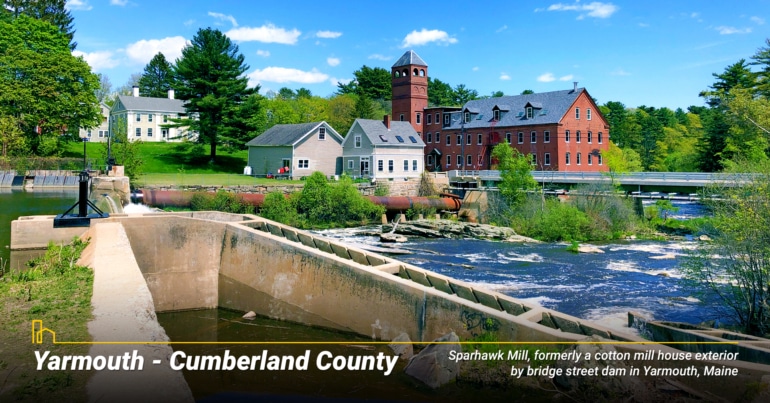
Yarmouth is a harbor town just miles away from the Atlantic Ocean. As far as quality of life goes, it is exceptional. With a 46% lower crime rate than the rest of the state and terrific amenities, families could do much worse than settle down in this town of 8,602 people.
The schools in Yarmouth earn an A for education. They consistently rank among the top districts in the state. Housing, however, may be out of reach for some folks. With a median home value of $605,500, living here certainly isn’t cheap. Those who can afford it will reap multiple benefits.
Yarmouth has plenty of parks and open spaces, including conserved land for anyone who loves the outdoors. The proximity to Portland makes it easy to enjoy day trips and city nightlife. One of Yarmouth’s biggest draws is unique: The annual Clam Festival typically attracts somewhere in the area of 120,000 people per year over a three-day weekend. That more than quadruples the permanent population of the town!


Related article
7 Key Factors to Know About Living in Boston
Before considering your move to Boston, we have compiled a list of 7 key factors we put together for you. Boston life is about the best city life you can imagine. Relatively small, it’s often referred to as the walking city, with world-class museums, universities, theaters, and gourmet dining…
4. Winthrop- Kennebec County

Winthrop, located just west of the state capital of Augusta, fashions itself as a “forward-thinking community” that values its history and prides itself on being an excellent place for families to put down roots. The numbers back it up, too. It’s a safe small town, with just 6,029 people and a 15% lower crime rate than the rest of the state.
Real estate is relatively affordable here; the median home costs $275,900. It’s even easier to rent a home, as Winthrop has one of the cheapest average rents in the entire state. Unemployment is very low in the area too, so there are opportunities for working families to maintain a good income.
Winthrop schools have recently been recognized for their investment in their students. They are consistently considered in the top 10 districts in the state when it comes to student performance and satisfaction. Kids here tend to enjoy themselves as they grow and form their sense of community.
Winthrop has lots of outdoor appeal. They have well-maintained public parks, a locally-famous library, and plenty of community events, such as outdoor theater. Winthrop’s Cobbossee Lake is one of the best lakes for fishing in the United States!

Related article
The 10 Best Places to Live in Wisconsin: A City Comparison (updated)
Wisconsin offers diverse communities with strong economies and housing costs below national averages. While prices vary widely from affluent Whitefish Bay to fast-growing Eau Claire, this analysis compares top municipalities based on jobs, housing availability, and infrastructure to help residents choose strategically…
5. Gorham – Cumberland County

Gorham is located closer to the southern part of the state, where many of Maine’s communities are concentrated. The population is 17,962, making it one of the larger towns on our list. It’s an incredibly safe community; crime rates are 63% lower overall than in the rest of the state, which makes crime very rare here.
Families looking to buy a home won’t find the cheapest houses in Gorham, but they won’t break the bank either. The median home value is about $398,600, a little higher than average for the rest of the state. The cost of living is also slightly higher here than in other communities. Still, residents get a return on that cost through other perks.
The school system is highly rated, and Gorham’s proximity to the city of Portland and the highly-popular Old Orchard Beach ensures plenty in the area to keep people busy. Portland offers the excitement of a larger city for nightlife, culture, and attractions.
With an urban-style downtown area known as “the village” and plenty of beautiful natural scenery to explore, families will find no shortage of things to do in Gorham. Most famously, it is the home to one of the oldest covered bridges in New England. While the original structure did burn down in 1973, it was restored and rebuilt as part of Gorham’s historical heritage.
Recommended for you




6. Hampden – Penobscot County

You’d be hard-pressed to find a list of family-friendly Maine communities that omitted Hampden. The town of 7,257 not only has crime rates 52% lower than Maine’s average, but the cost of living here is also very agreeable. It’s 82% lower than the average for all of the U.S.
Students in Hampden consistently outrank the national average on standardized tests, making parents very happy with the school system. They’re pleased with the home prices too. With a median home cost of $257,800, Hampden residents are paying slightly higher than the Maine average but much less than that in nearby desirable urban centers.
Hampden is just a few miles from Bangor, which means residents have easy access to the amenities there, including the highly-regarded medical centers and the popular shopping districts. Residents can also find lots of fun on the water: Hampden is situated directly on the Penobscot River and just a short drive away from some beautiful rocky Maine beaches.
7. Fort Kent – Aroostook County

Fort Kent is here to represent the far north part of Maine. It’s located on the border of Canada, so only families who don’t mind a harsh winter and a rural lifestyle may find the appeal. Still, the small town of just 3,805 packs a punch much more significant than its population would suggest.
The biggest benefit of Fort Kent is the cost of living. It’s a whopping 21.8% lower than the rest of the United States. The median home value is set at just $139,400. And if you think there may be a catch, consider that crime rates are 38% lower than the rest of the state, making Fort Kent a wonderfully safe community.
While the schools are not quite as highly rated as the other places on the list, most students here earn a high school diploma and go on to get a college degree. Healthcare is easily accessible here, too, highlighted by the Northern Maine Medical Center, known for its quality of patient care.
It’s no surprise that the culture of Fort Kent is dripping in Canadian influence. It hosts an annual ploye festival, multiple international biathlon events, and the Can-Am Crown International, a winter dog sled race that finishes right in the center of town. Fort Kent can appeal if you don’t mind the town’s remoteness.

Related article
4 Best Places to Live in Minnesota
Bordering Canada and the Great Lakes is a state fondly dubbed as the “North Star State” and “Land of 10,000 Lakes.” The state has a lot of lakes sprawled across its more than 86,000 square mile area. In a comprehensive study of cities, Minnesota is the number one state for raising a family because of its high median income, affordable cost of living and exceptional education services…
8. Topsham – Sagadahoc County

Topsham has undergone some impressive growth over the past few years. Its geographic location lends itself well to commuters and local business growth. The population of Topsham is 8,942 and getting larger.
Families may want to take a look at Topsham while it remains affordable. The median home price here is $297,500. Of course, crime is also low, at 33% lower than Maine’s average. While unemployment remains low, the growing economy of Topsham ensures there will be opportunities for new residents. Schools in Topsham are not at the top of the state but still perform better than average when it comes to the entirety of the region and higher than the U.S. average as well.
Topsham hosts an annual fair each autumn, one of the community’s joys. The city of Brunswick is just a short drive away, with lots of family-friendly attractions, such as historic bridges, cinemas, dining, and the beautiful rocky coastline.
9. Orono – Penobscot County

The University of Maine’s campus is in Orono, which thrives on the college town atmosphere. The permanent population of 10,636 enjoys those perks, with the cost of living 12.7% lower than the rest of the U.S. Crime rates are lower, too. They average 34% less than Maine.
Homes are affordable here, especially for a college community, with the median home price at $229,300. There’s low unemployment, and the University keeps the town’s economy moving. The public schools are strong, although not at the very top of the state, but satisfactory for any family who values education.
With its popular area brewing company and a trendy farmers market, Orono has community roots working alongside the college feel, keeping families happy. The proximity to Bangor makes it possible to go and explore all the charm there too.

Related article
Pros and Cons of Living in Virginia
In this article, we will discuss some of the advantages and drawbacks of life in Virginia. We will also explore some of the best cities in Virginia for different types of individuals and families…
10. Cumberland – Cumberland County

Rounding out the list is the town of Cumberland, with a population of 8,473. The agricultural town is a beautiful place for families to plant roots, with a whopping 84% lower crime rate than the rest of Maine.
Cumberland schools are considered exceptional. They consistently rank at the very top of all of Maine’s districts. The students have access to ample extracurricular opportunities and high-quality teaching in the classroom.
The cost of living here is a bit higher. The median home will cost an average of $549,000, which will be a significant investment. Regardless, there is plenty of job opportunities, and the unemployment rate is extremely low.
While there isn’t a great deal of activities in Cumberland itself, there are a few. Sweetser’s Barrell and Apple Orchards and Spring Brook Farms are two of the agricultural attractions of the town, and Portland is close by to satisfy that social and nightlife itch. Cumberland is great for a small-town family.
Conclusion
Families who choose Maine will find themselves living in a scenic New England setting with easy access to the natural beauty of forests, oceans, and rivers. The small towns seem built specifically for peaceful family living, making it easy to build a strong connection with the community. As the classic humorist, Will Rogers once mused: “did you ever see a place that’s built to enjoy? Well, the whole state of Maine looks this way.”

Related article
What is It Like Living in St. Paul, MN?
This historic city has that and much more. It’s a beloved hometown for many with distinct neighborhoods, employment opportunity, dining and nightlife. In this article, we’ll discuss highlights for Saint Paul residents and guests regarding standard of living, housing, education, business, healthcare, weather and recreation…
FAQs About Raising a Family in Maine
- How does Maine’s overall cost of living impact families choosing among its best towns?
Maine is generally more affordable than their New England counterparts, especially when comparing home prices and property taxes to nearby Massachusetts or coastal New Hampshire. That said, costs vary sharply by region: desirable coastal and Portland-area suburbs often have higher housing prices, while interior or northern towns tend to be more budget-friendly but may offer fewer jobs and amenities. Families should weigh trade-offs between lower housing costs and added transportation, childcare, or commuting expenses if they settle farther from metros. A practical approach is to build two or three sample family budgets, housing, utilities, commuting, groceries, kids’ activities, for specific towns, rather than relying on statewide averages. - How do Maine’s schools differ between coastal hubs, suburbs, and rural areas?
Many of the family-friendly communities highlighted in relocation guides feature top-tier public schools, revered college-prep programs, and active parent involvement, especially in the coastal suburbs ofCape Elizabeth, Falmouth, and York. Rural districts provide quaint class sizes and close-knit communities but may have fewer advanced courses, extracurriculars, or specialized services. Because performance and resources vary widely, parents are wise to dig into district- and school-level report cards, discussions with local families, and check transportation patterns, especially if multiple towns share a regional school system. Some families also supplement public education with homeschooling networks or private schools, both of which have an active presence in parts of ME. - What are the main lifestyle differences families experience between southern/coastal Maine and more inland or northern towns?
Southern and coastal communities, including greater Portland and nearby seaside towns, tend to offer a denser network of restaurants, arts venues, medical specialists, and youth activities, along with easier access to airports (PWM) and larger employers. Inland and northern towns often provide quieter streets, more space, and closer proximity to lakes, mountains, and forests, which appeals to families who prioritize outdoor recreation and a slower pace. Trade-offs are longer commutes for shopping, entertainment, and advanced healthcare, and teens may have fewer local part-time jobs or social opportunities. When selecting, it benefits to ask whether your family would rather sacrifice some convenience for more nature and quiet, or accept higher housing costs in exchange for dense amenities and shorter drives. - How challenging are Maine winters for families, and how do people adapt?
Winters in Maine are unforgiving, but are also central to its identity as many families embrace skiing, skating, sledding, and winter hiking as core parts of their routine. Practical adaptation includes investing in reliable heating systems, reliable insulation, snow-removal tools, and often all-wheel-drive vehicles, especially in hilly or rural areas. Parents build winter into their schedules, allowing extra time for school drop-offs, bus delays, and road conditions, and they stock appropriate clothing so outdoor play remains enjoyable and safe. Families who thrive usually learn to treat winter as a season to prepare for and enjoy, not just endure, while recognizing that the darker, colder months can feel isolating if they are not intentional about staying active and connected. - What should families know about healthcare access in Maine’s best family towns?
Larger metros of Portland and Bangor serve as medical hubs, offering hospitals, specialists, and pediatric services that many surrounding communities rely on. Family-friendly suburbs on the outskirts take advantage of short drives to comprehensive care, which can be important for chronic conditions, pregnancy care, or sports injuries. In rural and more remote areas, many depend on smaller clinics or community hospitals for routine needs and travel to regional centers for advanced care, so it is important to map actual drive times for emergencies and regular appointments. Checking which towns fall within a comfortable distance of the providers your family needs, and how snow and road conditions affect that travel, can be as important as comparing school ratings. - How do work opportunities and commutes affect where families should live in Maine?
Major employment clusters are concentrated around Portland, Bangor, and a handful of regional centers, with jobs in healthcare, education, tourism, manufacturing, and remote-friendly professional fields. Families living in close-in suburbs often gain shorter commutes and more predictable schedules but pay more for housing, while those nestled in more affordable outlying towns trade lower home prices for longer drives and higher fuel costs. Increasingly, some parents work remote or hybrid jobs, allowing them to choose a town primarily for schools and lifestyle while planning only occasional trips to offices or airports. Before committing, it helps to test-drive your commute at rush hour, calculate yearly transportation costs, and consider how weather and tourist traffic affect the routes you’ll rely on. - What kinds of families tend to thrive in Maine’s top family-friendly communities?
Families enjoying outdoor activities, value safety and community, and are comfortable with a slower, less urban pace are often happiest in Maine’s best-known family towns. Parents heavily involved in schools, local sports, and community events find plenty of opportunities to build tight networks and give children a deeply-rooted sense of belonging. On the other hand, those craving dense nightlife, large-city anonymity, or extensive high-end shopping may feel constrained, especially in smaller towns where social circles are tighter and amenities are limited. For many families, however, the combination of commendable education, access to nature, and a culture that prizes time outdoors and community involvement makes Maine’s leading family-oriented towns an appealing place to put down roots.


Related Content