





Pros & Cons of Modular Homes Investment
- Local Editor:Local Editor: The HOMEiA Team
- Category: Buy House , Real Estate Investing


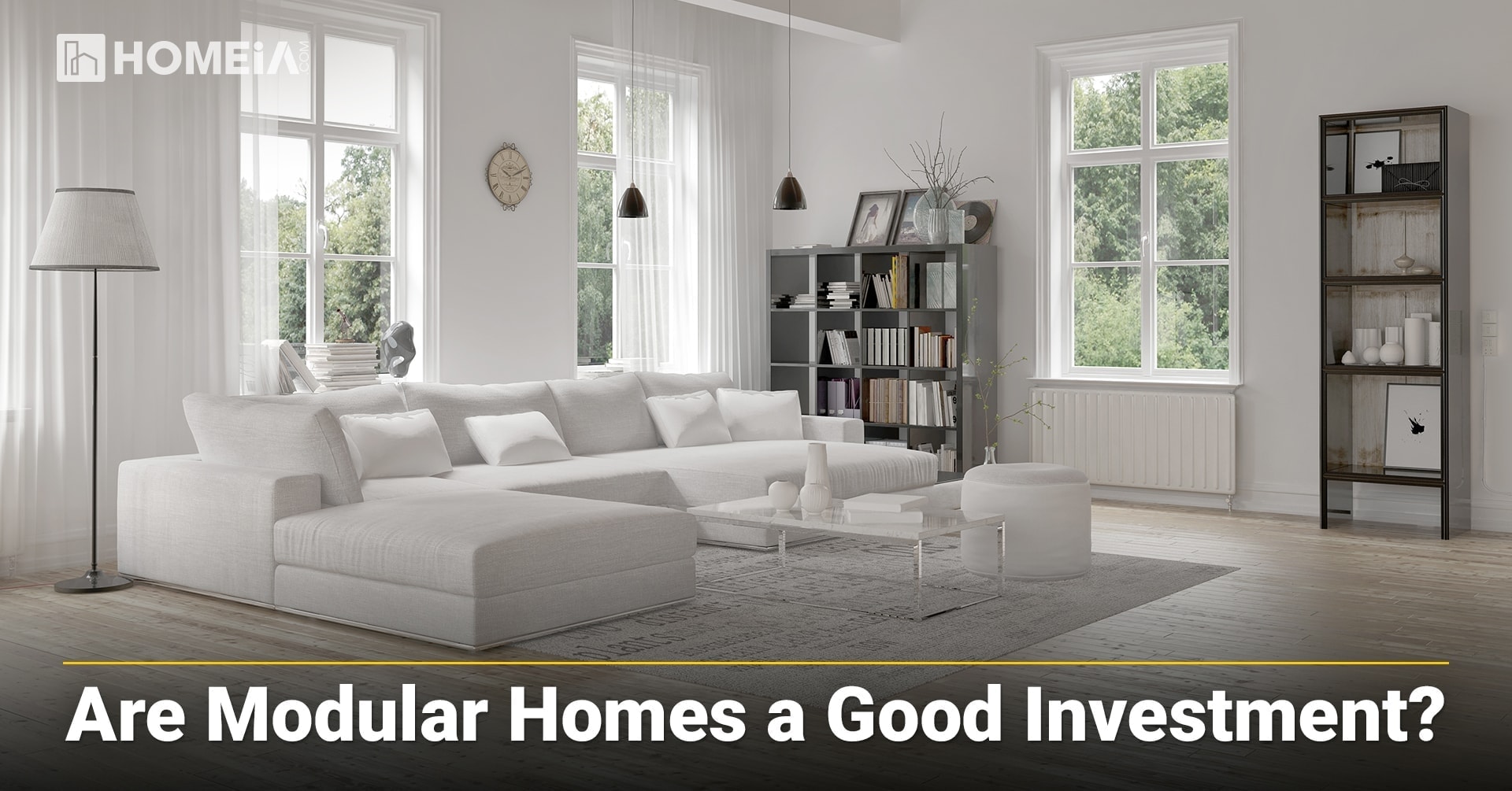
More “prefab” than a built-on-site home and more permanent than a mobile home, modular homes are an intriguing option for home buyers. We will explain in detail what the modular home is and its Pros and Cons which you should know before deciding whether it is a good investment for you.
Are modular homes a good investment today? The answer is Yes, modular homes values can increase over time – this makes for a good investment. Proponents see them as an excellent way to build economically and with consistent quality, while detractors find them impersonal and cite their mixed reputations as a reason to stay away.
As with all housing options, there are tradeoffs when choosing a modular home. They’re not for everyone, but for an increasing number who value economy, quick completion, and even quality, a modular home could be a great decision.
Pros and Cons of Modular Homes
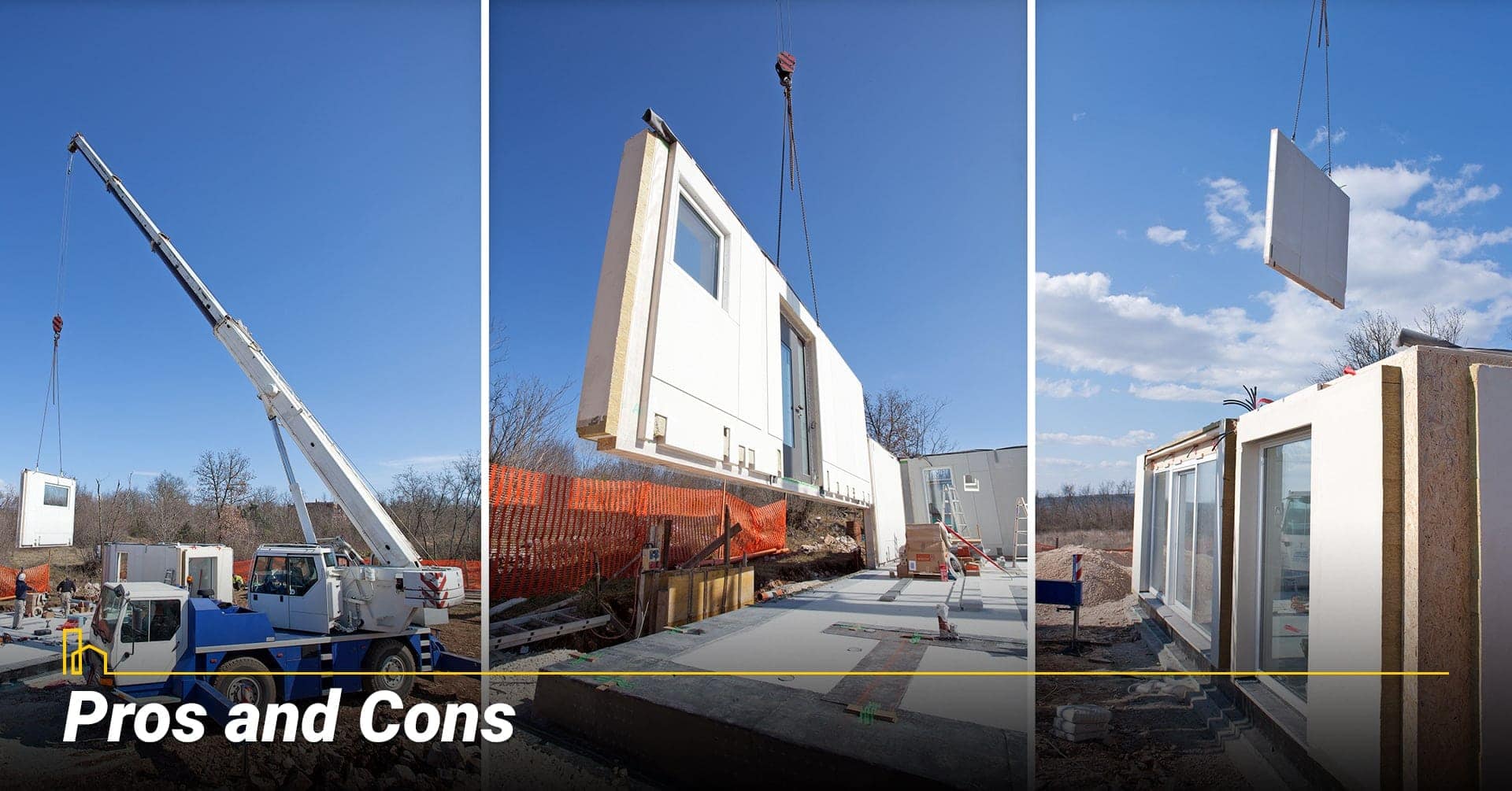
Modular homes are right for some situations and wrong for others. Even when they’re a great match for your needs, there are some factors you understand before you proceed.
One of the benefits of a modular home is the streamlined process for selection and construction. For many buyers, this is a plus, but if you want to customize each and every aspect in order to create your dream home, you may find your options too limited. A custom stick-built home (with a large budget!) might suit you better.
Next, remember that the price of a modular home does not include everything that the list price of an existing home does. Be sure to add in these costs.
Modular homes, also known as prefab or factory-built homes, are constructed in sections or modules in a factory and then transported to the building site for assembly. Like any housing option, modular homes have their own set of pros and cons:
Pros of Modular Homes:
Cost-Efficient: Modular homes can be more cost-effective than traditional stick-built homes. Factory construction allows for better cost control and reduced material waste.
If you are looking for lower-cost alternatives to conventional single-family houses, semi-detached options are also worth evaluating. Learn more by checking out our guide to buying a twin home for insights on lower down payments and conventional mortgage financing.
Faster Construction: Modular homes are typically built much faster than traditional homes. Since much of the construction is done in a controlled factory environment, weather-related delays are minimized.
Quality Control: Factory construction means that each module is built under strict quality control standards, potentially resulting in a higher quality home.
Energy Efficiency: Modular homes can be designed with energy-efficient features and materials, which can lead to lower utility bills in the long run.
Customization: Modular homes offer a wide range of design options and can be customized to meet your preferences and needs. They can be single-story or multi-story, and you can choose from various architectural styles.
Sustainability: Some modular homes are built with sustainable materials and practices, making them more eco-friendly than traditional homes.
Less Disruption: Since much of the construction takes place off-site, there is less disruption to the local neighborhood during the building process.
Cons of Modular Homes:
Land and Permit Challenges: Finding suitable land and navigating local zoning regulations and permits can be challenging, as not all areas are open to modular construction.
Limited Customization: While there is a degree of customization available, modular homes may have limitations compared to completely custom-built homes. Some layouts or design features may be less flexible.
Transportation Costs: Transporting the modules to the building site can be costly, especially if the site is far from the factory.
Foundation Requirements: Modular homes typically require a permanent foundation, which can add to the overall cost.
Resale Value: Modular homes may not appreciate in value as much as traditional homes over time, although this can vary depending on factors such as location and the quality of construction.
Financing Challenges: Securing financing for a modular home can sometimes be more challenging than for a traditional home, as some lenders may have stricter requirements.
Limited Design Changes: Once the modules are constructed, making significant design changes can be difficult and costly.
In summary, modular homes offer a range of advantages, including cost efficiency, speed of construction, and quality control. However, they also come with challenges related to land acquisition, customization, and financing. Whether a modular home is the right choice for you depends on your specific needs, budget, and the local housing market. It’s essential to research and carefully consider your options before making a decision.
Recommended for you



What is a Modular Home?
First, it helps to know what a modular home is not.
A modular home is not a “stick-built” home—industry jargon for a house built on-site, from the foundation and frame to the shingles and siding. Stick-built homes are the most traditional, and account for the vast majority of new construction done today. They require all the workers and all the materials to travel to the build site.
On the other hand, a modular home is not a mobile home. Mobile homes are manufactured entirely in the factory and transported to their locations on wheels. The standard long, narrow appearance of a “single-wide” mobile home owes to the need for it to fit roughly within a lane of highway.
Double- and triple-wides are transported in two or three pieces and end up with proportions more similar to a typical ranch home. They are generally placed without a foundation, though they may have skirting to connect the exterior walls with the ground.
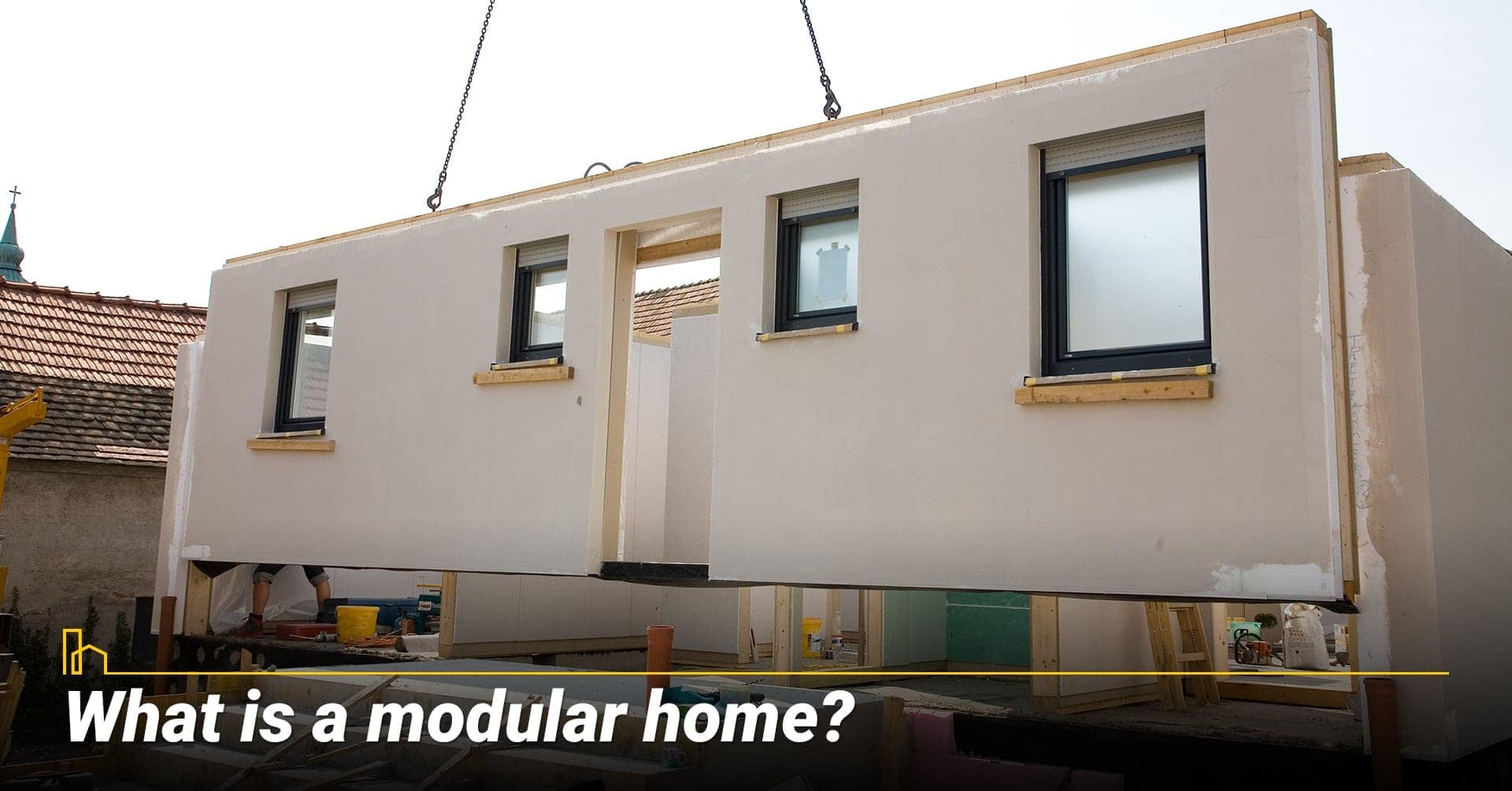
Modular homes fill a niche between stick-built and mobile. Sections of the home are built in a factory. They are brought to the build site, where local contractors assemble and finish them.
Modular homes are assembled on a foundation, which may include a traditional basement, and the completed home may be largely indistinguishable from a stick-built home.


Related article
What are the Pros and Cons of a Land Lease Agreement
A land lease agreement, which can range from 50 to 99 years, outlines rules and obligations for the lessee when it comes to the use of the land. The arrangement has some distinct advantages and disadvantages for the home buyer. It’s important that you understand both before you…
Best of Both Worlds

At their best, modular homes take advantage of some of the best features of site-built and manufactured homes.
Because they are built at a factory, where materials are already available and workers are already onsite, modular homes can be very cost-effective. Manufacturers can take advantage of economies of scale by creating many similar buildings in the same place—think shared equipment instead of duplicates, bulk materials and significantly less transportation time.
They can also be built quickly. Most of the building is done indoors, where weather won’t halt construction work. Even inspections require less time, as they’re done on site. Once the modules are ready and brought to the homesite, they can be combined quickly into a complete home.
Factory-built housing may suffer from a false impression that, being less expensive, it is also lower in quality. But modern modular homes actually benefit from their assembly line process. The modules of the homes are built under strict observation from quality control; sloppy work won’t go unnoticed as it could at a remote build site.
Additionally, the pieces of the structure must be strong enough to be carried long distances without damage, so the bar is higher almost by definition.
What about building codes? While mobile homes follow the national building code from the U.S. Department of Housing and Urban Development, modular homes are held to the same local building codes as a stick-built home, and manufacturers design their buildings with that in mind.
As an added bonus, modular homes are designed to be very energy-efficient, reducing your environmental footprint and shrinking your energy bills.
Related article
10 Key Things to Know Before Buying a Manufactured Home
Manufactured homes can cost anywhere from $20,000 for a basic single-section home to upwards of $200,000 for a multi-section home with all the upgrades. The average cost is about $82,000. Here’re 10 important things you should know before you buy a manufactured home…
Financing Your Modular Home

In part due to a lack of education about the quality of today’s prebuilt homes, it has been more difficult to get a loan for a modular home than for a traditionally built home—but that may be changing.
A popular belief that manufactured homes depreciate over time (in contrast to stick-built homes) has not been borne out by experience. Just like traditional homes, modular homes have increased in value over time, meaning they can be a smart investment, too.
The process for obtaining a loan for your modular home differs slightly from that for buying an existing home. In most cases, the loan will have two phases, in what’s known as a “construction-to-permanent” loan.
The loan starts out as a construction loan, and you’ll pay interest only (no principal) until the final appraisal. At that point it becomes a permanent mortgage and you will start to pay down the full loan amount.
The major lenders in the U.S. are offering new ways to finance manufactured homes, too, giving you more options than in the past.
In 2019 Fannie Mae introduced MH Advantage, which can finance manufactured homes as long as they fit in with stick-built houses, meeting requirements such as drywall throughout the home and eaves that are at least six inches. Why the cosmetic requirements? Because lenders can use stick-built homes as comps when determining the value of the home.
The minimum down payment for the program is just three percent, making it a viable option for some first-time and lower income buyers.
Freddie Mac offers loans for manufactured homes as well—specifically the Freddie Mac Home Possible program. To qualify for this program the home has to be defined as “real property” via its title—which usually means it must be permanently attached to the land, as modular homes typically are.
Conclusion
Here is an analogy. In recent years, winemakers have recognized that screw-caps and even wine boxes offer significant benefits over traditional corked bottles—most importantly, they eliminate the problem of “cork rot,” which causes some percentage of their product to go to waste. Consumers, on the other hand, hold on to the idea that corked wine is classier, reducing the demand for the newer bottle styles.
Modular homes are similar. The newest homes are high-quality, high-efficiency, economical and more eco-friendly. They can be assembled so they’re virtually indistinguishable from stick-built homes, and they can have full foundations and basements.
Until public perception catches up with the reality, though, there is some risk that a modular home may be harder to resell when the time comes.
If you only expect to live in your home for a few years, a modular home might not be worth the tradeoff. But if you intend to stay in your home for a long time, a modular home could be a great investment that will stand the test of time.
Related article
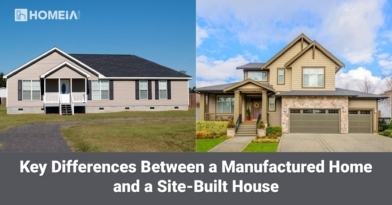
Key Differences Between a Manufactured Home and a Site-Built House
What many first-time homebuyers want to know is: What are the key differences between manufactured homes and site-built ones? Here are the Key Differences Between a Manufactured Home and a Site-Built House…
FAQs about the Pros & Cons of Modular Homes Investment
- How do modular homes differ from manufactured and site-built homes in terms of investment potential?
Modular homes are constructed in sections off-site but must meet the same local building codes, appraisal standards, and permanent-foundation requirements as site-built houses,meaning they are treated as real property.
Manufactured homes are built to the federal HUD code and often titled as personal property, which historically created increased financing limits and depreciation risk, while modular homes typically appraise and insure like traditional stick-built homes in the same neighborhood. - Do modular homes actually appreciate in value, or do they behave more like manufactured homes?
Research and lender guidance now indicate that modular homes can appreciate at rates similar to site-built homes when placed on permanent foundations in stable or growing markets.
Appreciation varies by location, local demand, land ownership, and maintenance; where these are strong, modular homes have shown long-term equity growth rather than automatic depreciation. - What are the main financial advantages of choosing a modular home as an investment?
Factory construction usually cuts build time by 30%–60% and reduces material waste, so modular homes can cost 10%–20% less per square foot than comparable stick-built properties, creating “built-in equity” from the start.
Faster timelines, lower carrying costs during construction, and consistent quality control plus enhanced energy efficiency can make the homes more attractive to future buyers and renters. - What are the key investment risks or downsides with modular homes?
Some markets and buyers still misunderstand modular construction, which limits the buyer pool or creates stigma in areas where factory-built housing is viewed negatively.
Zoning limits, HOA rules, and lender overlays can also restrict where modular homes can be placed or which lenders will finance, raising the importance of site selection and pre-approval. - How does financing a modular home work, and does it affect long-term returns?
Modular homes typically use construction-to-permanent loans: the project begins as a construction loan (interest-only during the build) and converts to a standard mortgage once completed and appraised.
Because modular homes are real property, they typically qualify for conventional, FHA, VA, or similar products, which often means lower rates and longer terms than chattel loans, improving cash flow and long-term ROI compared with many manufactured setups. - For investors, when does a modular home make more sense than a traditional build?
Modular construction is especially compelling with labor issues, tight timelines, or the goal is to produce consistent, code-compliant units across multiple lots or projects.
In those situations, the combination of lower build costs, predictable schedules, and site-built-equivalent appraisals can improve margins for build-to-sell or build-to-rent strategies, provided the land and local demand are desirable. - What practical steps improve the odds that a modular home will be a good long-term investment?
The most important moves are: choosing a reputable modular builder, placing the home on a permanent foundation, owning the land, and building in a neighborhood where stick-built and modular homes can be used as comparable sales.
Upkeeping the property, creating records of warranties and upgrades, and marketing the home’s quality and energy-efficiency features help position it not as a cheap alternative but rather, a high-value, modern home that competes directly with traditional construction.
Related article
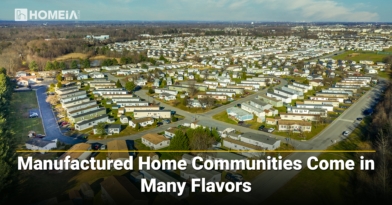
9 Common Types of Manufactured Home Communities
We’ll explore the various types of manufactured home community and their Pros and Cons. If you are in search of a place to put your manufactured home, you’ll find many ideas here…
Share